Myanmar Has an Envoy at the United Nations. Why Is He Not Speaking?
 Sep 23, 2026 · byThe New York Times
44 articles · 1+ stories

U Kyaw Moe Tun has kept a low profile at the General Assembly for years, part of an arrangement to keep his post despite the military-backed government’s efforts to remove him.
Sep 23, 2026 · byThe New York Times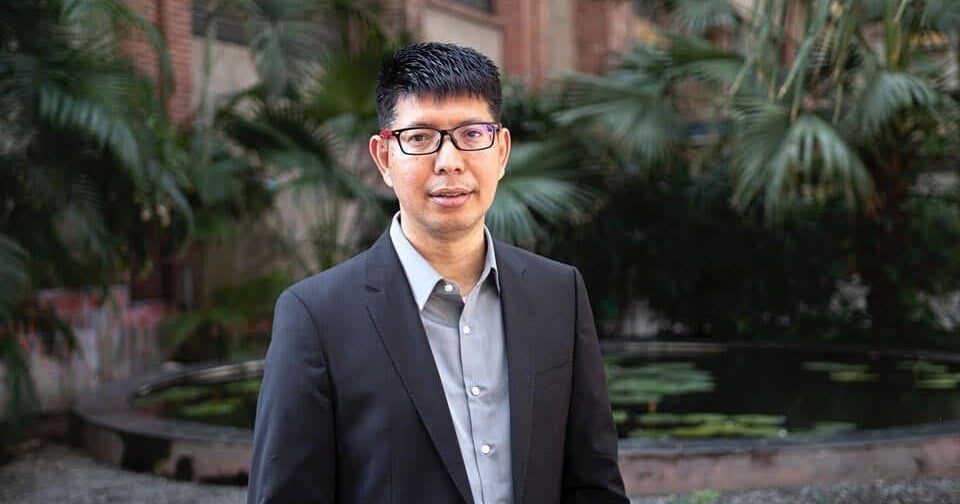
Min Zin, a Myanmar scholar, has been held for more than 100 days at what human rights groups say is a "black site" in China.

In Southeast Asia, hundreds of thousands of people working in fraud centres are scamming people across the world. US authorities suggest the fraudsters are responsible for scams worth almost $10 billion a year against US nationals alone. Victims in Europe, the UK and China have also been targeted. Human rights groups further warn that those working in the centres are often themselves victims of human trafficking – forced to work as slaves.
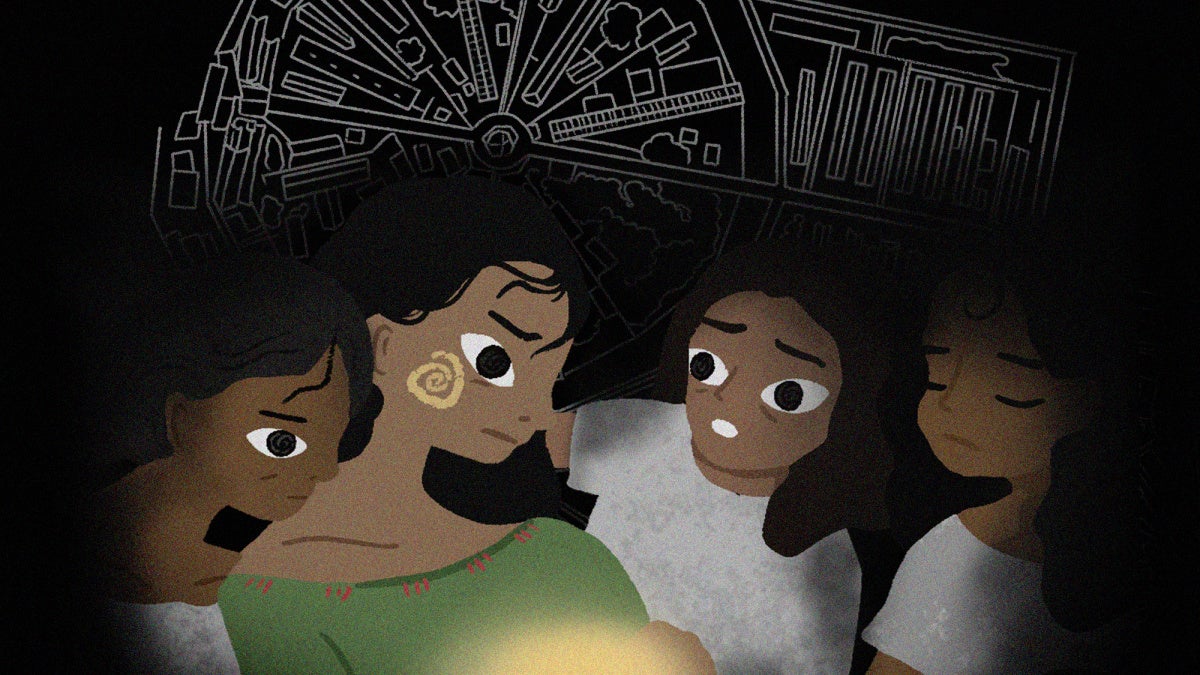
Click to expand Image Former women political prisoners in Myanmar and their families reported the dangerous and sometimes deadly denial of prenatal and obstetric medical care to pregnant women. © 2026 Human Rights Watch (Bangkok) – The Myanmar military junta subjects women political prisoners to torture, sexual violence, and life-threatening denial of medical care, Human Rights Watch said today. Among the over 30,000 political prisoners detained since the junta’s February 2021 coup are about 6,600 women and 640 children. Former prisoners and their families have reported beatings, rape, squalid conditions, and the dangerous and sometimes deadly denial of prenatal and obstetric medical care to pregnant women. The junta should urgently and unconditionally release all women political prisoners and their children, including the former leader Aung San Suu Kyi, who has been detained for more than five years. “Women who have been detained as political prisoners in Myanmar paint a deeply disturbing picture of a prison system in which suffering and neglect are both deliberate and routine,” said Bryony Lau, deputy Asia director at Human Rights Watch. “The women face layers of injustice, from arbitrary arrest to torture and mistreatment in detention, to unrelenting fear and trauma following release.” In 2025 and 2026, Human Rights Watch interviewed 17 former women political prisoners, 3 family members, and 4 lawyers and advocates. The former detainees—activists, journalists, healthcare workers, and aid workers at the time of their arrest—had been held in 11 interrogation centers and prisons, some since the 2021 coup. The women said they were prosecuted under various criminal code provisions used against real or perceived critics of the junta. These include Penal Code section 505A, a vague and overbroad post-coup law to punish opposition and dissent, and the sweeping Counter-Terrorism Law. Several women said they were detained unlawfully as hostages for friends or relatives who had eluded arrest. Women reported being tortured and ill-treated during interrogation, which could last months, or as punishment. Prison authorities beat them with sticks, chains, metal pipes, and slingshots, and subjected them to electric shock, sexual violence, cigarette burns, prolonged stress positions, and weeks or months in solitary confinement. Most said they had faced sexual humiliation or assault, including invasive body searches conducted in a manner and at a frequency that indicated an intent to humiliate more than any legitimate security purpose. An activist, 26, who was pregnant when arrested in 2024, was interrogated for over a month. Her husband said, “They threatened her about the pregnancy, told her to tell them about me and her colleagues [in the opposition]. They threatened her: ‘If you won’t tell us the information, we’ll hit your belly.’” More than 2,300 men and women have died in custody since the coup, according to the Assistance Association for Political Prisoners. Myanmar Prison Witness has documented 290 deaths of political prisoners between February 1, 2021, and September 16, 2026, including 43 deaths of women political prisoners and their children. “Our lives in prison are worth an A4 paper,” a former political prisoner said, referring to the notice families are required to sign when informed about a death in detention. The bodies are not returned to families, he said, and Human Rights Watch is unaware of any investigations or accountability. In some cases, the families are not even informed. Former prisoners said that prison authorities consistently block access to necessary medical care for serious chronic and acute conditions. Treatment is highly arbitrary, requiring months-long waits, bribes to prison guards, and outside payments for medicine and care. “When it comes to disease, there is no medication, so you just have to endure it,” said a woman who spent three years in prison. “Minor issues unnecessarily become serious issues.” Women said that medical neglect is compounded by a near-total lack of specialized services to meet their sexual and reproductive healthcare needs. Pregnant women are denied access to necessary prenatal, obstetric, and postnatal care, and may face abuses that could endanger their health, lives, and pregnancy. A woman arrested in 2021 when three months’ pregnant said her interrogators, who knew she was pregnant, used electric shock and beat her, leaving her with chronic pain. She was held in a storage room with nine other pregnant inmates, where they slept on a concrete floor among used medical masks and gowns. “There was no ultrasound so there was no way to estimate the due date,” she said. “My water broke at midnight, but the [hospital] referral letter only arrived at 10 a.m.… Chains were put back on my feet right after the delivery.” Some women are left to give birth in their cells due to the lack of emergency care, which former prisoners said led to stillbirths and deaths of mothers and infants. Women also described overcrowding and squalid conditions that placed their lives and health at risk. After release, a number of these women reported experiencing depression, hypervigilance, isolation, and suicidal thoughts. Myanmar is party to several core international human rights treaties that address treatment of people in custody, including the Convention on the Elimination of All Forms of Discrimination against Women; the Convention on the Rights of the Child; and the Convention on the Rights of Persons with Disabilities. Under treaty and customary international law, Myanmar authorities have a duty of care for people in prisons, including an obligation to protect their rights to life, health, safety, dignity, and security. Moreover, no one may be subjected to cruel, inhuman or degrading treatment or punishment. The UN Standard Minimum Rules for the Treatment of Prisoners (the Nelson Mandela Rules) state that the “provision of health care for prisoners is a State responsibility,” with necessary health care to be provided free. The Rules call for all prisons to ensure prompt access to medical attention and accommodation for prenatal and postnatal care and treatment, including arrangements for giving birth in a hospital. The UN Rules for the Treatment of Women Prisoners and Non-custodial Measures for Women Offenders (the Bangkok Rules) establish additional protections for women prisoners, including gender-specific healthcare services at least equivalent to those available in the community, and safeguards for mothers and children. Concerned governments should impose targeted economic and travel sanctions on senior junta officials to press the junta to unconditionally release all arbitrarily detained and imprisoned people, including Aung San Suu Kyi; immediately end torture and other ill-treatment in custody; and grant impartial international humanitarian agencies full access to everyone in custody. Donors should support local groups providing legal, medical, psychosocial, and vocational assistance to current and former women political prisoners, and increase resettlement opportunities for particularly vulnerable people. “Governments should use every opportunity to press the junta to release all political prisoners, including detained women,” Lau said. “Focusing greater attention on the plight of detained women will show the junta that it can’t hide its horrific treatment behind prison walls, and the thousands of women unjustly detained that they haven’t been forgotten.” For more information on the junta’s abuses against women political prisoners, please see below. For their protection, pseudonyms are used for those interviewed. Myanmar Junta Abuses against Women Political Prisoners Torture, Ill-Treatment, and Retaliation Torture and other ill-treatment are rampant in Myanmar prisons, interrogation centers, military bases, and other detention sites, with reports of beatings, rape, prolonged stress positions, electrocution, and deprivation of food, water, and sleep. Military authorities shuttled Phyu Phyu, 36, between interrogation centers in northern Yangon known as Shwe Pyi Thar, and 8 Mile in Mayangone Township for three-and-a-half months in 2022, where she said she was questioned and beaten repeatedly: They used many techniques. Like one of the older men would say, “You are like my daughter, we won’t do anything if you answer the questions.” … They used sticks and beat me when they’re not satisfied with my answers. They’d say, “You are lying to us.”.… They would threaten that they could kill me anytime. “No one knows that you’re here, so we have permission to kill you anytime. After being transferred to Insein prison in Yangon, she requested a hospital visit for the pain and dizziness she had suffered since the beatings. After about 10 months and multiple requests, she was taken to see a hospital doctor, who found that her left shoulder bone had been crushed. In July 2025, the activist Wutt Yee Aung, 26, died in Insein prison after years without adequate medical treatment for head injuries from multiple beatings following her arrest in September 2021. Two months before her death, an advocate working on her case told Human Rights Watch that she was having repeated seizures. Women said the guards targeted political prisoners as “troublemakers” who at times were separated from other detainees. Khine Zar, 27, said the officer-in-charge of the women’s prison at Daik-U in Bago Region routinely “abused her authority.” She said one time “[s]he ordered other prisoners to beat three political prisoners with chains…. One of the victims was carried away in a blanket, she was so badly injured.” During a prison riot in Insein, Nilar Oo, 31, said guards beat her even though she had not participated: I was targeted because I had been involved in other demands. Men and women guards beat me and other inmates. I was kicked by four people at the same time. After the incident, I was put in solitary confinement for two weeks as punishment. During roll calls, guards required prisoners to hold squatting stress positions, or pone san, for an hour. Prisoners who complain about the poor conditions or treatment to family members or visiting officials face retaliation, those interviewed said, such as confiscating their parcels or letters, reducing food rations, denying them visits, denying medical care, sending them to solitary confinement, or transferring them to a harsher or more remote prison. Officers also use collective punishment, such as confining entire units, as “discipline.” “If someone tried to report to the warden, they are transferred to another prison,” said Hnin Hnin, 29. “They set an example that whistleblowers will be retaliated against.” Several women said they had been transferred to Thayawaddy prison in Bago Region, which was notorious for the guards’ systematic brutality toward political prisoners. Phyu Phyu was transferred from Insein to Thayawaddy in 2023 with about 300 other political prisoners, 100 women and 200 men. She said, “They told us, ‘You were sent to this prison because you were disobedient at another prison.’” Recently released prisoners said that new prisoners were commonly beaten on arrival at Thayawaddy. Nandar Hlaing, 32, said she was beaten, then put in solitary confinement for two weeks: I could go out only 15 minutes every 24 hours. I had to stay in a 10 x 6 ft. cell all day where I also ate and went to the bathroom. It was so dark. There was no electricity and nothing for me to do, nothing to read. Thayawaddy officials held Khin San Win, 26, in solitary confinement for nine months after she was transferred from Insein. “When they transferred us from the hall building to solitary confinement, the prison staff, both male and female, swore at us and set prison dogs on us,” she said. “They also shot us with slingshots.” United Nations special rapporteurs on torture have affirmed that solitary confinement beyond 15 days constitutes a form of torture. A prisoner advocate said that initially, male guards would refrain from violence against women prisoners. But over the past five years, that norm was abandoned. In Obo, Thayawaddy, and Daik-U prisons, she said, male staff used slingshots to control women political prisoners, even those who were sick or pregnant. Sexual Violence Sexual and gender-based violence is a frequent form of torture against detainees, including rape, sexual humiliation, and excessive and abusive use of invasive body searches and surveillance. A representative from the Women’s Organization of Political Prisoners said they had documented cases of rape and sexual violence during interrogations. A woman held in Insein and Daik-U prisons between 2021 and 2023 said that guards coerced some women into sexual activity in exchange for medicine or other necessities. Women at Insein prison described degrading body-searches before and after court appearances, allegedly to search for drugs or letters. “Every time I come back to the cell from the court during my trial, the female staff do a body search,” Khine Zar said. “They put their fingers into our bodies just to make sure we are not delivering letters to outside. It is the standard procedure. Women during their period have to unstick their pad from their panties for the search.” Women held at five prisons described surveillance while showering or changing clothes, both directly and via CCTV cameras. “I didn’t feel secure while showering because the guards in the tower were staring at us,” said Cho Cho Win, 21, who was detained at Pyay prison between 2024 and 2025. “CCTV are everywhere including the changing rooms. The CCTV controllers are men, so we don’t feel safe. Some women didn’t even shower.” The UN Independent Investigative Mechanism for Myanmar in 2025 found: Systematic commission of sexual and gender-based crimes against individuals of different ages and genders in detention settings. Crimes include rape (gang rape and multiple rapes), including through the insertion of objects into anal and genital openings; sexual slavery; burning of sexual body parts with cigarettes or burned objects; sexualized touching or forced full or partial nudity; invasive body searches intended to humiliate; the use of sexualized, misogynistic or homophobic slurs, threats of sexual violence, or violence based on gender or sexual orientation; and reproductive violence, particularly against women and girls. Violations of the Right to Health and Other Mistreatment Medical Neglect Former women prisoners described deeply inadequate medical care, without access to qualified staff, essential medicine or equipment, or emergency services. Women said that in general they were dependent on fellow detainees with medical backgrounds in the absence of official medical personnel. Some were able to buy medicine or request it in parcels from their families, depending on the prison. “In prison, we took care of ourselves,” said Khin San Win. “We secretly shared medicines with each other. Medicines were precious in prison.” Prison medical staffing has been depleted since the coup, with large numbers of healthcare workers arrested for joining the opposition Civil Disobedience Movement (CDM). According to a representative from the Political Prisoners Network Myanmar, Thayawaddy prison has only 3 doctors for over 3,000 prisoners, while Insein has 4 or 5 for over 8,000 prisoners. A former prisoner at Nyaungshwe in Shan State said there was 1 doctor for 2,000 prisoners when she was held there in 2021. Prisons with fewer than 1,000 inmates often have no doctor or clinic. Aye Myint, who was detained between 2021 and 2023, said that Daik-U prison had only one medical officer: “We called him ‘Ko Ko Para’ because the only medicine he gave us was paracetamol, no matter what the health problem was.” Nu Nu, 33, a nurse for the CDM, was arrested in 2022 for providing medical care to opposition activists. She was detained for two-and-a-half years, first at Insein, then Thayawaddy. At Insein, a detained CDM doctor was assigned as the medical officer, she said, “but without any equipment and no authority to make any medical decisions.” At Thayawaddy, she was assigned as the medical officer given her nursing background. “There was a male doctor, but he was always drunk,” she said. “So I was the one taking care of the check-ups.” Former prisoners said that requests for anything beyond basic care required approval from the prison administrators, a prolonged arbitrary process. Requests were often denied. In one of her most serious cases, Nu Nu treated a patient with kidney stones that progressed to a kidney infection and fever. “I gave her IV antibiotics and asked the prison to let her to get the treatment she needed,” she said. “Only after two months of asking was she allowed to get the treatment [at a hospital].” A 47-year-old woman political prisoner said that an older inmate at Daik-U had to wait for six months for an X-ray after she slipped and broke her leg. She said her cellmate with kidney disease waited 45 days for permission for an X-ray. “More complicated patients are not transferred to the outside hospital until it is too late,” she said. Two former prisoners at Daik-U said that the authorities denied prisoners with cancer access to outside hospitals, even with referrals from prison doctors. “For cancer patients, they can only get a referral when they’re dying,” a prisoner advocate said. Many prisons had no nighttime medical care. Win Kyi, 28, had a seizure one night in 2021 while at Obo prison in Mandalay, after the doors had been locked. “A person claiming to be a prison doctor later came, but he examined me from outside the cell bars because the door couldn’t be opened,” she said. Khine Zar described a nighttime medical emergency at Daik-U: An inmate suffering from kidney failure began vomiting nonstop around 1 a.m. and repeatedly asked for medical attention. Because it was nighttime and the prison had already been locked, prison staff refused to call a doctor. Only at about 6 a.m., after we all together demanded urgent medical assistance, did prison staff attempt to contact the doctor. The staff came back and told us that the doctor had refused to come. Eventually, a male CDM doctor inmate was brought in to help her. Women said that authorities cut off healthcare access as “discipline,” as well as promising medical treatment to coerce them to provide information during interrogations. Khine Zar said that the officer-in-charge in Daik-U prison threatened a prisoner after she had two seizures after being beaten during interrogation. “She warned her that if she ever ‘dared’ to have a third seizure, she would be placed in solitary confinement,” Khine Zar said. Mya Sein, who was detained in Nyaungshwe prison in southern Shan State in 2021 and 2022, witnessed another political prisoner pass out one morning: It turned out she was having a stroke. We asked the clinic to give her urgent medicine and said we would pay for her no matter the amount. But the warden said we needed to request a different level for the treatment. The doctor came to check on her 30 minutes after she fell. She regained consciousness but couldn’t walk. Her right side was paralyzed. She kept throwing up. We asked the doctor to bring the medicine that treats stroke within three hours. The doctor said he didn’t have it. Women political prisoners face grave restrictions on access to menstrual supplies and to facilities for personal hygiene, which the UN Independent Investigative Mechanism for Myanmar identified as a form of reproductive violence. Cho Cho Win was arrested in 2024 during a raid by 10 plainclothes officers, who ransacked her house, blindfolded her, and tied her hands with rope. “When I was arrested, I was on my period,” she said. “I couldn’t change my pad or underwear for two days.” During interrogation, the officers threatened to kill and dismember her: I was scared to death. Due to the trauma, I got a hormonal imbalance and was menstruating for the whole month after I got to Pyay prison.… In prison, I was denied pads for the first two months because I was new. Companies donate pads but the prison staff sold them to us. Many other women said they faced irregular menstruation from stress. Phyu Phyu said her period stopped and she later had surgery for uterine fibroids. According to the Political Prisoners Network-Myanmar, 59 political prisoners, including 26 women, died during the March 2025 earthquake, mainly at Obo prison, near the earthquake’s epicenter, including prisoners who survived initially but died from lack of treatment for their injuries. Cho Cho Win, in Pyay prison, said the staff fled the compound when the earthquake hit, leaving prisoners locked in their cells. Despite some injuries, there was no medical follow-up, she said. Pregnant Women, Mothers, and Children The Women’s Organization of Political Prisoners told Human Rights Watch in July 2025 that about 125 women political prisoners were being detained with their children or while pregnant. Some children had been taken into custody with their mothers; others were born in prison. Children have sometimes unlawfully been detained as proxies for their parents. International standards call for special accommodation for prenatal and postnatal care and treatment, and that arrangements should be made for children to be born in a hospital outside a prison. Provisions should also be made to provide pediatric services for children remaining with their mothers. Nwe Ni Win, 41, was eight-months pregnant when she was injured at Obo prison during the earthquake. Local media reported that her requests for medical treatment were denied for over two weeks, at which point her fetus had died in utero. Nwe Ni Win died due to infection shortly after undergoing a stillbirth. Khine Zar was 22 when she was arrested in 2021, a week after she learned she was pregnant. “At the military compound, the interrogators, knowing I was pregnant, used electroshock devices on my back and thighs and beat me,” she said. Khine Zar was not allowed to see an obstetrician-gynecologist during her pregnancy, but her husband’s family bribed the prison officers to allow them to visit with prenatal vitamins and supplements. Without an ultrasound, staff at Insein measured her belly to estimate her due date. “The prison staff scolded us not to deliver our babies at night as it would be a long process to open the door,” Khine Zar said. In Myingyan prison in Mandalay Region, Win Kyi helped deliver a fellow political prisoner’s baby in a storage room. “There was no equipment to deliver the baby,” she said. “So all the inmates had to help her. We cleaned the storage room, and the baby was delivered in the dust. Right after she gave birth, she was told to walk back to her cell. She was locked up right after the delivery. She was not sent to the hospital or allowed other medical follow up.” Without prenatal care in prison, May Phyo Maung relied on detained CDM healthcare workers for assistance. Her husband bribed the prison staff to send her medicine and prenatal vitamins, and for one visit to a doctor during her pregnancy. He paid 300,000 kyat (US$150) so she could give birth in a hospital, where she required a cesarean section (C-section). Women who give birth in detention must make the heartbreaking choice between raising their child in prison or handing the baby over to family members. Before giving birth to her daughter in 2025, May Phyo Maung had been sentenced to 15 years in prison. She decided not to keep the baby with her in prison and was separated from her a week after giving birth. “It was an impossible choice,” her husband said. “I wanted my baby to be with my wife, but I also wanted her to be free.” Their relatives raised the baby after the husband fled the country to avoid arrest. Khine Zar gave her daughter to her family 28 days after giving birth in 2022 and was only reunited with her three years later, after her release: “My daughter did not have any emotional connection with me. She thought I was a guest visiting her home.” Former prisoners said that they were not given any equipment to help pump breast milk after being separated from their babies, which can cause painful engorgement and risks leading to clogged ducts and infection. In some prisons, children detained with their mothers live among everyone else; in others, like Nyaungshwe, they have a separate cell. Nandar Hlaing said that when she was held at Insein between 2021 and 2023 about 100 women were held in a single large room, 13 with babies. Win Kyi said that 12 children under age 6 lived in a room of 80 prisoners when she was in Obo in 2022. “They’re treated like inmates as well,” she said, with no toys, extra space, or formula. “Mothers and children suffer more. Mothers stay up to fan the kids all night so they can sleep … to make sure they don’t cry.” Squalid Conditions All prisoners in Myanmar’s prisons, including women and children, are held in overcrowded cells, denied access to sanitation facilities necessary for personal hygiene, and subject to inhuman conditions. Women held at Insein between 2021 and 2023 said that 100 to 130 prisoners would share 40-by-60-foot rooms intended to house 70 to 80 prisoners. One woman held at Nyaungshwe in 2021 and 2022 said that 30 women shared a 25-by-15 foot room, and the lights were kept on while they slept. Nandar Hlaing said prisoners at Insein would ask their families for pieces of carpet for sleeping on the concrete floor: “The floor is broken, holes, bumpy, it hurts our backs.” Overcrowding also resulted in reduced food rations and water quotas for bathing. Women said that water shortages during the summer affected the toilet and showers; guards would hit them with rulers if they used more than the allocated bowls of water to bathe. Former prisoners described rotten or worm-infested food, contaminated drinking water, flooding and mold during rainy seasons, and rat and insect infestations. “The rice always has worms, chicken feces, or some trash from the plastic bag,” Thida Aung said. “The dal has insects or worms.” Squalid living conditions also contribute to the spread of disease. Ringworm, scabies, and other skin conditions are ubiquitous and seldom treated, women interviewed said. Authorities provide women with two prison uniforms and confiscate additional clothing, leaving them to wear damp and dirty clothing and underwear. Waterborne diarrhea, urinary tract infections, and vaginal infections are common. One former prisoner said that despite swarms of mosquitoes, officers would confiscate any mosquito repellent they found, leading to dengue infections. Thida Aung said that at Kyaikmaraw prison in Mon State, where she was held from 2022 to 2025, the authorities stopped isolating inmates with tuberculosis from the rest of the prisoners due to overcrowding. Long-term Harm All former women prisoners reported long-term psychological and physical harm. Women described experiencing insomnia, recurring nightmares, panic attacks, hypervigilance, noise sensitivity, and fear of people in uniform. Nilar Oo spent 20 months in prison. She fled to Thailand shortly after her release in 2023 but still has nightmares and anxiety. “I always feel like I’m being watched, and I’m still shaken whenever I see people in uniforms,” she said. “Every time I have to deal with authorities, like getting documents renewed, I can’t sleep the night before.” Most of the women interviewed were released under section 401 of the Criminal Code, a conditional pardon that allows authorities to rearrest individuals without warrant to serve their remaining sentence if any condition of their release is “not fulfilled.” Many women said that family members and friends cut off contact out of shame, judgment, or fear, including being served divorce papers. Khine Zar said she struggled to find a job because her aunt refused to let her return home to collect her education certificates. One former prisoner, who spent three years in custody, said she moved away from her family after release because they harassed and belittled her. Other families reported overwhelming feelings of guilt while their relatives were in prison because they felt they could not help. Many political prisoners fled to Thailand after their release, while others have stayed in Myanmar due to family obligations or a lack of documentation or funds. Those who managed to escape to Thailand expressed fear of arrest by Myanmar authorities when applying for Certificates of Identity, a required step for migrant workers. It has become harder for former political prisoners to leave Myanmar since the junta enacted a new passport law resulting in increased repression and surveillance in March 2026. The law allows junta authorities to deny a passport to anyone conditionally released or “considered likely to threaten national security or the interests of the State,” and empowers any “court or relevant authority” to recommend denying a passport to anyone who has faced criminal action. The Myanmar Passport Issuance Board’s responsibilities include “to enter names on the blacklist.” The new law and forthcoming electronic passports coincide with the junta’s development of a biometric database and facial‐recognition system—the Person Scrutinization and Monitoring System—allowing for sweeping surveillance of people’s movement and digital and financial activity. As a whole, these tools prevent former political prisoners, who live in constant fear of rearrest, from legally leaving Myanmar. The years lost in wrongful detention and imprisonment disrupt women’s education and employment, leaving them struggling to find work. One woman said that some employers refused to hire her without a police background check. “My three years were wasted,” said Thida, who was arrested at 19. “We couldn’t learn anything…. Even if some people wanted to teach each other, there are no tools.” “As I have to make sense of two worlds, I was struggling mentally,” Mya Sein said. “I forgot my outside world. I forgot how to speak English. I forgot all the names and numbers from the outside.”

For more than five years, U Kyaw Moe Tun has refused to give up his United Nations post and a sandstone townhouse on the Upper East Side.
Sep 20, 2026 · byThe New York Times
Country: Myanmar Source: Protection Cluster Please refer to the attached file. The conflict in Myanmar has entered its sixth year, becoming among the top five countries with the most intense political violence in the world (ACLED Conflict Index). Active conflict continues across multiple fronts, marked by widespread violations of international humanitarian and human rights law, protracted displacement, economic decline, and natural disasters coverging and deepening humanitarian needs. Adding to the crisis, a powerful a 7.7 magnitude earthquake hit the country on 28 March 2025 dramatically intensifying the impacts of conflict and displacement. Notably, the earthquake impacted an area already hosting approximately 2.2 million of Myanmar's 3.7 million internally displaced persons, resulting in some 3,800 deaths, 5,100 injuries and causing widespread destruction of homes and infrastructure and placing additional strain on already overstretched response capacities. Floods in several states affected another one million people, killed some 500, displaced 80,000, and worsened outbreaks of cholera and denguei. The elections held in December/January and its aftermath was marked by further intensification of hostilities, sustained repression, and efforts to further restrict political and civic space. Rather than serving as a catalyst for dialogue and a negotiated political settlement, the elections have been followed by a hardening of positions by conflict actors making it increasingly difficult to establish the conditions necessary for de-escalation and dialogue. By the end of 2025, an estimated 21.9 million people in Myanmar were in need of humanitarian assistance, including 15.4 in need of protection among whom 6.9 million children. Internal displacement rose to roughly to 3.7 million among whom around 40% are children, with nearly 200,000 more having fled to neighboring countries since the 2021. Communities continue to face overlapping crises: conflict, displacement, movement and humanitarian access restrictions, food insecurity, inflation, livelihood collapse, and eroding access to essential services. Women, children, older persons, persons with disabilities, and other vulnerable groups continued to experience disproportionate impacts across all protection risks. The protection risks requiring immediate attention in the period covered by this analysis are: 1. Attacks on civilians and civilians objects 2. Siege, movement restrictions denying access to services and humanitarian assistance 3. Children and family separation 4. Gender based violence (GBV) 5. Indiscriminate and widespread use of explosive hazards causing civilian harm, restricting safe movement and access to services and livelihoods.
 Sep 18, 2026 · byReliefWeb
Country: Myanmar Source: UN Office for the Coordination of Humanitarian Affairs Please refer to the attached Infographic.
Sep 18, 2026 · byReliefWeb
Businessman Adam Castillo had been detained by authorities for three months on breach of trust allegations.
 Sep 17, 2026 · byAl Jazeera
Country: Myanmar Source: Karen Human Rights Group Please refer to the attached file. This Short Update describes events occurring in Kyeh Htoh (Kyaikto) Township, Doo Tha Htoo (Thaton) District, during the period between March and December 2025. Between March and December 2025, Burma Army and allied militia forces conducted mortar shelling, drone attacks, air strikes, and arbitrary arrests against local villagers in Kyeh Htoh Township and surrounding areas. In March, frequent shelling in and around Kha Ywel village tract forced over 7,500 villagers to flee and relocate. On 21 March and 24 April 2025, militia soldiers and Burma Army Military Operations Command (MOC) #310 fired mortar shells into Ng--- village, Kha Ywel village tract, the former of which killed one monk and injured two others, and damaged a monastery, and the latter of which injured a villager and damaged villagers’ houses and properties. In addition, the shelling and displacement restricted villagers from accessing their livelihoods, healthcare, and essential commodities. On 10 May 2025, a Burma Army Y-12 aircraft dropped five bombs onto Jz--- village, Win Kan village tract. The bombs landed and exploded in the village, injuring two villagers, burning down four houses, destroying two villagers’ houses, and leading 3,000 villagers from Win Kan village tract to displace. On 17 October 2025, Burma Army aircraft conducted air strikes on Wk--- and Pj--- villages, Kyauk Pya village tract, injuring three villagers and destroying and damaging villagers’ houses. On 12 December 2025, the Burma Army fired mortar shells into Jt--- village, A Lu village tract, killing two villagers and injuring one, before entering the village, where the Burma Army then arbitrarily arrested at least 13 villagers and travellers, five of whom remained detained. These attacks were conducted during ongoing military operations and resulted in local villagers’ casualties, property destruction, displacement, livelihood difficulties, food shortages, and medicine shortages. They also increased insecurity among local communities in Kyeh Htoh Township. [1] Repeated Burma Army mortar shelling caused casualties and displaced local villagers On 20 March 2025, six cars and four motorcycles of the SAC [State Administration Council, [2] also referred to as the Burma Army [3] ] arrived at Rk--- village, Waw Township, Bago Region (Shwegyin [Hsaw Htee in Karen] Township, Kler Lwee Htoo [Nyaunglebin] District). [4] They brought and unloaded four 4-foot-high boxes, including materials and mortars, at the monastery. Mortar shelling was often conducted by the SAC into Gn---, Zm---, Js---, Kr---, and Rk--- villages, Bago Region [an area under the control of the Burma Army], and mostly it landed and exploded on Ng--- village. Consequently, over 2,000 Ng--- villagers had to flee and relocate frequently. Moreover, over 5,500 villagers in Jn---, Sj---, Ld---, Dl---, Nj---, Ik---, and Ng--- villages, Kha Ywel village tract [5] had to flee and relocate frequently because [the SAC], based in Theinzayet army camp, under Light Infantry Division (LID) [6] #44-controlled MOC [Military Operations Command] [7] #310 and LIB [Light Infantry Battalion] [8] #207, conducted shelling frequently. Therefore, the villagers faced livelihood difficulties and insufficient healthcare. On 21 March 2025, at 9:33 am, militia soldiers from the house of Aung Gyi, who is a leader of [Burma Army-affiliated] militia soldiers, indiscriminately fired an 81 mm mortar shell from the front yard of his house [garden] to Rk--- village, Waw Township, Bago Region (Shwegyin Township, Kler Lwee Htoo District) [an area under the control of the Burma Army]. The mortar shell landed and exploded on a monastery’s dining hall, located at the northern part of Ng--- village, Kha Ywel village tract, Kyeh Htoh (Kyaikto) Township, Doo Tha Htoo (Thaton) District (Mon State). As a result, a monk named U [9] G--- was hit by the shrapnel of the explosion on his head and entire body. He died on the spot. Due to the explosion of the mortar shell, two other monks were also slightly injured. The explosion of the mortar shell caused severe damage to the entire monastery. Ng--- village is located in Waw Township, on the other side of the Sittang River [opposite Rk--- village]. Because the SAC often conducted shelling and drone strikes, the local villagers needed to flee and relocate [where they thought it would be safer for them]. Furthermore, there was no humanitarian organisation that came and provided support, so [the villagers] had to face a difficult situation. Moreover, the extreme increase in commodity prices and the scarcity of job opportunities became huge challenges for the local villagers. Mainly, [the villagers] had to go to Theinzayet Town, which is [distance censored for security] away to buy commodities. Regarding this, if they bought a lot of [commodities], [soldiers] at the SAC checkpoint seized the commodities randomly; [the villagers] were being fined due to the commodities, and [SAC] also threatened them [the villagers]. Because of that, the shopkeepers in the villages faced difficulties to store commodities for selling. So, it caused livelihood problems in the villages. On 24 April [2025], at 2 pm, SAC MOC #310 fired two 120 mm mortar shells. The mortar shells landed and exploded on In--- part, Ng--- village, and the shrapnel hit 34-year-old Ko [10] W---, who was taking a bath at a well. When Ko W--- was taking a bath at the well, he heard the sound of the mortar shelling conducted by MOC. However, he assumed that it was a usual shelling like previous times [which had landed elsewhere, outside of the village], so he did not flee. When he heard the sound of mortar shelling above his head, he quickly fled into an old bunker near the well, but the shrapnel hit his left foot. Ko R---, the younger brother of Ko W---, came to carry him. At that time, MOC #310 fired another mortar shell, and that mortar shell hit bamboos and exploded not too far and not too near to the first one that had landed: it was only around ten yards away. Regarding the explosion of the mortar shell [shrapnel] that hit Ko W---, it hit branches of a lebbek tree [siris tree] near the well and exploded. The distance between the tree and Ko W--- was around two yards, so if it had landed on the ground, maybe he would have lost his life. The SAC conducted shelling constantly, and when the sound of the shelling stopped, the authorities in Kha Ywel village tract transported Ko W---, who was injured by the shelling, to a [self-funded] clinic that is connected [cooperates] with the NUG [National Unity Government] [11] in Kyeh Htoh Township, and he received treatment there. [Ko W--- returned home after receiving treatment, but he can no longer walk comfortably as before.] The tree that the mortar shell hit and exploded was very close the house of 68-year-old U [12] L---, who is the father of Ko W---. Therefore, the house was also destroyed by the shrapnel, and almost all of the materials inside the house were destroyed. Furthermore, the house of the younger brother of Ko W---, located at the western part of their father’s house, was also hit by the shrapnel. The SAC often conducted shelling, and it frequently caused destruction. SAC LIB #207 and MOC #310, based in Theinzayet Town, are under the control of LID #44. LIB #208 and MOC #310 are close; only a fence separates them. At the other side of Ng--- village and the western part of the Sittang River, there is Waw Township, Bago Region (Hsaw Htee Township, Kler Lwee Htoo District) and the SAC army sheltered in the villages that are located there. The SAC army, which sheltered on the other side of the Sittang River, often conducted shelling into Kyeh Htoh Township, Doo Tha Htoo District, located at the eastern part of the Sittang River. Most of the mortar shells landed and exploded on Kha Ywel village tract, Kyeh Htoh Township. Therefore, the mortar shells often landed and exploded on Ld---, Jn---, Ng---, and Ik--- villages, and it often caused damage as well. The SAC not only often conducted shelling but also used drones [to conduct air strikes and do reconnaissance]. On 12 December 2025, around 2 pm, the State Security and Peace Commission (SSPC), [13] based in KNU [Karen National Union] [14] -controlled Kyeh Htoh Township at a gate [checkpoint] located on Than Ta Tan [Iron Bridge], fired two 120 mm mortar shells into A Lu village tract. The mortar shells landed and exploded in Jt--- village, A Lu village tract, Kyeh Htoh Township and the vicinity of Wp--- village, A Lu village tract. The mortar shells killed two villagers and injured one villager [in Jt—village]. The two villagers who were killed were the primary breadwinners for their families, and their family members faced livelihood challenges and displacement following their deaths. Right after the SSPC mortar shelling, around 60 SSPC soldiers conducted a military offensive into Jt--- village, A Lu village tract, and they stationed at a cemetery located at the entrance of Jt--- village. At 2:05 pm, they fired around seven 120 mm mortar shells into Jt--- village without any skirmish happening. The mortar shells landed and exploded in the northern part of the village in the front yard of the house of U O---. The shrapnel of the mortar shells hit 58-year-old U Q---, who was visiting U O---, at his right ear, and he died on the spot. Another 54-year-old named U H---, who was visiting Jt--- village and was the one closest to the place where the mortar shells landed, was hit on his stomach and the whole of his left leg was shattered, [leaving] his whole body severely injured [by the shrapnel]. While U H--- was injured, nearby villagers carried him to a nearby clinic. But while carrying him to the clinic, mortar shells [were fired and] landed continually. So, villagers who carried the victim left the victim in front of a monastery located at the centre of the village, and they ran to hide. A few moments later, the victim was taken to a clinic by car [by other villagers]. However, there was too much bleeding, so he passed away [after arriving at the clinic]. Another injured villager was 58-year-old U K---. He was hit by mortar shrapnel on his right thigh. He was not severely injured, so he was taken to Bilin Hospital [located in Bilin Town, administrated by the SAC] and was receiving treatment currently [as of December 2025]. Burma Army air strikes caused injuries and displacement to local villagers and destruction to villagers’ properties The SAC army from Bago Region launched drones to Mon State [Kyeh Htoh Township] and conducted drone strikes. The local villagers needed to be afraid, and they could not work to secure their livelihood; they lived their lives full of anxiety. Therefore, they had to face a lot of difficulties for their livelihood. The villages located in Kha Ywel village tract are villages near the Sittang River, so most of the villagers worked as fishermen to secure their livelihood. The main time [the best period] for catching fish and frogs is at night. The SAC arrested and hit the villagers who caught fish and frogs at night, and if they saw light, they threatened [the villagers] by conducting indiscriminate firing [of guns], so the fishermen had to face difficulties. The civilians in those villages had to face not only the scarcity of job opportunities but also an extreme increase in commodity prices. Most of the villagers were daily wage workers, and they did not have extra foods to store for an emergency. Currently [as of December 2025], there were over 5,000 villagers in Kha Ywel village tract. They had to survive difficultly under the danger of shelling and drones strikes. Currently [as of December 2025], the situation of healthcare was that there were no health workers in SAC clinics, so it was the same as having no healthcare. Even though it is a [partially] KNU-controlled area, KDHW [Karen Department of Health and Welfare] [15] health workers could not enter [to provide healthcare, as it is a mixed-control area], so the villagers had to go to Theinzayet Town, which is the nearest place to receive healthcare. On 20 March 2025, at 4:55 pm, [the SAC] launched two drones from Rk--- monastery located in Rk--- village, Waw Township, and the drones flew to Ng--- village, Kha Ywel village tract, Kyeh Htoh Township (Kyaikto Township, Mon State). The drones dropped one bomb near the Ng--- graveyard and one bomb near Zn--- place; in total two bombs were dropped. Therefore, the villagers from Ng--- village were afraid and fled to safe places. On 10 May 2025, at 4 pm, a Burma military regime Y-12, which is a small reconnaissance aircraft, dropped five bombs onto Jz--- village, Win Kan village tract, Kyeh Htoh Township. The bombs landed and exploded on Jz--- village. Four houses were burnt down, and two houses of villagers were destroyed by the explosion. More than 80 villagers from Jz--- village and the People’s Defence Force (PDF) [16] from Win Kan village tract participated together to extinguish the fire. So, the fire was extinguished in time, and the other houses were saved from the danger of fire. There were approximately 300 houses and around 350 households in Jz--- village. In addition, because the SAC conducted an air strike against civilians, houses were destroyed. Moreover, two villagers were hit by the shrapnel: 31-year-old Saw [17] M---, the son of Saw T---, was hit on his thighs, arms, and forehead, and 18-year-old Saw Z---, the son of Saw Y---, was hit on his temple. After, they were transported to Za--- clinic, located in Za--- village, Baw Ka Hta village tract, Ler Doh (Kyaukkyi) Township, Kler Lwee Htoo District, administered by the KDHW. Then they received treatment in the emergency room at the hospital. There was no fighting occurring between the Burma Army and an armed resistance force when the air strike was conducted. So, from the villagers’ perspective, the Burma Army deliberately conducted an air strike to attack the village. However, at that time, the PDF was conducting an operation to capture the base of LIB #598, located in Shwegyin Township in an area bordering Kyeh Htoh Township. When the PDF conducted an operation to capture [LIB] #598 army camp, they [the PDF] were not led by a local KNLA [Karen National Liberation Army] [18] battalion; several battalions of PDF combined together to capture SAC LIB #598 army camp. Because the SAC dropped bombs onto Jz--- village by Y-12 reconnaissance aircraft, four houses in Jz--- village, Win Kan village tract, owned by Saw D---, Saw A---, Saw I---, and Naw [19] J--- were burnt down. Also, two houses owned by Saw B--- and Saw X--- were hit and destroyed by the shrapnel from the bomb explosion. Before the SSPC conducted an air strike in Jz--- village, [the Burma Army] had conducted four rounds [of air strikes] in Pyin Ka To Kon village tract and one round in Kyauk Pya village tract: five rounds in total. As a result, a monastery and a school in Wk--- village, Kyauk Pya village tract, were destroyed. The air strike that was conducted in Jz--- village was the fourth round of the air strikes, and it was the first air strike [of the five] which caused injuries to civilians. The PDF had to advance through Jz--- village to conduct an inspection operation while they were conducting an operation to capture [LIB] #598 army camp, so some of the PDF set up a temporary army camp. So, villagers from the village suspected that the air strike happened because PDF had conducted activities [in the area]. Due to the SAC air strike, [the civilians in] Win Kan village tract, Zi Pyaung village tract, and Kha Yweh village tract mainly had to flee. Even though they fled, only a few of [the civilians] fled to Theinzayet Town, because the SAC have conducted arrests [there]. There were over 3,000 IDPs [internally displaced persons] in Win Kan village tract, and most of them were hillside farmers and daily wages workers. The school in Jz--- village had to close temporarily because of the air strike. In previous years, they [teachers and students from the village] studied in the school. Since a mortar shell landed near the school [on 23 March 2025], the village’s elders participated and built a temporary school to prevent the danger of mortar shells and so the students would be able to study during emergency situations [the ongoing conflict]. The school is not too far and not too close to the village. They [the village’s elders] had to try so that the children would be educated [would be able to access education]. There was no SAC teacher in Jz--- school, so the volunteer teachers in the village had to teach the children. The KECD [Karen Education and Culture Department] [20] also could not provide sufficient support [to the school], so the school was run by the villagers independently [as a self-funded school]. On 17 October 2025, at 10:40 am, a [Burma Army] fighter jet conducted air strikes onto a KNU-controlled area in Kyauk Pya village tract, Kyeh Htoh Township. The fighter jet first dropped cluster bombs onto Wk--- village, Kyauk Pya village tract, where the bombs landed and exploded in the village. The fighter jet then continued its attack by dropping rockets onto Pj--- village, Kyauk Pya village tract; the bombs landed and exploded in [Pj---] village. One of the bombs landed and exploded on the house of a villager [originally] from Wk--- village, named Saw C--- [living in Pj--- village]. The house was completely destroyed. However, the house owners were able to enter their makeshift bunker in time, so none of them were injured. Another bomb landed and exploded in a garden of Saw E---, located behind Saw C---’s house [garden], causing shrapnel damage to the houses of Saw E--- and Saw N---. Right at the time when [two other villagers from Pj--- village named] Saw E--- and Saw N--- heard the sound of approaching aircraft, they ran as quickly as possible toward their makeshift bunker, but the bomb was dropped nearby them while they were running. As a result, 31-year-old Saw E--- was mildly injured on his right shoulder and his shoulder was minorly burnt; [the injury] was not life-threatening. The fighter jet continued bombing Pj--- village. One of the bombs landed in the vicinity of the village on a turmeric farm. The bomb did not cause any casualties or destruction. Then another bomb landed on the peanut farm of Saw S--- and caused mild damages to nearby houses owned by Daw [21] V---, Daw Aa---, and U Ab---. Another bomb landed in the backyard of U Ac--- and caused no casualties or damages. In total, the Burma military regime conducted three [rounds of] air strikes on Pj--- village. Afterward, the fighter jet flew back over Wk--- village and continued dropping bombs onto the [Wk---] village. One of the bombs landed on the football pitch of the village, another bomb landed at the monastery of the village, another two bombs landed in front of the clinic of the village, and another bomb landed in a house garden [of a villager]. In total, five bombs landed and exploded in Wk--- village during this phase of the attack. There were no casualties or [major] damages from these explosions. Overall, the Burma military regime conducted six [rounds of] air strikes on Wk--- village. None of villagers were severely injured during the attacks. Burma Army arbitrarily arrested villagers and used the villagers as human shields and navigators On 12 December 2025, at around 3 pm, after the SSPC fired mortar shells [see incident above], they entered [Jt---] village, A Lu village tract, and when it was turning dark [after sunset], they stationed in the monastery located in the centre of the village. When the SSPC entered the village, they arrested travellers and villagers, then used them as human shield and navigators. There were 13 known villagers in total who were arrested and used as human shields and navigators, and the remaining people [arrested by the Burma Army] were unknown since they were travellers. Five out of 13 arrested villagers were still detained [as of December 2025], and all the remaining villagers were released. Those five villagers who remained detained are 1) Saw Ad---, 2) Saw Ae---, 3) Saw Ag---, 4) Saw Ah---, and 5) Saw Ai---. The SSPC soldiers who conducted the military offensive operations were under the control of LID #44. Because the SSPC conducted military offensive operations and fired mortar shells, almost all villagers from A Lu village tract fled to places where it would be safer for them. Some villagers fled to nearby villages, some fled to monasteries, and some fled to rubber fields. They faced difficulties because there was not enough food and medicine.
Sep 17, 2026 · byReliefWeb
Countries: World, Afghanistan, Angola, Bangladesh, Burkina Faso, Cameroon, Central African Republic, Chad, Colombia, Cuba, Djibouti, Ecuador, El Salvador, Ethiopia, Fiji, Guatemala, Haiti, Honduras, Indonesia, Kenya, Kiribati, Madagascar, Malawi, Mali, Mozambique, Myanmar, Nepal, Nicaragua, Niger, Nigeria, Papua New Guinea, Peru, Solomon Islands, Somalia, South Sudan, Sudan, Timor-Leste, Tuvalu, Uganda, Vanuatu, Venezuela (Bolivarian Republic of), Zambia, Zimbabwe Sources: International Federation of Red Cross and Red Crescent Societies, Save the Children, UN Office for the Coordination of Humanitarian Affairs, World Food Programme Please refer to the attached file. OVERVIEW El Niño is firmly established and is forecast to reach very strong intensity. WMO forecasts indicate a nearly 100 per cent likelihood that it will persist through February 2027, with the event expected to strengthen further and peak towards the end of 2026. Its effects may lag and persist beyond the peak. A very strong El Niño is likely to bring major shifts in rainfall and temperature patterns, increasing the risk of drought, flooding, extreme heat and other weather and climate hazards. These effects will not be felt everywhere at the same time or in the same way. Their severity will depend on where the climate signal coincides with agricultural and livelihood calendars, existing humanitarian needs and people's ability to cope. WMO cautions that the strength of the global event does not translate directly into the scale of impacts in any individual country or region. El Niño is also occurring against the backdrop of long-term climate warming. The emerging risks must be understood alongside conflict, displacement, high food insecurity and high food prices, malnutrition, disease outbreaks, economic pressures and overstretched essential services. These conditions have not improved since the June update. In many places, repeated shocks have depleted household assets, increased debt and weakened the coping mechanisms that people would ordinarily rely on when drought, floods or high prices affect their livelihoods. WFP estimates suggest that up to 50 million people globally could be affected over the next six to nine months, indicating the potential scale of the humanitarian consequences.
Sep 17, 2026 · byReliefWeb
The MAGA movement has been a source of hope and headaches for Myanmar’s Christian diaspora and the rebels they support.
 Sep 16, 2026 · byForeign Policy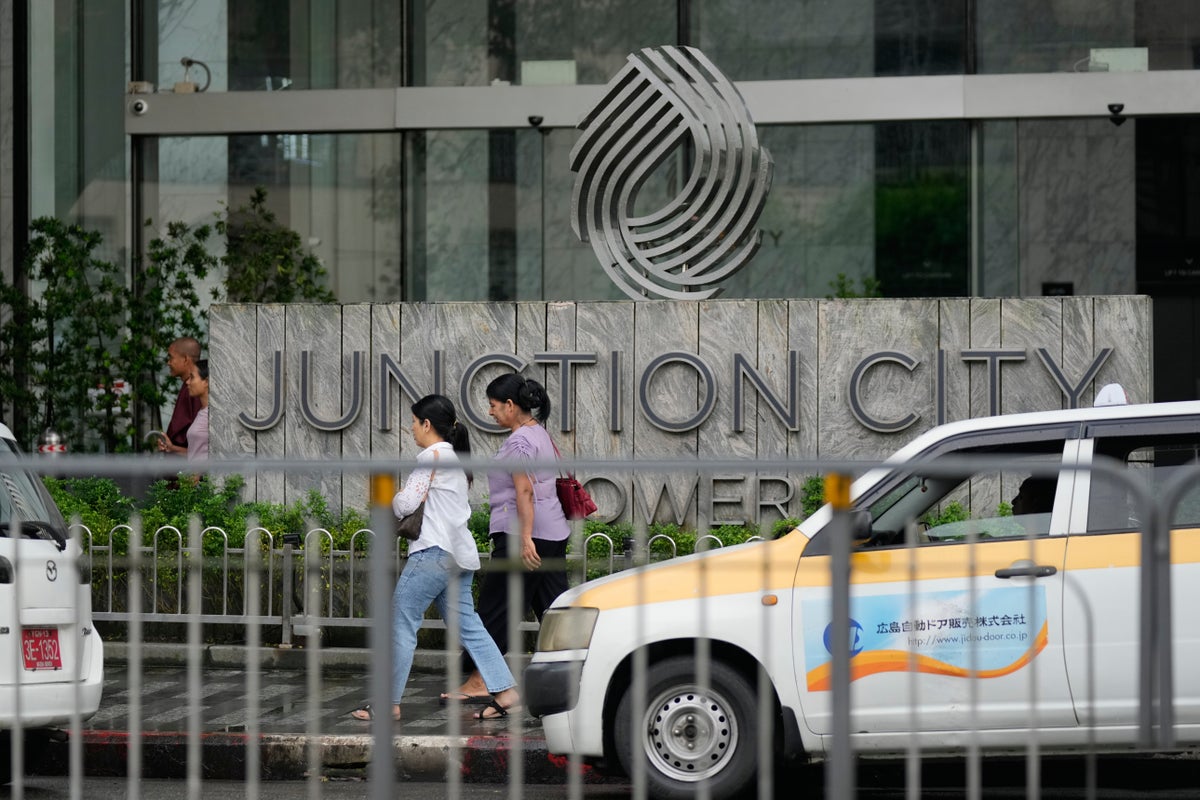
Myanmar’s military-backed government has deported Adam Castillo, a U.S. businessman, after three months in jail on charges his supporters say were trumped-up
Countries: Yemen, Belarus, Myanmar Source: Global Centre for the Responsibility to Protect Atrocity Alert is a weekly publication by the Global Centre for the Responsibility to Protect highlighting situations where populations are at risk of, or are enduring, mass atrocity crimes. THREAT OF RETURN TO LARGE-SCALE CONFLICT IN YEMEN AMID MAJOR ESCALATION Following months of heightened tensions, on 3 September the Houthis launched a widespread offensive against Saudi Arabia-backed Yemeni government forces in Taiz governorate, seeking to seize strategic areas along Yemen’s western coast. In the days since, fighting has dramatically expanded across several governorates, while the Houthis have intensified attacks on civilian and energy infrastructure in Saudi Arabia and reportedly assumed control of Yemen’s entire Red Sea coastline. According to the International Organization for Migration, over 100,000 people have been displaced in Yemen since the start of September, further compounding a crisis in which more than half of the population relies on aid and faces acute food insecurity. The past two weeks have marked one of the gravest escalations after years of reduced hostilities since the UN-brokered truce in 2022. During an emergency UN Security Council (UNSC) meeting on the situation on 10 September, Hans Grundberg, UN Special Envoy of the Secretary-General for Yemen, warned, “The question before the international community is no longer whether Yemen’s war will resume, but how to address a new and more dangerous phase – one whose consequences, if left unchecked, will not stay within Yemen’s borders.” Grundberg also stressed that the risks he outlined to the Council a month prior amid mounting tensions had now “turned into a harsh reality” and urged for Yemen not to “slip from the Council’s attention.” The latest escalation follows a deterioration in tensions since July, when an Iranian aircraft landed in Yemen – reportedly for the first time in a decade – and allegedly transported a Houthi delegation to Tehran for the funeral of Iran’s late Supreme Leader. The Yemeni government denounced the landing as a violation of national sovereignty and requested an emergency UNSC meeting to address Houthi violations of Council resolutions. On the day of the meeting, Yemeni government forces, in cooperation with Saudi Arabia, launched attacks on the Houthi-controlled Sanaa International Airport to prevent additional Iranian aircraft from landing. The Houthis subsequently launched attacks on Saudi Arabia, while fighting intensified throughout August. Dozens of casualties have since been reported, including from a Saudi strike on a prison in Yemen, a Houthi strike on an oil refinery in Saudi Arabia and clashes between the Houthis and Yemeni government forces. The international community must take decisive action to confront a return to large-scale conflict in Yemen, prevent further regional escalation and uphold civilian protection. States should support urgent diplomatic efforts to de-escalate the fighting and preserve prospects for a political process. They must also resolutely denounce attacks on civilians and civilian infrastructure by all parties to the conflict, ensure accountability for violations and scale up financial support for Yemen’s humanitarian appeal. BELARUS’ CRIMINAL JUSTICE SYSTEM WEAPONIZED AS AN “INSTRUMENT OF REPRESSION” The UN Group of Independent Experts on the Situation of Human Rights in Belarus warned on 15 September that the authorities have weaponized Belarus’ criminal justice system as an “instrument of repression” to systematically suppress dissent and fundamental freedoms and persecute perceived opponents. Karinna Moskalenko, Chair of the Group of Independent Experts, said, “Criminal justice processes are an integral part of a broader machinery of repression.” The repression extends beyond political opposition to human rights defenders, journalists and lawyers who defend people targeted by the authorities. The warning comes just days after the Minsk City Court sentenced human rights lawyer Dmitry Laevski to three years in prison on charges of “aiding extremist organization” and “discrediting” Belarus. According to Human Rights Watch and the Viasna Human Rights Center, the charges were linked to interviews Laevski gave to independent media about political trials, including those of opposition politician Viktar Babaryka and lawyer Maksim Znak, and the treatment of lawyers representing political prisoners. Laevski gave the interviews before the outlets were designated “extremist,” and prosecutors did not present evidence that his statements were false. He had previously represented Ales Bialiatski, the prominent human rights defender and 2022 Nobel Peace Prize co-laureate. Laevski’s imprisonment is part of a broader crackdown on the legal community in Belarus. Human Rights Watch says at least six other lawyers remain behind bars and dozens have lost their licenses on politically motivated grounds. The case illustrates the UN expert’s warning that Belarus’ “machinery of repression” remains operational not only against political opponents, but against those who defend them. Although Belarus has released dozens of political prisoners following negotiations with the United States (US) and recently pushed for the lifting of remaining US sanctions, the releases do not demonstrate broader human rights improvements and should not mask the staggering scale of ongoing repression. Bialiatski was among those released in December and expelled to Lithuania. Echoing documented patterns of transnational repression , his release did not end the persecution. In August he was placed on the Commonwealth of Independent States’ interstate wanted list at the request of Belarus’ Ministry of Internal Affairs. More than 5,000 Belarusians, including human rights defenders, journalists and activists, have reportedly been placed on this list. The Belarusian government must immediately and unconditionally release all political prisoners, halt politically motivated prosecutions and guarantee that civil society can carry out its work without fear of reprisal. The international community must maintain scrutiny of the human rights situation in Belarus and take all appropriate measures to advance accountability and protect victims. Any diplomatic concessions and sanctions relief should be tied to measurable structural changes, including an end to politically motivated prosecutions, legislative reforms and meaningful accountability for possible crimes against humanity and serious human rights violations. MYANMAR’S MILITARY SEEKS LEGITIMACY WHILE COMMITTING ATROCITIES AGAINST CIVILIANS While addressing the UN Human Rights Council on 7 September, High Commissioner Volker Türk deplored the deepening crisis across Myanmar (Burma) , noting that credible sources verified more than 1,200 civilian killings from 1 June 2025 to 31 May 2026, with airstrikes remaining the primary cause of deaths. Open sources indicate the true figure may exceed 3,000 civilian deaths. In July and August alone, local monitors documented 27 airstrikes across Rakhine and Chin states that killed 53 civilians and injured 163 others. According to High Commissioner Türk, forced conscription has also become a key tactic for the military “to sustain its advances on the battlefield, control the population, and spread fear.” High Commissioner Türk also emphasized, “The catastrophic situation of the Rohingya is a wound that affects the entire country.” Last month marked nine years since the military’s genocide of the Rohingya in Rakhine State. Today, Rohingya remaining in Rakhine face widespread and systematic abuses by both the military and the Arakan Army, including killings, arbitrary detention, torture, sexual violence, forced recruitment and forced labor. The UN Independent Investigative Mechanism for Myanmar (IIMM) reported that more than 154,000 Rohingya have fled to Bangladesh since early 2024, joining nearly one million refugees who still cannot safely return home. Despite this deteriorating crisis, the military continues efforts to secure international legitimacy. The junta’s sham elections excluded opposition candidates, displaced civilian populations, while voting took place in only 263 of 330 townships. High Commissioner Türk described the elections as an attempt to gain international recognition and warned that normalizing relations without changes in the military’s conduct would fuel further violence against civilians. Meanwhile, on 8 September the UN General Assembly appointed the new Credentials Committee, a nine-member body of member states responsible for examining the credentials of representatives to the UN. Five days later, the military-backed authorities announced that they had revoked the status of Myanmar’s Ambassador Kyaw Moe Tun. For five years, the General Assembly has deferred competing credentials claims, allowing Ambassador Kyaw Moe Tun, appointed by the democratically elected government before the 2021 coup, to continue representing Myanmar. The Credentials Committee and General Assembly should reject any attempt to transfer Myanmar’s UN representation to the military-backed authorities and ensure Ambassador Kyaw Moe Tun remains in place. Member states should also avoid actions that confer legitimacy on the military and halt transfers of arms, aviation fuel and dual-use items that facilitate attacks on civilians. The international community must also support accountability for atrocities through the International Criminal Court, International Court of Justice and the IIMM and increase humanitarian assistance for Rohingya and other affected communities.
Sep 16, 2026 · byReliefWeb
Malaysia has invited Myanmar’s military ruler for a visit to the country in a bid to expedite Rohingya repatriation.
Sep 16, 2026 · byAl Jazeera
Countries: Myanmar, Bangladesh, India, Indonesia, Malaysia, Sri Lanka, Thailand Source: UN High Commissioner for Refugees Please refer to the attached Infographic. The humanitarian crisis in Myanmar remains one of the world’s most complex and protracted, marked by repeated waves of displacement and limited prospects for durable solutions. Escalating conflict and human rights violations have forced millions to flee within Myanmar and across borders. As of August 2026, 4 million people are internally displaced, and 1.63 million are refugees and asylum-seekers. The crisis has been worsened by disasters and extreme weather in recent years, including Cyclone Mocha (May 2023), Typhoon Yagi (September 2024), and a 7.7 magnitude earthquake (March 2025). With no sign of improvement, prospects for safe and voluntary returns, especially for 1.33 million Rohingya remain bleak. As humanitarian resources in host countries grow increasingly strained, thousands of Myanmar refugees are undertaking dangerous journeys in search of protection, safety, family reunification, and livelihoods. UNHCR is adopting a Route-Based Approach to improve early access to protection and solutions for refugees and asylum-seekers - ultimately reducing the need for risky onward movement. UNHCR continues to urge States across the region to strengthen coordination to save lives at sea, fully deploy rescue capacities, and ensure safe, timely disembarkation—upholding the principles of humanity, solidarity, and shared responsibility.
Sep 16, 2026 · byReliefWeb![Myanmar: Probable Flood Inundated Area in Lemyethna, Yegyi and Thabaung Ayeyarwady Region as of 13 Sep 2026 (6:15 PM Local Time) [EN/MY]](https://reliefweb.int/sites/default/files/styles/thumbnail/public/previews/c6/67/c66778f3-9305-4945-9eed-a2b1a27a867f.png)
Country: Myanmar Sources: Myanmar Information Management Unit, UN Development Programme Please refer to the attached Map.
Sep 16, 2026 · byReliefWeb
Country: Myanmar Source: Karen Human Rights Group Please refer to the attached file. This Short Update describes events occurring in Ler Muh Lah Township, Mergui-Tavoy District, in August 2026. On 4 August 2026, at 4:07 pm, the Burma Army from Bleik (Myeik) Town conducted an air strike, dropping six bombs from three aircraft into Aa--- village, T’Hpoh village tract, killing a 63-year-old woman, burning two villagers’ houses and damaging three others, and damaging villagers’ plantations. The air strike intensified villagers’ fear. Thus, following the incident, villagers who did not have bunkers dug bunkers for their safety and security. [1] On 4 August 2026, in the afternoon, at 4:07 pm, three helicopters [of the Burma Army [2] ] from Bleik (Myeik) Town came and dropped six bombs into Aa--- village, T’Hpoh village tract, [3] Ler Muh Lah Township, Mergui-Tavoy District. [Villagers believed the aircraft came from Myeik Town because there is a Burma Army airbase there. The researcher assumed the aircraft were helicopters because they had rotors above their fuselage and not at the back, and they had tails.] Bombs were dropped in three rounds. Two bombs were dropped each round. The first round of bombs exploded on a villager’s rubber plantation, located at the edge of the village. The second round of bombs exploded near a clinic, in front of a villager’s house that had containers of petrol stored inside. Fragments of the bombs hit the petrol containers and set the house on fire. Then, the fire spread to another house. Thus, in total two houses were burned, and three houses sustained damages. The third round of bombs exploded beside a river, located a bit far from the village. The second round of bombs fatally injured a villager, damaged [three] villagers’ houses, burned two villagers’ houses, and damaged villagers’ plantations, [including] betel nut, rubber, and other types of plantations. The first and third rounds of bombs did not injure any villagers. The villager who died was named Daw [4] A---, 63 years old. Her ethnicity was Bamar and her religion was Buddhist. [Before the air strike happened,] the villager went to a clinic for a medical checkup. When the villager was doing her checkup, [three] aircraft came and dropped bombs. So, she ran into a bunker [to hide]. After the first bombs were dropped, the villager thought that no more bombs would be dropped. She left, worried for her husband, who was paralysed and left at home. Thus, she came out of the bunker to check on her husband. Soon [when she arrived near the house that had stored petrol], the [second round of] air strikes happened and she sustained an injury to her left shoulder and left thigh. Then the three aircrafts dropped two more bombs nearby a river, located near the village. After the air strikes, when villagers extinguished the fire, they found that Daw A--- was dead, near the house that stored petrol [and caught fire]. Villagers brought back [the corpse of] Daw A--- to her house, and on 5 August 2026, villagers cremated the corpse. One of Daw A---’s children took over the care of their father after Daw A---’s death. A local authority, the village head of Aa--- village, said: “[We] don’t know why the aircraft came and dropped bombs near the clinic. When the bombs exploded, wind blew and burned villagers’ houses instead of the clinic. Before the air strikes, wounded PDF [People’s Defence Force] [5] soldiers from the battlefield were brought back to this clinic to receive treatment. After the soldiers had returned to their place [left the village], the air strike happened.” The villagers were terrified by the incident because it was the first time that air strikes happened in Aa--- village. Some villagers’ houses have bunkers, and some didn’t. So, villagers who didn’t have bunkers started to dug bunkers. Schools were forced to shut down [for three days] due to the air strikes [before beginning classes again in a different location for safety], and it intensified fear and wariness of parents to send their children to school. Further background reading on the situation of air strikes in Southeast Burma/Myanmar can be found in the following KHRG reports: ကဘီယူၤဟဲလံ Aircraft coming! : Impacts of air strikes on local communities and villagers’ protection strategies in Southeast Burma since the 2021 coup , November 2024. “ Mu Traw District Incident Report: Burma Army air strikes killed a four-year-old, injured 12 villagers, including two children, and caused displacement in Bu Tho Township (December 2025) ”, September 2026. “ Taw Oo District Short Update: Burma Army air strikes injured a 16-year-old girl and damaged six houses in Daw Hpah Hkoh Township (February to March 2026) ”, May 2026.
Sep 16, 2026 · byReliefWeb
Country: Myanmar Source: UN Children's Fund Please refer to the attached file. Highlights Myanmar’s humanitarian situation continued to deteriorate over the reporting period. Ongoing conflict and displacement, compounded by the fuel crisis and economic decline, continued to drive acute needs, with 16.2 million people, including 4.9 million children, requiring humanitarian assistance. Nearly 3.8 million people were internally displaced, as of June 2026. Landmine incidents, displacement and protection risks continued to escalate, while seasonal flooding and disease risks further increased vulnerabilities among affected populations. Despite escalating humanitarian needs and access constraints, UNICEF and partners reached 326,503 people with primary health care, 472,742 children with education support, 487,036 people with MHPSS services, and 315,169 people with critical WASH supplies during the first half of 2026. UNICEF appealed for US$267.2 million to address the needs of 3.3 million people in 2026. By mid-2026, the funding level stood at US$95.4 million, with a gap of US$171.7 million (64 per cent). Situation Overview & Humanitarian Needs The humanitarian situation in Myanmar continued to deteriorate with ongoing conflict, recurrent natural hazards, and economic decline in 2026. Ongoing hostilities, including airstrikes, resulted in widespread displacement and civilian casualties.1 The humanitarian situation remained acute, with 16.2 million people, including 4.9 million children, in need of humanitarian assistance.2 By the end of June 2026, nearly 3.8 million people were internally displaced3 - an increase of 154,400 newly displaced since the end of 2025 - while an additional 1.6 million people were refugees and asylum seekers in neighbouring countries. The humanitarian situation was aggravated by recurrent natural hazards and seasonal climatic shocks. Communities already affected by conflict and displacement faced acute water shortages during the dry season, while the monsoon season heightened the risk of flooding, landslides, and outbreaks of water-borne diseases. These hazards further strained limited coping capacities and exacerbated existing vulnerabilities. In the last week of June 2026, heavy rains caused flooding in five townships in Kachin State, disrupting livelihoods and access to essential services in affected communities. The spillover effects of the ongoing Middle East conflict and associated disruptions to global energy markets contributed to rising fuel prices, fuel shortages, and increased transportation costs. According to WFP market monitoring, the average food basket cost in June was estimated to be 20 per cent higher than in February 2026, with significant price increases reported in Rakhine and Magway due to transport disruption and reduced market availability.5 If these conditions persist, an estimated 3.5–5 million additional people could become food insecure, adding to the 12.4 million people already facing food insecurity nationwide. Rising poverty is compounding these pressures, with growing numbers of families adopting negative coping strategies, including reduced food consumption, child labour and early marriage. These overlapping shocks are compounding humanitarian needs and increasing vulnerabilities among vulnerable communities with limited access to markets, livelihoods, and basic services. During the first half of 2026, a total of 327 landmine and explosive ordnance (EO) incidents resulting in 487 civilian casualties were reported. Of these casualties, 113 were children (23 per cent).7 This was an increase over the second quarter of 2025, when there were 229 incidents with 357 casualties reported, of whom 33 were children (27 per cent). Access to basic health services was still critically constrained, particularly in Rakhine, Kayah, and Sagaing, where close to half of the population faces serious access challenges. Overcrowded living conditions, inadequate WASH services, and limited access to basic health care continued to elevate the risk of water‑borne and water‑related diseases. Cases of acute watery diarrhoea (AWD) and skin infections were reported in Kachin, Sagaing, Mandalay, Chin and Rakhine. Vaccination coverage remained low, with 1.5 million children under five missing basic vaccinations since 2018, resulting in increased risk of vaccine-preventable disease. Increasing displacement continued to disrupt children’s access to education, with an estimated 3.4 million children in urgent need of educational support. Conflict-affected areas, including Sagaing, Magway, Chin, Kachin, Shan, Kayah, Kayin, Tanintharyi, and Rakhine faced increasing demand for safe and continuous learning opportunities for displaced and out-of-school children. Damage to education infrastructure, inadequate WASH facilities, shortages of learning materials, and limited availability of qualified educators persisted in displacement‑affected and hard‑to‑reach areas. Funding gaps, economic pressures, and rising costs increased drop-out risks, particularly among adolescents, while over‑age and conflict‑affected children faced continued barriers to structured learning pathways and transition to formal education, due to the lack of recognized accreditation. This highlights the urgent need for expanded learning pathways, safe learning spaces, individual learning materials, and mental health and psychological support (MHPSS). Kachin state continued to face a worsening humanitarian crisis with prolonged armed conflict, widespread displacement, economic collapse, deteriorating livelihoods, and climate shocks. The intensified conflict around Bhamo and Hpakant area in early 2026 and renewed clashes in Shwegu township caused sustained displacement, with over 228,000 people displaced internally during the reporting period, including the newly displaced population from the Sagaing region. Ongoing armed clashes, intensified military operations and airstrikes severely impacted civilians in the northwest, leading to large-scale displacement and exposing children and women to heightened protection risks. Magway region was among the hardest-hit areas, with more than 100,000 people displaced across Myaing, Pakokku, Pauk and Saw townships since mid-May. Many families in the northwest region had been displaced multiple times and were sheltering in monasteries or makeshift structures, with an urgent need for shelter, non-food items, hygiene kits, lighting, and educational supplies. During the reporting period, over 1.8 million people remained internally displaced in the northwest region.
Sep 16, 2026 · byReliefWeb
Countries: India, Myanmar Source: UN High Commissioner for Refugees Please refer to the attached file.
Sep 15, 2026 · byReliefWeb
Countries: Indonesia, Myanmar Source: UN High Commissioner for Refugees Please refer to the attached Infographic.
Sep 15, 2026 · byReliefWeb
Countries: World, Bangladesh, Burkina Faso, Haiti, Madagascar, Malawi, Mali, Myanmar, Niger, Pakistan, Uganda, Zimbabwe Source: Welthungerhilfe Please refer to the attached file. SUMMARY Drought, extreme heat and erratic rainfall threaten crops, livestock, and water supplies across Southern Africa and the Sahel, while parts of East Africa face heightened risks of flooding and storms after an extended dry period. At the same time, communities in South Asia, Central America and the Caribbean are exposed to worsening water scarcity, agricultural losses, and resulting livelihood disruption. The 2026 ‘El Niño’ global climate phenomenon is already classified as ‘strong’ and is expected to intensify into a ‘very strong’ and exceptional event, with a near 100% likelihood of persisting through February 2027. El Niño is already intensifying the risk of drought, floods, and extreme heat as well as significantly altering rainfall and temperature patterns across many regions. Meanwhile, the latest World Meteorological Organization (WMO) outlook warns that, the event could become stronger than anything observed since modern monitoring began, with impacts expected to multiply and cascade across communities, economies, and supply chains. El Niño is therefore acting as a risk multiplier, amplifying the effects of existing food insecurity, displacement, conflict, and economic pressures. FEWS NET similarly highlights growing food security risks in vulnerable regions where climate shocks are already compounding impacts on fragile livelihoods and markets. The time to act is now, before these risks develop into a larger humanitarian crisis. Welthungerhilfe (WHH) and its vast network of national civil society partners are ready to work and scale on three levels: risk communication and readiness, taking anticipatory action when forecast thresholds are reached, and rapidly scaling up assistance when impacts materialize. Ready to act - and ready to scale As a civil society organization, WHH is the leading implementer of German-funded Anticipatory Action, with established operational structures, local partnerships, Action Anticipatory Plans (AAPs), and trigger models already in place across highrisk contexts. With more than 20 Anticipatory Action activations globally across slow- and rapid-onset hazards, WHH and its partners have demonstrated their ability to translate forecasts and early warnings into timely action before impacts materialize, even when the window of opportunity for action is narrow. This existing readiness provides a strong foundation to anticipate and respond to the impacts of a ‘very strong’ El Niño. While WHH and its partners are already prepared to act, the scale and severity of the anticipated impacts require us to reach more people at risk, expand support to additional high-risklocations, and scale up anticipatory and rapid response measures before impacts escalate into larger humanitarian crises. Comprehensive risk analyses, as well as established contingency plans, operational structures, and local partner networks enable WHH and its partners to act rapidly as risks and needs evolve - protecting people, livelihoods, and essential assets.
Sep 15, 2026 · byReliefWeb
Country: Myanmar Source: ODI - Humanitarian Practice Network Si Thu Htin Aung Localisation agenda dominates the aid sector. Almost everyone now wants to be associated with it. Donors promote it, international agencies build strategies around it, national organisations claim the role, and staff pursue related positions. It is both a policy agenda and a source of funding and legitimacy. This is not inherently negative. Localisation has opened important debates about power, funding, partnership and leadership; expanded recognition of local actors; and challenged international dominance. Yet has it changed how the aid system thinks and behaves at its core? In Myanmar, as elsewhere, this question is urgent. Since the Covid-19 pandemic, and especially the 2021 military coup, aid has moved through contested, insecure and politically fragmented spaces. Local organisations, community networks, ethnic service providers, faith-based groups, volunteers and informal responders have become indispensable to conflict-affected and displaced communities. In this context, localisation means more than transferring funds or listing local partners. It concerns who carries risk, makes decisions, is trusted and heard, and who might also remain invisible despite doing the hardest frontline work. Ten years after the Grand Bargain, the sector cites stronger language on equitable partnership and local leadership, alongside the symbolic 25% funding target for local and national actors. But targets do not equal transformation. The question is whether power has shifted or old hierarchies have gained new procedures. Visible, English-speaking, donor-facing organisations often benefit most because they understand the system and can become intermediaries – or bottlenecks. Smaller groups, informal networks and community responders often remain outside formal localisation processes and understanding, despite their proximity to communities and willingness to work in difficult areas. Cyclone Mocha in 2023 and the March 2025 earthquake exposed this imbalance: local civil-society networks, volunteers and community organisations mobilised first, supporting evacuations, assessments, medical care, shelter, water, food, ambulance services, and early relief where formal access was restricted, while international agencies later relied on these networks to extend assistance. Yet many still depend on pass-through funding, lack control over resources and decisions, and remain invisible to donors because of language, registration, compliance requirements, or limited access to high-level forums. Localisation can therefore reproduce the inequalities it seeks to challenge and, when delivery and danger are pushed further downward without adequate funding, safeguarding, coordination, authority, or protection, it can create the risk of ‘super-localisation’. Gatekeeping, security and donor accountability Security complicates localisation because open engagement can put local organisations and communities at risk. Yet concrete experience shows what locally led response can achieve . Since the 2021 coup, women-led and civil-society organisations embedded in communities have delivered cash assistance and protection support to underserved women, adolescent girls, people with disabilities, and other minority groups, including through organisations formed in response to new humanitarian needs like informal networks that could not meet conventional partnership requirements. In conflict-affected areas, ethnic-minority and community-based organisations have also continued providing essential services in remote communities and have built partnerships with CDMers (civil servants and other public sector workers who joined the Civil Disobedience Movement (CDM) after the February 2021 military coup). These examples show that localisation works when donors recognise trusted local access, adapt compliance and partnership arrangements, fund local capacity, include frontline actors in decisions, and share protection responsibilities and risk rather than merely transferring accountability downward. The most important shift must occur within donors and international agencies. Localisation is often framed around how local organisations should strengthen systems, meet compliance requirements, coordinate, manage risk, and become more professional. But international actors must also change. Are funding mechanisms flexible enough for frontline realities? Do reporting requirements support learning or institutional protection? Is risk shared or pushed downward? Are communities decision-makers or merely ‘beneficiaries’ and data sources? These are political and ethical questions about power, not only technical ones. A people-centred approach begins with communities rather than institutional architecture. It asks how affected people define safety, dignity, access, trust and accountability, and whether aid strengthens local agencies or uses local actors to deliver externally designed projects. Communities are political, social and moral actors with their own knowledge and decision-making. Yet donors and agencies ask local organisations to coordinate and adapt while controlling resources, timelines, indicators and definitions of success. Genuine localisation requires humility, shared authority, and perhaps less institutional visibility. The risk of super-localisation Super-localisation is not a deeper or more virtuous form of localisation. It is a risk that arises when the localisation chain becomes too fragmented and responsibility is pushed from international agencies to national intermediaries, then to small community groups and volunteers, without a corresponding transfer of funding, authority, protection and support. Myanmar’s aid history also shows how intermediary power can become institutionalised. After Cyclone Nargis in 2008, international support helped create capable national organisations fluent in donor systems , but these organisations also absorbed upward accountability, bureaucracy, competition for visibility and distance from grassroots constituencies . Similar incentives emerged when HIV/AIDS funding drew organisations and professionals towards a well-resourced, visible field. As funding shrinks, localisation can likewise become a route to resources, jobs, influence and institutional survival, encouraging organisations to compete for recognition as the most legitimate local actor. Those closest to communities may gain visibility but inherit disproportionate compliance burdens, security threats and expectations, while better connected organisations retain control as gatekeepers. In this form, super-localisation does not remove hierarchy, but relocates risk to the bottom while using the language of local leadership without changing aid’s underlying power relations. For Myanmar, this distinction matters deeply. Aid operates amid conflict, displacement, surveillance, contested authority and restrictions on civil society. Localisation cannot mean endlessly subcontracting delivery to actors closest to danger. It must strengthen community and frontline agency while ensuring that strategic decision-makers share risk and remain accountable. Donors, international agencies, national organisations and intermediaries must examine their incentives and treat affected communities as participants in how aid is imagined, designed and governed. If localisation is to mean more than institutional adaptation, it must move closer to the ground. It should focus less on who speaks the aid system’s language and more on whom communities trust as legitimate service providers; less on visibility and more on accountability; and less on shifting responsibilities downward than on honestly sharing power, risk and decisions. Only then can localisation reshape how aid relates to people. Si Thu Htin Aung is Atlantic Fellow for Health Equity in Southeast Asia, and a humanitarian, health advocate and development practitioner with a medical background.
Sep 15, 2026 · byReliefWeb![Myanmar Situation Analysis: [31/8/2026] - [6/9/2026]](https://reliefweb.int/sites/default/files/styles/thumbnail/public/previews/0c/88/0c88c4b3-bff8-5750-a9f0-1e98f63265a1.png)
Country: Myanmar Source: Data Friendly Space Please refer to the attached file. Executive Summary Myanmar faces a protracted humanitarian emergency characterized by widespread displacement, ongoing armed conflict, severe economic deterioration, and compounding natural disasters. The crisis demands sustained international attention and coordinated humanitarian response across multiple sectors. The Myanmar crisis requires sustained engagement across diplomatic, humanitarian, and development channels. Immediate priorities include scaling humanitarian assistance, protecting civilian infrastructure, and maintaining pressure for political resolution while preparing for long-term recovery and resilience-building efforts. This analysis, produced through GANNET SituationHub's AI-powered platform with human-in-the-loop verification, synthesizes data from thousands of humanitarian sources to provide actionable insights for decision-makers, field teams, and donors responding to the Myanmar crisis. The platform's real-time monitoring capabilities enable rapid identification of emerging needs and coordination gaps critical for effective humanitarian response. SituationHub: https://analysis.gannet.ai/myanmar
Sep 15, 2026 · byReliefWeb
A single mine’s disruption led to a spike in global tin prices. As AI-driven demand surges, supply now depends on opaque politics in a militia-run enclave at the Myanmar-China border.