Indonesia
226 articles · 2+ stories
Stories about Indonesia



Latest Indonesia articles


Watch: How toxic smog from wildfires is making Indonesians sick
Around 175,000 people in Indonesia have suffered from respiratory illness since August.
 Sep 23, 2026 · byBBC
Watch: How toxic smog from wildfires is making Indonesians sick
Around 175,000 people in Indonesia have suffered from respiratory illness since August.
Sep 23, 2026 · byBBC
El Nino: Climate scientists warn of "Godzilla-level" climate event
Extreme heat caused by this year’s “super El Niño” could lead to as many as 451,000 excess deaths worldwide in the six months to February 2027, according to researchers at the University of Chicago’s Climate Impact Lab. The number of extremely hot days is expected to rise by 44%, with Nigeria, Indonesia and Sudan among the countries likely to be worst affected. Researchers warn that the impact could extend well beyond the six-month period studied. Carys Garland reports.

Super El Niño could cause 451,000 excess deaths worldwide
Extreme heat linked to this year’s “super El Niño” could cause up to 451,000 excess deaths worldwide in the six months to February 2027, according to researchers at the University of Chicago’s Climate Impact Lab. The number of extremely hot days is expected to rise by 44%, with Nigeria, Indonesia and Sudan among the countries likely to be most affected. Researchers warn that the impact could extend well beyond the six-month period studied. Chloe Brimicombe, a climate scientist from the University of Oxford, shares further details about this climate phenomenon.
Green forest fire notification in Indonesia
On 09/09/2026, a forest fire started in Indonesia, until 23/09/2026.
Green forest fire notification in Indonesia
On 10/09/2026, a forest fire started in Indonesia, until 23/09/2026.
Green forest fire notification in Indonesia
On 18/09/2026, a forest fire started in Indonesia, until 23/09/2026.

SR Technics supports Garuda CFM56 maintenance
SR Technics has begun maintenance services for selected CFM56 engines operated by Garuda Indonesia, supporting the national carrier’s fleet readiness and operational requirements. The work is being carried out through SR Technics’ engine maintenance operations in Zurich and forms part of Garuda Indonesia’s broader efforts to strengthen operational reliability and the resilience of its maintenance […] The post SR Technics supports Garuda CFM56 maintenance appeared first on AviTrader Aviation News .
 Sep 23, 2026 · byAviTrader
‘Ah Girl,’ ‘The Sea Speaks His Name’ to Bookend Jakarta Film Week
Singaporean director Ang Geck Geck Priscilla’s “Ah Girl” will open the sixth Jakarta Film Week, set for Oct. 21–25, and Yosep Anggi Noen’s “The Sea Speaks His Name” (“Laut Bercerita”) will close the festival in its Indonesian premiere. The program was unveiled Sept. 23 at a press conference at CGV Grand Indonesia, where Jakarta Deputy […]
 Sep 23, 2026 · byVariety
Caritas Indonesia Hands Over Housing to Flood-Affected Residents in Central Tapanuli
Country: Indonesia Source: Caritas The Caritas Indonesia network has officially handed over permanent housing to residents affected by the flash floods and landslides that struck the Sumatra region in November 2025. The symbolic handover was conducted by the Chairman of the Indonesian Bishops’ Conference (KWI), Msgr. Antonius Subianto Bunjamin, in Lubuk Ampolu Village, Badiri District, Central Tapanuli Regency, on September 16, 2026. Caritas Indonesia handed over 100 completed houses. Additionally, the organization is currently finalizing the construction of approximately 200 more homes. This housing initiative is part of the “Gerakan Rumah Belarasa” (Compassionate Home Movement), a humanitarian initiative spearheaded by the Caritas Indonesia network. This housing assistance is also supported by the Caritas Internationalis network as part of the Emergency Appeal (EA) 23/2025 program. The Caritas Indonesia network has been actively distributing aid to residents affected by the floods in Sumatra that occurred in late November 2025. For assistance within the Diocese of Sibolga, this social outreach is supported by Caritas Diocese of Sibolga and the Capuchin JPIC (Justice, Peace, and Integrity of Creation) commission. Affected areas in North Sumatra include Sibolga City, Central Tapanuli Regency, and South Tapanuli Regency; approximately 4,900 houses in these areas sustained severe damage. Msgr. Antonius expressed his hope that these units would serve as dignified homes for the affected residents. He also hopes the housing will restore hope to those who lost their homes. “This housing assistance is a tangible expression of the Church’s solidarity and love, present amidst the community’s grief without discrimination,” said Msgr. Antonius. The Caritas Indonesia network remains committed to accompanying the residents, ensuring that the provision of housing is accompanied by the restoration of access to sanitation and healthcare, as well as the strengthening of community capacity. Mgr. Aloysius Sudarso SCJ, Member of the Trustee Board of the Karina KWI Foundation (Caritas Indonesia), expressed hope that the newly handed-over housing would foster community resilience, enabling residents to better withstand future disaster threats. “Gerakan Rumah Belarasa” (Compassionate Housing Movement) initiative is a symbol of compassion and true brotherhood. The spirit of *gotong royong* – mutual cooperation – among the humanitarian network, local government, and the local community was the key factor that made the successful construction of these homes possible,” he said. Meanwhile, the Bishop of Sibolga, Mgr. Fransiskus Tuaman Sasfo Sinaga, stated that the provision of these homes marks a fresh start for the recovery of the affected residents’ lives. “We express our deep gratitude and thanks for the care shown by the entire Caritas network and our benefactors, which has made it possible to provide dignified housing for those affected by the floods,” said Mgr. Fransiskus. Caritas Indonesia Executive Director Father Fredy Rante Taruk explained that the housing construction program aims to restore the lives of residents who lost their homes, ensuring they have access to safe and dignified living quarters. He added that from the emergency response period through to the recovery phase, Caritas Indonesia has served as the coordinator and facilitator of humanitarian efforts on the ground. “We continue to oversee this housing construction to ensure it reaches the intended beneficiaries, meets quality standards, and addresses the actual needs of the affected community,” he said. Through this ongoing synergy, Caritas Indonesia reaffirms its commitment not only to providing physical aid but also to restoring the dignity, hope, and self-reliance of communities affected by flooding in Sumatera. The Caritas Indonesia network, together with the Diocese of Sibolga, will continue to collaborate with local government authorities to oversee the recovery process until all planned housing units are completed. Caritas Indonesia and the Diocese of Sibolga are supporting communities across Sibolga, Central Tapanuli and South Tapanuli, combining emergency relief with long-term recovery. Assistance provided so far includes: More than 100 permanent homes completed, with approximately 200 more under construction, alongside repairs and structural improvements to existing homes. 20 clean water systems serving nearly 10,000 people and eight sanitation facilities benefiting over 2,300 people. Health services and hygiene promotion reaching 1,137 people, and psychosocial support for 449 children. Distribution of 1,231 food packages, 1,000 family kitchen sets, 500 shelter kits and 498 hygiene kits. Together with local communities and authorities, Caritas continues to help families rebuild their lives, regain their independence and strengthen their resilience to future disasters. Article by Caritas Indonesia. The post Caritas Indonesia Hands Over Housing to Flood-Affected Residents in Central Tapanuli appeared first on Caritas .
 Sep 23, 2026 · byReliefWeb
More than 170,000 respiratory cases recorded in haze-choked Indonesia
More than 40,000 of the cases – which range from mild coughs to pneumonia – involve toddlers.
Sep 23, 2026 · byBBC
Huge El Niño projected to cause 450,000 deaths in next six months
New report predicts a heavy toll from Nigeria to the US – and comes on top of existing impacts of the climate crisis More than 450,000 people are projected to die from the additional heat brought by the super El Niño in the next six months, according to estimates by climate scientists. The toll is on top of the early deaths resulting from temperatures already driven up by the climate crisis. It will strike across the globe, from Indonesia to India, and Nigeria to the US. Many further deaths are expected from the droughts, wildfires and flooding that El Niños bring. Continue reading...
 Sep 23, 2026 · byThe Guardian
Green forest fire notification in Indonesia
On 14/09/2026, a forest fire started in Indonesia, until 22/09/2026.
Green forest fire notification in Indonesia
On 14/09/2026, a forest fire started in Indonesia, until 22/09/2026.
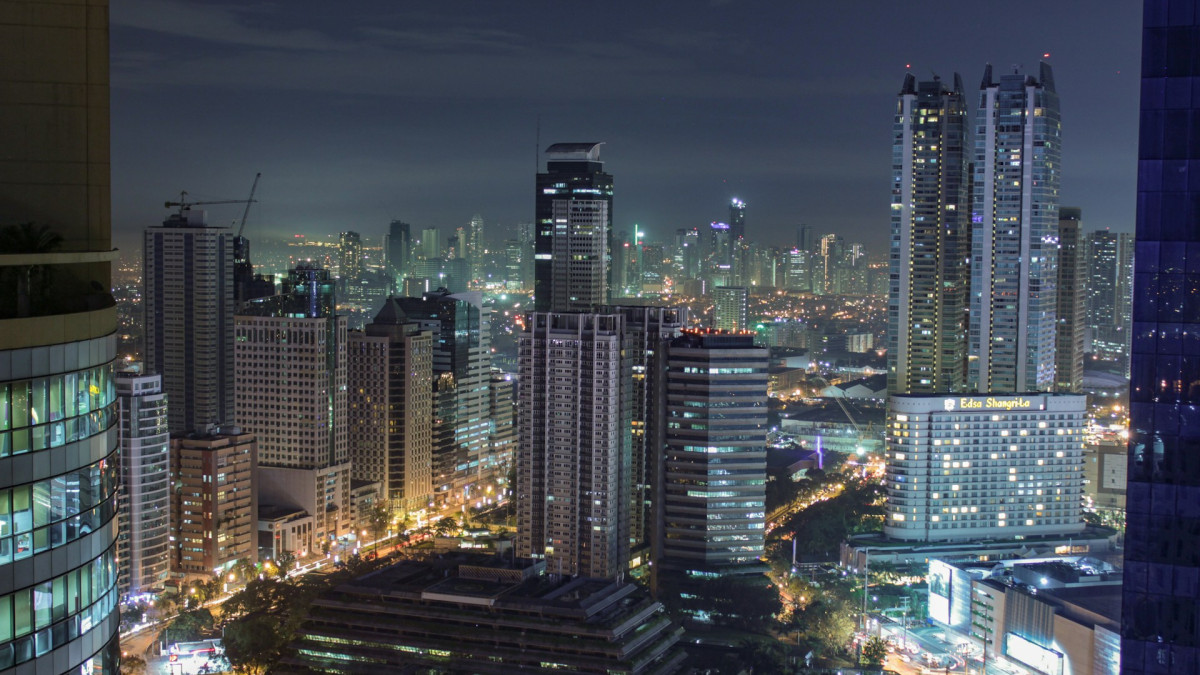
Global Energy Demand Set to Jump 60% by 2060 as Developing Nations Power Up
Emerging economies are going to see an explosion of energy demand over the coming decades. Countries like Brazil, India, Nigeria, and Indonesia are racing to expand their energy production and imports in order to keep up with rapid economic development. While the leaders of these and other emerging economies are making a concerted effort to expand their renewable energy capacity, meeting demand will require an all-of-the-above approach to energy that will extend the life of oil and gas, according to a new report from S&P Global. According to…
Green forest fire notification in Indonesia
On 10/09/2026, a forest fire started in Indonesia, until 22/09/2026.

Respiratory problems climb past 170,000 cases in haze-hit Indonesia
More than 170,000 respiratory cases were recorded in regions affected by haze in Indonesia, a Health Ministry official said Tuesday, as the country has battled for weeks to control fires that caused the toxic smog.

Joint Statement by Ministers of Foreign Affairs of UAE, KSA, Qatar, Jordan, Indonesia, Pakistan, Türkiye, Egypt
New York - The Ministers of Foreign Affairs of the Arab Republic of Egypt, the State of Qatar, the Hashemite Kingdom of Jordan, the United Arab Emirates, the Republic of Indonesia, the Islamic Republic of Pakistan, the Republic of Türkiye, and the Kingdom of Saudi Arabia met in New York on September 21, 2026, on the margins of the 81st Session of the United Nations General Assembly. The Ministers express deep concern over the continued humanitarian suffering in Gaza and call upon Israel to immediately fulfil its outstanding commitments under the First Phase of the Comprehensive Plan, including by ensuring the immediate, safe and unhindered delivery of humanitarian assistance and Early Recovery supplies, and facilitating the rehabilitation of critical infrastructure. They stress the imperative of preserving the ceasefire and ending all violations. The Ministers stress that the Road Map constitutes an integral part of the Comprehensive Plan and provides the implementation framework for advancing its Second Phase, including decommissioning alongside full Israeli withdrawal, the deployment of the International Stabilization Force (ISF), the assumption by the National Committee for the Administration of Gaza (NCAG) of its responsibilities throughout the Gaza Strip, and the launch of early recovery and reconstruction across Gaza. They call on all parties to fulfil their respective commitments in good faith and without delay. The Ministers reiterate their categorical rejection of any measures aimed at the expulsion or the forced displacement of the Palestinian people from their homeland or attempts to alter the territorial or demographic character of the Occupied Palestinian Territory. They deplore in this context the illegal measures aimed at consolidating Israeli control and annexation, including the accelerating settlement expansion, land confiscation, demolition of Palestinian homes, settler violence and terrorism, and forced displacement, and called for their immediate reversal. They express grave concern over measures undermining the historical and legal Status Quo of the Muslim and Christian holy sites in Jerusalem. The Ministers welcome the recent measures taken by the United Kingdom, as well as broader national and European efforts, in response to illegal Israeli settlement activity, including measures to halt trade with illegal Israeli settlements and call for further effective measures to end settlement expansion and ensure accountability for settler violence. They also emphasise that Gaza must remain an integral part of the Palestinian territory and reaffirm that the implementation of the Comprehensive Plan must contribute to the reunification of the West Bank, including East Jerusalem, and the Gaza Strip, and to a credible and irreversible pathway towards the exercise of the Palestinian people's right to self-determination and the realization of a sovereign, viable, and independent Palestinian State with East Jerusalem as its capital, through the implementation of the two-State solution. The Ministers commend the leadership of President Donald J. Trump and underscore the indispensable role of the United States in ensuring the implementation of the Comprehensive Plan. They call for sustained and active US engagement to ensure that all parties, including Israel, fulfil their commitments and obligations and to overcome obstacles to the implementation of the Road Map. They stress that tangible progress on the ground will strengthen the credibility of the Board of Peace and the authority of the plan and create deeply needed momentum. The Ministers reaffirm their readiness to continue working collectively with the United States, the Board of Peace, the Palestinian Authority and all relevant parties to advance the full implementation of the Comprehensive Plan and its Road Map, alleviate the suffering of the Palestinian people, fulfil their right to self-determination and independent statehood and achieve just, lasting and comprehensive peace in the region.
Green forest fire notification in Indonesia
On 08/09/2026, a forest fire started in Indonesia, until 22/09/2026.

El Niño weather pattern enters record territory: Scientist
The strengthening El Niño weather pattern has tied for the most intense on record on a widely used metric, a senior scientist told AFP on Monday, even as its influence is already being felt from Central America to Indonesia.
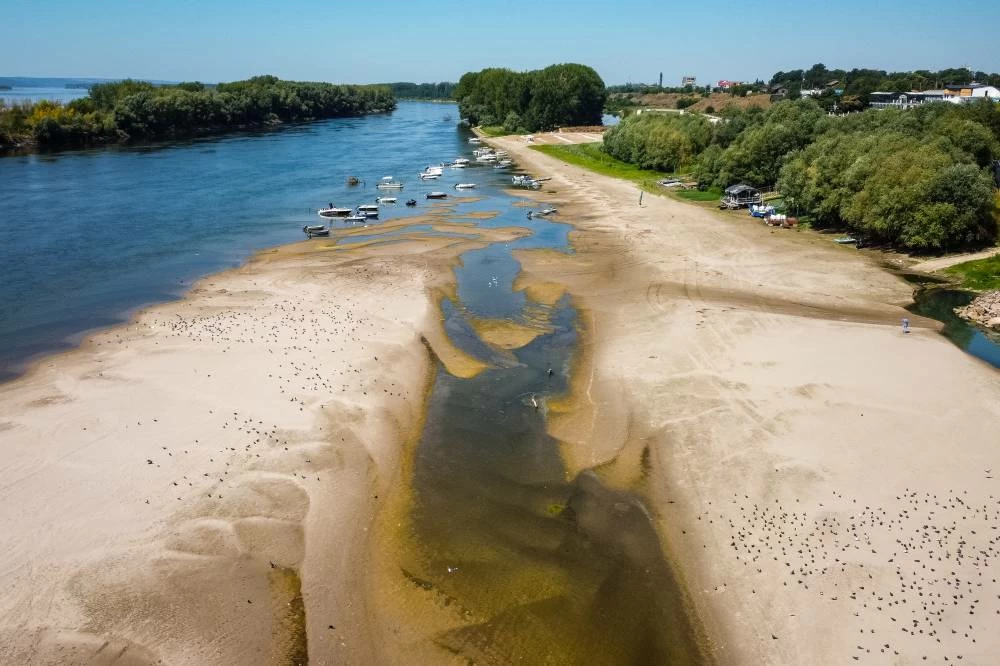
El Nino threatens Asia with drought, higher global food prices
BANTEN, Indonesia : All signs are pointing toward a record-breaking El Nino this year, which experts say may cause severe drought in Asia and other extreme weather across the world, threatening food security for millions of people. El Nino is part of a natural climate cycle of warming ocean temperatures, but this year’s is expected to reach new extremes of drought, heat waves, flooding and other climate-related disruptions in South America, Africa and Asia. Southeast Asia is one of the world's most climate vulnerable regions. It's already beset by an energy crisis triggered by the war in Iran. El Nino is already fueling wildfires across farmland, depleting water supplies for major cities and hurting fish catches in the region. Asian governments that have been drawing on their financial reserves to mitigate the war's ripple effects of higher energy costs and scarce fertilizer supplies have less capacity to cope with this year's intensifying El Nino, which is forecast to peak in December. The phenomenon may amplify other crises in Southeast Asia, according to Paul Teng, with Singapore’s ISEAS-Yusof Ishak Institute, who said, "El Nino is only compounding all the other problems that we see.” During El Nino years, sea surface temperatures in the Pacific Ocean are warmer than usual. This happens every few years and often alters global weather patterns. This year, the seas already are hotter than average, with global oceans hitting new temperature records in August as the climate warms, said Kareff Rafisura, chief of the Disaster Risk Reduction Division at the U.N. Economic and Social Commission for Asia and the Pacific. This intensifying El Nino may be the "strongest in living memory,” according to the United Kingdom’s national weather and climate service. Similarly, the U.S.' National Oceanic and Atmospheric Administration said there is a 69% chance that this will be the strongest recorded El Nino since record-keeping began in 1950. El Nino's impact will be felt differently across regions, but it is expected to jeopardize food security worldwide. It could push at least 49 million more people into acute food insecurity by the end of 2027, according to the United Nations’ World Food Program. The problem will be worst in parts of Central America and southern Africa, with significant effects also anticipated in eastern Africa and South and Southeast Asia, warned the food agency. In Southeast Asia, wildfires are torching forests and peatlands in Indonesia, sending up plumes of toxic haze. The water level of a major reservoir supplying the bustling capital city of Jakarta - the world's biggest metropolis - is dropping inch by inch. As the lake dries, the ruins of one of 11 villages that had been inundated by the reservoir have emerged, as alarm grows over the need for alternative water supplies for the city of 42 million. "I would have rather not moved. There were plenty of livelihood opportunities here,” said Hussen, who only uses one name, as he ferried people across the receding reservoir. This is just the beginning, said Erma Yulihastin with Indonesia's Research Center for Climate and Atmosphere, who warned El Nino has only just begun its "super phase.” Less rainfall and hotter temperatures are putting pressure on Southeast Asia's fisheries, an essential source of protein. It's a pressing problem along the Mekong, a river basin that flows through six nations and is being disrupted by mining and construction of hydropower dams. "It’s one punch after another,” said Zeb Hogan, with the University of Nevada, Reno, who runs the research and conservation project, Wonders of the Mekong. "If the river doesn’t catch a break, we will reach a point where it’s no longer going to sustain people in the way that it always has.” Lower flows are especially hard on communities along the Mekong that depend on predictable water levels for fishing and farming, said Kongmeng Ly, with the Mekong River Commission, an intergovernmental group for Cambodia, Laos, Thailand and Vietnam. Southeast Asia's wet season generally runs from June to October, when rains usually replenish reservoirs, cool overheated cities and supply water for irrigation ahead of the next planting season. Drought may force farmers to delay planting, reduce acreage or switch crops entirely, said Rafisura, with the U.N. "Agriculture is definitely on the front line,” she said. Cutbacks in staple crops like rice and palm oil can have global impacts. The world's top three exporters of rice - India, Vietnam and Thailand - are among the nations most likely to be hit hard by El Nino this year. North of the Thai capital Bangkok, rice farmers like 55-year-old Boonmark Marksuuk are already facing tough choices. Apart from pricier fuel and fertilizer because of the war, he's spending most of his days pumping water into his rice fields because he no longer trusts the rain. El Nino is also bearing down on Indonesia and Malaysia, suppliers of about 85% of the world’s palm oil, which is used in everything from cookies and lipstick to toothpaste and laundry detergent. Malaysia’s prime minister has ordered its Ministry of Agriculture and Food Security to find ways to mitigate El Nino’s impact, which is forecast to hit Malaysia hardest in November. In Indonesia, farmers rely on rain to dissolve fertilizers into the soil to avoid burning the plants, explained Eddy Martono, chairman of the Indonesian Palm Oil Association. "If it doesn’t rain, everyone will definitely stop fertilizing,” which will hurt national production, he said. While the total economic fallout of an extreme El Nino is hard to calculate, losses from past events have reached trillions of dollars, according to HSBC’s Global Investment Research, which warns the numbers could be even bigger this time. Analysts at the investment bank Goldman Sachs estimate this El Nino could push global food commodity prices up more than 15%. "Whatever happens to agriculture really determines whether people stay below or just slightly above the poverty line,” Rafisura said. "Coming back to Southeast Asia, whatever happens here, the extent to which countries can protect production levels, will have global impacts.”
Green forest fire notification in Indonesia
On 09/09/2026, a forest fire started in Indonesia, until 21/09/2026.

Psychosocial Impacts of Prolonged Uncertainty on the Mental Well-being, Resilience, and Community Engagement of Afghan Refugee Youth in Indonesia
Countries: Indonesia, Afghanistan Source: Asia Pacific Refugee Rights Network Please refer to the attached file. EXECUTIVE SUMMARY Protracted displacement remains one of the most pressing humanitarian challenges facing refugees in Indonesia. As a non-signatory to the 1951 Refugee Convention, Indonesia provides temporary protection but no pathway to permanent legal status, leaving refugees in prolonged uncertainty with restricted access to rights and limited prospects for durable solutions. For many Afghan refugee youth, this uncertainty has persisted for over a decade, profoundly shaping their mental well-being, resilience, and ability to participate meaningfully in society. This qualitative study, conducted by Emplace Initiative with support from the Mixed Migration Centre (MMC) and the Danish Refugee Council (DRC), draws on in-depth interviews and focus group discussions with 25 participants, including Afghan refugee youth, refugee leaders, Indonesian stakeholders, and psychosocial practitioners, to examine the psychosocial impacts of prolonged displacement in Indonesia. THE FINDINGS demonstrate that prolonged uncertainty itself has become a major source of psychological harm. Participants consistently described living in a state of indefinite limbo, characterised by the inability to work legally, limited access to higher education, prolonged family separation, financial dependency, and the absence of a foreseeable future. Limbo is a daily struggle against stagnation. Rather than recovering from a single traumatic event, refugee youth experience continuous and cumulative stress resulting from years of legal insecurity and social exclusion. These directly erode well-being, manifesting in persistent anxiety, chronic sleep issues, and a pervasive emotional numbness. Feelings of hopelessness, emotional exhaustion, anxiety, and depression were recurrent throughout the research. Youth experience a tense duality in which independent milestones (higher education, careers) are suspended, yet adult responsibilities within families and communities accelerate. The structural absence of formal academic recognition, a transparent resettlement process, or clear futures heavily fractures the motivation to learn. Planning and engaging often feel pointless, leading to severe demotivation and heightened household or community tensions. The responsibilities at home also prevented some youth from participating in community activities. The study further reveals that refugee mental well-being deteriorates significantly during major humanitarian and geopolitical crises related to them. Events such as the Taliban's return to power in Afghanistan, the COVID-19 pandemic, the Iran vs Israel and the US conflict, reductions in humanitarian assistance, and growing uncertainty surrounding resettlement pathways repeatedly intensified psychological distress by reopening unresolved trauma and increasing concerns for family members remaining in Afghanistan, Pakistan, Iran, and other diaspora locations. Participants reported that these crises compounded existing vulnerabilities and, in some cases, contributed to severe mental health conditions, self-harm, and suicide within the refugee community. Beyond legal and economic insecurity, the research highlights the psychosocial impact of social and religious marginalization. While existing literature notes that Shia Hazaras often navigate public ignorance and sectarian stereotypes regarding their faith in Sunni-majority Indonesia, which frequently compels them to avoid public worship, informants in this study primarily highlighted marginalization driven by their status as refugees and foreigners. Their accounts note experiences of being degraded or patronized as “vulnerable” or “lesser” by non-refugees who were aware of their status. Additionally, because of their physical appearance, participants are often mistaken for foreign tourists among those unaware of their refugee status and condition, leading local vendors to charge them inflated prices, severely compound their existing financial limitations and reinforce their sense of alterity. Despite these significant challenges, the research also documents remarkable resilience among Afghan refugee youth. Participants identified education, volunteering, peer support, sports, faith, and engagement with refugee-led organizations (RLOs) or other civil society organizations as critical sources of hope, purpose, and psychological strength. Crucially, youth relied on high-volume daily activities such as teaching, managing RLOs, athletic training, creative outlets, workshops, and reading to construct a rigorous “secondary routine” . This self-imposed structure serves as a vital psychological anchor: it provides predictability in times of uncertainty, deliberately keeping their minds preoccupied to distract from looming anxieties about their future. Beyond distraction, well-being was sustained by a shared growth mindset and strong, aligned support systems. Informants actively engaged in continuous skill-building, such as mastering English and taking on community leadership, using these pursuits as a process of active meaning-making. By framing daily efforts as investments in their personal development, they restored a sense of agency, individual value, and purpose. Surrounding themselves with peers who shared this growth-oriented outlook created a protective community buffer. Operating within these networks, RLOs have emerged as trusted actors offering tailored psychosocial support, informal education, and leadership development, compensating for gaps in formal humanitarian assistance despite severe resource constraints. However, while grassroots programs and personal motivation successfully convert forced inactivity into periods of strategic skill-building, they exist within a fragile ecosystem. Community programming alone cannot resolve the root trauma of prolonged displacement, nor can individual resilience compensate for structural exclusion. While refugee-led initiatives strengthen coping capacities and social cohesion, they cannot substitute for formal legal recognition, basic rights, or long-term mobility. Sustainable well-being requires systemic policy reforms that restore dignity and enable refugees to rebuild their lives through expanded access to education, livelihoods, healthcare, legal protections, and long-term solutions, including resettlement and complementary pathways. Achieving this demands concrete commitment and coordination across all key stakeholders, including UNHCR, IOM, international donors, humanitarian organizations, the Indonesian government, local civil society, RLOs, community leaders, and refugee youth themselves. Ultimately, addressing psychosocial health requires dismantling the structural conditions of limbo that perpetuate harm. Ultimately, improving psychosocial well-being requires addressing not only individual mental health needs but also the structural conditions of prolonged displacement that continue to shape refugees' lives.
Sep 22, 2026 · byReliefWeb