Fact check: Could Trump replace Canada's potash with Belarus?
Donald Trumpneutral
44 articles

Canada produces more potash than any other country in the world, all from 10 active mines in Saskatchewan. U.S. President Donald Trump says he's working on a deal to buy potash from Belarus instead. But could Belarus replace our supply? Here are the facts.

"Even if we wanted to supply [potash] to other, Western markets, we simply do not have those volumes," said the Belarusian president.
Belarus says this year's potash output is already contracted as Trump seeks a cheaper supply deal with the US.
Trump’s announcement on Russia ally comes as he steps up his trade war with Canada, a long-term US ally and top supplier of potash President Donald Trump has said he is working on a “massive” deal to buy fertiliser from Belarus, pivoting away from main supplier Canada amid an escalating trade dispute, and moving instead toward an ally of Russia. “The United States is working on a massive deal with respect to the purchase of Potash from Belarus,” Trump said on his Truth Social network. “The pricing would be for substantially less than we are currently paying to Canada, very good news for our farmers and ranchers.” Continue reading...
 Sep 22, 2026 · byThe Guardian
The proposed potash purchases would expand trade with a country that helped Moscow launch its invasion of Ukraine.

Belarus’s authoritarian leader Alexander Lukashenko said Monday that there are no available volumes of fertilizer to send to the U.S. This came after President Trump announced that he was working on a “massive Deal” to buy potash from Minsk at a steep discount amid the trade war with Canada. “Even if we wanted to supply…
 Sep 21, 2026 · byThe Hill
U.S. President Donald Trump said on Monday that Washington is working on a deal to purchase potash from Belarus for less than what the U.S. currently pays to Canada.

A network targeting workers in Africa, Asia and Belarus relies on Western tech and platforms to recruit people for Russia's war effort, according to a new investigation.
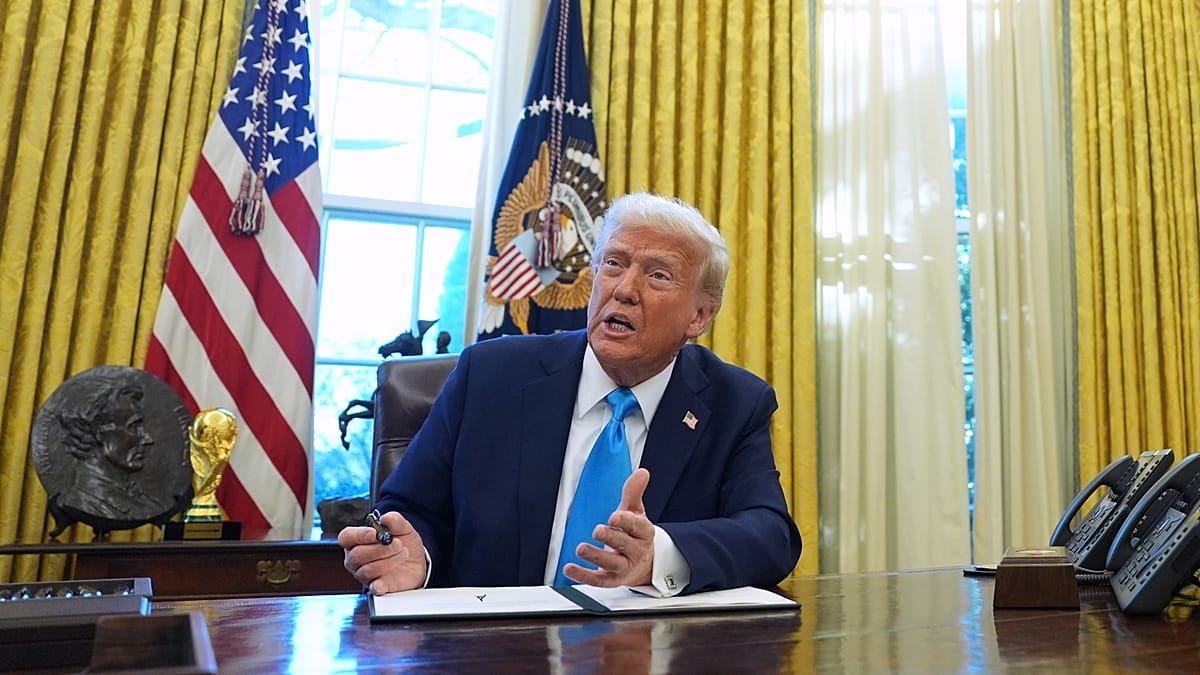
The US president says fertilizer from Lukashenko's Russia-allied regime will cost far less than Canadian supplies, the latest sign of Washington's warming relationship with Minsk.
 Sep 21, 2026 · byEuronews
The US's pivot to Belarus for potash could reshape global trade dynamics, challenging Canada's dominance and altering geopolitical alliances. The post Trump says US seeks potash supplies from Belarus amid Canada trade fight appeared first on Crypto Briefing .
 Sep 21, 2026 · byCryptoBriefing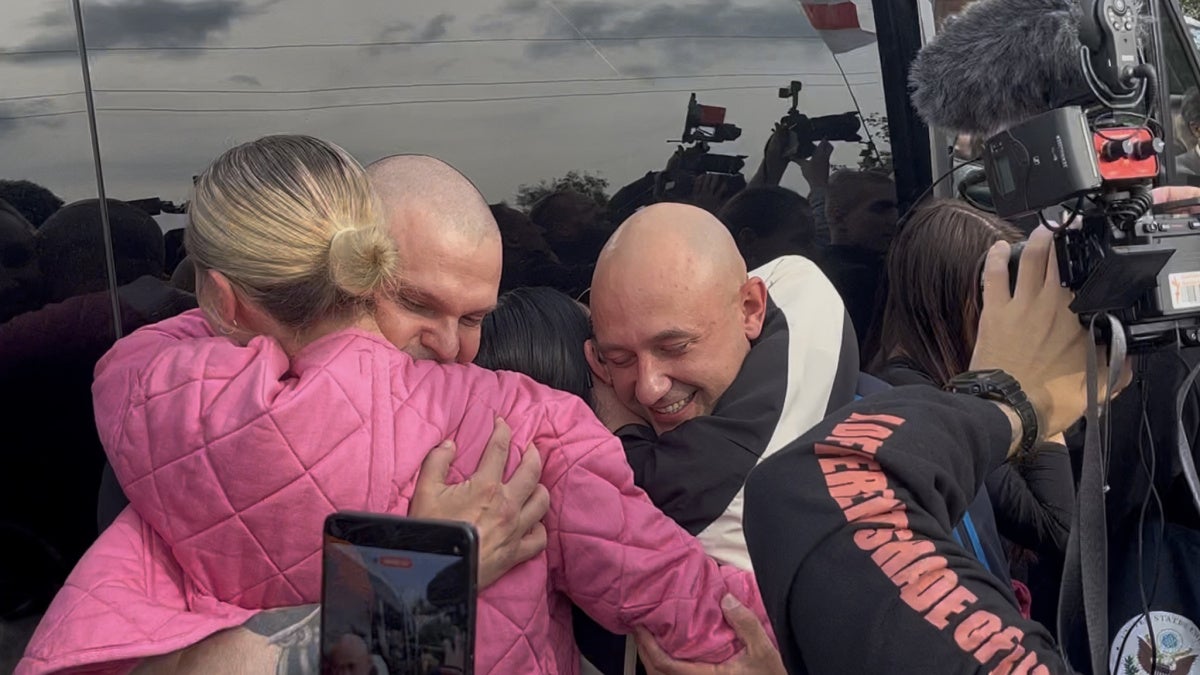
Click to expand Image TOR BAND musicians, former political prisoners, embrace their loved ones after arriving in Vilnius on September 16, 2026. © 2026 Human Rights Watch This week 25 former political prisoners arrived in Vilnius, Lithuania having been released from detention in Belarus. Their release was negotiated by the United States special envoy to Belarus John Coale with president Aliaksander Lukashenka. In exchange, the US lifted sanctions on two Belarusian companies. Among those released are journalist Andrei Aleksandrau and activist Iryna Zlobina, who married while in detention; lawyer Anastasiya Lazarenka, prosecuted for organizing legal consultations, among other charges; activist Alena Lazarchyk, a single parent whose communication with her child was limited by the prison management; and Sviatlana Yakubovich, a volunteer at Viasna, one of the leading human rights groups in Belarus. Most of them had been sentenced to harsh sentences of up to 14 years. Click to expand Image Former political prisoner Alena Lazarchyk after being brought to Vilnius from Belarus, September 16, 2026. © 2026 Human Rights Watch After her arrival in Vilnius, Lazarchyk told those gathered that she had not believed she would be freed until the very last moment. “One day, they say, ‘get your things.’ I was sure they were just transferring me somewhere, but they said I was being deported.” Belarusian authorities regularly impose forced expulsion as a mandatory condition for some political prisoners’ release, a practice which violates international human rights law, as United Nations experts have underscored. Since summer 2025, hundreds of political prisoners have been taken outside Belarus following their release from detention. Some have been deported without passports while others have reported that their passports were canceled following their expulsion from Belarus. While the release of these 25 prisoners is something to celebrate, at least 886 prisoners remain in jail in Belarus on politically motivated grounds. Every month, dozens more are detained and handed heavy prison sentences. According to Coale, the negotiations will continue and more political prisoners will be released soon. However Belarus' president persists with the false narrative that there are no political prisoners in Belarus. These prisoners aren’t gaming pieces to be exchanged for political favors. Governments need to increase the pressure on Belarusian authorities to end its ruthless, politically motivated crackdowns and to secure the freedom of the hundreds of political prisoners who continue to languish in jail, without exile from their home being the price they must pay.
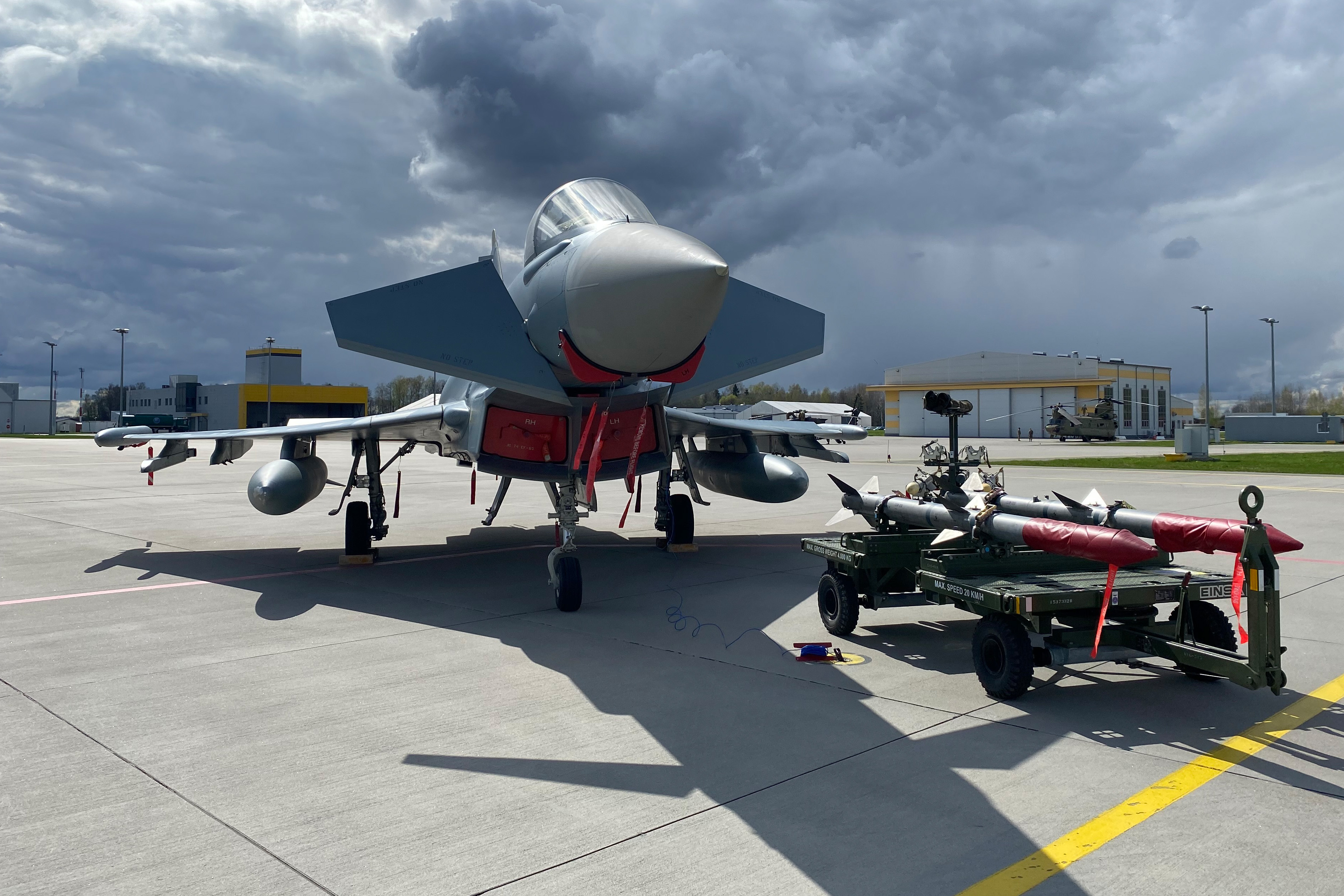
Germany will send four Eurofighter jets to defend Latvian airspace during upcoming elections, amid concerns over drone incursions from Russia and Belarus.

Countries: Latvia, Afghanistan, Russian Federation, Somalia, Syrian Arab Republic, Tajikistan, Ukraine, World Source: UN High Commissioner for Refugees Please refer to the attached file. Refugees from Ukraine: Latvia hosts about 32,000 refugees from Ukraine under Temporary Protection which constitutes almost 1 per cent of the population. EU’s external borders: UNHCR continues to collaborate with state authorities to improve access to asylum for those irregularly ariving in the southeastern regions bordering Belarus. Education: UNHCR advocates for the inclusion of refugee children from Ukraine into the national education system. HIGHLIGHTS Socio-economic inclusion of Ukrainians The 2025 statistics show a growing socio-economic inclusion of Ukrainian refugees: participation in the national labor force, as well as the average renumeration continues to increase: 10,401 Ukrainians were employed by December 2025, compared to 9,600 in December 2024. Access to asylum at the Latvia-Belarus border In 2025, according to the State Border Guard, over 12,000 attempts to cross the border were prevented at the LatviaBelarus border. This is the second highest total number of attempts recorded since 2021 (the highest number recorded so far was in 2023 with 13,836 attempts). By contrast, the number of persons admitted on humanitarian grounds at Latvia’s border with Belarus is among the lowest: 31 in 2025 and 26 in 2024 in comparison to 428 in 2023.
 Sep 17, 2026 · byReliefWeb
The Trump administration said more releases would be secured soon amid improved US-Belarus relations.
 Sep 16, 2026 · byAl Jazeera
Countries: Yemen, Belarus, Myanmar Source: Global Centre for the Responsibility to Protect Atrocity Alert is a weekly publication by the Global Centre for the Responsibility to Protect highlighting situations where populations are at risk of, or are enduring, mass atrocity crimes. THREAT OF RETURN TO LARGE-SCALE CONFLICT IN YEMEN AMID MAJOR ESCALATION Following months of heightened tensions, on 3 September the Houthis launched a widespread offensive against Saudi Arabia-backed Yemeni government forces in Taiz governorate, seeking to seize strategic areas along Yemen’s western coast. In the days since, fighting has dramatically expanded across several governorates, while the Houthis have intensified attacks on civilian and energy infrastructure in Saudi Arabia and reportedly assumed control of Yemen’s entire Red Sea coastline. According to the International Organization for Migration, over 100,000 people have been displaced in Yemen since the start of September, further compounding a crisis in which more than half of the population relies on aid and faces acute food insecurity. The past two weeks have marked one of the gravest escalations after years of reduced hostilities since the UN-brokered truce in 2022. During an emergency UN Security Council (UNSC) meeting on the situation on 10 September, Hans Grundberg, UN Special Envoy of the Secretary-General for Yemen, warned, “The question before the international community is no longer whether Yemen’s war will resume, but how to address a new and more dangerous phase – one whose consequences, if left unchecked, will not stay within Yemen’s borders.” Grundberg also stressed that the risks he outlined to the Council a month prior amid mounting tensions had now “turned into a harsh reality” and urged for Yemen not to “slip from the Council’s attention.” The latest escalation follows a deterioration in tensions since July, when an Iranian aircraft landed in Yemen – reportedly for the first time in a decade – and allegedly transported a Houthi delegation to Tehran for the funeral of Iran’s late Supreme Leader. The Yemeni government denounced the landing as a violation of national sovereignty and requested an emergency UNSC meeting to address Houthi violations of Council resolutions. On the day of the meeting, Yemeni government forces, in cooperation with Saudi Arabia, launched attacks on the Houthi-controlled Sanaa International Airport to prevent additional Iranian aircraft from landing. The Houthis subsequently launched attacks on Saudi Arabia, while fighting intensified throughout August. Dozens of casualties have since been reported, including from a Saudi strike on a prison in Yemen, a Houthi strike on an oil refinery in Saudi Arabia and clashes between the Houthis and Yemeni government forces. The international community must take decisive action to confront a return to large-scale conflict in Yemen, prevent further regional escalation and uphold civilian protection. States should support urgent diplomatic efforts to de-escalate the fighting and preserve prospects for a political process. They must also resolutely denounce attacks on civilians and civilian infrastructure by all parties to the conflict, ensure accountability for violations and scale up financial support for Yemen’s humanitarian appeal. BELARUS’ CRIMINAL JUSTICE SYSTEM WEAPONIZED AS AN “INSTRUMENT OF REPRESSION” The UN Group of Independent Experts on the Situation of Human Rights in Belarus warned on 15 September that the authorities have weaponized Belarus’ criminal justice system as an “instrument of repression” to systematically suppress dissent and fundamental freedoms and persecute perceived opponents. Karinna Moskalenko, Chair of the Group of Independent Experts, said, “Criminal justice processes are an integral part of a broader machinery of repression.” The repression extends beyond political opposition to human rights defenders, journalists and lawyers who defend people targeted by the authorities. The warning comes just days after the Minsk City Court sentenced human rights lawyer Dmitry Laevski to three years in prison on charges of “aiding extremist organization” and “discrediting” Belarus. According to Human Rights Watch and the Viasna Human Rights Center, the charges were linked to interviews Laevski gave to independent media about political trials, including those of opposition politician Viktar Babaryka and lawyer Maksim Znak, and the treatment of lawyers representing political prisoners. Laevski gave the interviews before the outlets were designated “extremist,” and prosecutors did not present evidence that his statements were false. He had previously represented Ales Bialiatski, the prominent human rights defender and 2022 Nobel Peace Prize co-laureate. Laevski’s imprisonment is part of a broader crackdown on the legal community in Belarus. Human Rights Watch says at least six other lawyers remain behind bars and dozens have lost their licenses on politically motivated grounds. The case illustrates the UN expert’s warning that Belarus’ “machinery of repression” remains operational not only against political opponents, but against those who defend them. Although Belarus has released dozens of political prisoners following negotiations with the United States (US) and recently pushed for the lifting of remaining US sanctions, the releases do not demonstrate broader human rights improvements and should not mask the staggering scale of ongoing repression. Bialiatski was among those released in December and expelled to Lithuania. Echoing documented patterns of transnational repression , his release did not end the persecution. In August he was placed on the Commonwealth of Independent States’ interstate wanted list at the request of Belarus’ Ministry of Internal Affairs. More than 5,000 Belarusians, including human rights defenders, journalists and activists, have reportedly been placed on this list. The Belarusian government must immediately and unconditionally release all political prisoners, halt politically motivated prosecutions and guarantee that civil society can carry out its work without fear of reprisal. The international community must maintain scrutiny of the human rights situation in Belarus and take all appropriate measures to advance accountability and protect victims. Any diplomatic concessions and sanctions relief should be tied to measurable structural changes, including an end to politically motivated prosecutions, legislative reforms and meaningful accountability for possible crimes against humanity and serious human rights violations. MYANMAR’S MILITARY SEEKS LEGITIMACY WHILE COMMITTING ATROCITIES AGAINST CIVILIANS While addressing the UN Human Rights Council on 7 September, High Commissioner Volker Türk deplored the deepening crisis across Myanmar (Burma) , noting that credible sources verified more than 1,200 civilian killings from 1 June 2025 to 31 May 2026, with airstrikes remaining the primary cause of deaths. Open sources indicate the true figure may exceed 3,000 civilian deaths. In July and August alone, local monitors documented 27 airstrikes across Rakhine and Chin states that killed 53 civilians and injured 163 others. According to High Commissioner Türk, forced conscription has also become a key tactic for the military “to sustain its advances on the battlefield, control the population, and spread fear.” High Commissioner Türk also emphasized, “The catastrophic situation of the Rohingya is a wound that affects the entire country.” Last month marked nine years since the military’s genocide of the Rohingya in Rakhine State. Today, Rohingya remaining in Rakhine face widespread and systematic abuses by both the military and the Arakan Army, including killings, arbitrary detention, torture, sexual violence, forced recruitment and forced labor. The UN Independent Investigative Mechanism for Myanmar (IIMM) reported that more than 154,000 Rohingya have fled to Bangladesh since early 2024, joining nearly one million refugees who still cannot safely return home. Despite this deteriorating crisis, the military continues efforts to secure international legitimacy. The junta’s sham elections excluded opposition candidates, displaced civilian populations, while voting took place in only 263 of 330 townships. High Commissioner Türk described the elections as an attempt to gain international recognition and warned that normalizing relations without changes in the military’s conduct would fuel further violence against civilians. Meanwhile, on 8 September the UN General Assembly appointed the new Credentials Committee, a nine-member body of member states responsible for examining the credentials of representatives to the UN. Five days later, the military-backed authorities announced that they had revoked the status of Myanmar’s Ambassador Kyaw Moe Tun. For five years, the General Assembly has deferred competing credentials claims, allowing Ambassador Kyaw Moe Tun, appointed by the democratically elected government before the 2021 coup, to continue representing Myanmar. The Credentials Committee and General Assembly should reject any attempt to transfer Myanmar’s UN representation to the military-backed authorities and ensure Ambassador Kyaw Moe Tun remains in place. Member states should also avoid actions that confer legitimacy on the military and halt transfers of arms, aviation fuel and dual-use items that facilitate attacks on civilians. The international community must also support accountability for atrocities through the International Criminal Court, International Court of Justice and the IIMM and increase humanitarian assistance for Rohingya and other affected communities.
Sep 16, 2026 · byReliefWeb
The deal is part of the Trump administration’s more transactional approach to a close Russian ally that Europe has tried to isolate.
 Sep 16, 2026 · byThe New York Times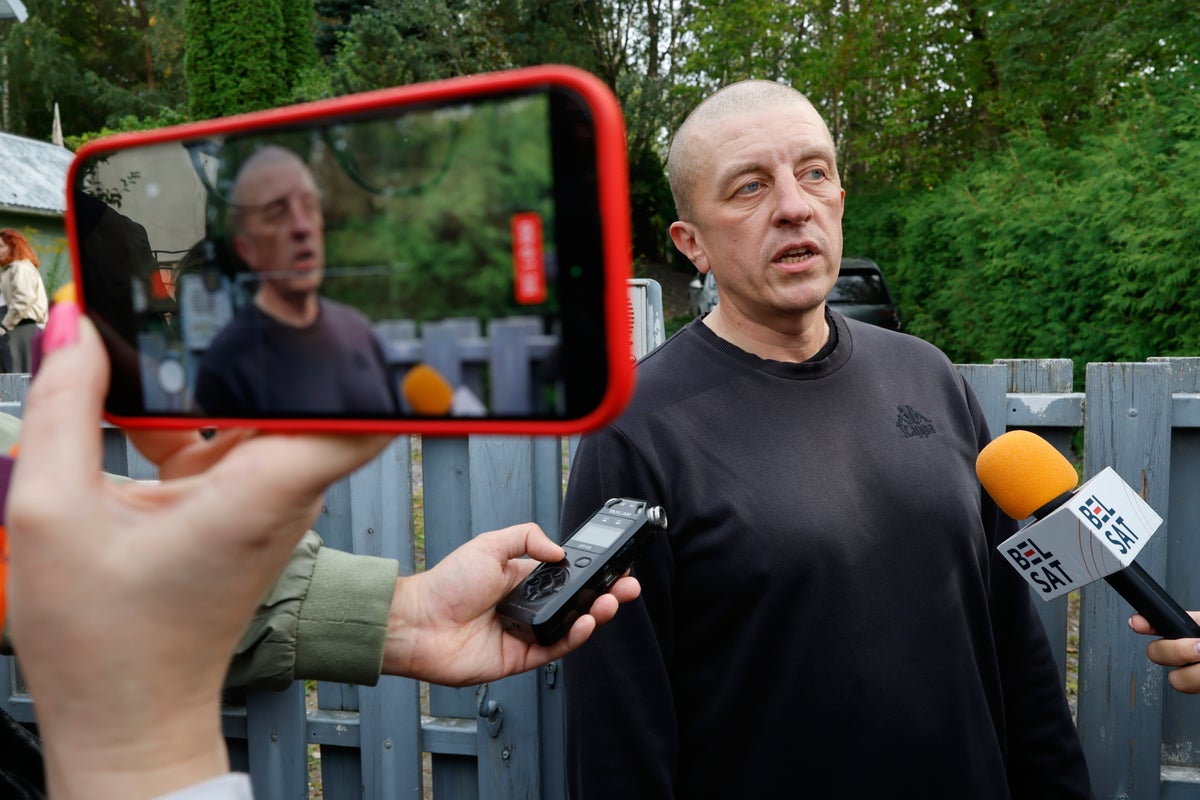
Since Trump returned to the White House for his second term, Lukashenko has released hundreds of political prisoners in a series of U.S.-mediated deals that also lifted some U.S. sanctions

Countries: Poland, Belarus, Russian Federation, Ukraine, World Source: UN High Commissioner for Refugees Please refer to the attached file. Over one million refugees from Ukraine are currently present in Poland, the majority women and children. This represents some 2.5 per cent of the total population of Poland. UNHCR coordinates the response of 58 organizations in Poland under the Ukraine Situation Regional Refugee Response Plan (RRP), the majority of which are local and refugee-led organizations. UNHCR works with the Government of Poland to ensure refugees have access to territory, legal status, documentation and enjoy their rights. HIGHLIGHTS UNHCR Engagement on Amendments to the Act Phasing Out the Special Actt on Assistance to Ukrainian Citizens In January 2026, the Polish Parliament adopted the so-called Phasing Out Act, which terminates the special assistance regime for Ukrainian refugees and provides for a transition to temporary protection under existing legislation as of March 2026. Throughout the legislative process, UNHCR actively engaged through legal comments and targeted advocacy, raising concerns regarding compliance with EU law. UNHCR issued recommendations addressing the proposed restriction of access to protection, access to accommodation support, documentation requirements and the removal of provisions safeguarding family reunification. Following consultations, the bill was amended to retain family reunification provisions. Supporting Refugee Employment: UNHCR and Japan’s MOFA Host Job Fair UNHCR, together with the Ministry of Foreign Affairs of Japan, organised a Japanese Job Expo in Warsaw to support investment in refugee human capital and self-reliance. Held on 28 November, the event connected Japanese employers with Ukrainian jobseekers, supporting skills matching, labour market inclusion and pathways towards a more stable future.
Sep 16, 2026 · byReliefWeb
Countries: Lithuania, Belarus, Russian Federation, Somalia, Ukraine Source: UN High Commissioner for Refugees Please refer to the attached file. Refugees from Ukraine: Lithuania generously hosts 52,500 refugees from Ukraine on temporary protection. Temporary protection in Lithuania is extended untill 4 March 2027. Refugee Response Plan (RRP): Lithuania is included in the Ukraine RRP for 2025-2026. Partners have reached above 27,000 refugees with assistance and support in Lithuania in 2025. Refugees from Belarus: Lithuanian authorities and NGOs provide assistance and support to refugees and persons released from prison in Belarus. HIGHLIGHTS EU Solidarity The Government has opted for a mixed approach in Lithuania to the EU’s solidarity mechanism. Lithuania will accept half of the asylum-seekers allocated to it by the EU and will pay a financial contribution for the remainder, starting in June 2026. Fair asylum procedures UNHCR conducted training on asylum interviews for asylum and registration officers of the Migration Department. Training included all stages of the process, from planning and preparing, engagement and rapport, managing biases and how memory works to obtaining a free account and challenging information respectfully, as well as working with interpreters and conducting remote interviews.
Sep 16, 2026 · byReliefWeb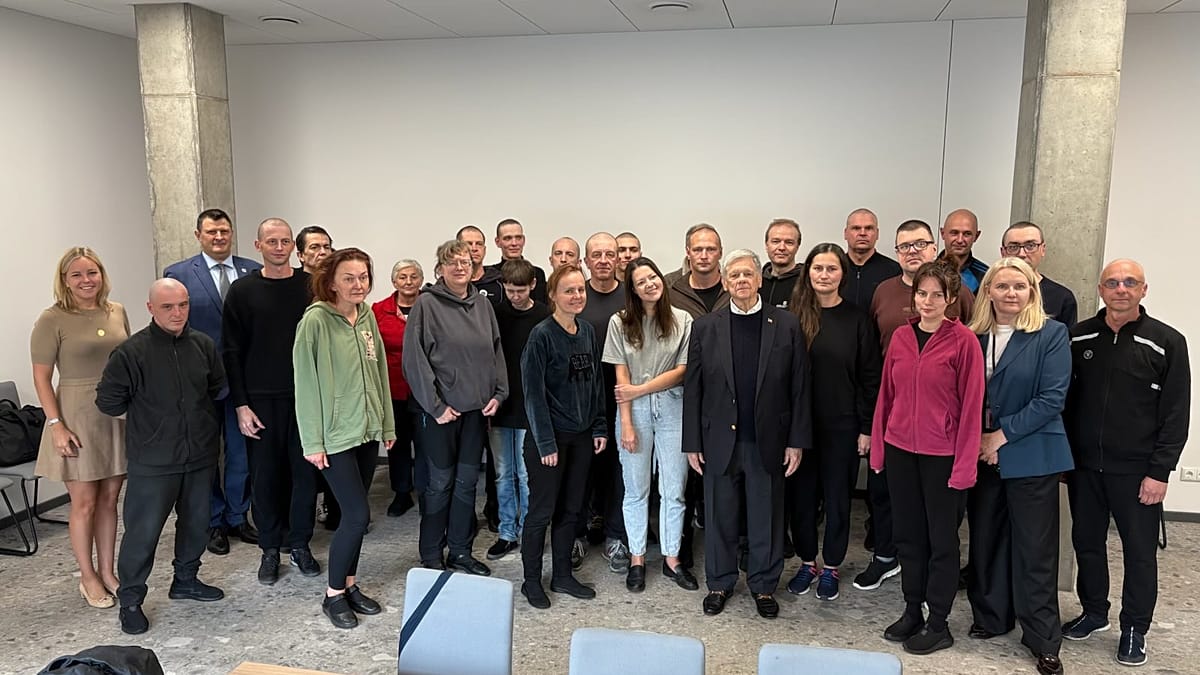
Hundreds remain in prison, including journalists, trade unionists and others who supported the 2020 protests against Aliaksandr Lukashenka’s re-election.
Sep 16, 2026 · byEuronews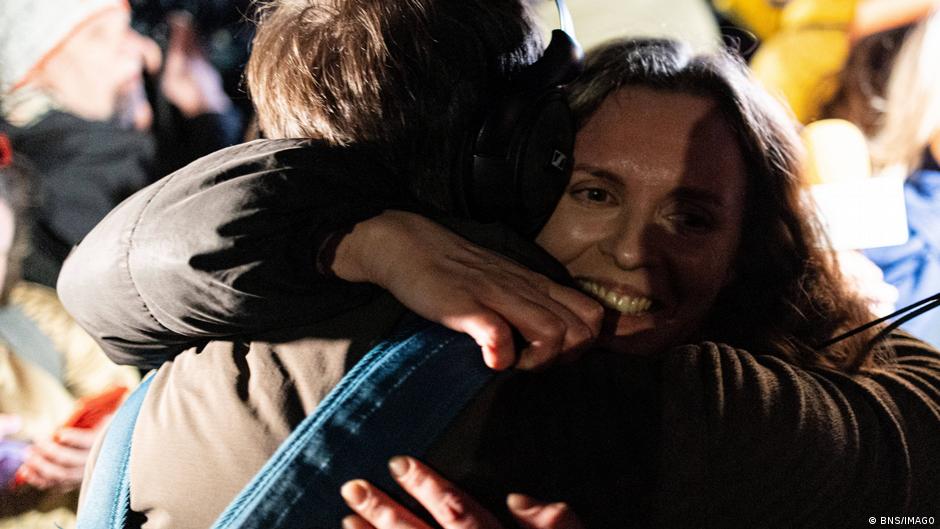
Belarus will release 25 more prisoners under an interim agreement with the United States, while Washington plans to lift sanctions on two Belarusian companies and pursue broader negotiations.
 Sep 16, 2026 · byDeutsche Welle