Topic · Place
Nepal
84 articles · 1+ stories
See also
📰
Latest Nepal articles

📰
Japan contributes USD 1 million to support WFP’s emergency flood response in Nepal | World Food Programme
Countries: Nepal, Japan Source: World Food Programme The Government of Japan contributed an emergency grant of USD 1 million to support emergency food assistance for communities affected by recent devastating flash floods in Nepal through the World Food Programme (WFP). The timely allocation of this funding enables WFP to deliver immediate critical assistance to affected populations in Rasuwa, Nuwakot and Dhading, and to continue to provide logistics support to the government-led humanitarian response. “Japan has long been a trusted partner of Nepal and a strong supporter of humanitarian action around the world,” said H.E. Mr. MAEDA Toru, Ambassador of Japan to Nepal. “Through this contribution, we aim to support timely and coordinated assistance to people affected by the recent emergency and help communities begin their recovery.” “On behalf of WFP, I extend our sincere gratitude to the Government and people of Japan for their timely and generous support,” said Riaz Lodhi, WFP Nepal Country Director and Representative. “This contribution is strengthening our collective efforts to reach affected families with life-saving assistance and helps ensure relief reaches those who need it most.” With support from donors including the Government of Japan, WFP immediately provided emergency rations of ready-to-eat food followed by distributions of a two-week supply of in-kind assistance - consisting of fortified rice, lentils, vegetable oil and iodized salt - to more than 15,000 people. Moving forward, WFP will provide cash transfers to communities with functioning markets and food rations will continue to be distributed to communities cut off from markets due to flooded roads or washed-out bridges. Using trucks, helicopters and humanitarian cargo drones, WFP remains committed to reaching every flood-affected community, no matter how remote or difficult to access they may be. WFP is also supporting the Government of Nepal’s logistics and emergency response operations by facilitating the reception, storage and dispatch of humanitarian relief supplies via the Kathmandu Humanitarian Staging Area and the newly established Nuwakot Common Humanitarian Office and storage facilities in Bidur. This funding contributes to a coordinated humanitarian response led by the Government of Nepal, working alongside national and international partners to meet urgent needs and support recovery efforts. # # # The United Nations World Food Programme is the world’s largest humanitarian organization saving lives in emergencies and using food assistance to build a pathway to peace, stability and prosperity for people recovering from conflict, disasters and the impact of weather extremes. Follow on X, formerly Twitter: @wfp_media @WFP_Nepal and Facebook, @WFPinNepal Follow on Facebook: facebook.com/JPNInNepal/
 Sep 23, 2026 · byReliefWeb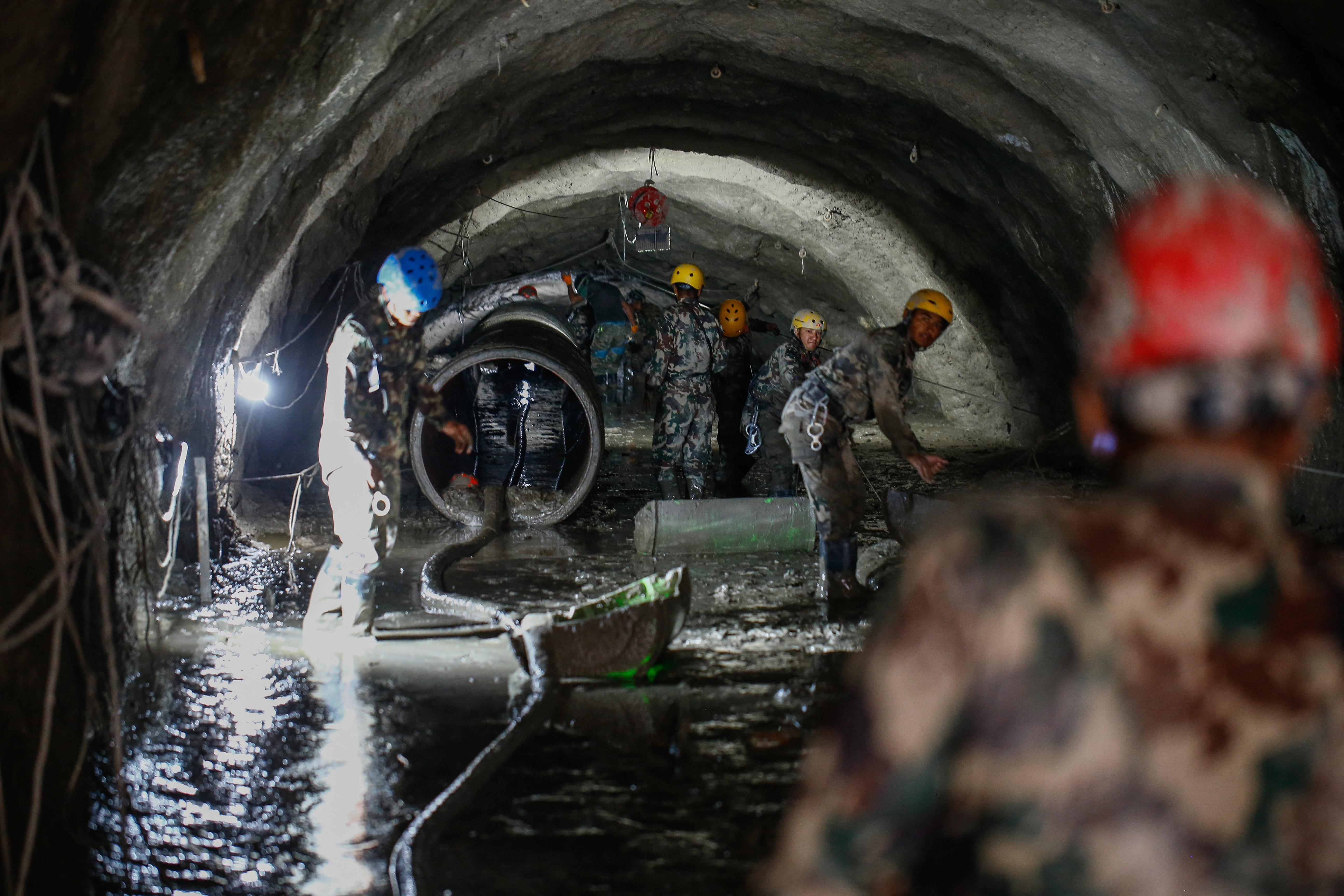
Is Nepal's flood a harbinger of what's to come in the Himalayas?
Building dams and hydropower plants in the Himalayas holds great promise for providing electricity. In the wake of the Nepal disaster, experts are asking about the risks of such construction.
 Sep 23, 2026 · byNPR
Our message to global leaders: we need solar power everywhere by the decade’s end | Open letter
As the UN gathers, signatories from Bernie Sanders to Yeb Saño issue an open letter calling for clean power for all The climate fight has one great ally. You just can’t look at it directly We the undersigned write this letter out of great fear and great hope. Over the last few months, we’ve seen the world set ablaze by both war and warming. From the conflict in Iran, which has claimed thousands of lives and disrupted billions more, to the series of ever worsening climate disasters, from wildfires in Europe to collapsing glaciers in Nepal, the world seems to be falling apart exactly when it needs to be coming together. Continue reading...
 Sep 23, 2026 · byThe Guardian
Berlinale Title ‘Lali’ to Open Tasveer Film Festival’s 21st Edition (EXCLUSIVE)
Seattle’s Tasveer Film Festival & Market has unveiled its 21st edition lineup: 136 films from 16 countries screening Oct. 13-18, opening with Sarmad Sultan Khoosat’s “Lali,” a Berlinale Panorama title, in its West Coast premiere. The films, spanning more than 25 languages, tell stories from Afghanistan, Bangladesh, Bhutan, India, the Maldives, Nepal, Pakistan, Sri Lanka, […]
 Sep 23, 2026 · byVariety
Georgia couple who survived Nepal flood shares their story
Mita and Hemant Parikh decided to split from their group and take a side trip during their long-planned pilgrimage. They're now safely back home, but none of the families they were traveling with have been found.
The Patagonia town where Nepal’s deadly glacier flood could be repeated – and what they’ve learned
The risk to El Chaltén in Argentina has been known for years but recent findings and the Nepal disaster have brought planning for the worst-case scenario into sharp focus The images from Nepal stopped Daniela Schmidt in her tracks. A geologist at the University of Buenos Aires in Argentina, she watched the deadly flash floods on 26 August tear through everything in their path, people running for their lives as the water and debris swept over the landscape. “I had never seen anything like it,” she says. “This was one of the most catastrophic events on a global scale related to these glacial floods.” The aftermath of the Nepal floods in Nuwakot district, 26 August. Photograph: Xinhua/Shutterstock Continue reading...
Sep 22, 2026 · byThe Guardian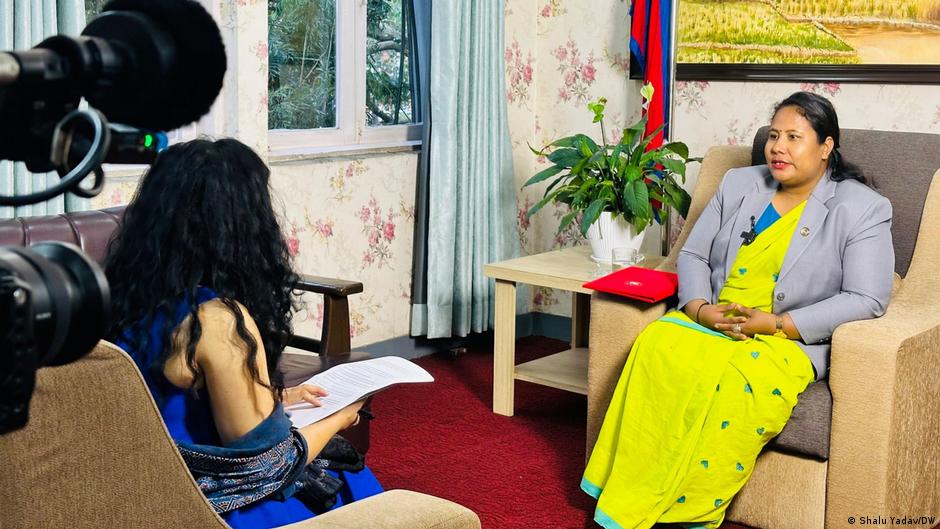
After floods, Nepal minister demands 'climate justice'
With Nepal still reeling from the devastating floods in August, Kathmandu is calling for climate justice and seeking compensation from the UN-backed Loss and Damage Fund, Environment Minister Geeta Chaudhary told DW.
 Sep 22, 2026 · byDeutsche Welle
Nepal Flash Flood 2026 Situation Report 4 (15 September 2026)
Country: Nepal Source: Plan International Please refer to the attached file. A major flash flood entered Nepal through the Bhote Koshi River at approximately 9:00 AM on 26 August 2026, causing significant loss and damage across Rasuwa, Nuwakot and Dhading districts. Timure, Rasuwagadhi and Syabrubesi are among the worst affected areas, with impacts reported on communities, markets, roads, bridges and hydropower infrastructure. The cause of the flood remains under investigation, with authorities assessing the possibility of a glacial lake outburst flood (GLOF) or another upstream hydrological event. The Government of Nepal has mobilised security forces for search, rescue and relief operations and issued alerts for communities downstream along the Trishuli River corridor.
Sep 22, 2026 · byReliefWeb
Nepal: Flash Floods - LTC Situation Report (Telecoms Area) 32 (Reporting period: 12 - 20 September 2026)
Country: Nepal Sources: Emergency Telecommunications Cluster, Logistics Cluster, World Food Programme Please refer to the attached file. This Situation Report provides an update on the humanitarian situation following the flash floods that struck Nepal on 26 August 2026. Since the activation of the Logistics & Telecommunications Cluster (LTC) 1 on 02 September, the LTC Telecoms Area has supported humanitarian partners through telecommunications coordination, assessments, connectivity services and information management. Summary Points • Three weeks after the 26 August flash floods, the National Disaster Risk Reduction and Management Authority (NDRRMA), under the Ministry of Home Affairs, continues to lead the government-coordinated response in collaboration with humanitarian partners, including LTC Telecoms. • LTC Telecoms has established shared connectivity at the WFP-managed humanitarian staging area near Kathmandu airport, which serves cooperating partners and humanitarian organizations receiving relief cargo and assistance. • During his mission the LTC Telecoms Coordinator developed a two-month response plan outlining priority telecommunications requirements, coordination actions, potential support activities and budget estimate across three locations.
Sep 21, 2026 · byReliefWeb
Nepal could show the world how to recover sustainably from a major disaster
With chances of further sensational hydropower tunnel rescues dimming, the devastating ice-rock avalanche in August at the Nepal-Tibet border and catastrophic floods downstream are no longer making global headlines.

Nepal - Guidance on air transportation of Dangerous Goods, September 2026
Country: Nepal Sources: Emergency Telecommunications Cluster, Logistics Cluster, World Food Programme Please refer to the attached file. Summary Nepal - Guidance on air transportation of Dangerous Goods Content Guidance on air transportation of Dangerous Goods (DG) User organizations wishing to move Dangerous Goods (DG) by air must take the following steps before submitting the SRF: Identify any dangerous articles or substances in accordance with ICAO regulations. Shippers can look up possible dangerous substances using the DG Lookup Tool . DG can also be identified by looking at the labels on boxes. If DG is present, indicate the UNID number when submitting the SRF, and upload associated Material Safey Data Sheets (SDS/MSDS) . SDS/MSDS are supplied by the manufacturer or supplier, and are usually available online. The LTC focal point will coordinate with the air transport provider to confirm if the DG items can be transported. Once the LTC focal point confirms that DG is acceptable, and before handing over DG Items: Cargo owners may be asked to limit the quantity contained in each package to the maximum allowable. Use the correct type of packaging, and mark and label each package in accordance with the regulations. Any cargo containing DG must have the correct DG hazard labels per DG type. More information on DG package labelling can be found here . Inspect each package for damage and/or leakage. A guide to common DG items used in emergency response can be found here . The LTC may assist and consult the requesting partner upon request.
Sep 21, 2026 · byReliefWeb
UNICEF Nepal Humanitarian Situation Report No. 4, 16 September 2026
Country: Nepal Source: UN Children's Fund Please refer to the attached file. Highlights An estimated 84,270 people, including 32,021 children and 1,854 persons with disabilities, are affected across 17 municipalities in six districts by the flash floods which struck Nepal on 26 August. As of 16 September, 2,096 displaced people remain in 29 holding centres across three districts. WASH, protection, health, nutrition and education needs remain significant, with 46 water supply systems damaged, an estimated 541 children unaccompanied and separated from their families, disruptions to health and nutrition supply chains, and a minimum need for 46 temporary learning centres to restore access to education. Mental health and psychosocial support services have reached 8,179 people through community-based psychosocial support (4,373 people), specialized mental health services (3,647 people), and psychological first aid in schools (159 children). Water-supply systems serving approximately 26,000 people have been restored and 67 temporary toilets have been constructed. 19 temporary learning centres with inclusive WASH facilities are operational, providing 413 children with access to education. 50,411 people have been vaccinated against cholera in Rasuwa and Nuwakot districts, including 3,304 children aged 1 to 5 years. 546 children under-five in 20 holding centers in Nuwakot district have been screened for malnutrition of which 35 children with moderate acute malnutrition have received treatment. Risk communication and community engagement generated nearly 2.2 million audience interactions across radio, SMS, digital and community channels. US$17.2 million is required to meet the immediate needs of affected children and families.
Sep 21, 2026 · byReliefWeb
Photos: Nepal flood survivors find little trace of former lives
Nepal’s floods displace thousands, with survivors mourning loved ones and searching for belongings amid the debris.
 Sep 20, 2026 · byAl Jazeera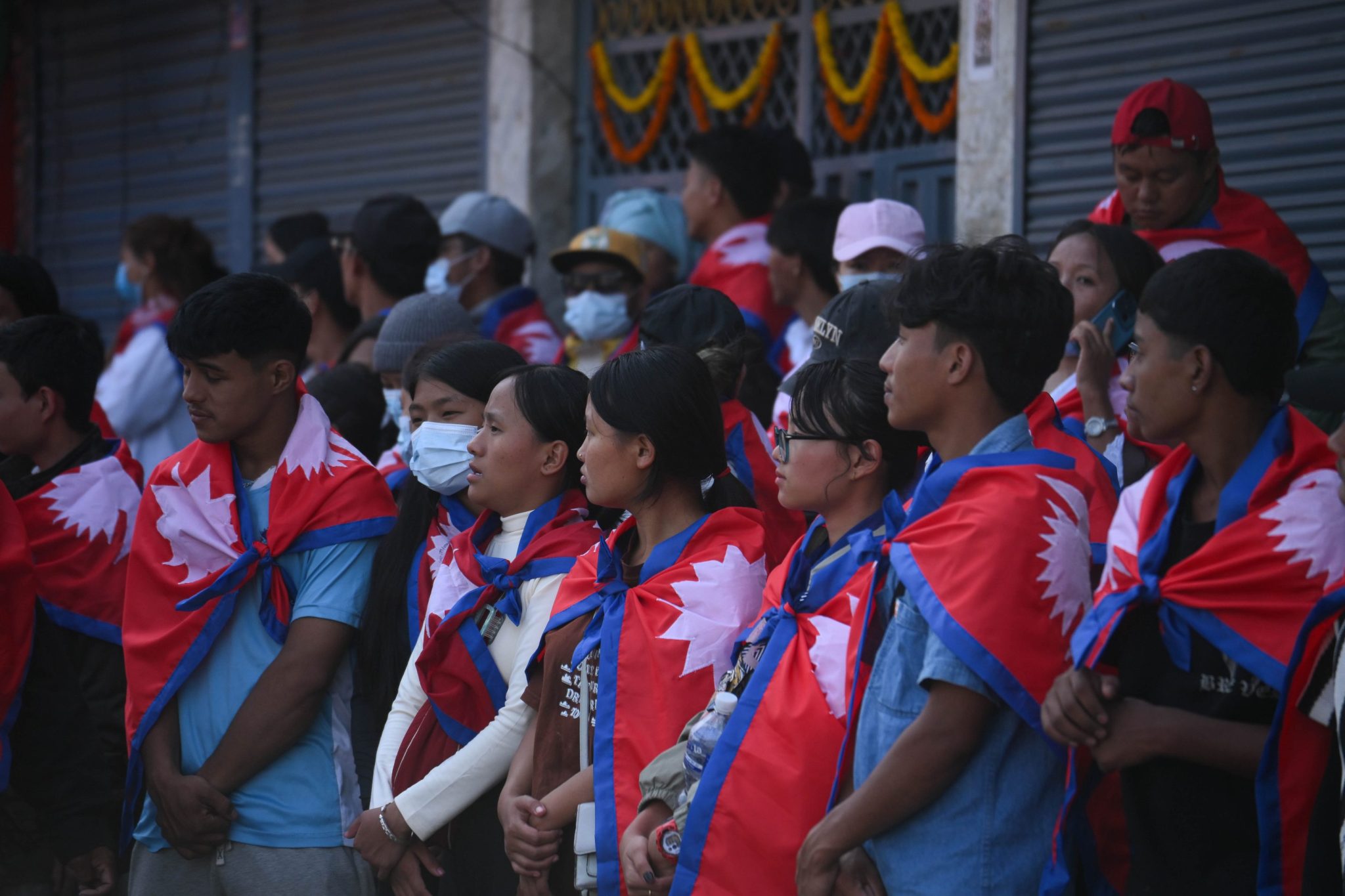
Elon Musk’s DOGE swiped $329 million in humanitarian funding from Nepal, leaving a Gen Z tech revolution to transform the budding country’s economy
After the Trump administration gutted USAID, Nepal’s private sector has stepped up to energize its young workforce and strengthen its financial independence.
Elon Muskcritical
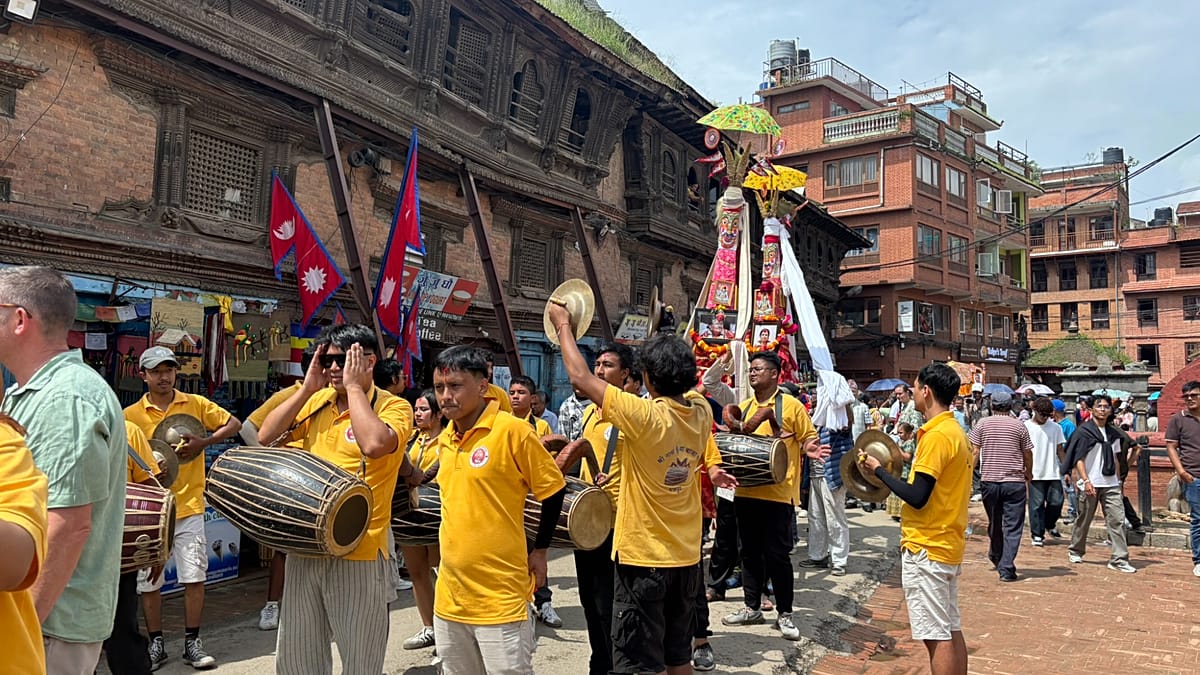
Drums, dancing and definitely no tears: Here’s why you need to experience Nepal’s Sa: Paru festival
Euronews Travel’s Dianne Apen-Sadler headed to the ancient city of Bhaktapur in Nepal for the Sa: Paru festival honouring those that have died in the past year.
 Sep 19, 2026 · byEuronews
The Nepal floods question: When the Himalayas collapse, who gets warned?
The floods raised concerns about cross-border warnings that experts say can no longer be ignored.
Sep 19, 2026 · byAl Jazeera
Nepal’s Gen Z Is Taking on the World’s Polluters Over Climate Disasters
The young government of Nepal, a nation with a tiny carbon footprint, is seeking reparations from the world’s major economies as it bears the brunt of collapsing Himalayan glaciers.
 Sep 19, 2026 · byThe New York Times
Video: Influencers accused of exploiting Nepal flood survivors
‘Aid influencers’ are being accused of exploiting Nepal flood victims to boost social media followers.
Sep 18, 2026 · byAl Jazeera
Nepal: Rasuwa Flood Situation Report No. 8 (As of 15 September 2026)
Country: Nepal Sources: UN Office for the Coordination of Humanitarian Affairs, UN Resident Coordinator in Nepal Please refer to the attached file. HIGHLIGHTS The floods have claimed 1,399 lives; 5,179 people remain missing and 13,742 have been rescued (NDRRMA, 15 September, 19:00). Assistance has reached 46,829 people in the 17 affected municipalities. This includes 28,925 people with food, 26,550 with restored water supply, 17,543 with emergency shelter and relief items, and 9,118 with psychosocial support. Authorities report that initial relief needs in Nuwakot are being met. In Rasuwa, many communities remain cut off by damaged roads and bridges and rely on air deliveries, which heavy rain is disrupting. With 7,570 buildings damaged, 2,155 people remain in 30 displacement centres, while others have moved on to Kathmandu and elsewhere. The national Cash Working Group agreed on NPR 15,000 per household every 15 days, for up to three months, as the reference value for multipurpose cash. It also called for stronger coordination to avoid overlap.
Sep 18, 2026 · byReliefWeb
The world’s rivers are at breaking point. Can we save them before it is too late?
In this week’s newsletter: As the Guardian launches a year-long project, Our Rivers, we take stock of the issues facing waterways around the world Don’t get Down to Earth delivered to your inbox? Sign up here The nicknames of the world’s biggest rivers give a sense of how we feel about them: “the great river”, “the river that swallows all rivers”, “Mother Ganga” and “Old father Thames”. They feed and water us, and many other animal species. They carry our trade but also give us cool relief on a hot day. They’re nerve endings, elders and sources of comfort, but also of awe and respect. And yet many of the world’s rivers are suffering, hit by multiple environmental challenges. A new report out today from the World Meteorological Organization finds that rivers across the world experienced one of the driest years in more than three decades during 2025. Climate crisis probably weakened glacier that caused devastating Nepal-Tibet floods, first study finds Who are the 514 people accused of starting French wildfires and what motivates them? Benedict Cumberbatch on his Earth-saving eco film: ‘We are in the last grab of the extraction era’ Continue reading...
Sep 18, 2026 · byThe Guardian
Scientists Warn of Flood Risks to 8 Himalayan Countries after Nepal Disaster
The catastrophe set off alarms in a region with thousands of glaciers spanning eight nations. Better monitoring and cooperation between the countries could save lives, experts say.
Sep 18, 2026 · byThe New York Times📰
Additional Emergency Assistance to Nepal in Response to the Flash Flood
Countries: Nepal, Japan Source: Government of Japan Today, September 17, upon the request of the Government of Nepal, in light of the humanitarian perspective and the close relations between Japan and Nepal, the Government of Japan has decided to provide DNA testing equipment as emergency relief goods to Nepal in response to the damage caused by the flash flood. (Reference) The flash flood struck Nepal on August 26, causing numerous casualties, fatalities, and extensive physical damage. According to the Government of Nepal, as of September 16, 1,399 people died and 5,179 people are missing.
Sep 18, 2026 · byReliefWeb📰
Major disasters disrupted education for at least 13 million children in six countries in three months as Venezuela reopens schools
Countries: Venezuela (Bolivarian Republic of), Colombia, Indonesia, Japan, Nepal, Philippines Source: Save the Children CARACAS, Venezuela, 17 September 2026 – Education was disrupted for about 13 million children over the past three months as Nepal, Japan, Colombia, Venezuela, Indonesia, and the Philippines were all hit by major natural or climate disasters such as earthquakes, floods, or wildfires , said Save the Children. In many countries where the disasters stuck, classes were in session at the time such as in Nepal where children were forced to flee flash flooding. In others, schools were approaching the end of year holidays such as in Venezuela where pupils return to class this week and learning disruptions are only now being felt. Analysing various data sources, Save the Children looked at the impact of these disasters over the past three months and estimated that about 13 million children saw their learning suspended, transferred online, reduced or disrupted in other ways, with some continuing to see their education impacted.[1] In Venezuela, students and teachers said that they were feeling anxious as they returned to school for the new academic year following the twin earthquakes that hit the country on 24 June, killing more than 6,500 people. The earthquakes, the most powerful in a century, halted education for more than 21,000 students [2] and disrupted learning for one million**,** or about one in every eight school-aged child, Save the Children said. Teachers from La Guaira, a coastal region badly hit in northern Venezuela, said it was important to continue efforts to ensure that schools can provide supportive environments for children returning after the earthquakes although some schools have suffered structural damage and cannot reopen. Alondra*, 37, a teacher in Venezuela and mother to nine-year-old Emma*, is worried that the disruption will force students into overcrowded schools, affecting both learning quality and recreational opportunities. “My daughter's education is paramount, of course, and I'm not going to take her out of school, especially not because of this [earthquake],” she said. Alondra has been taking Emma to a Save the Children safe space in the months since the earthquake so she can continue learning and playing with other children her own age. Save the Children in Venezuela and its national partners have helped over 93,970 people** since the earthquakes including through psychosocial support, health support, and community engagement activities. The child rights organisation will also start rehabilitating learning spaces and schools and training teachers to support children affected by the earthquakes. Four other powerful earthquakes in Colombia, the Philippines, Indonesia and in Japan disrupted education for about 4 million children out of the 13 million children. A 7.8 magnitude earthquake struck the southern Philippines on 8 June, the first day back to school after the country’s summer break, disrupting education. Since then, Save the Children has reached more than 8,800 people, including 3,900 children, providing support including household items, hygiene kits and temporary learning spaces. Floods brought about by this season's monsoon in the Philippines also affected nearly 7 million students who saw classes suspended including in the capital Manila and several provinces, on and off, for almost two weeks, while almost 900 schools sustained damaged.[3] Tatiana Betancourt, an education officer at Save the Children Colombia, said: “Families temporarily settled in spaces that do not have adequate security and protection conditions affecting educational institutions, limiting children's and adolescents' access to safe learning spaces. Emotional effects on children, caregivers and families include fear, stress and uncertainty generated by the emergency.” In Colombia, the earthquake’s damage to education infrastructure disrupted access to education for over 1 million children and compounded pre-existing poverty. While about 80% of children have returned to learning through partial, hybrid, or alternating attendance, more than 300,000 children are estimated to be facing heightened protection risks, including recruitment by armed groups. [4] Save the Children in Colombia is focusing on supporting the safe return to schools wherever feasible and is supporting temporary learning arrangements through local education partners including temporary learning tents in affected areas such as Chocó. Flash floods in Nepal in August which hit as children were either on their way to school or starting their lessons, killed at least 1,350 people with about 4,800 still missing.[5] While some schools closed by the floods in Nepal have begun to reopen, many displaced children are not currently able to attend classes as they are not registered for schools in areas they moved to. Save the Children has supported more than 6,000 people across Nuwakot, Dhading and Rasuwa districts with essential items and has set up two temporary learning spaces to help children learn. In Japan, Save the Children set up child friendly spaces to provide children with a safe environment to play and recover following the 28 July earthquake in Kumamoto Prefecture, southern Japan, among other support. When disasters or climate emergencies disrupt children’s education, as they have for children in Nepal, Venezuela, Colombia and elsewhere this summer, children must be able to continue their education through crisis. Governments also need stronger, more inclusive, and resilient education systems that can last. Save the Children is calling on world leaders gathering in New York for the UN General Assembly this month to pledge at least US $5 billion to the Global Partnership for Education to help reach about 750 million children across 96 countries by 2030 by strengthening education systems. The child rights organisation is also calling on leaders to pledge US$600 million this November for Education Cannot Wait, so children in crisis can continue learning. *Names changed for anonymity References: **As of 11 September 2026. Methodology: Over 13 million figure is based on looking at major or high-profile disasters between 1 June and early September where there was a publicly reported impact on education. Disasters included earthquakes in Venezuela (1 million children’s education impacted) ; Colombia ( 1 million ) Indonesia ( over 116,000 ), Japan (about 200,000) and the Philippines ( 3 million ), wildfires in Indonesia ( 1.4 million ), monsoon flooding in the Philippines ( 6.8 million ) and flash floods in Nepal ( 19,000 ). For Japan, the number of children with disrupted education is estimated based on data from Ministry of Education, Culture, Sports, Science and Technology (MEXT) on 650 affected schools, using the average number of students per school in Japan. [1, 5] NEPAL: https://www.unocha.org/publications/report/nepal/nepal-rasuwa-flood-situation-report-no-7-8-september-2026 [2] Save the Children Rapid Needs Assessment (RNA) August 2026 + UNICEF assessment indicates that more than 432 schools suffered physical damage to their infrastructure. In the state of La Guaira, out of the 290 public and independent schools surveyed in the coastal area, 62 sustained structural damage or suffered total physical collapse. [3] EDCOM 2 - The Second Congressional Commission on Education: https://www.facebook.com/edcom2ph/posts/pfbid0xPVJkvHr9HAYRbofaMZcX3kDNtVcqeiHiq3yCtUSd2pSiYpwMCBMcxMoGrq1GH5fl [4] IRC, 14 Aug 2026: https://www.rescue.org/press-release/irc-launches-health-child-protection-response-colombia-earthquake-death-toll-rises
Sep 18, 2026 · byReliefWeb