Paramore's Hayley Williams Breaks Silence On Ex-Husband Chad Gilbert's Death
Paramoreneutral
 Sep 23, 2026 · byTMZ
42 articles · 1+ stories

Hayley Williams is paying tribute to her ex-husband Chad Gilbert ... days after the New Found Glory guitarist's death. On Wednesday, the Paramore frontwoman posted an emotional goodbye to Chad, who passed away on September 20 after a cancer battle.…
Sep 23, 2026 · byTMZ
Countries: Madagascar, Chad, Mali, World Source: World Health Organization Please refer to the attached file. This Weekly Bulletin focuses on public health emergencies occurring in the WHO African Region. This week’s articles cover: Mpox, Madagascar Cholera, Chad Humanitarian situation in Mali For each of these events, a brief description, followed by public health measures implemented and an interpretation of the situation, is provided. A table is provided at the end of the bulletin with information on all new and ongoing public health events currently being monitored in the region, as well as recent events that have been controlled and closed. Major issues and challenges include Mpox in Madagascar: Mpox transmission in Madagascar eased in the latest reporting week, with confirmed cases and test positivity falling for a second consecutive week. However, the outbreak remains widespread, with cases across districts nationwide. Household and close-contact exposure still drive transmission, highlighting the need for sustained community-based prevention, early detection and contact follow-up. Surveillance reporting completeness recovered after a previous dip, though logistics reporting still lags, with several regions unreported. Challenges include harmonising and integrating surveillance, laboratory and case-management data, and the ongoing interruption of the national toll-free hotline, hampering community alerts and information access. Operational gaps persist in supply distribution, activating new treatment centres and maintaining diagnostics and response commodities.
 Sep 23, 2026 · byReliefWeb
Countries: Cameroon, Benin, Burkina Faso, Cabo Verde, Central African Republic, Chad, Congo, Côte d'Ivoire, Democratic Republic of the Congo, Equatorial Guinea, Gabon, Gambia, Ghana, Guinea, Guinea-Bissau, Liberia, Mali, Nigeria, Sao Tome and Principe, Senegal, Sierra Leone, Togo Source: UN High Commissioner for Refugees Please refer to the attached Map.
Sep 23, 2026 · byReliefWeb
People living in Chad’s Lake Province are bearing the brunt of climate change. The region and the communities that have developed there have historically depended on this vast body of water. Fishing, first and foremost, but also farming, are the pillars of local livelihoods. Yet both are increasingly disrupted by erratic weather patterns: dwindling fish stocks, damaged farmland and a rising cost of living.

Countries: Sudan, Central African Republic, Chad, Egypt, Ethiopia, Libya, South Sudan, Uganda Source: International Organization for Migration Please refer to the attached file. The Sudan Displacement and Return Snapshot includes information on internally displaced persons (IDPs) and returnees, based on data from over 13,000 locations, 185 localities, and all 18 states in Sudan. Main Findings An estimated 8,583,274 internally displaced persons (IDPs) were recorded across 185 localities in all 18 states. An estimated 5,145,165 returned individuals were recorded across 77 localities in nine states. Eighty-two per cent of returnees moved back from internal displacement, while 18 per cent returned from abroad. Approximately half of IDPs (55%) and returnees (50%) were children under 18 years old. Key Trends The number of IDPs decreased by 26 per cent compared to the highest-recorded displaced population and by approximately one per cent compared to the previous month. The number of returnees increased by four per cent compared to the previous month. For further information, see the DTM Methodological Note and the DTM Sudan Interactive Dashboard.
Sep 22, 2026 · byReliefWeb
Countries: Democratic Republic of the Congo, Burkina Faso, Cameroon, Central African Republic, Chad, Mali, Niger, Nigeria, World Source: UN Office for the Coordination of Humanitarian Affairs Please refer to the attached Infographic.
Sep 21, 2026 · byReliefWeb
Countries: Chad, Sudan Source: UN High Commissioner for Refugees Please refer to the attached Infographic.
Sep 21, 2026 · byReliefWeb
Countries: Chad, Sudan Source: UN High Commissioner for Refugees Please refer to the attached Infographic.
Sep 21, 2026 · byReliefWeb
Countries: Chad, Sudan Source: UN High Commissioner for Refugees Please refer to the attached Infographic.
Sep 21, 2026 · byReliefWeb
Countries: Chad, Sudan Source: UN High Commissioner for Refugees Please refer to the attached Infographic.
Sep 21, 2026 · byReliefWeb
Countries: Chad, Sudan Source: UN High Commissioner for Refugees Please refer to the attached file. Réponse d’urgence à l’Est Le Tchad continue d’accueillir des réfugiés soudanais malgré l’insécurité persistante et la fermeture de la frontière. Au 15 septembre 2026, l’afflux de réfugiés soudanais vers l’est du Tchad s’est poursuivi, avec 3 413 nouveaux arrivants enregistrés depuis le 31 août, principalement à Adré, Tiné et Oure-Cassoni/Kariari, sous l’effet de l’insécurité persistante au Darfour et à Khartoum. Malgré les efforts de protection, d’enregistrement et d’assistance menés par le Gouvernement, la CNARR, le HCR et leurs partenaires, la pression sur les capacités d’accueil reste élevée. Au 15 septembre, 956 250 réfugiés soudanais avaient été enregistrés au Tchad depuis le début du conflit en avril 2023, tandis que 215 862 personnes préenregistrées demeuraient en attente de relocalisation depuis les centres de transit d’Adré et de Tiné. Le Tchad continue d’appliquer sa politique de portes ouvertes, sans aucun cas signalé de refoulement malgré la fermeture officielle de la frontière avec le Soudan.
Sep 21, 2026 · byReliefWeb
Countries: Chad, Sudan Source: United Nations Population Fund Please refer to the attached file. On August 20, 2026, a vehicle convoy inside Chadian territory (Ennedi-Est) was targeted by Sudanese Armed Forces-linked strikes, prompting Chadian forces to raise defense alerts over sovereignty violations. As of August 30, 2026, some 944,933 new Sudanese refugees have been registered since the conflict began in April 2023, including approximately 6,000 during August. Women and children continue to represent over 85% of the Sudanese refugee population in Chad. The cholera outbreak expanded beyond its initial epicenter in Karal, spreading to N'Djamena and Lac Province (early August). By August 25, 2026, cumulative national figures reached 599 cases and 28 deaths across 11 health districts, with a case fatality rate of 4.7%. Lac Province is the most affected, accounting for 311 cumulative cases and 15 of the 28 deaths, while N'Djamena has recorded 120 cases.
Sep 21, 2026 · byReliefWeb
Countries: World, Algeria, Chad, Djibouti, Egypt, Eritrea, Ethiopia, India, Iran (Islamic Republic of), Libya, Mali, Mauritania, Morocco, Niger, Oman, Pakistan, Saudi Arabia, Somalia, Sudan, Tunisia, Yemen Source: Food and Agriculture Organization of the United Nations Please refer to the attached file. The dynamical models indicate above-normal rainfall across most of northern and eastern Africa and the Middle East from October through December, consistent with previous strong El Niño episodes. Within this region, drier-than-normal conditions are expected to emerge across North Africa by December, but elsewhere the wet pattern is likely to persist through winter. The only notable change in the forecasts this month is that the predicted wet anomaly is somewhat less pronounced in East Africa, and the forecast has also turned drier for Yemen and Oman, because the positive phase of the Indian Ocean Dipole is struggling to become established, and a less positive IOD favors relatively drier conditions around the northwestern Indian Ocean during El Niño. Nevertheless, the pronounced El Niño forcing will remain the dominant (wet) influence. These rainfall patterns can support breeding in the northern Sahel through late summer breeding season. Small-scale breeding may begin in October along the Red Sea and Gulf of Aden coasts. Precipitation
Sep 21, 2026 · byReliefWeb
Countries: Sudan, Greece, Italy, Libya, Tunisia, Türkiye Source: UN High Commissioner for Refugees Please refer to the attached file. BACKGROUND Since April 2023, Sudan has experienced a devastating conflict marked by severe civilian harm, reports of conflict-related sexual violence, and large-scale displacement.1 As of 6 July 2026, more than 11.4 million people have been displaced, including over 6.5 million internally within Sudan and more than 4.5 million Sudanese who have fled the country. Nearly 60% of Sudanese refugees and asylum-seekers are hosted in just seven neighbouring countries, with the largest populations in Chad, Egypt, Libya, and South Sudan. While the majority remain in neighbouring countries, Mediterranean Europe4 has witnessed a noticeable increase in Sudanese arrivals since the outbreak of the conflict. Journeys to Europe are often long and dangerous. Insights from focus group discussions reveal that onward movement to Europe is primarily driven by unmet protection and basic needs in first countries of asylum. UNHCR considers that persons originating from Sudan who cannot return there because of the conflict are likely to be in need of international protection. UNHCR continues to call on States to ensure access to territory and asylum for people fleeing Sudan, and to respect and uphold the principle of non-refoulement at all times. In this context, this report analyses the situation of Sudanese nationals arriving in Europe, including their profiles, routes taken to reach Europe, and risks and challenges faced along the route. The report is based on arrivals data, 173 protection monitoring interviews with Sudanese nationals in South-Eastern Europe conducted between January 2025 and July 20266, and focus group discussions with Sudanese nationals held in Greece, Italy and Spain. The findings provide insights into the experiences and perspectives of participating individuals and should not be interpreted as statistically representative of all Sudanese refugees and asylum-seekers in Europe or first countries of asylum.
Sep 18, 2026 · byReliefWeb
Countries: Chad, Sudan Source: Famine Early Warning System Network Please refer to the attached file. Key Messages Crisis! (IPC Phase 3!) and Crisis (IPC Phase 3) outcomes will persist between August 2026 and January 2027 in the Ouaddaï, Sila, Wadi Fira, and Ennedi Est provinces. Refugees continue to arrive and remain heavily dependent on markets and food assistance. Pressure on host population livelihoods is increasing at a time when lean season conditions are particularly severe, resulting in significant food consumption deficits. However, conditions among host populations are expected to improve with the harvests in October. Crisis (IPC Phase 3) outcomes are expected in Lac Province through January 2027. Security conditions are deteriorating, and the season is delayed amid persistent attacks by armed terrorist groups. The deterioration of livelihoods, particularly fishing and livestock rearing, is resulting in declining income. Food consumption deficits are being observed among internally displaced persons (IDPs) and host populations. However, an improvement to Stressed (IPC Phase 2) outcomes is expected between October and January 2027 in Wayi Department with the arrival of the harvests. Crisis (IPC Phase 3) outcomes are expected between August and September 2026 in Kanem and northern Barh-El-Gazel. In this pastoral area, the season remained delayed through August. Market-dependent households continue to face high livestock maintenance costs and deterioration in most of their income sources. Low purchasing power is forcing households to engage in atypical sales of productive assets. Beginning in October, these conditions are expected to improve, along with household food consumption. A delayed onset of the rainy season, with below-average rainfall, has been observed in several regions of the country. A particularly difficult lean season is ongoing in several areas. Nearly all households are highly dependent on markets, while the delayed season is preventing the recovery of typical agricultural income that would normally facilitate food access.
Sep 18, 2026 · byReliefWeb
Countries: Burkina Faso, Chad, Mali, Niger Source: UN Office for the Coordination of Humanitarian Affairs Please refer to the attached file. CONTEXTE ET JUSTIFICATION Le Fonds Humanitaire Régional pour l’Afrique de l’Ouest et du Centre (FHRAOC), établi en juin 2021 et géré par OCHA à travers son bureau régional basé à Dakar, est le premier mécanisme humanitaire régional de ce type. Depuis son lancement, il est opérationnel dans quatre pays : le Niger (depuis 2021), le Burkina Faso (2022), le Mali (2023) et, plus récemment, le Tchad (2025). Avec des contributions estimées à 162 millions USD, le Fonds a alloué près de 145 millions USD pour la mise en oeuvre de plus de 200 projets d’urgence, exécutés par 193 organisations nationales et internationales, permettant d’assister plus de cinq millions de personnes affectées par les crises humanitaires dans la région. Le mandat du FHRAOC consiste à financer des interventions visant à sauver des vies, réduire les souffrances et préserver la dignité humaine, en se basant sur les besoins humanitaires identifiés au niveau national et en cohérence avec le Cadre des priorités régionales. Ce cadre vise à renforcer l’harmonisation et la coordination des stratégies de réponse dans les quatre pays, avec une attention particulière portée au Sahel. Depuis son établissement, le Fonds a également servi de catalyseur pour plusieurs initiatives d’envergure, global, notamment à travers le renforcement des capacités des ONG nationales et locales au Burkina Faso, au Mali et au Niger. La mise en oeuvre de ces interventions a généré un ensemble significatif de bonnes pratiques, enseignements tirés et innovations opérationnelles, dont la documentation et le partage sont nécessaires afin de consolider l’apprentissage collectif, au bénéfice des acteurs du mécanisme et, plus largement, de la communauté humanitaire. Après plus de quatre années de mise en oeuvre, la capitalisation de cette expérience apparait comme une étape importante pour maximiser la valeur ajoutée et soutenir l’amélioration continue. Dans cette optique, l’Unité Régionale des Financements Humanitaires (URFH) d’OCHA ROWCA prévoit l’organisation régulière d’ateliers thématiques de capitalisation, réunissant les partenaires des quatre pays bénéficiaires de thématiques ciblées. Par ailleurs, ces ateliers offriront un espace structuré de dialogue, d’échanges d’expériences, favorisant l’apprentissage croisé entre les partenaires, contribuant à améliorer la cohérence, l’efficacité et la qualité des interventions financées. Objectifs spécifiques ‣ Documenter et diffuser les bonnes pratiques issues des projets financés par le FHRAOC, en mettant en évidence leur valeur ajoutée et leur potentiel de réplication dans d’autres contextes, y compris au sein des autres enveloppes pays. ‣ Recueillir, analyser et consolider les leçons apprises afin d’alimenter l’amélioration continue et d’ajuster les processus décisionnels, notamment en renforçant la prise en compte des retours des communautés affectées. ‣ Identifier et prioriser les axes d’amélioration nécessaires pour renforcer la qualité, l’efficacité, la redevabilité et la durabilité des interventions financées. ‣ Promouvoir l’apprentissage mutuel et l’appropriation collective entre les partenaires du FHRAOC afin de renforcer la cohérence des approches, favoriser l’émulation et encourager le partage d’expériences. Résultats attendus ‣ Un ensemble structuré de bonnes pratiques documentées et partageables, avec des éléments concrets facilitant leur réplication. ‣ Une synthèse consolidée des leçons apprises, incluant les facteurs de succès, les défis majeurs et les recommandations opérationnelles. ‣ Une liste d’axes d’amélioration prioritaires assortie de propositions d’actions réalistes (à court, moyen et long terme). ‣ Un renforcement du dialogue et de la collaboration entre partenaires, avec une meilleure compréhension des approches et une cohérence accrue des interventions Approche méthodologique ‣ Organisé en ligne sur une durée de deux heures, l’atelier a adopté une approche participative et orientée vers l’apprentissage. Il a combiné des présentations de partenaires, des séances de brainstorming collectif et des discussions guidées visant à analyser les causes profondes des défis identifiés et à coconstruire des pistes de solutions. Des règles de facilitation ont été définies en amont afin de garantir des échanges structurés, inclusifs et respectueux du temps imparti, notamment en matière de prise de parole, de gestion des interventions et de respect des délais.
Sep 18, 2026 · byReliefWeb
In tonight's edition, the body of a 9th woman is found in Johannesburg as South African police start investigating a potential femicidal serial killer. Also, Africans are excited about what good use of the technology could mean to growth, but many are also worried about what an AI free-for all could soon mean for their lives and livelihoods. And Chad’s first music school officially opened its doors on Wednesday night in N’Djamena.

Countries: Congo, Benin, Burkina Faso, Cameroon, Central African Republic, Chad, Côte d'Ivoire, Democratic Republic of the Congo, Equatorial Guinea, Gabon, Gambia, Ghana, Guinea, Guinea-Bissau, Liberia, Mali, Mauritania, Niger, Sao Tome and Principe, Senegal, Sierra Leone, Togo Source: UN Children's Fund Please refer to the attached file. Highlights The first half of 2026 was marked by multiple public health emergencies across West and Central Africa (WCA), including mpox, cholera, measles, polio, yellow fever and Lassa fever. Cholera resurged in the Republic of Congo, mpox spread across several countries, and the Ebola outbreak in the Democratic Republic of the Congo triggered heightened preparedness, surveillance and cross-border coordination. Persistent insecurity in Burkina Faso, Mali and Niger continued to drive large-scale displacement, with nearly 575,000 refugees, asylum seekers and internally displaced persons hosted in neighboring and coastal countries by mid-2026. UNICEF humanitarian interventions admitted 15,000 children aged 6–59 months with severe wasting, provided supplemental measles vaccination to 187,192 children, safe water to 115,800 people, and enabled 131,100 children to access education. UNICEF's 2026 Humanitarian Action for Children (HAC) appeal for WCA remains only 31 per cent funded, with US$28.2 million available against requirements of US$92.6 million, limiting life-saving assistance across the region.
Sep 17, 2026 · byReliefWeb
Countries: World, Afghanistan, Angola, Bangladesh, Burkina Faso, Cameroon, Central African Republic, Chad, Colombia, Cuba, Djibouti, Ecuador, El Salvador, Ethiopia, Fiji, Guatemala, Haiti, Honduras, Indonesia, Kenya, Kiribati, Madagascar, Malawi, Mali, Mozambique, Myanmar, Nepal, Nicaragua, Niger, Nigeria, Papua New Guinea, Peru, Solomon Islands, Somalia, South Sudan, Sudan, Timor-Leste, Tuvalu, Uganda, Vanuatu, Venezuela (Bolivarian Republic of), Zambia, Zimbabwe Sources: International Federation of Red Cross and Red Crescent Societies, Save the Children, UN Office for the Coordination of Humanitarian Affairs, World Food Programme Please refer to the attached file. OVERVIEW El Niño is firmly established and is forecast to reach very strong intensity. WMO forecasts indicate a nearly 100 per cent likelihood that it will persist through February 2027, with the event expected to strengthen further and peak towards the end of 2026. Its effects may lag and persist beyond the peak. A very strong El Niño is likely to bring major shifts in rainfall and temperature patterns, increasing the risk of drought, flooding, extreme heat and other weather and climate hazards. These effects will not be felt everywhere at the same time or in the same way. Their severity will depend on where the climate signal coincides with agricultural and livelihood calendars, existing humanitarian needs and people's ability to cope. WMO cautions that the strength of the global event does not translate directly into the scale of impacts in any individual country or region. El Niño is also occurring against the backdrop of long-term climate warming. The emerging risks must be understood alongside conflict, displacement, high food insecurity and high food prices, malnutrition, disease outbreaks, economic pressures and overstretched essential services. These conditions have not improved since the June update. In many places, repeated shocks have depleted household assets, increased debt and weakened the coping mechanisms that people would ordinarily rely on when drought, floods or high prices affect their livelihoods. WFP estimates suggest that up to 50 million people globally could be affected over the next six to nine months, indicating the potential scale of the humanitarian consequences.
Sep 17, 2026 · byReliefWeb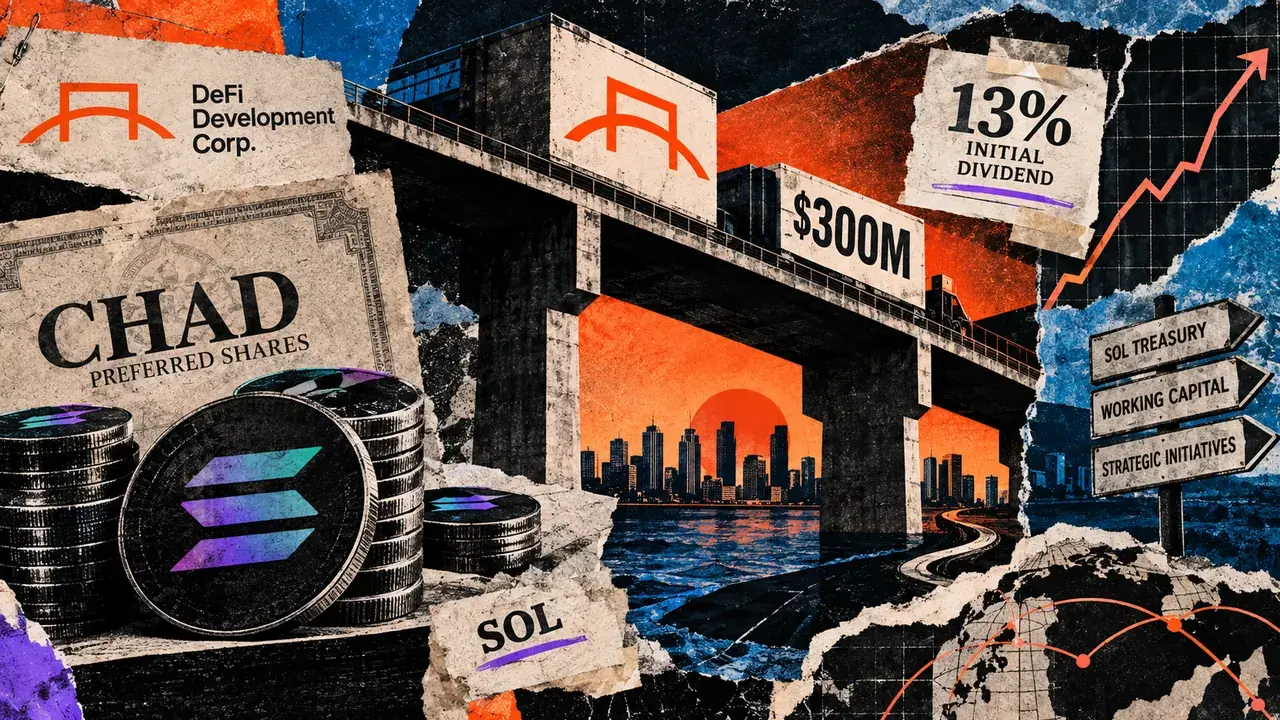
The company can sell up to 30 million shares, while actual proceeds and the SOL allocation remain undetermined. The post Solana treasury giant DeFi Development opens $300M CHAD offering backed by a massive 13% dividend catch appeared first on CryptoSlate .
 Sep 16, 2026 · byCryptoSlate
Countries: Democratic Republic of the Congo, Burkina Faso, Cameroon, Central African Republic, Chad, Mali, Niger, Nigeria, World Source: UN Office for the Coordination of Humanitarian Affairs Please refer to the attached Infographic.
Sep 16, 2026 · byReliefWebAround the world, people are living longer. Monaco and San Marino had the highest life expectancies, while Nigeria and Chad had the lowest.

DeFi Development Corp added another 55,491 SOL and opened a CHAD at-the-market program for its preferred stock, extending a fast-moving three-week run of capital markets activity.

Countries: Sudan, Central African Republic, Chad, Democratic Republic of the Congo, Ethiopia, Libya, South Sudan, Uganda Source: UN High Commissioner for Refugees Please refer to the attached Infographic.
Sep 15, 2026 · byReliefWeb