← News
Topic · Place

Côte d’Ivoire

20 articles

See also
📰

Latest Côte d’Ivoire articles

World: Global Weather Hazards Summary, October 08, 2026 – October 14, 2026

World: Global Weather Hazards Summary, October 08, 2026 – October 14, 2026

Country: World Source: Famine Early Warning System Network Please refer to the attached file. Global Overview : El Niño continues to strengthen. Although long-term abnormal dryness persists in several regions, heavy rain is causing flooding in parts of central and northern Africa, eastern Central Asia, Central America, and northern South America. Africa Weather Hazards Abnormal heat is forecast in the eastern Sahel and parts of Eastern Africa, while high risks of flooding exist in far-western West Africa, Morocco, and southern Ethiopia. 1) Inundation in the Sudd wetlands of South Sudan persists. 2) Large 90-day rainfall deficits have led to abnormal dryness across Chad and large parts of Eastern Africa. As a result, deteriorated vegetation conditions, driven by drought, have been observed over western Sudan, southern and southeastern South Sudan, northern Uganda, and parts of Ethiopia's northern, eastern, and central regions. 3) Central Mali and central/eastern Liberia and southern Cote D’Ivoire are under Abnormal Dryness because of sustained below-average rainfall over the past 30 and 90 days. 4) Recent heavy rainfall has caused flooding in Anambra and Delta States in Nigeria. 5) The forecast heavy rainfall elevates flood risk in western Senegal, Guinea-Bissau, Guinea-Conakry, Sierra Leone, Liberia, northern Morocco, southern Ethiopia, and parts of Somalia during the next week. 6) Abnormal heat is forecast in southern Chad, eastern CAR, Sudan, South Sudan, northern Uganda, and northwestern Kenya as above-average temperatures are expected to persist for three or more consecutive days in this region during the next week.

Oct 7, 2026 · byReliefWeb
📰

World: Testing coordination before hazards become disasters

Countries: World, Angola, Côte d'Ivoire, Zambia Source: UN Office for Disaster Risk Reduction Across Africa, climate-related hazards place growing pressure on communities. For Angola, Côte d'Ivoire and Zambia, floods and droughts have been identified as significant and recurring hazards, with risks projected to evolve under changing climatic conditions, including under the 2026/2027 El Niño. As climate-related hazards intensify across the continent, effective action and coordination based on early warning information becomes more critical than ever before. In July 2026, the United Nations Office for Disaster Risk Reduction (UNDRR) Regional Office for Africa, co-organized three discussion-based exercises (DBXs) in Angola, Côte d'Ivoire and Zambia. DBXs are a type of simulation exercise designed to surface strengths, gaps, and bottlenecks in the early warning value chain. They emphasize sequencing and timing, allowing participants to examine how their collaboration efforts are affected as new information becomes available. The three DBXs convened separate groups of national stakeholders to explore how continental early warning information can support preparedness. While all the exercises shared a common methodology, each was tailored to the hazard profiles and institutional arrangements of each country. The exercises were convened under the Disaster Risk Reduction Capacity Building in Africa programme funded by the Government of Italy. They were facilitated with support from the African Union Commission and the CIMA Research Foundation. At national level, they were co-organized by the Civil Protection and Firefighters Service of Angola (SPCB), the National Platform for Risk Reduction and Disaster Management (PN-RRC) in Côte d'Ivoire, and the Disaster Risk Management Division (DRMD) in Zambia. In Angola, participants worked through a flood scenario reflecting the country's exposure to heavy rainfall and riverine flooding. In Côte d'Ivoire and Zambia, the exercises centered on drought conditions, enabling participants to examine how early warning information can support decision-making in the face of slow-onset hazards. By simulating realistic disaster scenarios in a low-risk environment, the exercises enabled stakeholders to test existing procedures, clarify institutional roles and examine how information flows between technical agencies, disaster management authorities and key decision makers, and towards the communities who rely on these warnings and advisories to take action. The discussions helped identify where warning information may be delayed, misunderstood or insufficiently linked to decision-making processes, providing a basis for strengthening preparedness plans and standard operating procedures. A key focus of the exercise was familiarizing national stakeholders with the early warning products created by the African Multi-Hazard Early Warning and Early Action System (AMHEWAS) programme . Drawing on forecasts and information from its continental network, AMHEWAS provides its Member States with forecasting products, which support the monitoring of evolving hazards. These include products like the Continental Watch, a multi-hazard early warning bulletin for emerging fast-onset weather risks, and the Africa Drought Watch, which provides information on rainfall deficits, vegetation stress and evolving drought patterns.support the monitoring of evolving hazards. These include products like the Continental Watch, a multi-hazard early warning bulletin for emerging fast-onset weather risks, and the Africa Drought Watch, which provides information on rainfall deficits, vegetation stress and evolving drought patterns. “This simulation has opened our eyes to drought hazards. Drought has not been well understood in Côte d'Ivoire, as we are mostly affected by flood events. This exercise has helped us learn more about drought monitoring, and helped us to understand how to take ownership of AMHEWAS products. Like the Aeronautical Meteorological Airport Development And Operations Company (SODEXAM) and other organisations here, we are working out how to support decision-making in the country with high-quality hydrological data.” - Mr. Ouattara Almamy, Deputy Director of Hydrological Studies, Hydrology Directorate of the Ministry of Hydrology, Health, and Sanitation of Côte d'Ivoire. The DBXs demonstrated to participants how continental products can provide an additional layer of hazard and vulnerability data for improved preparedness, particularly for transboundary hazards. By combining AMHEWAS information with national forecasts and local observations, decision-makers will have a more comprehensive understanding of emerging risks, and will be able to take action earlier. "[This DXB] will help to develop Zambia's national anticipatory action framework, especially with the country's trigger thresholds, and with formulating and achieving wider stakeholder consultation. This exercise will also enrich further discussions around drought protocols at the regional and continental levels, for which we have pledged to provide early warnings for each and every population at risk by 2030." - Mr. Likezo Musobani, Director in charge of Disaster Risk Management, Disaster Risk Management Division of Zambia The relevance of these exercises is underscored by the ongoing El Niño 2026/2027 event. During the Twenty-first African Continental Climate Outlook Forum (ACCOF-21), stakeholders stated that African countries must move their focus from simply producing and disseminating forecasts to fostering a continental coordinated system, ensuring that information from various regions will be co-produced and shared. These DBXs help to foster coordinated systems not only on the continental level but also at the national level. Effective coordination cannot be assumed, it must constantly be practiced and improved. The importance of strengthening coordination and preparedness was also highlighted at the Africa Early Warnings Forum , held in Addis Ababa in September 2026. The Forum featured a plenary on the implications of the anticipated 2026-2027 El Niño event, during which experts and government officials emphasized that early warning systems must not only generate forecasts, but also ensure that warnings lead to timely and effective early action. The Forum culminated in the Addis Ababa Call to Action on Early Warnings in Africa , which calls for stronger, more coordinated early warning systems across the continent. The best way to ensure that systems are coordinated and ready to respond is by constantly exercising them. By simulating real-world disaster scenarios, these discussion-based exercises help transform plans and forecasts into effective early action.

Oct 7, 2026 · byReliefWeb
Algeria: Desert Locust Bulletin 576 (6 October 2026)

Algeria: Desert Locust Bulletin 576 (6 October 2026)

Countries: Algeria, Afghanistan, Benin, Burkina Faso, Cabo Verde, Cameroon, Chad, Côte d'Ivoire, Djibouti, Egypt, Eritrea, Ethiopia, Gambia, Ghana, Guinea, Guinea-Bissau, India, Iran (Islamic Republic of), Liberia, Libya, Mali, Mauritania, Morocco, Niger, Nigeria, Oman, Pakistan, Saudi Arabia, Senegal, Sierra Leone, Somalia, Spain, Sudan, Togo, Tunisia, Yemen Source: Food and Agriculture Organization of the United Nations Please refer to the attached file. ISOLATED ADULTS IN THE WESTERN REGION In September, the general locust situation appeared calm across the three desert locust breeding Regions. In the Western Region, solitarious adult populations continued to be present in Mauritania and Chad, but no locusts were seen in Algeria and Tunisia. No surveys were conducted in Mali and Niger. In the Central Region, isolated adults were seen in Egypt, and no locusts were seen in Sudan, Ethiopia, Saudi Arabia, Yemen and Oman. In the Eastern Region, no locusts were seen in Iran, Pakistan and India. During the forecast period, summer breeding in Mauritania, southern Algeria, northern Mali and Niger, and Chad could result in increasing locust populations in the Western Region, where hopper and adult groups may form by the end of the forecast period. Surveys should continue in the summer breeding areas of these countries as the ecological conditions are favorable for breeding, and preventive control may be required. In the Central Region, small-scale breeding may occur in the summer areas of Sudan, the western lowlands of Eritrea and the interior areas of Yemen. Small-scale winter breeding may begin on the Red Sea and Gulf of Aden coastal plains, but no significant developments are expected. In the Eastern Region, summer breeding may occur along the Indo-Pakistan border; however, no significant developments are expected.

Oct 7, 2026 · byReliefWeb
Benin: West Africa Seasonal Monitor: Localized Rainfall Deficits Persist Across the Sahel as the Rainy Season is Ending (September 29, 2026)

Benin: West Africa Seasonal Monitor: Localized Rainfall Deficits Persist Across the Sahel as the Rainy Season is Ending (September 29, 2026)

Countries: Benin, Burkina Faso, Cameroon, Central African Republic, Chad, Côte d'Ivoire, Guinea, Liberia, Mali, Mauritania, Niger, Nigeria, Senegal, Sierra Leone, Togo Source: Famine Early Warning System Network Please refer to the attached file. Key Messages The Intertropical Front (ITF) reached its northernmost position in the second dekad of August, and due to an uneven southward retreat, it is currently located north of the climatological mean along its entire length. Rainfall deficits across northern part of the Sahel zone have reduced vegetation conditions and crop water availability. Rainfall forecasts for October and November show above-normal rainfall is expected across the Sahel, while below-normal rainfall is likely over the bimodal areas. Based on the extended streamflow forecast, the likelihood of flooding along the major Rivers in West Africa is extremely low through the end of the season.

Oct 6, 2026 · byReliefWeb
World: SeeD Newsletter Issue 09 September 2026

World: SeeD Newsletter Issue 09 September 2026

Countries: World, Bosnia and Herzegovina, Côte d'Ivoire, Cyprus, Ghana, Ukraine Source: Centre for Sustainable Peace and Democratic Development Please refer to the attached file. As we come out of the summer hiatus with fresh eyes, we reflect on a question that sits at the heart of SeeD’s work: how can we support peace and development architects on all levels to make decisions that are more inclusive, more timely and more impactful in moments of complex socio-economic and political challenges? For us, the answer increasingly lies not only in producing robust analysis, but in creating and optimising the conditions for that evidence to be discussed, challenged and translated into action. This means bringing different perspectives into the same room, grounding interpretation in local realities, and designing processes that help people move from insight to meaningful decisions, while responsibly using advancements in AI to support collaborative and compassionate intelligence. Our constant ambition is to ensure that data does more than describe the world as it is; that it identifies the pathways and solutions that can shape more cohesive and peaceful futures. We hope this issue offers a glimpse into how we are putting that ambition into practice.

Oct 6, 2026 · byReliefWeb
DR Congo: Afrique de l’Ouest et centrale : Derniers événements en bref (du 22 au 28 septembre 2026)

DR Congo: Afrique de l’Ouest et centrale : Derniers événements en bref (du 22 au 28 septembre 2026)

Countries: Democratic Republic of the Congo, Benin, Burkina Faso, Cabo Verde, Côte d'Ivoire, Gambia, Ghana, Guinea, Guinea-Bissau, Liberia, Mali, Mauritania, Niger, Nigeria, Senegal, Sierra Leone, Togo Source: UN Office for the Coordination of Humanitarian Affairs Please refer to the attached Infographic. République démocratique du Congo La violence entraîne des déplacements de population et aggrave les difficultés humanitaires et sanitaires Les combats dans le Sud-Kivu et le Nord-Kivu continuent de provoquer des déplacements de civils. Depuis juillet, plus de 40 000 personnes ont été nouvellement déplacées dans le territoire de Fizi, tandis que le Sud-Kivu accueille près de 1,2 million de personnes déplacées à l’intérieur du pays. En Ituri, l’insécurité sur le site de déplacés de Kigonze, à Bunia, qui accueille près de 19 000 personnes, a accru les préoccupations en matière de protection et fortement restreint l’accès humanitaire depuis le 20 septembre. Par ailleurs, la riposte à Ebola se heurte à des difficultés croissantes d’acceptation par les communautés. Au 26 septembre, les autorités faisaient état de 8 116 cas confirmés et de près de 4 000 décès. De récentes attaques liées aux activités de prévention d’Ebola dans le Nord-Kivu ont encore compliqué les efforts de riposte, dans un contexte marqué par l’insécurité, les contraintes d’accès et la poursuite des mouvements de population. Libéria La malnutrition infantile s'aggrave alors que l'aide diminue La malnutrition infantile et l’insécurité alimentaire s’aggravent dans un contexte de réduction de l’accès aux services de nutrition et de santé, à la suite de coupes dans l’aide internationale. Selon les estimations récentes, seuls 2,4 % des enfants âgés de 6 à 23 mois bénéficient d’une alimentation minimale acceptable, tandis que la malnutrition aiguë chez les enfants de moins de cinq ans a atteint 8,5 %. Les organisations humanitaires alertent sur les importantes lacunes dans les services essentiels engendrées par l’arrêt de programmes auparavant financés, qui accroissent les risques pour les enfants et les familles vulnérables. Mauritanie Des inondations mettent en évidence une vulnérabilité croissante face aux chocs climatiques Les fortes pluies tombées depuis le 24 septembre ont provoqué des inondations généralisées à Nouakchott, perturbant les transports et les activités quotidiennes et ravivant les inquiétudes concernant les infrastructures de drainage. Ces inondations surviennent dans un contexte de risques climatiques croissants à travers le pays, en particulier dans les régions du sud et du sud-est exposées aux sécheresses, aux inondations et aux tempêtes de sable. Une récente étude de l’OIM a révélé que 75 % des personnes interrogées se considèrent vulnérables aux chocs climatiques, tandis que beaucoup ne disposent pas des ressources suffisantes pour s’y adapter. L’OIM a appelé à un renforcement des investissements en faveur de la résilience, de la sécurité alimentaire et de l’adaptation au changement climatique. Afrique de l'Ouest Les risques climatiques soulignent les besoins de financement de la région, estimés à 294 milliards de dollars d'ici 2030 Depuis le 24 septembre, de fortes pluies ont provoqué d’importantes inondations à Nouakchott, perturbant les transports et les activités quotidiennes et suscitant de nouvelles préoccupations concernant les infrastructures de drainage. Ces inondations surviennent dans un contexte de risques climatiques croissants à travers le pays, notamment dans les régions du sud et du sud-est, exposées aux sécheresses, aux inondations et aux tempêtes de sable. Selon une récente étude de l’OIM, 75 % des personnes interrogées se considèrent vulnérables aux chocs climatiques, tandis que beaucoup ne disposent pas de ressources suffisantes pour s’y adapter. L’OIM a appelé à davantage d’investissements dans la résilience, la sécurité alimentaire et l’adaptation au changement climatique.

Sep 29, 2026 · byReliefWeb
DR Congo: West and Central Africa: Latest Events at a glance (22–28 September 2026)

DR Congo: West and Central Africa: Latest Events at a glance (22–28 September 2026)

Countries: Democratic Republic of the Congo, Benin, Burkina Faso, Cabo Verde, Côte d'Ivoire, Gambia, Ghana, Guinea, Guinea-Bissau, Liberia, Mali, Niger, Nigeria, Senegal, Sierra Leone, Togo Source: UN Office for the Coordination of Humanitarian Affairs Please refer to the attached Infographic. Democratic Republic of the Congo Violence drives displacement and compounds humanitarian and health challenges Fighting across South Kivu and North Kivu continues to displace civilians, with more than 40,000 people newly displaced in Fizi territory since July and nearly 1.2 million internally displaced people hosted across South Kivu. In Ituri, insecurity at the Kigonze displacement site in Bunia, hosting nearly 19,000 people, has heightened protection concerns and severely restricted humanitarian access since 20 September. Meanwhile, the Ebola response faces growing community acceptance challenges. As of 26 September, authorities reported 8,116 confirmed cases and nearly 4,000 deaths. Recent attacks linked to Ebola prevention activities in North Kivu have further complicated response efforts, alongside insecurity, access constraints and continued population movements. Liberia Child malnutrition worsens amid reduced assistance Child malnutrition and food insecurity are worsening amid reduced access to nutrition and health services following cuts in international assistance. Recent estimates indicate that only 2.4 per cent of children aged 6–23 months receive a minimum acceptable diet, while acute malnutrition among children under five has risen to 8.5 per cent. Humanitarian organizations warn that the closure of previously funded programmes has created significant gaps in essential services, increasing risks for vulnerable children and families. Mauritania Flooding highlights growing vulnerability to climate shocks Heavy rains since 24 September have caused widespread flooding in Nouakchott, disrupting transport and daily activities and renewing concerns over drainage infrastructure. The flooding comes amid growing climate risks across the country, particularly in southern and southeastern regions exposed to droughts, floods and sandstorms. A recent IOM study found that 75 per cent of respondents consider themselves vulnerable to climate shocks, while many lack adequate resources to adapt. IOM called for increased investment in resilience, food security and climate adaptation. West Africa Climate risks underscore region’s $294 billion financing needs by 2030 ECOWAS estimates that approximately $294 billion will be required by 2030 to implement Member States’ climate commitments and strengthen resilience, as climate-related risks intensify across the region. A new study warns that the current El Niño phenomenon could contribute to more than 450,000 additional heat-related deaths globally by early 2027, with the Sahel among the most affected regions. Researchers estimate nearly 67,000 additional deaths in the Sahel, including more than 31,000 in Nigeria, amid extreme heat, food insecurity and limited access to healthcare. At a regional parliamentary seminar in Accra, ECOWAS officials called for stronger climate governance and increased investment in adaptation and resilience, including through innovative financing mechanisms such as carbon markets.

Sep 29, 2026 · byReliefWeb
NASA Celebrates as Artemis Accords Surpasses 75 Signatories

NASA Celebrates as Artemis Accords Surpasses 75 Signatories

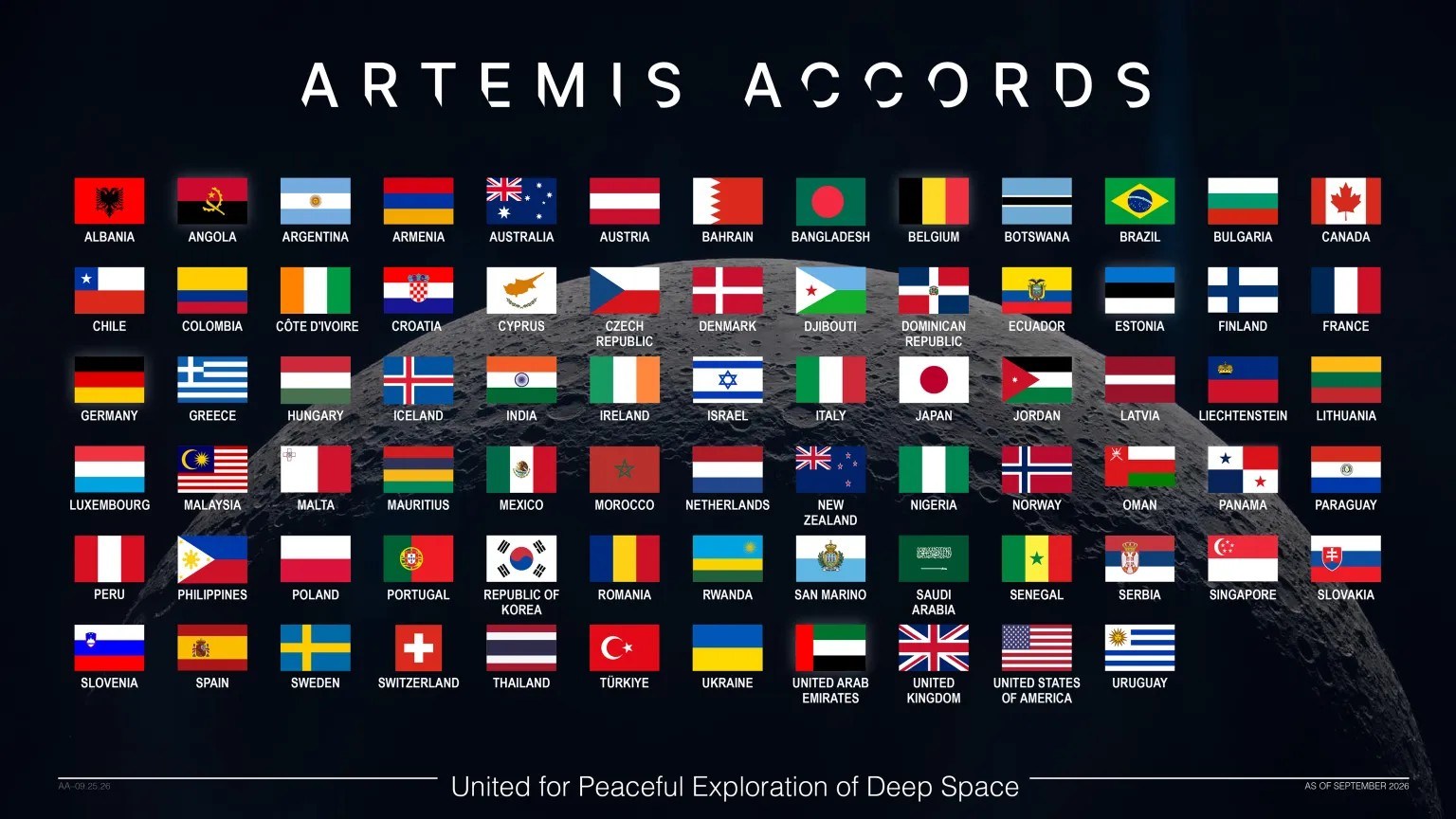
Marking a significant expansion in the number of signatories to the Artemis Accords, NASA welcomed Albania, Croatia, Côte d’Ivoire, and San Marino, bringing total participation to 76 countries.  “Our momentum reflects a growing commitment to peaceful, responsible exploration and a shared understanding that the future in space will be shaped by those willing to lead,” […]

NASAfavorable
Sep 28, 2026 · byNASA
NASA Welcomes Côte d’Ivoire as Newest Artemis Accords Signatory

NASA Welcomes Côte d’Ivoire as Newest Artemis Accords Signatory

Côte d’Ivoire signed the Artemis Accords on Thursday as the 75th signatory during a signing ceremony in the nation’s largest city Abidjan, marking the largest milestone yet for the international coalition of like-minded countries committed to peaceful and responsible space exploration. “The United States and Côte d’Ivoire already cooperate on Earth,” said NASA’s Deputy Administrator […]

Sep 24, 2026 · byNASA
Cameroon: UNHCR RBWCA - Forcibly Displaced and Stateless Persons Presence - August 2026

Cameroon: UNHCR RBWCA - Forcibly Displaced and Stateless Persons Presence - August 2026

Countries: Cameroon, Benin, Burkina Faso, Cabo Verde, Central African Republic, Chad, Congo, Côte d'Ivoire, Democratic Republic of the Congo, Equatorial Guinea, Gabon, Gambia, Ghana, Guinea, Guinea-Bissau, Liberia, Mali, Nigeria, Sao Tome and Principe, Senegal, Sierra Leone, Togo Source: UN High Commissioner for Refugees Please refer to the attached Map.

UNHCRneutral
Sep 23, 2026 · byReliefWeb
World: United Nations Day for South-South Cooperation 2026 - Rising Solidarity in Africa: Transforming National Experiences into Regional Solutions through South-South Cooperation

World: United Nations Day for South-South Cooperation 2026 - Rising Solidarity in Africa: Transforming National Experiences into Regional Solutions through South-South Cooperation

Country: World Source: Regional Centre of Excellence against Hunger and Malnutrition Please refer to the attached file. On the occasion of the 2026 United Nations Day for South-South Cooperation, this article highlights how African countries are transforming national experiences into regional solutions for food security and nutrition. Drawing on examples from Zambia, Côte d’Ivoire, and Benin, it demonstrates how knowledge sharing, peer learning, and technical cooperation can help countries adapt proven approaches to their local contexts. The article also showcases the role of the Regional Centre of Excellence against Hunger and Malnutrition (CERFAM) in identifying, documenting, and promoting good practices, while facilitating South-South and triangular cooperation across Africa. It argues that stronger knowledge exchange and solidarity are essential to accelerating sustainable development and building more resilient food systems on the continent.

Sep 18, 2026 · byReliefWeb
Congo: UNICEF West and Central Africa Region Humanitarian Situation Report No. 1, 30 June 2026

Congo: UNICEF West and Central Africa Region Humanitarian Situation Report No. 1, 30 June 2026

Countries: Congo, Benin, Burkina Faso, Cameroon, Central African Republic, Chad, Côte d'Ivoire, Democratic Republic of the Congo, Equatorial Guinea, Gabon, Gambia, Ghana, Guinea, Guinea-Bissau, Liberia, Mali, Mauritania, Niger, Sao Tome and Principe, Senegal, Sierra Leone, Togo Source: UN Children's Fund Please refer to the attached file. Highlights The first half of 2026 was marked by multiple public health emergencies across West and Central Africa (WCA), including mpox, cholera, measles, polio, yellow fever and Lassa fever. Cholera resurged in the Republic of Congo, mpox spread across several countries, and the Ebola outbreak in the Democratic Republic of the Congo triggered heightened preparedness, surveillance and cross-border coordination. Persistent insecurity in Burkina Faso, Mali and Niger continued to drive large-scale displacement, with nearly 575,000 refugees, asylum seekers and internally displaced persons hosted in neighboring and coastal countries by mid-2026. UNICEF humanitarian interventions admitted 15,000 children aged 6–59 months with severe wasting, provided supplemental measles vaccination to 187,192 children, safe water to 115,800 people, and enabled 131,100 children to access education. UNICEF's 2026 Humanitarian Action for Children (HAC) appeal for WCA remains only 31 per cent funded, with US$28.2 million available against requirements of US$92.6 million, limiting life-saving assistance across the region.

Sep 17, 2026 · byReliefWeb

UNHCR Morocco - Fact sheet, July 2026

UNHCR Morocco - Fact sheet, July 2026

Countries: Morocco, Central African Republic, Côte d'Ivoire, Guinea, Sudan, Syrian Arab Republic Source: UN High Commissioner for Refugees Please refer to the attached file. Operational Context Morocco has consolidated its role as a key country of asylum at the crossroads of Mediterranean and Atlantic migration routes, increasingly serving as a protection and inclusion space amid regional instability, including the conflict in Sudan and forced displacement in the Sahel. UNHCR works closely with the Government of Morocco to support the progressive strengthening of national asylum and protection frameworks within a growing and complex operational environment. As of 30 June 2026, UNHCR Morocco registered 23,615 persons, including 10,538 refugees and 13,077 asylum-seekers. Arrivals from Sudan have increased sharply since 2024, accounting for the majority of new registrations in 2025 and 2026 to date. Sudanese nationals represent 68% of all registrations in 2026, with an average of 233 individuals registered per month. Unaccompanied children accounted for one in nine newly registered individuals, highlighting heightened protection risks. UNHCR operates through a branch office in Rabat and five decentralized Protection Antennas established with its partner the Moroccan Organization for Human Rights (OMDH), providing access to registration, documentation, counselling and protection services across key regions, as sustained population growth continues to place pressure on protection systems. Morocco actively participated in the Global Refugee Forum (2023), making six pledges in key areas including health, education, socio-economic inclusion, data, and humanized border management, with refugee representatives from Morocco participating in both 2023 and 2025.

Sep 14, 2026 · byReliefWeb
Morocco: UNHCR Maroc - Fact sheet, juillet 2026

Morocco: UNHCR Maroc - Fact sheet, juillet 2026

Countries: Morocco, Central African Republic, Côte d'Ivoire, Guinea, Sudan, Syrian Arab Republic Source: UN High Commissioner for Refugees Please refer to the attached file. Context opérationnel Le Maroc a consolidé son rôle en tant que pays d’asile clé, situé au carrefour des routes migratoires méditerranéennes et atlantiques, s’affirmant de plus en plus comme un espace de protection et d’inclusion dans un contexte d’instabilité régionale, notamment en lien avec le conflit au Soudan et les déplacements forcés dans le Sahel. Le HCR travaille en étroite collaboration avec le Gouvernement du Maroc afin de soutenir le renforcement progressif des cadres nationaux. Au 30 juin 2026, le HCR Maroc avait enregistré 23 615 personnes, dont 10 538 réfugiés et 13 077 demandeurs d’asile. Les arrivées en provenance du Soudan ont fortement augmenté depuis 2024, représentant la majorité des nouvelles personnes enregistrées en 2025 et en 2026 à ce jour. Les ressortissants soudanais représentent 68 % de l’ensemble des personnes enregistrées en 2026, avec une moyenne de 233 personnes enregistrées par mois. Les enfants non accompagnés représentent une nouvelle personne enregistrée sur neuf, ce qui met en évidence l’augmentation des risques en matière de protection. Le HCR opère à travers un bureau de branche à Rabat et cinq antennes de protection décentralisées, mises en humains place avec son partenaire, l’Organisation marocaine des droits (OMDH), assurant l’accès à l’enregistrement, à la documentation, au conseil et aux services de protection dans les principales régions, dans un contexte où la croissance continue de la population exerce une pression accrue sur les systèmes de protection. Le Maroc a activement participé au Forum mondial sur les réfugiés (2023), en formulant six engagements dans des domaines clés tels que la santé, l’éducation, l’inclusion socio-économique, les données et la gestion humanisée des frontières. Des représentants de réfugiés au Maroc ont également participé aux éditions de 2023 et 2025.

Sep 14, 2026 · byReliefWeb