← News
Topic · Place

Cameroon

55 articles

See also
📰

Latest Cameroon articles

US: Deportations to African Countries Not Their Own

US: Deportations to African Countries Not Their Own

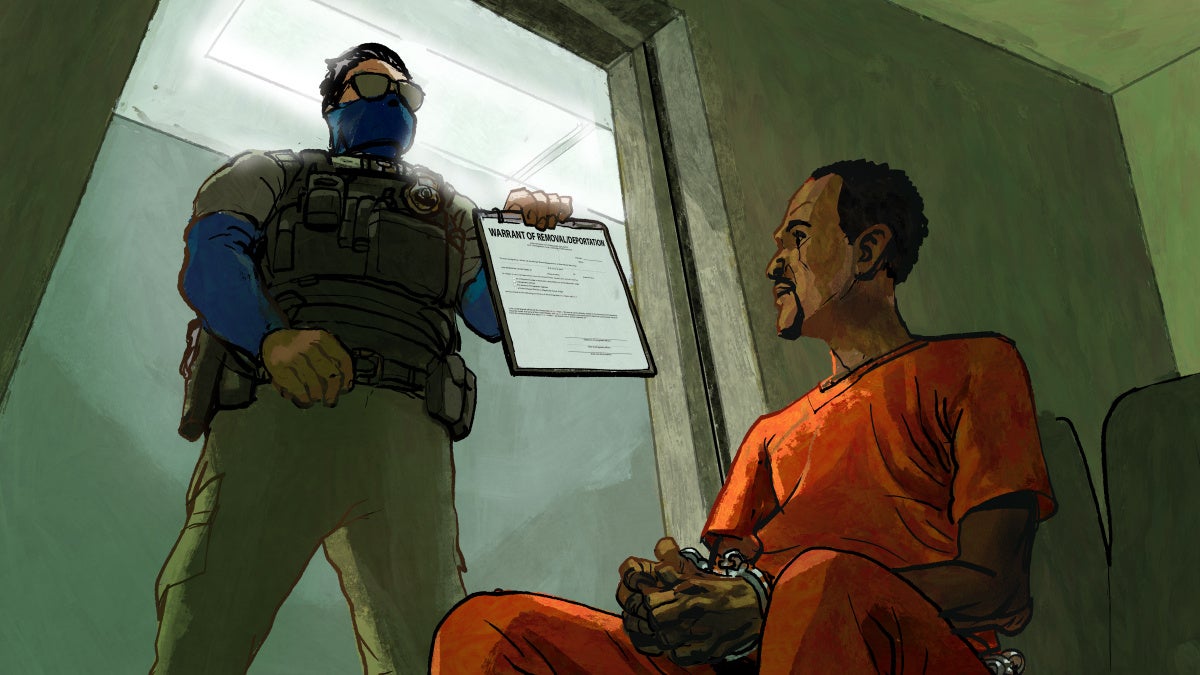
Click to expand Image “An ICE agent told me to sign for deportation to Chad. I refused . . . The ICE agent said, ‘I don’t care, I’m going to sign it myself.’ . . . I said, ‘I’m going to talk to my lawyer,’ but he said, ‘It’s too late.’ . . . I don’t know what happened, maybe later they changed their minds, because we ended up in Cameroon. . . . Even before we got on the plane, we asked where we were going, and they told us, ‘You’ll find out when you arrive.’” – Tesfay T., 35, an Ethiopian man deported to Cameroon. © 2026 John Holmes for Human Rights Watch The United States has sent more than 500 people whom it cannot deport to their own countries, because of the danger they would face, there to various countries in Africa where they have no connections, without giving them a meaningful chance to contest their removals to these countries.Some of the people have been detained upon arrival. Many, if not most, have been left with no practical option but to return to their home countries regardless of the harm they face there.The United States should stop deporting asylum seekers and refugees to third countries that lack the capacity to provide full and fair asylum procedures, and these countries should refuse to receive people under these conditions. (Washington, DC) – The Trump administration is sending hundreds of people who can’t be deported to their own countries, because of the danger they would face, to African countries where they have no connections, Human Rights Watch said in a report released today. Many have been left with no practical option but to return to their home countries regardless of the harm they face there. October 8, 2026 “To Scare People” US Expulsions of Third-Country Nationals to Countries in Africa Download the full report in English Appendix I: Third-Country Deportations by the Numbers Appendix II: Response Letters from IOM The 125-page report, “‘To Scare People’: US Expulsions of Third-Country Nationals to Countries in Africa,” documents that US authorities denied the more than 500 people transferred to third countries a meaningful chance to contest their removals or to articulate their fears of being removed to these countries. Some countries arbitrarily detained people they had accepted, and some have sent people onward to the risk of persecution or torture in their home countries, violating the international law principle of nonrefoulement. “Deporting people to countries where they have never set foot is part of a US policy designed to cause human suffering as a means to deter migration,” said Michael Garcia Bochenek, interim US program director at Human Rights Watch. “Because the US government uses these agreements to shirk its responsibilities and to deprive people of their due process rights, the African governments that have entered into these agreements should terminate or suspend them.” Human Rights Watch researchers conducted remote and in some cases in-person interviews between February and July 2026 with 24 third-country nationals transferred from the United States to 6 countries in Africa: Cameroon, the Central African Republic, the Democratic Republic of Congo, Equatorial Guinea, Eswatini, and South Sudan. Some of the people sent to these countries face the prospect of persecution and other serious harm in the receiving countries. The United States sent at least a dozen people who identified as lesbian, gay, bisexual, or transgender (LGBT) to African states that criminalize same-sex relations or public same-sex romantic conduct. These included refugees who had been granted protection in the United States based on the likelihood they would be persecuted in their home countries because of their sexual orientation or gender identity. Their deportation trapped them in situations in which it was neither safe to return home nor possible to obtain effective protection in the third country. Click to expand Image Graphic © 2026 Human Rights Watch The people interviewed consistently described abusive treatment during their flights from the United States, during which they were shackled, sometimes for 18 hours or more, and received little or no information about their destination. How the third-country nationals deported from the United States are treated upon arrival varies from country to country. In some cases, people being deported have not had access to needed medications or treatments for ongoing serious medical conditions. A 35-year-old man from Ethiopia who had fled to the United States after being imprisoned and tortured in his home country had been denied asylum because he had crossed the border irregularly, but a US immigration judge granted him “withholding of removal,” a bar on returning him to Ethiopia because of the likelihood he would again be tortured there. He said that when he refused to sign a voluntary departure form to send him to Chad, an ICE agent signed it himself. “We were chained and handcuffed, legs, hands, stomach” on the flight, he said. “We could not stand up. When I had to use the bathroom, they didn’t even take off the chains.” After arriving in Cameroon, he had repeated visits from representatives of the International Organization for Migration. “Every time they come, they ask the same thing: ‘Do you want to go back to your home?’ But every time I tell them, ‘I’m not going. Stop asking me that. I don’t want to die,’” he told Human Rights Watch in March. The threat of removal to a third country is part of the Trump administration’s policy of mass deportations. In practice, third-country removals have been used to frighten people into leaving before being thrown into the downward spiral of detention and deportation to unknown destinations. An unnamed US official told the Senate Committee on Foreign Relations that in fact, the purpose of third-country national transfers was to terrorize: “With countries like Palau or Eswatini, the point is that the Administration can threaten people that they will literally be dropped in the middle of nowhere,” the official said. “The point is to scare people.” The US government violates its domestic and international nonrefoulement obligations by sending people to places where they would face persecution, torture, or certain other serious threats to their lives or safety, or where they would likely be subjected to onward deportations to face such threats, Human Rights Watch said. It also deprives people of a meaningful opportunity to contest their removals to these countries and articulate any risk of abuse they may face if removed there. In December, the US Supreme Court will hear arguments about whether the third-country removal policy violates the Due Process clause of the US constitution or otherwise violates statutory bars against removing people to the risk of being tortured. The court has allowed the government to continue third-country deportations for now. The United States should stop deporting asylum seekers and refugees to third countries that lack the capacity to provide full and fair asylum procedures and in the absence of formal, transparent agreements that ensure they will have access to such procedures. These governments should also respect the principle of nonrefoulement and ensure the dignity, security, and fundamental rights of all persons under their jurisdiction, including third-country nationals whose removal they have accepted. “Several of these African governments are not only complicit in US abuses but have violated the human rights of these deported people themselves, including with arbitrary detention and in some cases sending them back to countries where they fled danger,” Bochenek said. “These countries should not detain people without a clear legal basis, and they should not coerce or send anyone to their home country or another country where they would face a risk of persecution, torture, or other serious harm.”

Oct 8, 2026 · byHuman Rights Watch
Cameroon Cholera Outbreak: Situation Report #7 (October 6, 2026)

Cameroon Cholera Outbreak: Situation Report #7 (October 6, 2026)

Country: Cameroon Source: International Medical Corps Please refer to the attached file. FAST FACTS As of October 5, 459 cholera cases and four deaths had been reported in Minawao Refugee Camp, which currently is home to more than 81,000 refugees and operating at about 325% of intended capacity. Multiple transmission chains are suspected within the camp, where heavy rainfall is increasing the risk of rapid spread among vulnerable populations. Nationwide, according to the most recent government figures, there have been 2,903 confirmed cases and 84 deaths nationwide across 13 health districts. The cholera outbreak in Cameroon has a case fatality rate of 2.89%, which is nearly three times higher than the internationally accepted target of less than 1%. OUR RESPONSE International Medical Corps has been operating in Minawao Refugee Camp since 2013, providing Nigerian refugees with primary, community-based and referred secondary healthcare. In response to the outbreak, our team has treated all 459 patients, expanded the cholera treatment unit to 65 beds, trained 105 health workers in case management and infection prevention, and reached a daily average of 6,478 people through community information sessions on hygiene, safe water and early care-seeking. We are coordinating with national health authorities, United Nations agencies, camp management and humanitarian partners to support a coordinated response.

Oct 7, 2026 · byReliefWeb
Algeria: Desert Locust Bulletin 576 (6 October 2026)

Algeria: Desert Locust Bulletin 576 (6 October 2026)

Countries: Algeria, Afghanistan, Benin, Burkina Faso, Cabo Verde, Cameroon, Chad, Côte d'Ivoire, Djibouti, Egypt, Eritrea, Ethiopia, Gambia, Ghana, Guinea, Guinea-Bissau, India, Iran (Islamic Republic of), Liberia, Libya, Mali, Mauritania, Morocco, Niger, Nigeria, Oman, Pakistan, Saudi Arabia, Senegal, Sierra Leone, Somalia, Spain, Sudan, Togo, Tunisia, Yemen Source: Food and Agriculture Organization of the United Nations Please refer to the attached file. ISOLATED ADULTS IN THE WESTERN REGION In September, the general locust situation appeared calm across the three desert locust breeding Regions. In the Western Region, solitarious adult populations continued to be present in Mauritania and Chad, but no locusts were seen in Algeria and Tunisia. No surveys were conducted in Mali and Niger. In the Central Region, isolated adults were seen in Egypt, and no locusts were seen in Sudan, Ethiopia, Saudi Arabia, Yemen and Oman. In the Eastern Region, no locusts were seen in Iran, Pakistan and India. During the forecast period, summer breeding in Mauritania, southern Algeria, northern Mali and Niger, and Chad could result in increasing locust populations in the Western Region, where hopper and adult groups may form by the end of the forecast period. Surveys should continue in the summer breeding areas of these countries as the ecological conditions are favorable for breeding, and preventive control may be required. In the Central Region, small-scale breeding may occur in the summer areas of Sudan, the western lowlands of Eritrea and the interior areas of Yemen. Small-scale winter breeding may begin on the Red Sea and Gulf of Aden coastal plains, but no significant developments are expected. In the Eastern Region, summer breeding may occur along the Indo-Pakistan border; however, no significant developments are expected.

Oct 7, 2026 · byReliefWeb
Benin: West Africa Seasonal Monitor: Localized Rainfall Deficits Persist Across the Sahel as the Rainy Season is Ending (September 29, 2026)

Benin: West Africa Seasonal Monitor: Localized Rainfall Deficits Persist Across the Sahel as the Rainy Season is Ending (September 29, 2026)

Countries: Benin, Burkina Faso, Cameroon, Central African Republic, Chad, Côte d'Ivoire, Guinea, Liberia, Mali, Mauritania, Niger, Nigeria, Senegal, Sierra Leone, Togo Source: Famine Early Warning System Network Please refer to the attached file. Key Messages The Intertropical Front (ITF) reached its northernmost position in the second dekad of August, and due to an uneven southward retreat, it is currently located north of the climatological mean along its entire length. Rainfall deficits across northern part of the Sahel zone have reduced vegetation conditions and crop water availability. Rainfall forecasts for October and November show above-normal rainfall is expected across the Sahel, while below-normal rainfall is likely over the bimodal areas. Based on the extended streamflow forecast, the likelihood of flooding along the major Rivers in West Africa is extremely low through the end of the season.

Oct 6, 2026 · byReliefWeb
📰

CAR: Central African crisis: renewed momentum for durable solutions to forced displacement

Country: Central African Republic Source: UN High Commissioner for Refugees Bangui – Meeting in Bangui, ministers and heads of delegation from the Central African Republic, Cameroon, the Republic of the Congo, the Democratic Republic of the Congo, Chad and Sudan reaffirmed their commitment to accelerate implementation of the Yaoundé Declaration and the Support Platform for Solutions for people forcibly displaced by the Central African crisis. At the extraordinary ministerial meeting of the Steering Committee of the Support Platform for Solutions for the Central African Republic (CAR Platform), participants welcomed progress since its launch in October 2023, particularly on voluntary returns, assistance to spontaneous returnees, sustainable reintegration, the identification of development hubs, progress towards inclusion and solutions for refugees in countries of asylum, and national and regional coordination. “Durable solutions are not limited to the return of populations. Returning home must also mean being able to live in safety, access essential services, exercise one’s rights, and have the means to rebuild one’s life and contribute to the development of one’s country… The voluntary, safe and dignified return of Central African refugees, as well as their sustainable reintegration, are essential pillars of the implementation of the Yaoundé Declaration,” said Felix Molua, Prime Minister of the Central African Republic. Since 2017, 75,031 Central African refugees have been assisted to voluntarily return, including 16,265 in 2024 and 21,455 in 2025. Several thousand others have returned spontaneously, according to local authorities. However, as of 31 March 2026, more than 1.16 million people remained forcibly displaced by the Central African crisis, including more than 650,000 refugees in countries of asylum and 427,479 internally displaced people in the Central African Republic. Renewed priorities to accelerate solutions In their final communiqué, ministers and heads of delegation recommended strengthening the CAR Platform’s governance structures and mobilizing additional financial and technical resources to support national action plans. They also called for the implementation of recommendations from the technical working groups, including the resumption of voluntary repatriation in 2026 and a provisional schedule for return convoys in 2027, aligned with reception capacities, reintegration programmes, health measures, and development initiatives in areas of return. Civil documentation, access to water, health care, education and economic opportunities were identified as investment priorities in development hubs to support reintegration, strengthen social cohesion and foster voluntary, safe and dignified returns. “Reintegration can only be sustainable if populations find, in areas of return, the conditions they need to rebuild their lives. This means investing in essential services, infrastructure and economic opportunities, for the benefit of returnees as well as the communities that host them,” said William Chemaly, UNHCR Representative in the Central African Republic. Participants nevertheless noted persistent challenges, including insecurity in some areas of return, socio-economic and infrastructure constraints, insufficient resources, growing reintegration needs and additional health measures linked to the Ebola virus. They invited technical and financial partners, international financial institutions, United Nations agencies, regional organizations, the private sector, civil society and new partners to strengthen support for the Yaoundé Declaration and the CAR Platform. “Durable solutions require structural investments that strengthen community resilience, stimulate local economic development and create opportunities for refugees, returnees, internally displaced people and host communities. The African Development Bank will remain engaged alongside Governments, UNHCR and partners,” said Mamadou Coulibaly, Resident Representative of the African Development Bank (AfDB) in the Central African Republic. Media contacts in Bangui: Gloria Ramazani, ramazang@unhcr.org, +236 74147892 Fatime Stella, fatime@unhcr.org, +236 74083734 About the CAR Platform The Support Platform for Solutions for the Central African Republic (CAR Platform) was officially launched in Bangui in October 2023, following the adoption of the Yaoundé Declaration in April 2022. It is a regional mechanism for dialogue, coordination and partnership mobilization aimed at promoting durable solutions for Central African refugees, internally displaced people, returnees and host communities affected by the Central African crisis. As of 31 March 2026, more than 1.16 million people remained forcibly displaced as a result of the Central African crisis, including more than 650,000 refugees in countries of asylum and 427,479 internally displaced people in the Central African Republic.

Oct 2, 2026 · byReliefWeb
Sudan: UN releases $160 million to save lives in 12 underfunded humanitarian crises

Sudan: UN releases $160 million to save lives in 12 underfunded humanitarian crises

Countries: Sudan, Afghanistan, Burkina Faso, Cameroon, Chad, Cuba, Mali, Niger, occupied Palestinian territory, Somalia, South Sudan, Yemen Source: UN Office for the Coordination of Humanitarian Affairs Please refer to the attached file. (New York/Geneva, 2 October 2026) The United Nations today allocated US$160 million from the Central Emergency Response Fund (CERF) to support life-saving assistance in 12 of the world’s most underfunded humanitarian crises across Africa, Asia, Latin America and the Middle East. This allocation is part of a wider push to reach 87 million people facing the most severe humanitarian needs this year. “We have 87 million people to reach, and no time to waste. Today’s new funding will help us get aid to people who might otherwise be left behind,” said Tom Fletcher, Under-Secretary-General for Humanitarian Affairs and Emergency Relief Coordinator. “But money alone won’t get us there: leaders must exercise political will to open access, remove obstacles and help us reach people whose lives are on the line.” Of the new allocation, $150 million will support life-saving responses in Afghanistan ($18 million), Burkina Faso ($10 million), Cameroon ($6 million), Chad ($9 million), Cuba ($4 million), Mali ($10 million), Niger ($10 million), the occupied Palestinian territory ($18 million), Somalia ($16 million), South Sudan ($15 million), Sudan ($16 million) and Yemen ($18 million). Five of the crises – Afghanistan, the occupied Palestinian territory, South Sudan, Sudan and Yemen – are among the 10 contexts where Mr. Fletcher has called for urgent diplomatic action to secure humanitarian access to unlock assistance for 11 million people of the 87 million people prioritized for support this year. The allocation also includes $10 million to address the urgent needs of people with disabilities in the 12 crises and make humanitarian assistance more accessible and inclusive. CERF is partnering with the UN Global Disability Fund , which will provide up to $4 million in complementary funding and technical support through its Inclusion Catalyst Hub, including to strengthen the capacity and participation of local organizations of persons with disabilities in humanitarian response. CERF is the UN’s global emergency fund managed by the UN Office for the Coordination of Humanitarian Affairs (OCHA). Today’s allocation brings total CERF funding allocated so far in 2026 to $483 million. CERF receives broad support from UN Member States, observers, regional authorities, international organizations, the private sector and individuals. CERF is one of the fastest funding instruments available and allocates funding to rapid response and underfunded emergencies. Funding decisions for CERF allocations to underfunded emergencies are based on detailed analysis of more than 100 humanitarian indicators and wide consultation with partners. Note to the Editor Since its creation by the UN General Assembly in 2005, and with generous contributions from 135 Member States and observers, as well as other donors including private individuals, CERF has assisted hundreds of millions of people with some $10.2 billion across more than 117 countries and territories. This includes $3.4 billion to underfunded crises. In 2025, $212 million was disbursed to implement life-saving activities in 18 underfunded emergencies. CERF has an annual funding target of $1 billion. CERF launched its Climate Action Account at COP28, offering a quick, efficient and impactful avenue for climate-related humanitarian finance. It aims to assist the world’s most vulnerable communities facing the consequences of the climate crisis, including through anticipatory action. For further information, please contact: In New York, Eri Kaneko, kaneko@un.org, +1 917 208 8910 In Geneva: Jens Laerke, laerke@un.org, +41 79 472 9750

Oct 2, 2026 · byReliefWeb
📰

The Transition of Aid Coordination in Nigeria Is a Major Test for the Humanitarian Community

Country: Nigeria Source: International Peace Institute The precipitous decline in funding for humanitarian assistance has made headlines around the world. In Nigeria, reports indicate that reductions in the delivery of food assistance, nutrition programming, and health services have already affected hundreds of thousands of people. According to the 2026 Nigeria Humanitarian Needs and Response Plan (HNRP), 7.3 million people are already in need of some form of assistance nationwide, including 5.9 million concentrated in three northeastern states. The World Food Programme (WFP) and UNICEF have warned in recent months that worse could follow. At the same time, Nigeria—along with many of its neighbors—has suffered for years from Islamist insurgencies and other sources of insecurity. Addressing humanitarian and economic challenges is critical to reducing this insecurity in Nigeria and the region. Another layer of complication was added to the humanitarian response in Nigeria in March 2025 when the Inter-Agency Standing Committee (the UN-led global humanitarian coordination body) named Nigeria as one of eight countries designated for “humanitarian transition,” along with Cameroon, Colombia, Eritrea, Iraq, Libya, Pakistan, and Zimbabwe. This designation comes as part of the global Humanitarian Reset , a broader reform effort that, as the IASC acknowledges, comes as funding, access, and operational capacity are under “growing strain.” Of these eight contexts, Nigeria and Colombia stand out because of their combination of large-scale humanitarian needs, insurgencies, and potential for environmental shocks. The 2026 HNRP characterized the humanitarian transition in Nigeria as “strengthening the role of the Government of Nigeria and civil society in coordinating and delivering humanitarian assistance, while gradually phasing out international support to humanitarian coordination where appropriate.” International support for humanitarian coordination is set to draw down over the course of 2026–2027 and cease by the end of 2027. During this window, the international community is undertaking a range of activities designed to support the government and Nigerian civil society with the additional burden imposed by the international drawdown. In some ways, the choice of Nigeria as a transition country has a strong rationale. The humanitarian community has already been operating in Nigeria at large scale for more than 10 years. Nigeria has a significant natural resource base, the income from which could be used to finance humanitarian action. According to World Bank governance indicators, Nigeria’s government institutions are more effective than those in some other countries with large-scale humanitarian needs, such as the Democratic Republic of the Congo and Yemen, and are more on par with Zimbabwe and Kenya. More broadly, there have long been calls for governments and national NGOs to play a stronger role in humanitarian action. The 2016 Grand Bargain and a large body of literature on localization emphasize support for the leadership, delivery, and capacity of local responders. Nevertheless, the decision to include Nigeria among the transition countries carries considerable risk. As the 2026 HNRP also acknowledges, “crisis-level humanitarian needs are expected to be sustained—or even increase—for some time to come.” The transition timeline also leaves little time to strengthen the financial, decision-making, and technical systems required for the government to take full responsibility for such weighty and large-scale functions. For Nigerians in need of humanitarian assistance—and for the country’s broader stability—it is vital that the transition be managed effectively. The Nigerian experience will also offer lessons to the humanitarian community and governments around the world that may experience such a transition in the future. Continuous assessment will be required during and after the transition to ensure that real-time impressions, perceptions, and results are captured. Can a Financially Driven Transition Kick-Start Effective National Ownership? Drawdowns in international support for humanitarian coordination are usually triggered by an improvement in the humanitarian situation or an improvement in the capacity of national structures to meet residual humanitarian needs. The drawdown in Nigeria, by contrast, is taking place as humanitarian operations face a severe financial crunch, and the decision to draw down preceded planning for national structures to be sufficiently strengthened by the end of the transition. Sustained and consistent political will from all sides will be required to ensure that the transition works and that the federal and state governments can shoulder the new level of responsibility for addressing lifesaving needs. On the government side, this political will must also survive the 2027 elections. With global humanitarian funding severely reduced for the foreseeable future, the Nigerian transition will offer the broader humanitarian community insight into whether a financially motivated deadline can incentivize and accelerate national ownership without exacerbating the situation of those in need of lifesaving aid. How Can the Shift in Responsibility Be Managed? A fundamental element of the transition is managing the shift in responsibility for leading, coordinating, and financing humanitarian operations. While the government has always played a key role in Nigeria, the transition will significantly expand its responsibility for lifesaving assistance. The government and the humanitarian community have already taken positive steps by undertaking joint transition planning . For its part, the Federal Ministry of Humanitarian Affairs and Poverty Reduction has also moved toward institutionalizing greater ownership, including by establishing the National Council on Humanitarian Affairs and Poverty Reduction and a One Humanitarian One Poverty Reduction System. The National Emergency Management Agency has also committed to strengthening its coordination and response role in light of the transition. It is vital that all other relevant government organs—such as those for health, education, and housing—as well as state governments also play their part in taking ownership. In turn, federal and state legislatures must back their executive institutions with consistent and continuous funding for humanitarian action. Developing the procedural and financial structures in the government is much more complicated than developing the equivalent structures within the humanitarian community. Globally, there will be lessons to draw from the mechanics of this shift in responsibility for leading and financing an operation of this scale, including the milestones and processes set by the Nigerian government and the humanitarian community to make that shift happen. Can Development Approaches Strengthen Institutions That Help Deliver Lifesaving Assistance? The extent of the new responsibilities taken on by the government and Nigerian NGOs means that implementing them will likely be an iterative learning process. Routinizing and enhancing the management of the financing, planning, and coordination of humanitarian support across Nigeria’s complex governance structures may take several years. While the international community will support the strengthening of these structures during the humanitarian transition, international organizations must maintain technical and managerial assistance to government institutions and NGOs to support humanitarian planning, coordination, and financing beyond 2027. Such assistance will also be required in areas—such as the North West—with high levels of humanitarian need or vulnerability to shocks, and where structured international support for coordination has been largely absent. Nigeria will be an important test of whether humanitarian and development actors—both Nigerian and international—can cooperate sufficiently to anchor these efforts to strengthen humanitarian institutions in longer-term national and international development planning and budgeting cycles, maintain relevant technical support capacities, and coordinate effectively to transition to more sustainable development assistance and durable solutions. Can What Needs to Be Independent Stay Independent? Partnership between the Nigerian government and Nigerian NGOs and civil society will be important to the successful planning, coordination, and delivery of lifesaving assistance in the future. At the same time, the government is heavily involved in military and security operations in the areas where humanitarian need is greatest. Serious question marks have been raised over the conduct of Nigerian forces with regard to the protection of civilians. For its part, the government has leveled accusations that some humanitarian assistance has gone to insurgent groups. While a close relationship between the government and NGOs is important, NGOs will therefore need to continue to assert their independence to enhance their chances of delivering aid in insecure areas and effectively monitor threats to civilians. The protection sector is already moving in this direction by ensuring the continuation of an independent architecture at the national and field level for data collection, monitoring, analysis, early warning, referrals, and delivery support. Similar efforts should be made to preserve space for coordinating independent humanitarian access so that NGOs can maintain strong information sharing, analysis, and discussion on operational responses. The international community should advocate for these mechanisms and continue to back them with technical and financial support. How Can International Humanitarian Organizations Better Prepare for Implementing an Exit Strategy? The drop in funding and the potential for further volatility in aid financing indicate that open-ended commitments to financing international humanitarian coordination systems may be a thing of the past. In future humanitarian crises around the world, the international humanitarian community will likely have to treat transitions as a more pressing reality and prepare for drawing down support for humanitarian coordination in a more structured way. This will allow more time—and hopefully financial resources—for systematically working with national counterparts to strengthen national institutions and organize a handover before resources start to dwindle. The Nigerian case will be an important guide for judging realistic methods and time frames for institutional development, where to focus most time and resources from an early stage to prepare for an eventual exit, and how to cooperate with national partners to make it work—even before the deadline for ending international support to coordination has been set. Peter Rice is an independent political and humanitarian affairs consultant who served as the UN’s strategic planner for the humanitarian transition in Nigeria from 2025 to 2026. Originally Published in the Global Observatory

Oct 2, 2026 · byReliefWeb
Cameroon - Key Message Update: Rainfall deficits compound conflict-driven production declines in the Far North, September 2026 - January 2027

Cameroon - Key Message Update: Rainfall deficits compound conflict-driven production declines in the Far North, September 2026 - January 2027

Country: Cameroon Source: Famine Early Warning System Network Please refer to the attached file. Key Messages In the Far North, Crisis (IPC Phase 3) outcomes are expected to continue through September in the conflict-affected divisions of Mayo-Sava, Mayo-Tsanaga, and Logone-et-Chari, with some very poor displaced households likely facing large food consumption gaps consistent with Emergency (IPC Phase 4) , before improving to Stressed (IPC Phase 2) in October as main harvests replenish household food stocks and reduce market reliance. Frequent Islamist attacks continue to disrupt agricultural and pastoral livelihoods, averaging 25 incidents per week over the past month, and rainfall deficits are compounding these conflict-driven production declines: June-to-September rainfall was 20 to 50 percent below average in Logone-et-Chari, delaying planting and contributing to poor crop development, while higher fertilizer prices and reduced access to subsidized inputs have further constrained production. These combined pressures likely indicate a below-average harvest, which is expected to weaken the area's seasonal improvement to Stressed in October. Reduced labor demand, lower wages, and heightened competition have also kept seasonal earnings well below typical levels. Many households remain market-dependent in September despite localized early harvests: cereal prices were more than 18 percent above last month's levels, and low incomes have further constrained purchasing power. Very poor displaced households affected by repeated displacement, asset losses, and limited access to land and livelihood opportunities are unlikely to benefit from the harvest-driven improvement, however, and are expected to continue relying on severe coping strategies, including reducing essential health expenditures, even as area-level outcomes improve. These outcomes are expected despite ongoing humanitarian food assistance in the area, which has faced reduced rations and coverage amid funding shortfalls. In the Northwest and Southwest regions, Crisis (IPC Phase 3) outcomes will continue in Ndian, Lebialem, Menchum, Momo, and Bui divisions, where severe conflict-driven production declines and geographic isolation continue to limit household food access. Elsewhere in the two regions, outcomes are expected to remain Stressed (IPC Phase 2) through October.A nearly two-week separatist-imposed lockdown in September disrupted harvesting, crop sales, and market access, and already above-average food prices rose further ahead of and during the lockdown, remaining elevated through the month and compounding the loss of income from disrupted markets, particularly for market-dependent urban displaced households. These pressures are expected to drive a deterioration to Crisis (IPC Phase 3) at the area level across the Stressed divisions starting in November, with outcomes persisting at that level through at least January 2027 amid continued high market dependence, elevated food prices, and limited income-earning opportunities. Many urban internally displaced persons (IDP) are expected to increase reliance on inadequate and irregular informal labor to meet their basic food needs, as well as increase use of debt to finance food purchases and reduce meal size and frequency. In Mbere (Adamawa), Kadey, and Lom-et-Djerem (East) — divisions hosting large populations of refugees from the Central African Republic — Stressed (IPC Phase 2) outcomes are expected to continue through January 2027 . The continued presence of refugee households is expected to sustain pressure on food prices, casual agricultural and off-farm labor opportunities, and the cost of essential non-food goods and services. Poor refugee households who are market dependent for food due to limited assets and restricted access to land will continue to face difficulties accessing sufficient food amid constrained income-earning opportunities and above-average prices, despite generally good market supply following the July-September harvests. Very poor refugee households are expected to remain in Crisis (IPC Phase 3) and to continue employing negative coping strategies, including borrowing money in order to meet basic food needs.

Oct 1, 2026 · byReliefWeb
Cameroon govt announces payments as teachers strike continues

Cameroon govt announces payments as teachers strike continues

In Cameroon, the start of the academic year for Universities, scheduled for October 5, may not take place. This is as a result of an indefinite strike launched by SYNES, the National Union of Higher Education Teachers. Teachers are demanding the payment of 16 billion CFA francs in academic bonuses, equivalent to nearly 24 million euros.

Oct 1, 2026 · byFrance 24
Ethiopian AI expert, Timnit Gebru, wins 'alternative Nobel'

Ethiopian AI expert, Timnit Gebru, wins 'alternative Nobel'

In tonight's edition, Africa's richest man breaks ground on a 16 billion dollar oil refinery in Kenya. Also, at universities across Cameroon, programming is overshadowed with uncertainty amidst an indefinite strike by lecturers. And I speak to Ethiopian-born computer scientist and pioneering AI ethicist Timnit Gebru as she is  honored with the Swedish Right Livelihood Award for her work on how AI is influenced by biases.

Sep 30, 2026 · byFrance 24