Yemen government forces claim control of Mount Qarfan in Taiz
 Sep 23, 2026 · byAl Jazeera
23 articles

Mountain’s capture disrupts Houthis' defences and impacts their advances along Red Sea coast.
Sep 23, 2026 · byAl Jazeera
Thousands flee fighting as Iran-aligned group seeks to consolidate territorial gains against Saudi-backed government forces Middle East live – latest updates As many as 169 people have been reportedly killed in Yemen in the last three days as Iran-aligned Houthis battle Saudi-backed government forces for control of strategic heights on the Red Sea coast, while thousands flee the violence. Houthi military officials said at least 118 people had been killed in clashes, as well as Saudi air and artillery strikes on Taiz, al-Jawf, Marib and Saada provinces since Sunday, Agence France-Presse reported. Yemeni government sources have said at least 36 people have been killed on their side of the conflict. Continue reading...
 Sep 22, 2026 · byThe Guardian
Countries: Yemen, Djibouti, Somalia Source: UN High Commissioner for Refugees El recrudecimiento de los combates en Yemen podría provocar nuevos desplazamientos masivos, ante la previsión de que un número creciente de personas se vea obligado a huir tanto dentro del país como hacia Yibuti, Somalia y otros países, advierte ACNUR, la Agencia de la ONU para los Refugiados. Los combates se están extendiendo por múltiples frentes en Yemen, desencadenando una crisis de desplazamiento que crece rápidamente y que ha obligado a más de 130.000 personas a abandonar sus hogares desde principios de septiembre. La población civil sigue soportando las peores consecuencias del conflicto. Se han registrado al menos 110 víctimas, entre ellas 28 muertos. Se teme que las cifras de víctimas y desplazados sigan aumentando, agravando unas necesidades humanitarias ya acuciantes en un momento en el que la inseguridad y las restricciones de acceso dificultan aún más las labores de ayuda. Taiz sigue siendo el epicentro de la crisis y concentra más del 60% del total de los desplazamientos. Muchas familias permanecen dentro de la propia gobernación, sin posibilidad de trasladarse a lugares más seguros debido a los combates, las carreteras bloqueadas o la falta de transporte y combustible. También se han registrado desplazamientos en las gobernaciones de Al Jawf, Marib y Al Hodeida, lo que refleja la expansión del conflicto a múltiples frentes. La mayoría de las familias desplazadas recientemente ha encontrado cobijo en las gobernaciones de Adén, Lahj, Abyan y Al Dhale'e, así como en Marib, adonde han llegado más de 90.000 personas. Las condiciones de los desplazados son cada vez más graves a medida que llegan a asentamientos ya saturados, donde necesitan con urgencia alojamiento, alimentos, agua potable, atención sanitaria y protección. Esta situación añade presión a unos servicios y unas infraestructuras ya de por sí frágiles. Incluso antes de la reciente escalada, más de 5,2 millones de personas estaban desplazadas dentro de Yemen, y los actuales combates están agravando una crisis humanitaria ya de por sí desesperada. Se calcula que más de 22 millones de personas necesitan asistencia humanitaria, entre ellas desplazados internos y unos 65.000 refugiados y solicitantes de asilo, principalmente procedentes de Somalia y Etiopía. En respuesta, ACNUR ha declarado una emergencia inicial de Nivel 1 para Yemen, Yibuti y Somalia, lo que permite movilizar rápidamente recursos y personal para ampliar la respuesta mediante ayudas económicas, alojamiento y protección. La Agencia ya ha proporcionado asistencia económica de emergencia a 200 familias desplazadas y está previsto prestar apoyo inmediato a otras 1.000. Dado que más del 70% de las familias desplazadas se encuentran en alojamientos de emergencia o en condiciones precarias, también se ha asegurado financiación para proporcionar ayudas económicas destinadas al alojamiento a 500 familias desplazadas en Adén y Lahj. Además, se están preparando 1.000 kits de reparación de viviendas para rehabilitar las casas dañadas. También se han iniciado evaluaciones de protección para identificar las necesidades y los riesgos más urgentes de 2.000 hogares. ACNUR está enviando desde su reserva mundial de emergencia en Dubái 3.000 paquetes de artículos básicos de ayuda para las familias en Yemen. Los suministros incluyen esterillas para dormir, mantas, lámparas solares, utensilios de cocina, bidones para agua, mosquiteras y lonas de plástico. Junto con sus socios, ACNUR está preparando el retorno voluntario de unos 150 refugiados somalíes desde Adén a Mogadiscio. A pesar de estos esfuerzos para ampliar la asistencia, las operaciones humanitarias se enfrentan a graves limitaciones. Los frentes activos, la inseguridad, las restricciones de movimiento, las interrupciones de las telecomunicaciones y los daños en las carreteras y otras infraestructuras —incluido el puerto de Al Mokha— están limitando el acceso y ralentizando la distribución de ayuda vital. Es urgente garantizar un acceso seguro y sin obstáculos a las poblaciones afectadas para poder ayudar a las familias que han huido con muy pocas pertenencias. La respuesta también está limitada por un grave déficit de financiación. La operación de ACNUR en Yemen solo cuenta con el 18% de la financiación necesaria para 2026: de los 194 millones de dólares requeridos incluso antes de que esta última escalada generara nuevas necesidades, solo se han recibido 34 millones. Se calcula que ACNUR necesita urgentemente 25 millones de dólares para prestar asistencia a unas 231.000 personas con necesidades humanitarias inmediatas. Al otro lado del golfo de Adén, los refugiados yemeníes siguen llegando a Yibuti a diario. Hasta ahora, más de 3.000 han llegado al país, donde ACNUR trabaja con las autoridades y sus socios para prestar asistencia a los recién llegados. Cientos de personas han desembarcado también en Somalilandia y Puntlandia. El número diario de llegadas de refugiados a Yibuti ya ha superado la cifra diaria más alta de yemeníes registrada desde 2015. ACNUR y sus socios se están preparando para la llegada de más de 10.000 personas a Yibuti. Se espera que las condiciones del mar mejoren a mediados de octubre, lo que podría facilitar nuevas travesías. La operación de ACNUR en Yibuti solo cuenta con el 15% de la financiación necesaria, y ACNUR y sus socios humanitarios hacen un llamamiento urgente para recaudar 13,5 millones de dólares que permitan garantizar a los recién llegados el acceso al registro, la recepción, la protección y otros servicios esenciales. Nos preocupa profundamente el impacto de la reanudación del conflicto sobre la población civil, incluidos los desplazamientos generalizados y el sufrimiento que está provocando.
 Sep 22, 2026 · byReliefWeb
Countries: Yemen, Djibouti, Somalia Source: UN High Commissioner for Refugees Intensifying fighting in Yemen could drive more mass displacement, with growing numbers of people expected to flee both within Yemen and to Djibouti, Somalia and other countries, UNHCR, the UN Refugee Agency, is warning. Fighting in Yemen is expanding across multiple front lines, triggering a rapidly growing displacement crisis and driving more than 130,000 people to flee their homes since the beginning of September. Civilians continue to bear the brunt of the conflict, with at least 110 casualties reported, including 28 lives lost. It is feared that casualty and displacement numbers are likely to grow, deepening humanitarian needs at a time when insecurity and access constraints are already hampering relief efforts. Taiz remains the epicentre of the crisis, accounting for more than 60 per cent of the overall displacement, with many families remaining within the governorate itself, unable to move to safer locations due to fighting, blocked roads or lack of transportation and fuel. Displacement is also being reported from Al Jawf, Marib and Al Hodeidah governorates, reflecting the expanding, multi-front nature of the conflict. Most newly displaced families have found refuge in Aden, Lahj, Abyan and Al Dhale'e governorates and even in Marib, with more than 90,000 people arriving in these areas. Conditions for displaced people are increasingly severe as they arrive at already congested displacement sites in urgent need of shelter, food, clean water, health care and protection, placing additional pressure on fragile services and infrastructure. Even before the recent escalation, more than 5.2 million people were internally displaced in Yemen, and the current fighting is deepening an already dire humanitarian crisis in the country. It is estimated that more than 22 million people require humanitarian assistance, including internally displaced people and around 65,000 refugees and asylum-seekers, mainly from Somalia and Ethiopia. In response, UNHCR has declared an initial Level 1 emergency for Yemen, Djibouti and Somalia, enabling the rapid mobilization of resources and staff to scale up our response through cash assistance, shelter and protection. Emergency cash assistance has already been provided to 200 displaced families, with immediate support planned for 1,000. As more than 70 per cent of displaced families are in emergency or substandard shelters, funding has also been secured to provide cash-for-shelter assistance to 500 displaced families in Aden and Lahj, while preparations are underway to distribute 1,000 shelter repair kits to rehabilitate damaged houses. Protection assessments have been initiated to identify urgent needs and risks among 2,000 households. UNHCR is dispatching 3,000 packages of core relief items from its global emergency stockpile in Dubai to support families in Yemen, including sleeping mats, blankets, solar lamps, kitchen sets, jerry cans, mosquito nets and plastic tarpaulins. With partners, planning is underway for the voluntary return of some 150 Somali refugees from Aden to Mogadishu. Despite these efforts to scale up the assistance, humanitarian operations face severe constraints. Active front lines, insecurity, movement restrictions, telecommunications disruptions, and damaged roads and other infrastructure – including Al Mokha port – are limiting access and slowing the delivery of life-saving aid. Safe and unimpeded access to the affected populations is urgently needed to bring relief to families who fled with little. The response is also constrained by a severe funding shortfall. UNHCR's Yemen operation is only 18 per cent funded in 2026, with $34 million of the $194 million required even before this latest escalation generated new needs. An estimated $25 million is urgently needed for UNHCR to assist some 231,000 people with immediate humanitarian needs. Across the Gulf of Aden in Djibouti, Yemeni refugees continue to arrive daily. More than 3,000 have so far arrived in Djibouti – where UNHCR is working with the authorities and partners to assist the arrivals. Hundreds have also landed in Somaliland and Puntland. The daily number of refugee arrivals in Djibouti has already surpassed the highest daily number of Yemenis arriving since 2015. UNHCR and partners are planning for more than 10,000 arrivals in Djibouti, with sea conditions expected to improve by mid-October, potentially enabling further crossings. UNHCR’s Djibouti operation is 15 per cent funded, and UNHCR and humanitarian partners are urgently appealing for $13.5 million to ensure arrivals can access registration, reception, protection and other essential services. We are deeply concerned about the impact of the renewed conflict on civilians, including widespread displacement and suffering.
Sep 22, 2026 · byReliefWebCountry: Yemen Source: Action for Humanity Action For Humanity (AFH), one of the leading humanitarian organisations operating in Yemen, is warning that the country's already fragile humanitarian situation could deteriorate further as fighting continues across multiple frontlines and the risk of wider escalation remains high. Recent reporting indicates that hostilities remain intense across western Taiz, the Bab al-Mandab corridor and Marib, with ongoing fighting, air operations and insecurity creating growing concerns for civilians and humanitarian access. The warning comes just weeks after renewed fighting forced tens of thousands of families from their homes. More than 85,000 families have now been displaced across Ta'iz and Al Hodeidah, many arriving in safer areas with little food, limited access to clean water and no certainty about what comes next. Humanitarian organisations are increasingly concerned that further instability could lead to additional displacement, greater humanitarian access challenges and increasing pressure on communities already struggling to cope. Action For Humanity continues to deliver humanitarian programmes across Yemen and is preparing to scale up its emergency response. Working through its teams and local partners, AFH is preparing food distributions, water trucking, hygiene and sanitation support, and emergency cash assistance to help displaced families meet their most urgent needs. The organisation is also warning that Yemen remains one of the world's most severe and chronically underfunded humanitarian crises. As humanitarian needs increase, aid agencies face growing challenges in securing sufficient funding to respond at the scale required. Wassim Khmaja, Acting Chief Executive Officer of Action For Humanity, said: "Yemen remains one of the world's most severe humanitarian crises, yet it continues to receive only a fraction of the attention and funding the scale of need demands." "Families who have already endured years of conflict and hardship are once again being forced from their homes. Many have little access to food, clean water, healthcare or other essential services. The humanitarian consequences of further deterioration could be devastating." "It very much feels as though Yemen remains on the brink of a humanitarian catastrophe. Without urgent support, many vulnerable families risk being left without the assistance they need to survive." "Action For Humanity is mobilising emergency assistance across affected areas and stands ready to expand its response as needs evolve. Our teams and partners are preparing food assistance, water support, sanitation services and emergency cash assistance for families who have lost almost everything." "Yet humanitarian agencies cannot respond at the scale required without funding. Every day that passes without sufficient support means more families going hungry, more children missing out on essential services and more people being pushed deeper into crisis." Action For Humanity is calling on donors, institutions and the international community to increase support for humanitarian operations in Yemen and ensure aid agencies have the resources needed to respond rapidly to emerging needs. How the Public Can Help £60 could provide a 30-day food parcel for a family affected by the crisis. £80 could provide essential non-food items for a displaced family, helping them meet their basic needs during displacement. £150 could provide emergency cash assistance for one month, helping a family cover essential costs such as food, rent and medicine. Donations will help Action For Humanity provide food, clean water, sanitation support, emergency assistance and longer-term support for vulnerable children affected by the crisis. Families in Yemen have endured years of conflict and hardship. Today, thousands face the uncertainty of displacement once again. ENDS Notes to editor About Action For Humanity Action For Humanity is an international humanitarian and development charity working in crisis-affected communities around the world. In Yemen, Action For Humanity delivers life-saving and long-term support to vulnerable communities through integrated humanitarian programmes. Our work in Yemen includes: Emergency healthcare through fixed and mobile health facilities. Nutrition support for malnourished children and vulnerable mothers. Child protection and sponsorship programmes supporting at-risk children and orphans. Cash assistance helping vulnerable families meet their most urgent needs with dignity. Shelter and housing support for displaced and crisis-affected households. Livelihoods and early recovery programmes helping families rebuild incomes and resilience. Water, sanitation and hygiene interventions to improve public health and reduce disease risks. Rapid emergency response to populations affected by conflict, displacement and other humanitarian shocks. Action For Humanity's teams, including medical staff, field teams and support personnel, continue to operate across Yemen, providing critical assistance to communities facing severe humanitarian needs. Yemen humanitarian situation at a glance More than 22 million people in Yemen require humanitarian assistance and protection services. 18.3 million people face acute food insecurity. More than 2.2 million children under five are acutely malnourished. The 2026 Yemen Humanitarian Response Plan is only 19.4% funded , leaving an unmet funding gap of approximately US$1.74 billion . [fts.unocha.org] , [unocha.org] For media enquiries, interviews, comment requests and broadcast appearances, please contact: Email: charles.lawley@actionforhumanity.org Mobile: +44 7535 415 060 Website: www.actionforhumanity.org Spokespeople from Action For Humanity in Yemen are available for interviews on: The humanitarian situation in Yemen - Humanitarian access and aid delivery challenges - Food insecurity and malnutrition - The impact of funding shortfalls on vulnerable communities - Action For Humanity's response operations in Yemen and across the region.
Sep 22, 2026 · byReliefWeb
Country: Yemen Sources: Health Cluster, World Health Organization Please refer to the attached file. Key Highlights • Casualties continue to be reported daily on every front. Between 13 and 18 September the MoPHP Health EOC recorded 680 new casualties (516 injuries, 164 deaths), with daily totals ranging from 78 to 195. Cumulative casualties since 6 August stand at 3,672 (2,998 injuries, 674 deaths), 789 more than published in Sitrep #3 once the 109 cases added retrospectively to the register on 13 September are included. Reported daily totals this period are below those of 3–12 September, but the deaths-to-injuries ratio has risen: 164 deaths against 516 injuries (24%) compared with 17% previously, and on 15 September deaths (35) exceeded injuries (43). Since the rise is not explained by casualty volume, it could indicate limitations in access to timely trauma and surgical care and in referral mechanisms, though the nature of the incidents and possible under-reporting of injuries where access and communications are degraded may also contribute. The HEOC is reviewing the underlying causes, including time to reach care and surgical capacity in the receiving areas. • Lahj has become the most active front. The Al-Madharibah wa Ras Al-Arah district – the coastal approach from Bab el-Mandeb towards Aden – reported 284 casualties in six days (226 injuries, 58 deaths), including 123 on 16 September, the highest daily governorate total of the period. Lahj's cumulative toll has almost tripled, from 149 to 433. Marib (Al-Jubah, Harib, Raghwan and Marib Al-Wadi) reported 277 casualties and remains the largest cumulative burden (1,690, 46%); Taiz (Al-Shamayatayn/At-Turbah, Al-Ma'afer, Maqbanah, Sabir Al-Mawadim and Al-Misrakh) reported 103. Al-Jawf (Al-Hazm, eight deaths on 15 September), Shabwah (Usaylan) and Al-Dhale'e (Muris) also recorded incidents. • Displacement has passed 120,000 people across eight governorates. The Executive Unit for IDP Camp Management's consolidated report through 15 September records 17,852 displaced families, an estimated 122,297 people, in Taiz (9,562 families), Lahj (4,511), Al-Hodeidah (1,471), Aden (1,180), Abyan (1,003), Hadramout (66), Al-Mahra (40) and Shabwah (19) – an increase of about 44,500 people on the 77,789 reported by the Health Cluster through 11 September, and the first registrations in Hadramout and Al-Mahra. Of particular concern, 3,034 families are hosted in Al-Madharibah wa Ras Al-Arah, the same Lahj district that is now producing the highest casualty loads, and the 1,471 families previously in Hays and Al-Khokha have moved on to Aden. The inter-agency picture is consistent: OCHA's countrywide preliminary estimate is about 18,000 households (≈126,000 people) since the beginning of September, still under registration and verification, with 13,644 RRM displacement alerts across nine governorates of which 8,312 households had been verified and assisted by 12 September. IOM DTM tracking shows most movement is short-distance – from Jabal Habashi, Maqbanah, Al-Wazi'iyah, Al-Ma'afer and Mawza into neighbouring districts of Taiz, southern Al-Hodeidah and western Lahj – and that at least 908 households in the Taiz hub were already displaced before this wave. The Executive Unit states that its figures are not final and that the Aden field team faces constraints in reaching displaced households. • Attacks on health care and on displaced civilians. On 18 September ambulances were targeted at the Kahbub front in Lahj, killing an ambulance driver and an emergency medical responder. Health authorities in Marib reported shelling of Al-Hamah IDP site in Marib City on 9 September (three children killed, six people injured) and of a residence in Raghwan on 14 September (eight children injured), in addition to the Asdas camp attack reported in Sitrep #3. Nine health facilities or assets have now been damaged, put out of service, closed or directly attacked in Taiz, Lahj and Al-Hodeidah; on the West Coast, Al-Jurrah Health Unit (Hays) and Dhubab Hospital have reopened while Jisr Al-Hamli Centre (Mawza) remains closed. • Civilian harm is shifting with the front lines. Open-source monitoring by the Civilian Impact Monitoring Project (CIMP) recorded 53 civilian casualties (14 killed, 39 injured) in 45 incidents between 10 and 16 September, 70% fewer than the previous week (178), as the most active front lines moved away from populated areas of southern Al-Hodeidah and south-western Taiz towards less densely populated north-western Lahj. Lahj nonetheless accounted for over half of front-line civilian casualties (18), including nine when a mosque on the Al-Bayda border was shelled and four on the Hayjat Al-Abd road – the main paved Taiz–Aden route, struck twice this month. Airstrikes on 14 September hit a bridge in Maqbanah and houses in Dhubab (five casualties); 65 houses, two bridges, two airports, a seaport, two water facilities and a school were among the civilian structures affected. CIMP's 2026 year-to-date civilian casualty count stands at 1,256. • WHO's third dispatch has been delivered to all four hospitals. Surgical supplies, commodities and antibiotics were offloaded at Al-Gamhoriah Teaching Hospital and 22 May Hospital in Aden on 13 September, at Kara Hospital in Marib on 16 September and at Marib General Hospital Authority on 17 September, following MoPHP confirmation of road access. Signed proof of delivery is being collected. Procurement of 17,000 adults and 3,000 paediatric blood bags (≈US$ 32,000) continues. The Aden warehouse remains at stock-out for normal saline, sterile surgical gloves, atropine and potassium chloride, and without TESK/trauma kits and anaesthetic drugs; replenishment is now the binding constraint on any further dispatch. WHO is engaging its Dubai Hub for rapid procurement and shipment of supplies using ongoing and pipeline resources. • Coordination has moved to a daily rhythm. The MoPHP HEOC now issues a daily consolidated report covering casualties, displacement and 24-hour operational priorities, with Lahj, Taiz, Marib and Aden designated as the geographic priority. At the ad hoc MoPHP–partners meeting of 15 September, MoPHP shared the list of essential surgical supplies and medicines, and the list of frontline hospitals and stabilization centres was circulated for partner mapping by 17 September. Health Cluster partners are adding capacity: Pure Hands is dispatching Interagency Emergency Health Kits and equipment to Al-Nashmah and Khalifah hospitals in Taiz and to hospitals in Marib, Lahj and Al-Dhale'e; INTERSOS has a mobile team at Al-Saab camps; IRC has two mobile teams ready for Aden and Lahj; 15 mobile medical teams are supported across Taiz, Aden, Lahj, the West Coast and Marib. • Current response under Scenario 2, with a funding gap: All triggers for activation of the second scenario of the joint response plan have been met, and MoPHP, WHO and Health Cluster partners are now operating under Scenario 2 interventions. Of the US$ 9 million required for Scenario 2, US$ 2 million has been secured or pledged to date, leaving US$ 7 million (78%) unfunded. As a result, the trauma stabilization points, specialized care teams, ICU expansion, referral pathways, mobile medical teams and essential services for displaced communities, outbreak prevention and response, and trauma supplies that Scenario 2 specifies cannot be completed. Triggers for the third scenario are monitored daily by the HEOC, with contingency planning for Scenario 3 under way.
Sep 22, 2026 · byReliefWeb
Country: Yemen Source: United Nations Population Fund Please refer to the attached file. Rapidly escalating hostilities along Yemen’s western coast and southern Taiz frontlines have displaced nearly 94,000 people , a 135 percent increase in displacement since 8 September. The number continues to rise by the hour, with many families experiencing repeated displacement. Women and girls are among the most vulnerable and urgently need health and protection support. Continued military escalations, insecurity and impassable roads are severely constraining the humanitarian response. Intensifying violence has disrupted reproductive health and women’s protection services in the most affected Governorates, with several health facilities and women and girls safe spaces (WGSS) closed. Limited safe shelter, privacy, and sanitation along with shortages of dignity kits, are increasing protection risks, while an estimated 400 displaced pregnant women require urgent comprehensive emergency obstetric and newborn care. The UNFPA-led UN Inter-Agency Rapid Response Mechanism (RRM) remains a first line of humanitarian response and has delivered emergency relief to nearly 59,000 individuals as of 14 September. Lack of funding is severely straining UNFPA’s ability to respond; US$22.7 million is urgently needed to scale up the response to December 2026.
Sep 21, 2026 · byReliefWeb
Country: Yemen Source: International Medical Corps Please refer to the attached file. FAST FACTS 12,597 newly displaced households (86,415 individuals) have been reported across Abyan, Aden, Al Hodeidah, Lahj, Shabwah and Taiz governorates. Fifteen of 19 International Medical Corps-supported health facilities remain operational across the west coast, with four non-functional. OUR FOOTPRINT International Medical Corps maintains a wide operational presence across Hajjah, Ibb and Sana’a governorates in the north, and Aden, Al Dhale’e, Al Hodeidah, Lahj and Taiz governorates in the south. Our lifesaving multi-sectoral assistance prioritizes active conflict zones and high-risk environments. In 2025, we reached more than 400,000 people with integrated humanitarian programming. OUR RESPONSE International Medical Corps continues to support a network of health facilities across the west coast in Al Khawkhah, Al Mokha, Al Mudhafar, Hays, Mawza and Salah districts. Seven facilities resumed service delivery after temporary disruption, reflecting strong community engagement and health workforce commitment. International Medical Corps is deploying an integrated mobile medical team in Lahj governorate to provide displaced populations with primary healthcare, maternal and newborn services, nutrition screening and treatment, mental health care, disease surveillance and referral services.
Sep 17, 2026 · byReliefWeb
Country: Yemen Source: UN Children's Fund More than 57,000 children displaced in past two weeks as children are killed, injured and reported missing AMMAN, 16 September 2026 – Renewed hostilities across Yemen are forcing families from their homes, killing and injuring children and disrupting access to health care and education, deepening an already severe humanitarian crisis, UNICEF warned today. More than 104,000 people, including over 57,000 children, have been displaced in just two weeks. Since 3 September, at least nine children have been reported killed and 12 injured, while three other children are reported missing following an attack on the road from Yemen’s western coast to Aden. The fighting across western Taiz, southern Hudaydah, Marib and other affected areas is cutting children off from essential services. Twenty-six UNICEF-supported health facilities have had services disrupted, while 243 schools have closed or had suspended learning, affecting more than 137,000 students. UNICEF is expanding its emergency response to reach up to 231,000 people affected by the escalation. Assistance is already underway, with support to health facilities, hygiene kits and water tanks distributed in Taiz, additional water and hygiene supplies provided in Marib, and nine health and nutrition mobile teams redeployed to displacement sites and affected communities in Aden, Marib and Taiz. Emergency water and sanitation support aims to reach more than 200,000 people with safe water, hygiene supplies and urgent repairs to damaged systems. Child protection teams are providing psychosocial care and case management, including for unaccompanied and separated children, and helping communities reduce the risks posed by explosive ordnance. “Children in Yemen were already living through one of the world’s most grave humanitarian crises, and many have known little but conflict and displacement,” said Edouard Beigbeder, UNICEF Regional Director for the Middle East and North Africa. “Now, tens of thousands of families have been forced from their homes in just two weeks, many fleeing only with what they can carry. For children who have already endured years of hunger, displacement and disrupted schooling, this latest violence is eroding what little stability they had left.” The impact of the escalation is also being felt across the Bab el-Mandeb Strait. More than 2,000 people, including many children, have arrived in Djibouti after a dangerous crossing marked by extreme heat, dehydration and protection risks. UNICEF is working with authorities to support newly arrived families with safe water, hygiene and sanitation services, child protection support and referrals for the most vulnerable children. Even before the latest escalation, an estimated 12.2 million children in Yemen needed humanitarian assistance. More than 2.2 million children under five are acutely malnourished, including over 515,000 children with severe acute malnutrition, while 3.2 million school-aged children are out of school. Around 17.8 million people lack adequate access to healthcare, water and sanitation services, with only 60 per cent of health facilities fully functional. UNICEF reiterates the call of the Secretary-General for all parties to the conflict to protect civilians, including children, comply with international humanitarian law, and facilitate safe and unimpeded humanitarian access so that urgently needed assistance can reach communities in need. Media contacts Louise Wateridge UNICEF Amman Email: lwateridge@unicef.org Salim Oweis UNICEF MENA Tel: +962- 70-936- 5212 Email: soweis@unicef.org Joe English UNICEF New York Tel: +1 917 893 0692 Email: jenglish@unicef.org #####
Sep 16, 2026 · byReliefWebCountries: Yemen, Belarus, Myanmar Source: Global Centre for the Responsibility to Protect Atrocity Alert is a weekly publication by the Global Centre for the Responsibility to Protect highlighting situations where populations are at risk of, or are enduring, mass atrocity crimes. THREAT OF RETURN TO LARGE-SCALE CONFLICT IN YEMEN AMID MAJOR ESCALATION Following months of heightened tensions, on 3 September the Houthis launched a widespread offensive against Saudi Arabia-backed Yemeni government forces in Taiz governorate, seeking to seize strategic areas along Yemen’s western coast. In the days since, fighting has dramatically expanded across several governorates, while the Houthis have intensified attacks on civilian and energy infrastructure in Saudi Arabia and reportedly assumed control of Yemen’s entire Red Sea coastline. According to the International Organization for Migration, over 100,000 people have been displaced in Yemen since the start of September, further compounding a crisis in which more than half of the population relies on aid and faces acute food insecurity. The past two weeks have marked one of the gravest escalations after years of reduced hostilities since the UN-brokered truce in 2022. During an emergency UN Security Council (UNSC) meeting on the situation on 10 September, Hans Grundberg, UN Special Envoy of the Secretary-General for Yemen, warned, “The question before the international community is no longer whether Yemen’s war will resume, but how to address a new and more dangerous phase – one whose consequences, if left unchecked, will not stay within Yemen’s borders.” Grundberg also stressed that the risks he outlined to the Council a month prior amid mounting tensions had now “turned into a harsh reality” and urged for Yemen not to “slip from the Council’s attention.” The latest escalation follows a deterioration in tensions since July, when an Iranian aircraft landed in Yemen – reportedly for the first time in a decade – and allegedly transported a Houthi delegation to Tehran for the funeral of Iran’s late Supreme Leader. The Yemeni government denounced the landing as a violation of national sovereignty and requested an emergency UNSC meeting to address Houthi violations of Council resolutions. On the day of the meeting, Yemeni government forces, in cooperation with Saudi Arabia, launched attacks on the Houthi-controlled Sanaa International Airport to prevent additional Iranian aircraft from landing. The Houthis subsequently launched attacks on Saudi Arabia, while fighting intensified throughout August. Dozens of casualties have since been reported, including from a Saudi strike on a prison in Yemen, a Houthi strike on an oil refinery in Saudi Arabia and clashes between the Houthis and Yemeni government forces. The international community must take decisive action to confront a return to large-scale conflict in Yemen, prevent further regional escalation and uphold civilian protection. States should support urgent diplomatic efforts to de-escalate the fighting and preserve prospects for a political process. They must also resolutely denounce attacks on civilians and civilian infrastructure by all parties to the conflict, ensure accountability for violations and scale up financial support for Yemen’s humanitarian appeal. BELARUS’ CRIMINAL JUSTICE SYSTEM WEAPONIZED AS AN “INSTRUMENT OF REPRESSION” The UN Group of Independent Experts on the Situation of Human Rights in Belarus warned on 15 September that the authorities have weaponized Belarus’ criminal justice system as an “instrument of repression” to systematically suppress dissent and fundamental freedoms and persecute perceived opponents. Karinna Moskalenko, Chair of the Group of Independent Experts, said, “Criminal justice processes are an integral part of a broader machinery of repression.” The repression extends beyond political opposition to human rights defenders, journalists and lawyers who defend people targeted by the authorities. The warning comes just days after the Minsk City Court sentenced human rights lawyer Dmitry Laevski to three years in prison on charges of “aiding extremist organization” and “discrediting” Belarus. According to Human Rights Watch and the Viasna Human Rights Center, the charges were linked to interviews Laevski gave to independent media about political trials, including those of opposition politician Viktar Babaryka and lawyer Maksim Znak, and the treatment of lawyers representing political prisoners. Laevski gave the interviews before the outlets were designated “extremist,” and prosecutors did not present evidence that his statements were false. He had previously represented Ales Bialiatski, the prominent human rights defender and 2022 Nobel Peace Prize co-laureate. Laevski’s imprisonment is part of a broader crackdown on the legal community in Belarus. Human Rights Watch says at least six other lawyers remain behind bars and dozens have lost their licenses on politically motivated grounds. The case illustrates the UN expert’s warning that Belarus’ “machinery of repression” remains operational not only against political opponents, but against those who defend them. Although Belarus has released dozens of political prisoners following negotiations with the United States (US) and recently pushed for the lifting of remaining US sanctions, the releases do not demonstrate broader human rights improvements and should not mask the staggering scale of ongoing repression. Bialiatski was among those released in December and expelled to Lithuania. Echoing documented patterns of transnational repression , his release did not end the persecution. In August he was placed on the Commonwealth of Independent States’ interstate wanted list at the request of Belarus’ Ministry of Internal Affairs. More than 5,000 Belarusians, including human rights defenders, journalists and activists, have reportedly been placed on this list. The Belarusian government must immediately and unconditionally release all political prisoners, halt politically motivated prosecutions and guarantee that civil society can carry out its work without fear of reprisal. The international community must maintain scrutiny of the human rights situation in Belarus and take all appropriate measures to advance accountability and protect victims. Any diplomatic concessions and sanctions relief should be tied to measurable structural changes, including an end to politically motivated prosecutions, legislative reforms and meaningful accountability for possible crimes against humanity and serious human rights violations. MYANMAR’S MILITARY SEEKS LEGITIMACY WHILE COMMITTING ATROCITIES AGAINST CIVILIANS While addressing the UN Human Rights Council on 7 September, High Commissioner Volker Türk deplored the deepening crisis across Myanmar (Burma) , noting that credible sources verified more than 1,200 civilian killings from 1 June 2025 to 31 May 2026, with airstrikes remaining the primary cause of deaths. Open sources indicate the true figure may exceed 3,000 civilian deaths. In July and August alone, local monitors documented 27 airstrikes across Rakhine and Chin states that killed 53 civilians and injured 163 others. According to High Commissioner Türk, forced conscription has also become a key tactic for the military “to sustain its advances on the battlefield, control the population, and spread fear.” High Commissioner Türk also emphasized, “The catastrophic situation of the Rohingya is a wound that affects the entire country.” Last month marked nine years since the military’s genocide of the Rohingya in Rakhine State. Today, Rohingya remaining in Rakhine face widespread and systematic abuses by both the military and the Arakan Army, including killings, arbitrary detention, torture, sexual violence, forced recruitment and forced labor. The UN Independent Investigative Mechanism for Myanmar (IIMM) reported that more than 154,000 Rohingya have fled to Bangladesh since early 2024, joining nearly one million refugees who still cannot safely return home. Despite this deteriorating crisis, the military continues efforts to secure international legitimacy. The junta’s sham elections excluded opposition candidates, displaced civilian populations, while voting took place in only 263 of 330 townships. High Commissioner Türk described the elections as an attempt to gain international recognition and warned that normalizing relations without changes in the military’s conduct would fuel further violence against civilians. Meanwhile, on 8 September the UN General Assembly appointed the new Credentials Committee, a nine-member body of member states responsible for examining the credentials of representatives to the UN. Five days later, the military-backed authorities announced that they had revoked the status of Myanmar’s Ambassador Kyaw Moe Tun. For five years, the General Assembly has deferred competing credentials claims, allowing Ambassador Kyaw Moe Tun, appointed by the democratically elected government before the 2021 coup, to continue representing Myanmar. The Credentials Committee and General Assembly should reject any attempt to transfer Myanmar’s UN representation to the military-backed authorities and ensure Ambassador Kyaw Moe Tun remains in place. Member states should also avoid actions that confer legitimacy on the military and halt transfers of arms, aviation fuel and dual-use items that facilitate attacks on civilians. The international community must also support accountability for atrocities through the International Criminal Court, International Court of Justice and the IIMM and increase humanitarian assistance for Rohingya and other affected communities.
Sep 16, 2026 · byReliefWeb
The recent flare-up in the Yemen conflict has seen tens of thousands of people displaced in Taiz governorate.
Sep 16, 2026 · byAl Jazeera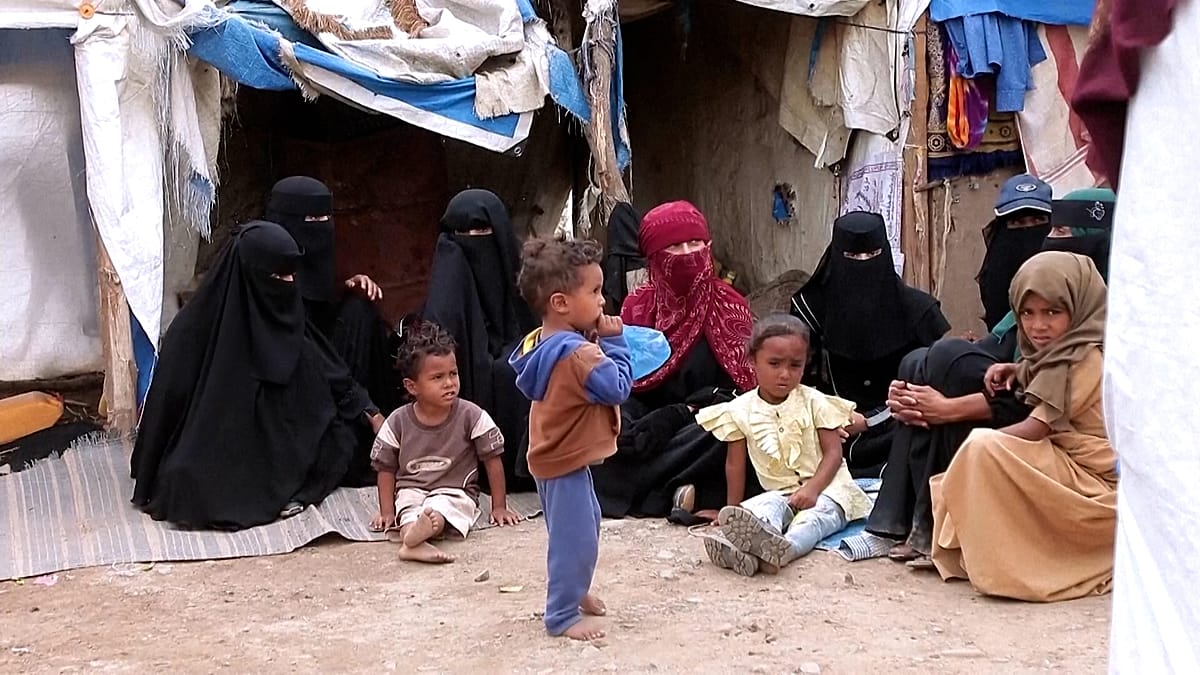
Thousands of Yemenis are fleeing renewed fighting and arriving at makeshift Al Kadha camp in Taiz. The UN says 125,000 people have been displaced in the past two weeks.
 Sep 16, 2026 · byEuronews
Countries: Yemen, Djibouti Source: UN Department of Political and Peacebuilding Affairs New York, UN Khaled Khiari, Assistant Secretary-General for the Middle East, Europe, the Americas, Asia and the Pacific Mr. President, The situation in and around the Bab al Mandab Strait has become increasingly volatile in recent days. Further to the briefing of Special Envoy Grundberg to this Council on 10 September, fighting has intensified along Yemen’s west coast, as the Houthis continued their advance towards the Bab al Mandab Strait, reportedly capturing several islands in the southern Red Sea. According to maritime tracking sites, commercial shipping flows through the Red Sea appear to remain unaffected for the time being. Nevertheless, the Houthi advance has added to market concerns, amid continuing disruptions in the Strait of Hormuz. In parallel, the Government of Yemen reportedly launched a counteroffensive following the Houthi advances over the past week, with localized clashes reported across several frontlines in Marib, Lahj, Al-Jawf, Hajjah, Al-Bayda and Sa’ada. The counteroffensive, reportedly including extensive airstrikes, also extends to Taiz. Unconfirmed estimates indicate hundreds of combatant casualties in recent days. Mr. President, The impact of these hostilities also extends to the civilian population, forcing people to flee their homes, causing civilian casualties and putting already stretched humanitarian operations under growing pressure. Our colleagues from the Office for the Coordination of Humanitarian Affairs (OCHA) warn that at least 125,000 people have now been displaced across Yemen since the start of the month. Over this same period, the UN Human Rights Office has reported 40 civilian casualties – eight people killed and 32 others injured. Women and children account for half of those killed and more than half of those injured. Meanwhile, across the Red Sea in Djibouti, UN teams are working closely with the Government of Djibouti in response to the arrival of people fleeing the latest escalation of conflict in Yemen. As of 14 September, approximately 2,300 people had arrived in the Obock region in northern Djibouti. Registration is continuing, and further arrivals are expected. We call on all parties to protect civilians, respect international humanitarian law, and facilitate safe and unimpeded humanitarian access so that urgently needed assistance can reach communities in need. Mr. President, The ongoing escalation is not limited to the Bab al Mandab Strait and Yemen. On 14 September, the spokesperson for the Saudi coalition forces said 13 individuals were injured, and seven residences were damaged in Houthi missile and drone strikes on Abha, Khamis Mushait, and Taif in Saudi Arabia. On 12 September, the Kingdom of Saudi Arabia condemned the targeting of the East-West Pipeline in the Riyadh and Madinah regions by several drones reportedly launched from an area inside Iraq. The attacks reportedly resulted in injuries and material damage. The strikes caused the pipeline to shut down for repairs, interrupting the crucial artery Saudi Arabia had been using as an alternative to the Strait of Hormuz. In a statement, the Saudi Ministry of Foreign Affairs indicated it had decided to avoid escalatory countermeasures following a request from Iraq’s Prime Minister. On 12 September, the Office of the Iraqi Prime Minister released a statement expressing appreciation for “the Kingdom’s response to the efforts made by Iraq to contain the situation.” The statement also noted that Prime Minister al-Zaidi had ordered an urgent investigation into the attacks and the parties behind them. Iraq also reaffirmed that “its territory and airspace will not be a launching pad for aggression against any State”. Mr. President, On 14 September, the Houthis claimed to have targeted the King Khaled Airbase in Khamis Mushait in southern Saudi Arabia with several ballistic missiles and drones in response to “300 Saudi airstrikes over the past five days”. This follows an earlier attack on 8 September on civilian and economic targets across Abha, Khamis Mushait, Jizan and Najran in southern Saudi Arabia, reportedly injuring 73 civilians, including women and children. We reiterate our firm condemnation of Houthi cross-border attacks on civilian and energy infrastructure in Saudi Arabia. Navigational rights and freedoms in and around the Red Sea and the Bab al Mandab Strait must be fully restored and respected by all, in accordance with international law and consistent with relevant resolutions of this Council, including resolution 2722. We remain concerned by the continued intensification of military clashes across multiple frontlines in Yemen, and call upon all parties to exercise restraint, prevent further escalation, and engage constructively with UN-led political efforts. Mr. President, We remain deeply concerned by the continued instability affecting another critical maritime waterway in the region – the Strait of Hormuz. Navigational rights and freedoms in and around international maritime corridors must be fully restored and respected in accordance with international law. The longer the Strait remains choked, the higher the cost globally. Further escalation risks grave consequences for international peace and security, global energy markets, food security, and the economies of countries far beyond the region, particularly the most vulnerable. All parties must take every feasible precaution to protect civilian vessels, crews and infrastructure. Mr. President, Developments around the Bab al-Mandab underline the urgent need to prevent Yemen’s conflict from further threatening the security of the Red Sea and this vital international maritime route. What is needed now is sustained engagement that reduces tensions, prevents further escalation and safeguards freedom of navigation. The parties in Yemen should prioritize dialogue and engage constructively with UN-led efforts toward a negotiated political solution. Thank you.
Sep 15, 2026 · byReliefWeb
Country: Yemen Source: Oxfam Please refer to the attached file. We, the undersigned aid organisations operating in Yemen, are deeply concerned by the sharp escalation in fighting across Taiz and the West Coast since 3 September and its mounting humanitarian impact, including civilian casualties and mass displacement. According to the International Organization for Migration (IOM) Displacement Tracking Matrix, displacement in Yemen has reached 85,818 people, including 82,164 displaced since the beginning of September alone. More than 2,000 people fleeing the hostilities have also reached Djibouti. The humanitarian crisis in Yemen remains one of the largest in the world. Renewed fighting risks worsening conditions for civilians and further constraining the ability of aid organisations to deliver critical services. More than a decade of conflict has left 22 million people, over half the population, in need of humanitarian assistance.¹ Millions already face hunger, displacement and limited access to basic services. Clashes have intensified across several of Yemen’s frontlines, many of which had remained relatively stable since the 2022 UN-brokered truce. Fighting has escalated rapidly along the West Coast and South Taiz frontlines. OCHA has reported civilian casualties, including children.² IOM reports that Taiz is the hardest hit by new displacement, with nearly 56,000 people displaced, followed by more than 19,000 in Lahj, more than 8,000 in Al Hodeidah and more than 2,500 in Aden.⁴ The escalation follows weeks of renewed hostilities in Marib, Taiz and Al Hodeidah, which displaced more than 162 households during August, according to OCHA.³ Families are fleeing in extremely difficult conditions, with some who have already been displaced by conflict now facing the prospect of being forced to flee again. Fighting near displacement sites and along routes used by civilians is creating serious protection risks for people on the move. Women and girls, particularly pregnant and breastfeeding women; children, including unaccompanied and separated children; older people; people with disabilities; and people living with chronic illnesses may face heightened risks, including difficulties accessing safe shelter, healthcare, sanitation and other essential services. Humanitarian organisations are providing lifesaving support, but insecurity and access constraints are making it harder for civilians to flee safely and for aid workers to reach everyone in need. Delivering essential goods to sustain humanitarian operations is already challenging amid regional instability and related supply-chain disruptions, and the recent escalation may further complicate these efforts. Additional flexible funding is urgently needed to address emerging humanitarian needs, particularly emergency shelter, food assistance, water, sanitation and hygiene, healthcare, nutrition, mental health and psychosocial support, education and protection, while safeguarding the continuity of existing services. Every Yemeni life is precious and must be protected. All parties to the conflict must respect and uphold international humanitarian law, including the principles of distinction, proportionality and precaution, protect civilians and civilian infrastructure, and ensure safe and sustained humanitarian access. After years of suffering, Yemen’s people cannot endure further civilian harm and displacement. We urge all parties and the international community to use available diplomatic channels to support an inclusive, Yemeni-led political process aimed at ending the conflict and achieving lasting peace in Yemen. • Première Urgence Internationale (PUI) • Polish Humanitarian Action (PAH) • International NGO Safety Organisation (INSO) • Norwegian Refugee Council (NRC) • Save the Children • CARE International • INTERSOS • War Child Alliance • International Medical Corps • Concern Worldwide • Vision Hope International • Action For Humanity International • MedGlobal • Médecins du Monde – Yemen • International Rescue Committee (IRC) • Danish Refugee Council (DRC) • Secours Islamique France (SIF) • Oxfam • Helpcode Italia ETS
Sep 15, 2026 · byReliefWebCountry: Yemen Source: Médecins Sans Frontières Aden — The recent escalation of fighting in Yemen has led to growing numbers of wounded people, adding pressure to a health system already stretched thin, and forcing thousands of families to flee their homes . Since 10 September, over 60 injured patients from the west coast have been admitted to Al-Gamhouria hospital in Aden. Many of them require urgent operations , blood transfusions, close monitoring, and long periods of care. This has put significant pressure on the hospital’s emergency room, operating theatres, wards, blood bank, medical stock, and staff. Médecins Sans Frontières (MSF) has expanded our support to the emergency room in response. Our team is helping hospital staff assess the condition of incoming patients quickly, so the most critical are treated first. They are also supplying the emergency room, operating theatres, and wards with emergency medicines and materials. In coordination with health authorities, MSF has also supported hospitals in Hodeidah with medicines and materials to treat people wounded in the fighting. We have also provided trauma kits to Taiz, Al-Bayda and Al-Jawf hospitals. Needs are likely to grow as the situation develops. Hospitals need the capacity to absorb sudden increases of wounded patients, while continuing the everyday care that people in Yemen depend on. More than 90,000 people have been newly displaced, according to the International Organization for Migration. Families who have been displaced have little access to food, clean water, shelter, sanitation services, and medical care. This escalation risks pushing Yemen’s health system past the point of recovery. Years of funding cuts have already left health facilities with little capacity to absorb a new wave of conflict. Sustained and flexible funding for Yemen remains essential, so women, children and the communities already bearing the heaviest burden are not left without care. MSF has supported the orthopaedic department at Al-Gamhouria hospital in Aden since June 2026. The support covers training nurses, infection prevention and control, microbiology laboratory testing, and the safe use of antibiotics, and a plan for responding when large numbers of wounded people arrive at the same time. This followed our handover of the Aden trauma centre in 2025, which ended 12 years of treating and rehabilitating thousands of people severely injured by the war in Yemen. Meanwhile, in Mocha, on the west coast, a small MSF team is still supporting the continuity of essential care in the maternity and paediatric units of the General hospital, despite the severe shortage of health professionals remaining in the city. We are working to identify solutions to reinforce the team and secure supplies of essential medicines and anaesthetics, while also seeking assurances that the medical mission will be respected and that we will be able to operate fully in accordance with our principles of action. As of Sunday, 13 September, 23 patients were still receiving care in this facility, including 10 babies in the neonatal intensive care unit.
Sep 15, 2026 · byReliefWeb
Country: Yemen Sources: Health Cluster, World Health Organization Please refer to the attached file. Key Highlights • The conflict has entered a multi-front, mass-casualty phase. Since Sitrep #2 the Marib front has re-ignited alongside the West Coast and Taiz. Marib City recorded 469 casualties on 9 September, the largest single-day toll of the emergency, followed by 177 on 10 September and 219 on 11 September. Casualties reported in the seven days of this period (1,746) exceed the entire cumulative toll at the last report. • Casualty burden has more than doubled in one week. Cumulative casualties rose from 1,137 (register re-issued 9 September) to 2,883 as of 12 September: 2,379 injuries and 504 deaths. The case-fatality ratio remains at 17%, consistent with blast and shelling injuries reaching hospitals late. Marib now carries 49% of the cumulative burden and Taiz/West Coast 43%; Lahj has emerged as a third recurrent source (149 casualties, 126 of them this period). • DFA forces seized the Bab el Mandeb coast on 10–11 September. Mocha, Dhubab and Perim (Mayyun) Island are under DFA control. Al-Mokha, the casualty collection point for the West Coast and the head of the ambulance corridor to Aden, is no longer accessible to the IRG-side health system; Taiz city has lost its western approaches and must plan for isolation. • Displacement has become a mass movement across six governorates. Exec. Unit for IDPs reports through 11 September, 11,096 displaced families (~77,789 people) verified across Taiz, Lahj, Al-Hodeidah, Aden, Abyan and Shabwah, up sharply from 1,790 households on 4 September and IOM’s 46,000 estimate on 10 September. Taiz accounts for the largest share (6,436 families), followed by Lahj (2,338) and Al-Hodeidah (1,471). Displacement continues, with villages emptied in Maqbanah, Jabal Habashi and Al Ma’afer, overnight departures from Mokha, and reported movement north towards Ibb. Many families have been displaced for a second or third time. In Taiz, an estimated 2,685 women and girls of reproductive age, including 240 pregnant women, are among those registered. IOM suspended operational movements on 11 September due to the deteriorating security environment. • Attacks on health care and civilians in camps. Seven health facilities or assets have been damaged, put out of service or directly hit in Taiz, Lahj and Al-Hodeidah. Asdas IDP camp in Raghwan (Marib) was shelled on 7 September, killing two children and injuring eight. • MoPHP has issued a 72-hour operational package and a formal support request to WHO (9 September): ten ambulances deployed from Aden to Al-Mokha, blood to 22 May Surgical and Aboud hospitals, two supply trucks to Taiz and the West Coast, a unified casualty line list, and nine prioritised requests to WHO led by trauma/anaesthesia supplies, blood-bank consumables and fuel. • WHO's third dispatch is under way. In line with the MoPHP request, surgical supplies, commodities and antibiotics are being dispatched to four hospitals: 22 May Hospital and Al-Gamhoriah Teaching Hospital in Aden, and Marib General Hospital Authority and Kara Hospital in Marib governorate. The Aden consignments are being dispatched on 13 September; the Marib consignments are ready. WHO is also procuring 17,000 single blood bags (450 ml) and 3,000 paediatric blood bags (250 ml), at an estimated cost of US$ 32,000, in response to the MoPHP blood-bank request. The Aden warehouse remains at stock-out for normal saline, sterile surgical gloves, atropine and potassium chloride, and without TESK/trauma kits and anaesthetic drugs.
Sep 15, 2026 · byReliefWeb
Country: Yemen Sources: Agency for Technical Cooperation and Development, Cash Consortium of Yemen, Danish Refugee Council, European Commission's Directorate-General for European Civil Protection and Humanitarian Aid Operations, International Organization for Migration, Mercy Corps, Norwegian Refugee Council, Solidarités International Please refer to the attached file. In Yemen, where formal social protection has largely collapsed and around four in five people need assistance, informal social protection (ISP) networks are a crucial source of support for households affected by displacement, income loss, illness and debt. However, humanitarian and development programming often focuses on strengthening economic resources while overlooking the social networks that shape households’ ability to cope and recover. This study examines how multi-purpose cash assistance (MPCA) interacts with these networks in Taiz governorate. Conducted between October 2025 and April 2026, it draws on baseline and endline surveys of MPCA recipients, covering 114 and 73 households, respectively, interviews with 30 recipient households, and 15 key informant interviews. The study finds that households rely mainly on relatives and neighbours as safety nets for food, small emergency loans, childcare, labour referrals and shopkeeper credit. These networks rarely provide the investment capital, market access or technical expertise needed to establish sustainable livelihoods. During the MPCA period, economic contacts and credit lines increased, while social contacts declined. The evidence suggests that MPCA activated existing economic relationships rather than creating new ones, while some informal support from relatives and neighbours decreased after households began receiving assistance. These changes coincided with MPCA receipt and should not be interpreted as causal. The findings underline that MPCA remains a primary survival intervention. Debt, limited savings, network poverty, restricted access to formal finance, and weak links to markets create structural barriers to productive investment. Women’s networks emerged as particularly important sources of information, initial customers, informal support and entry points to small-scale economic activity. However, women continue to face constraints related to mobility, transport costs, caregiving responsibilities and household decision-making. The study recommends pairing MPCA with complementary livelihoods and resilience support, including debt-management guidance, referral pathways, accessible programming for women, accompanied asset purchases, staged disbursements and stronger links to markets, cooperatives, financial providers and private-sector actors.
Sep 14, 2026 · byReliefWeb
Country: Yemen Source: International Rescue Committee Escalating conflict on Yemen's west coast is driving repeated displacement and disrupting children's education as the new school year begins Families flee multiple times as fighting spreads across the west coast, Taiz and beyond Schools converted into shelters just as the school year begins, suspending children's education indefinitely IRC calls for protection of civilians and sustained funding for the emergency response Aden, Yemen, September 14, 2026 — Over 80,000 people have been displaced in Yemen since fighting escalated between Ansar Allah and the Internationally Recognized Government earlier this month, the International Rescue Committee (IRC) said today. The latest wave follows the fall of the strategic port city of Al Mokha, with many families fleeing for the second time in a matter of weeks. Families arriving in host areas report having had no time to grab their belongings, and many left their livestock and livelihoods behind. “Families in Yemen are being forced to run again and again, and their children are paying for it twice. Once with their safety, and again with their education,” said Caroline Sekyewa, IRC's Yemen Country Director. “Families are sheltering wherever they can find space, some with nothing over their heads at all.” The weight of this crisis is falling first on communities that already had few resources and were struggling even before the fighting reached them. Women, children and people with disabilities face heightened risks as displacement disrupts access to the services support and protection they rely on. This is happening at a time when humanitarian organizations are already stretched thin, and funding has not kept pace with growing needs. Schools are being converted into shelters just as the new school year should be starting, leaving children without classrooms at a critical point in their education. Many of these children have already been displaced at least once before, and this new disruption comes with no clear timeline for when they will be able to return to class. IRC is calling on all parties to the conflict to keep civilians safe, protect civilian infrastructure, and ensure that aid workers are able to reach people safely and without delay. Donors must also sustain and urgently increase funding so responders can keep pace with a crisis that continues to deepen. The IRC is expanding its response to the crisis. In Aden, that includes cash assistance for displaced families. Mobile health teams are also being deployed across Aden, Lahj, Al Dhale’e and Abyan to check on people's safety and refer them to further support. IRC continues to deliver health, nutrition and protection services in Abyan, Al Dhale'e, Lahj and Shabwah, working to reach newly displaced families even as ongoing access constraints make it more difficult to meet the full scale of needs.
Sep 14, 2026 · byReliefWebMarib is home to Yemen's oil sector. Whoever controls it secures economic gains. Taiz's location makes it critical.
Sep 14, 2026 · byAl Jazeera
Yemeni government forces have advanced in western Taiz after successfully repelling a Houthi offensive.
Sep 14, 2026 · byAl Jazeera
The Houthi advances risk further destabilizing Yemen, potentially hindering U.S.-Iran negotiations and impacting regional security dynamics. The post Yemen’s Houthis advance on Marib, Taiz amid conflict escalation appeared first on Crypto Briefing .
 Sep 14, 2026 · byCryptoBriefing
Country: Yemen Sources: CCCM Cluster, Shelter Cluster, Shelter, Land and Site Coordination Cluster, UN High Commissioner for Refugees Please refer to the attached file. Situation at a Glance: Hostilities escalating on 3 September across Taiz, the West Coast, Aden Hubs including Hays, Al Khukha, Al Mukha, Mawza, Alwazyah, Maqbanah, Jabal Habashi, Almaafer and Almadharibah, triggering one of the sharpest spikes in new and secondary displacement there and placeing additional pressure on receiving sites. Access is severely constrained: the Taiz–AlMakha road has been disrupted, the main road to Maqbanah is blocked, currently clashes are in the road between AlMakha and Aden. Telecommunications disruptions hamper verification and real-time tracking. The Cluster tracked around 15,400 newly displaced households . Numbers keep changing from day to day.
Sep 13, 2026 · byReliefWeb
Country: Yemen Source: International Organization for Migration Ginebra, 11 de septiembre de 2026 — Al menos 46.000 personas han sido desplazadas en Yemen desde que los combates se intensificaron la semana pasada, informó hoy la Organización Internacional para las Migraciones (OIM). La cifra aumenta de manera alarmante hora tras hora. La OIM insta a todas las partes en conflicto a garantizar un acceso humanitario seguro y a proteger a la población civil, a los trabajadores humanitarios y a las instalaciones y bienes humanitarios. "Las familias se ven obligadas a huir por segunda o tercera vez en este conflicto, sin apenas nada", declaró Amy Pope, Directora General de la OIM. "A medida que se extienden los combates, resulta más difícil hacer llegar asistencia vital a las personas. Necesitamos urgentemente un acceso seguro y sin trabas. Todas las partes deben proteger a los civiles y a los trabajadores humanitarios, así como salvaguardar los suministros, vehículos e instalaciones de los que dependemos para prestar ayuda". La cifra abarca las gobernaciones de la Costa Oeste y Taiz hasta el día de ayer, y continúa en aumento. Durante la noche, se informó de la salida de un gran número de personas de la ciudad de Mokha con sus pertenencias. El equipo de la Matriz de Seguimiento de Desplazamientos (DTM) de la OIM trabaja para obtener cifras actualizadas que informen al sistema humanitario y orienten la respuesta de emergencia, aunque la comunicación con las zonas afectadas sigue siendo muy difícil debido a las interrupciones generalizadas de las telecomunicaciones. Se han registrado nuevas llegadas a las gobernaciones de Lahj y Adén, y los informes indican también desplazamientos hacia el norte, en dirección a Ibb. Se ha informado del vaciado de aldeas enteras en Maqbanah, Jabal Habashi y Al Ma'afer a medida que los enfrentamientos se acercaban a zonas pobladas. Según se informa, la carretera Mokha-Taiz, una ruta de suministro clave, ha quedado cortada, y las comunidades de acogida de la región se encuentran bajo una presión creciente. Desde el inicio del conflicto, la OIM ha estado atendiendo a las poblaciones desplazadas a través de sus equipos especializados en alojamiento, tierras y propiedad, coordinación y gestión de campamentos (CCCM), entre otros. Debido al deterioro de la situación de seguridad, todos los movimientos operativos han sido suspendidos temporalmente a partir de hoy. La OIM hace un llamamiento a todas las partes para que garanticen un acceso humanitario seguro y sostenido; garanticen la seguridad del personal humanitario, las instalaciones y los bienes humanitarios en todo el país; y restablezcan las comunicaciones y las rutas de transporte necesarias para distribuir la asistencia. Las reservas de emergencia ya se han agotado debido a la reciente respuesta ante las inundaciones, y las necesidades más urgentes son refugio, alimentos, agua, artículos para el hogar, atención sanitaria y apoyo en materia de protección. Para más información, póngase en contacto con el Centro de Prensa de la OIM .
Sep 11, 2026 · byReliefWeb