Djibouti
49 articles
Latest Djibouti articles


UNICEF Djibouti Humanitarian Flash Update No. 2 (Refugee influx from Yemen), 21 September 2026
Countries: Djibouti, Yemen Source: UN Children's Fund Please refer to the attached file. Highlights As of 18 September 2026, according to the Ministry of Social Affairs and Solidarity, just over 3,100 people have arrived in Djibouti from Yemen. Nearly half of them are children, including 523 children aged five and under. The pace of arrivals has slowed down since 16 September, reportedly due to fuel shortages in Yemen. However, authorities anticipate a possible new surge, and partners continue to plan for up to 10,000 people, in line with the Government appeal launched on 16 September. UNICEF and the Djiboutian Red Crescent (CRD) have established five water points in Markazi village, with a total storage capacity of 37 m³. The response also included the installation of 10 emergency latrines reserved for women and girls and the connection of the Markazi health post to the water supply. Public health risks remain high. Contributing factors include overcrowding, confirmed scabies cases and a high risk of waterborne disease. Health authorities report a high proportion of acutely malnourished and zero-dose children among those screened at the Markazi health post. One unaccompanied child has been identified to date. He has been placed in a vetted family-based care arrangement, and the family was jointly assessed by UNICEF and the Ministry of Women and Family (MFF). UNICEF requires USD 3 million to respond to the needs of up to 10,000 people over 6 months. SITUATION UPDATE Following the sharp acceleration of arrivals between 11 and 14 September, the rate of new arrivals has declined, reportedly due to fuel shortages in Yemen limiting sea crossings. As of 18 September, according to the Ministry of Social Affairs and Solidarity (MASS), 3,106 people have arrived from Yemen. This includes refugees identified through ongoing door-to-door registration in host communities. Nearly half of them are children, including 523 children aged five and under. The situation nevertheless remains fluid. According to the Prefecture, a significant number of Yemenis are gathered in Al Arah, the closest point of the Yemeni coast, and arrivals could resume rapidly should fuel become available. Partners therefore continue to plan for up to 10,000 people, in line with the Government appeal launched on 16 September. Living conditions in Markazi remain especially harsh for children. Many families, including those with young children, continue to stay in the overcrowded transit hangar because of high temperatures in the tents. This increases the risk of waterborne diseases and skin infections such as scabies. Health authorities report a high proportion of acutely malnourished and zero-dose children among those screened at the Markazi health post. In parallel, around 600 migrants wishing to travel to Yemen are waiting in Obock, and at least 120 Ethiopian migrants have returned from Yemen through Djibouti in recent days. Their presence adds pressure on already limited services in the region. The Government of Djibouti has been at the forefront of the response since the outset of the arrivals, coordinating the response and providing life-saving assistance. On 19 September 2026, UNICEF Djibouti, led by Representative Ms. Ramatou Touré, joined national authorities and partners in Obock to assess the urgent needs of newly arrived Yemeni refugees and reinforce the coordinated response. The situation of unaccompanied and separated children is of particular concern, as timely action can make the difference between risk and safety.
 Sep 23, 2026 · byReliefWeb
Djibouti minister appeals for aid for Yemeni refugees
Djibouti’s Minister of Social Affairs and Solidarity, Ouloufa Ismail Abdo, appeals for aid for Yemeni refugees
 Sep 22, 2026 · byAl Jazeera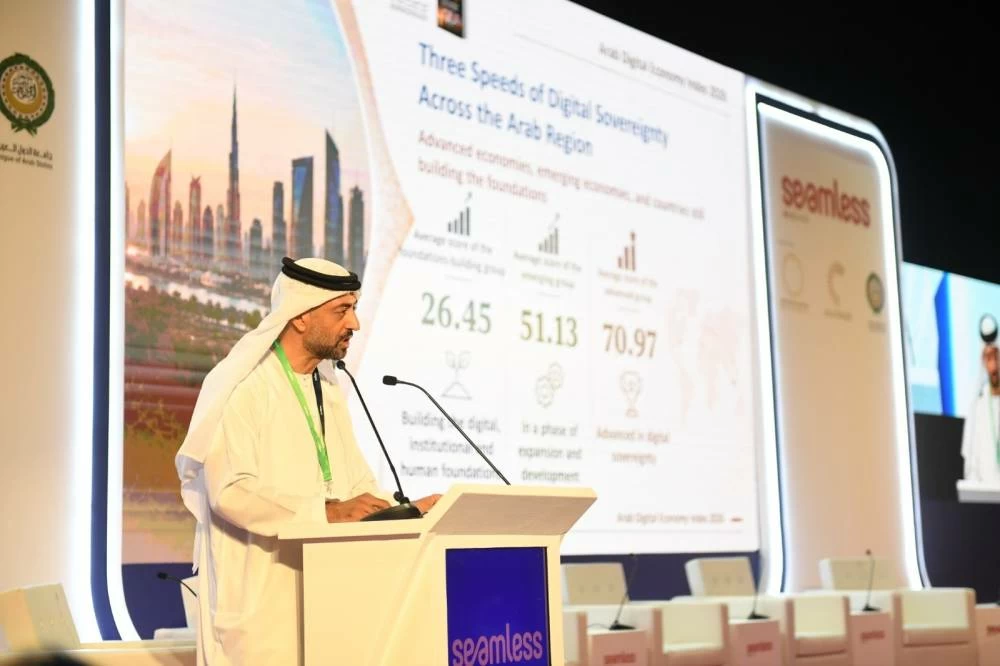
UAE tops Arab Digital Economy Index 2026
Dubai: The UAE has topped the Arab Digital Economy Index 2026, whose results were announced on Tuesday as Seamless Middle East 2026 opened in Dubai under the patronage of H.H. Lt. General Sheikh Saif bin Zayed Al Nahyan, Deputy Prime Minister and Minister of the Interior, and Supreme President of the Arab Federation for Digital Economy. Held at Dubai World Trade Centre from 22nd - 24th September, the event brings together the payments, fintech, banking, digital commerce, retail, identity and logistics sectors, with more than 25,000 participants, around 800 speakers and 750 exhibitors. The opening session drew Arab and international diplomatic, government and institutional representatives, including ambassadors and delegates from Egypt, Oman, Qatar, Lebanon, Mauritania, Tunisia, Syria, Djibouti and Palestine, alongside Russian representatives and officials from international and regional organisations. UAE government, economic, financial and academic officials also attended, along with representatives of the finance, energy, customs and economic development sectors, banks, chambers of commerce, research and innovation centres and international organisations. The opening programme featured an address by Dr. Ali Mohammed Al-Khouri, Chairman of the Board of Directors of the Arab Federation for Digital Economy and Advisor to the Council of Arab Economic Unity, followed by the launch of the Arab Digital Economy Index 2026. Officials from the Sharjah Research, Technology and Innovation Park and the UAE Banks Federation also addressed the event before delegates toured the exhibition. The index assesses digital-economy performance across a framework covering institutions, infrastructure, workforce, digital government, innovation, knowledge and technology, market forces, capital-market growth and sustainable development. The UAE led the highest-performing group, which also included Saudi Arabia, Bahrain, Qatar and Oman. The second group, comprising countries with medium levels of performance, included Jordan, Kuwait, Morocco, Egypt, Tunisia and Algeria. The third group, representing countries in the process of building their digital foundations, comprised Lebanon, Mauritania, Iraq, Djibouti, Comoros, Libya, Palestine, Syria, Sudan, Somalia and Yemen. The results showed stronger progress across the Arab world in digital infrastructure, government services and cybersecurity, while wider gaps remained in innovation, the data economy, research and development, and the ability to translate digital investment into productivity and economic value. Al-Khouri said the latest edition of the index places digital sovereignty at the heart of discussions on the future of Arab economies, as data, artificial intelligence, cloud infrastructure, semiconductors and cybersecurity become increasingly important to countries' economic and institutional capabilities. Commenting on the UAE's ranking, he said it reflects years of sustained investment in digital infrastructure, government services, cybersecurity, artificial intelligence and the knowledge economy, establishing the country as a leading model for building an innovation-driven economy that translates technological advancement into higher productivity and economic value. Al-Khouri thanked the UAE for supporting the development of the Arab digital economy and expressed appreciation to President His Highness Sheikh Mohamed bin Zayed Al Nahyan for his support and patronage of the Arab Digital Economy Vision, which he said has helped advance joint Arab action in the sector. He also praised the continued support of H.H. Lt. General Sheikh Saif bin Zayed Al Nahyan, saying his supportive role has helped transform several Arab initiatives from concepts and strategies into practical programmes, platforms and projects. The Arab Digital Economy Vision was launched in Abu Dhabi in 2018 with the support and patronage of President His Highness Sheikh Mohamed bin Zayed Al Nahyan and was subsequently adopted at the Arab leaders' level in 2022 as a framework for regional cooperation in the digital economy and technological transformation. The Arab Digital Economy Index is among the tools developed by the federation to measure progress, identify gaps and determine future priorities. Seamless Middle East 2026 features three days of discussions on fintech, digital payments, e-commerce, artificial intelligence, data analytics, cybersecurity and emerging technologies, bringing together government entities, financial institutions, technology companies, investors and experts from the region and beyond.
Yemen: L’intensification du conflit au Yémen pourrait provoquer de nouveaux déplacements et mouvements de réfugiés
Countries: Yemen, Djibouti, Somalia Source: UN High Commissioner for Refugees L'intensification des combats au Yémen pourrait entraîner de nouveaux déplacements massifs et pousser un nombre croissant de personnes à fuir, tant à l’intérieur du Yémen que vers Djibouti, la Somalie et d'autres pays, alerte le HCR, l'Agence des Nations Unies pour les réfugiés. Les combats s’étendent désormais sur plusieurs lignes de front au Yémen, alimentant une crise de déplacement qui s’aggrave rapidement et contraignant plus de 130 000 personnes à fuir leur foyer depuis le début du mois de septembre. Les civils continuent de payer le plus lourd tribut au conflit. Au moins 110 personnes ont été victimes des combats : 28 ont été tuées, les autres blessées. Il est à craindre que le nombre de victimes et de personnes déplacées n’augmente encore, aggravant les besoins humanitaires alors même que l’insécurité et les contraintes d’accès entravent déjà les opérations de secours. Taëz demeure l’épicentre de la crise et représente plus de 60 % de l’ensemble des déplacements. De nombreuses familles restent au sein même du gouvernorat, sans pouvoir rejoindre des zones plus sûres en raison des combats, des routes bloquées ou du manque de moyens de transport et de carburant. Des déplacements sont également signalés dans les gouvernorats d’Al-Jawf, de Marib et d’Al-Hodeïda, illustrant l’extension du conflit sur plusieurs fronts. La plupart des familles nouvellement déplacées ont trouvé refuge dans les gouvernorats d’Aden, de Lahj, d’Abyan et d’Al-Dhaleh, et même à Marib. Plus de 90 000 personnes sont arrivées dans ces zones. Les conditions de vie des personnes déplacées sont de plus en plus précaires, alors qu’elles arrivent dans des sites déjà surpeuplés, avec un besoin urgent d'abris, de nourriture, d'eau potable, de soins de santé et de protection. Cette situation exerce une pression supplémentaire sur des services et des infrastructures déjà fragiles. Avant même cette récente escalade, plus de 5,2 millions de personnes étaient déplacées à l’intérieur du Yémen. Les combats actuels aggravent une crise humanitaire déjà extrêmement préoccupante. On estime que plus de 22 millions de personnes ont besoin d’une assistance humanitaire, parmi lesquelles des déplacés internes ainsi qu’environ 65 000 réfugiés et demandeurs d’asile, principalement originaires de Somalie et d’Éthiopie. En réponse, le HCR a déclaré, dans un premier temps, une situation d’urgence de niveau 1 pour le Yémen, Djibouti et la Somalie, permettant une mobilisation rapide des ressources et du personnel afin de renforcer son intervention grâce à une aide en espèces, des abris et des activités de protection. Une aide financière d’urgence a déjà été versée à 200 familles déplacées, et un soutien immédiat est prévu pour 1 000 familles. Comme plus de 70 % des familles déplacées vivent dans des abris d'urgence ou inadéquats, des financements ont été obtenus afin de verser à 500 d'entre elles, à Aden et à Lahj, une assistance en espèces pour les abris. Par ailleurs, les préparatifs sont en cours en vue de distribuer 1 000 kits de réparation d’abris afin de réhabiliter des habitations endommagées. Des évaluations de protection ont également été lancées auprès de 2 000 ménages afin d’identifier les besoins et les risques les plus urgents. Le HCR achemine aussi 3 000 kits d’articles de première nécessité depuis son stock mondial d’urgence à Dubaï afin de soutenir les familles au Yémen. Ces kits comprennent notamment des nattes de couchage, des couvertures, des lampes solaires, des ustensiles de cuisine, des jerrycans, des moustiquaires et des bâches en plastique. Avec ses partenaires, le HCR prépare également le retour volontaire d’environ 150 réfugiés somaliens d’Aden à Mogadiscio. Malgré le renforcement en cours de l’assistance, les opérations humanitaires font face à de graves contraintes. Les lignes de front actives, l’insécurité, les restrictions de circulation, les perturbations des télécommunications ainsi que les dégâts causés aux routes et à d’autres infrastructures, notamment le port d’Al-Mokha, limitent l’accès aux populations touchées et ralentissent l’acheminement de l’aide vitale. Il est urgent de garantir un accès sûr et sans entrave pour secourir les familles qui ont fui en n’emportant presque rien. La réponse humanitaire est également limitée par un grave déficit de financement. En 2026, l'opération du HCR au Yémen n'est financée qu'à hauteur de 18 %, soit 34 millions de dollars sur les 194 millions requis. Ces besoins avaient été chiffrés avant même que la récente escalade n'en crée de nouveaux. Quelque 25 millions de dollars sont nécessaires de toute urgence pour permettre au HCR de venir en aide à environ 231 000 personnes en situation d'urgence humanitaire. De l'autre côté du golfe d'Aden, des réfugiés yéménites arrivent chaque jour à Djibouti, où plus de 3 000 personnes ont déjà trouvé refuge. Le HCR y travaille avec les autorités et ses partenaires pour leur porter assistance. Des centaines d’autres personnes ont également débarqué au Somaliland et au Puntland. Le nombre de réfugiés yéménites gagnant quotidiennement Djibouti a déjà dépassé le record journalier enregistré depuis 2015. Le HCR et ses partenaires se préparent à recevoir plus de 10 000 personnes dans le pays, une mer plus calme d'ici à la mi-octobre pouvant permettre de nouvelles traversées. Alors que l’opération du HCR à Djibouti n’est financée qu’à hauteur de 15 %, le HCR et ses partenaires humanitaires lancent un appel urgent pour mobiliser 13,5 millions de dollars afin que les nouveaux arrivants puissent avoir accès à l'enregistrement, à l'accueil, à la protection et à d'autres services essentiels. Nous sommes profondément préoccupés par les conséquences de la recrudescence du conflit pour les civils, notamment les déplacements massifs et les souffrances qu'elle provoque. Pour plus d’informations à ce sujet, veuillez contacter : À Amman, Rula Amin : aminr@unhcr.org, +962 (0) 790 045 849 À Amman, Tarik Argaz : argaz@unhcr.org, +962 (0) 791 223 095 À Genève, Babar Baloch : baloch@unhcr.org, +41 79 513 95 49
Sep 22, 2026 · byReliefWeb
UN warns of rising Yemen displacement as thousands flee to Djibouti
Renewed fighting could drive 10,000 across the Red Sea and displace more than 230,000 internally, UNHCR says.
Sep 22, 2026 · byAl JazeeraEl recrudecimiento del conflicto en Yemen podría provocar nuevos desplazamientos y movimientos de refugiados
Countries: Yemen, Djibouti, Somalia Source: UN High Commissioner for Refugees El recrudecimiento de los combates en Yemen podría provocar nuevos desplazamientos masivos, ante la previsión de que un número creciente de personas se vea obligado a huir tanto dentro del país como hacia Yibuti, Somalia y otros países, advierte ACNUR, la Agencia de la ONU para los Refugiados. Los combates se están extendiendo por múltiples frentes en Yemen, desencadenando una crisis de desplazamiento que crece rápidamente y que ha obligado a más de 130.000 personas a abandonar sus hogares desde principios de septiembre. La población civil sigue soportando las peores consecuencias del conflicto. Se han registrado al menos 110 víctimas, entre ellas 28 muertos. Se teme que las cifras de víctimas y desplazados sigan aumentando, agravando unas necesidades humanitarias ya acuciantes en un momento en el que la inseguridad y las restricciones de acceso dificultan aún más las labores de ayuda. Taiz sigue siendo el epicentro de la crisis y concentra más del 60% del total de los desplazamientos. Muchas familias permanecen dentro de la propia gobernación, sin posibilidad de trasladarse a lugares más seguros debido a los combates, las carreteras bloqueadas o la falta de transporte y combustible. También se han registrado desplazamientos en las gobernaciones de Al Jawf, Marib y Al Hodeida, lo que refleja la expansión del conflicto a múltiples frentes. La mayoría de las familias desplazadas recientemente ha encontrado cobijo en las gobernaciones de Adén, Lahj, Abyan y Al Dhale'e, así como en Marib, adonde han llegado más de 90.000 personas. Las condiciones de los desplazados son cada vez más graves a medida que llegan a asentamientos ya saturados, donde necesitan con urgencia alojamiento, alimentos, agua potable, atención sanitaria y protección. Esta situación añade presión a unos servicios y unas infraestructuras ya de por sí frágiles. Incluso antes de la reciente escalada, más de 5,2 millones de personas estaban desplazadas dentro de Yemen, y los actuales combates están agravando una crisis humanitaria ya de por sí desesperada. Se calcula que más de 22 millones de personas necesitan asistencia humanitaria, entre ellas desplazados internos y unos 65.000 refugiados y solicitantes de asilo, principalmente procedentes de Somalia y Etiopía. En respuesta, ACNUR ha declarado una emergencia inicial de Nivel 1 para Yemen, Yibuti y Somalia, lo que permite movilizar rápidamente recursos y personal para ampliar la respuesta mediante ayudas económicas, alojamiento y protección. La Agencia ya ha proporcionado asistencia económica de emergencia a 200 familias desplazadas y está previsto prestar apoyo inmediato a otras 1.000. Dado que más del 70% de las familias desplazadas se encuentran en alojamientos de emergencia o en condiciones precarias, también se ha asegurado financiación para proporcionar ayudas económicas destinadas al alojamiento a 500 familias desplazadas en Adén y Lahj. Además, se están preparando 1.000 kits de reparación de viviendas para rehabilitar las casas dañadas. También se han iniciado evaluaciones de protección para identificar las necesidades y los riesgos más urgentes de 2.000 hogares. ACNUR está enviando desde su reserva mundial de emergencia en Dubái 3.000 paquetes de artículos básicos de ayuda para las familias en Yemen. Los suministros incluyen esterillas para dormir, mantas, lámparas solares, utensilios de cocina, bidones para agua, mosquiteras y lonas de plástico. Junto con sus socios, ACNUR está preparando el retorno voluntario de unos 150 refugiados somalíes desde Adén a Mogadiscio. A pesar de estos esfuerzos para ampliar la asistencia, las operaciones humanitarias se enfrentan a graves limitaciones. Los frentes activos, la inseguridad, las restricciones de movimiento, las interrupciones de las telecomunicaciones y los daños en las carreteras y otras infraestructuras —incluido el puerto de Al Mokha— están limitando el acceso y ralentizando la distribución de ayuda vital. Es urgente garantizar un acceso seguro y sin obstáculos a las poblaciones afectadas para poder ayudar a las familias que han huido con muy pocas pertenencias. La respuesta también está limitada por un grave déficit de financiación. La operación de ACNUR en Yemen solo cuenta con el 18% de la financiación necesaria para 2026: de los 194 millones de dólares requeridos incluso antes de que esta última escalada generara nuevas necesidades, solo se han recibido 34 millones. Se calcula que ACNUR necesita urgentemente 25 millones de dólares para prestar asistencia a unas 231.000 personas con necesidades humanitarias inmediatas. Al otro lado del golfo de Adén, los refugiados yemeníes siguen llegando a Yibuti a diario. Hasta ahora, más de 3.000 han llegado al país, donde ACNUR trabaja con las autoridades y sus socios para prestar asistencia a los recién llegados. Cientos de personas han desembarcado también en Somalilandia y Puntlandia. El número diario de llegadas de refugiados a Yibuti ya ha superado la cifra diaria más alta de yemeníes registrada desde 2015. ACNUR y sus socios se están preparando para la llegada de más de 10.000 personas a Yibuti. Se espera que las condiciones del mar mejoren a mediados de octubre, lo que podría facilitar nuevas travesías. La operación de ACNUR en Yibuti solo cuenta con el 15% de la financiación necesaria, y ACNUR y sus socios humanitarios hacen un llamamiento urgente para recaudar 13,5 millones de dólares que permitan garantizar a los recién llegados el acceso al registro, la recepción, la protección y otros servicios esenciales. Nos preocupa profundamente el impacto de la reanudación del conflicto sobre la población civil, incluidos los desplazamientos generalizados y el sufrimiento que está provocando.
Sep 22, 2026 · byReliefWebEscalating conflict in Yemen could fuel more displacement, refugee movement
Countries: Yemen, Djibouti, Somalia Source: UN High Commissioner for Refugees Intensifying fighting in Yemen could drive more mass displacement, with growing numbers of people expected to flee both within Yemen and to Djibouti, Somalia and other countries, UNHCR, the UN Refugee Agency, is warning. Fighting in Yemen is expanding across multiple front lines, triggering a rapidly growing displacement crisis and driving more than 130,000 people to flee their homes since the beginning of September. Civilians continue to bear the brunt of the conflict, with at least 110 casualties reported, including 28 lives lost. It is feared that casualty and displacement numbers are likely to grow, deepening humanitarian needs at a time when insecurity and access constraints are already hampering relief efforts. Taiz remains the epicentre of the crisis, accounting for more than 60 per cent of the overall displacement, with many families remaining within the governorate itself, unable to move to safer locations due to fighting, blocked roads or lack of transportation and fuel. Displacement is also being reported from Al Jawf, Marib and Al Hodeidah governorates, reflecting the expanding, multi-front nature of the conflict. Most newly displaced families have found refuge in Aden, Lahj, Abyan and Al Dhale'e governorates and even in Marib, with more than 90,000 people arriving in these areas. Conditions for displaced people are increasingly severe as they arrive at already congested displacement sites in urgent need of shelter, food, clean water, health care and protection, placing additional pressure on fragile services and infrastructure. Even before the recent escalation, more than 5.2 million people were internally displaced in Yemen, and the current fighting is deepening an already dire humanitarian crisis in the country. It is estimated that more than 22 million people require humanitarian assistance, including internally displaced people and around 65,000 refugees and asylum-seekers, mainly from Somalia and Ethiopia. In response, UNHCR has declared an initial Level 1 emergency for Yemen, Djibouti and Somalia, enabling the rapid mobilization of resources and staff to scale up our response through cash assistance, shelter and protection. Emergency cash assistance has already been provided to 200 displaced families, with immediate support planned for 1,000. As more than 70 per cent of displaced families are in emergency or substandard shelters, funding has also been secured to provide cash-for-shelter assistance to 500 displaced families in Aden and Lahj, while preparations are underway to distribute 1,000 shelter repair kits to rehabilitate damaged houses. Protection assessments have been initiated to identify urgent needs and risks among 2,000 households. UNHCR is dispatching 3,000 packages of core relief items from its global emergency stockpile in Dubai to support families in Yemen, including sleeping mats, blankets, solar lamps, kitchen sets, jerry cans, mosquito nets and plastic tarpaulins. With partners, planning is underway for the voluntary return of some 150 Somali refugees from Aden to Mogadishu. Despite these efforts to scale up the assistance, humanitarian operations face severe constraints. Active front lines, insecurity, movement restrictions, telecommunications disruptions, and damaged roads and other infrastructure – including Al Mokha port – are limiting access and slowing the delivery of life-saving aid. Safe and unimpeded access to the affected populations is urgently needed to bring relief to families who fled with little. The response is also constrained by a severe funding shortfall. UNHCR's Yemen operation is only 18 per cent funded in 2026, with $34 million of the $194 million required even before this latest escalation generated new needs. An estimated $25 million is urgently needed for UNHCR to assist some 231,000 people with immediate humanitarian needs. Across the Gulf of Aden in Djibouti, Yemeni refugees continue to arrive daily. More than 3,000 have so far arrived in Djibouti – where UNHCR is working with the authorities and partners to assist the arrivals. Hundreds have also landed in Somaliland and Puntland. The daily number of refugee arrivals in Djibouti has already surpassed the highest daily number of Yemenis arriving since 2015. UNHCR and partners are planning for more than 10,000 arrivals in Djibouti, with sea conditions expected to improve by mid-October, potentially enabling further crossings. UNHCR’s Djibouti operation is 15 per cent funded, and UNHCR and humanitarian partners are urgently appealing for $13.5 million to ensure arrivals can access registration, reception, protection and other essential services. We are deeply concerned about the impact of the renewed conflict on civilians, including widespread displacement and suffering.
Sep 22, 2026 · byReliefWeb
Yemen Situation: UNHCR Emergency Update - External Update #1 (22 September 2026)
Countries: Yemen, Djibouti, Somalia Source: UN High Commissioner for Refugees Please refer to the attached file. Highlights § Escalating hostilities in Yemen have driven significant displacement within the country and cross-border movements across the Gulf of Aden, with close to 130,000 people internally displaced inside Yemen1 and over 3,000 people crossing to Djibouti2 . Arrivals in Somalia remain smaller but are gradually increasing, including Yemeni refugees and Somali refugee returnees. § In response to the evolving situation, UNHCR has declared a Level 1 emergency for Yemen, Djibouti and Somalia for three months and is scaling up preparedness and response across the affected operations. § In Yemen, UNHCR is taking part to the inter-agency response under the Yemen Humanitarian Needs and Response Plan (HNRP). In light of the recent escalation, UNHCR requires USD 25 million to support an estimated 231,000 people with protection services including monitoring, legal assistance and support for people at heightened risk, cash assistance, shelter and core relief items (CRIs) inside Yemen. § In Djibouti, UNHCR with the Government of Djibouti, developed an interagency appeal for a total amount of USD 13,27 million. The plan reflects a coordinated inter-agency approach covering activities among agencies (WFP, UNICEF, UNFPA, IOM and UNHCR) in support of 10,000 individuals (2,500 households) over a six-month period.
Sep 22, 2026 · byReliefWeb
Yemen Situation: Displacement overview (as of 21 Sept 2026)
Countries: Yemen, Djibouti, Somalia Source: UN High Commissioner for Refugees Please refer to the attached Infographic. SITUATION OVERVIEW Since the escalation of conflict in Yemen in September 2026, an estimated 128,000 people have been newly displaced, adding to the 5.2 million internally displaced persons (IDPs) already living in displacement across the country. The renewed violence has increased humanitarian needs and contributed to growing cross-border movements, particularly towards the Horn of Africa. As of 18 September 2026, 3,601 new arrivals from Yemen have been recorded in Djibouti, reflecting the continued search for safety among affected populations. Neighboring countries continue to host Yemeni refugees and asylum-seekers, including approximately 4,000 in Djibouti and 8,000 in Somalia, underscoring the regional implications of the crisis and the need for sustained humanitarian and protection support across the region.
Sep 22, 2026 · byReliefWeb
Afghanistan: EMR Polio Bulletin - Issue No. 1459, Week 37 (ending on 20/09/2026)
Countries: Afghanistan, Djibouti, Pakistan, Somalia, Sudan, Yemen Source: World Health Organization Please refer to the attached Infographic.
Sep 22, 2026 · byReliefWeb
Yemenis flee across Red Sea as Houthis and Saudi-backed forces escalate war
The BBC's Frank Gardner speaks to some of those who have fled the war by crossing the Red Sea to Djibouti
 Sep 21, 2026 · byBBC
Inside a camp for Yemeni refugees who have fled to Djibouti
Fighting on Yemen's west coast has prompted thousands of people to flee by boat across the Bab al-Mandab Strait.
Sep 21, 2026 · byBBC
Somalia: Climate Watch Advisory: The Evolving Dry Conditions in the Northern Parts of Eastern Africa - September 2026 Update
Countries: Somalia, Djibouti, Eritrea, Ethiopia, South Sudan, Sudan Source: Intergovernmental Authority on Development Please refer to the attached file. Initial Climate Watch issued on 11 August 2026 | Climate Watch No. 20260810-01-u1 Rainfall deficits have persisted across the northern sector of the Eastern Africa region from May through August, affecting Djibouti, Eritrea, Ethiopia, Somalia, South Sudan, and Sudan. Analysis of the Standardized Precipitation Index (SPI) for the June-August period indicates that these dry conditions extend southwards into parts of Uganda and western Kenya.
Sep 21, 2026 · byReliefWeb
Djibouti - Influx of refugees fleeing Yemen conflict escalation: UNFPA Flash Update (10 – 16 September 2026)
Countries: Djibouti, Yemen Source: United Nations Population Fund Please refer to the attached file. As fighting along the West Coast of Yemen continues, new displacement within Yemen has sharply increased with some people fleeing the country altogether. Since 10 September 2026, Djibouti has faced a growing influx of people, the majority women and children, fleeing the escalating conflict in Yemen. As of 16 September, the government registered a total of 2,776 new arrivals on the northern coast, Obock region. These new arrivals already represent more than 9 per cent of Obock town's resident population. There are concerns that the available essential services for the host community may soon be overstretched unless there is additional support to strengthen local response capacities. While disaggregated data remains limited at this stage, displaced women and girls face heightened sexual and reproductive health (SRH) and protection risks. Medical staff at the Markazi site have already recorded four births among the newly arrived population within 48 hours and identified another two pregnant women. UNFPA is supporting the nationally led response alongside Djibouti's national government agency for refugee assistance and disaster relief (ONARS), UNHCR, UNICEF, ICRC and the Djiboutian Red Crescent. As a key actor in sexual and reproductive health and gender based violence, UNFPA provided the Obock Medical-Hospital Center (CMH) with RH supplies for safe delivery, family planning commodities, and other essential medicines to address infections and maternal micronutrient deficiencies, along with 100 dignity kits, and is scaling up its response.
Sep 21, 2026 · byReliefWeb
World: Locust Watch: Seasonal precipitation predictions in the Desert Locust summer and winter breeding areas (October 2026–March 2027) (20 September 2026)
Countries: World, Algeria, Chad, Djibouti, Egypt, Eritrea, Ethiopia, India, Iran (Islamic Republic of), Libya, Mali, Mauritania, Morocco, Niger, Oman, Pakistan, Saudi Arabia, Somalia, Sudan, Tunisia, Yemen Source: Food and Agriculture Organization of the United Nations Please refer to the attached file. The dynamical models indicate above-normal rainfall across most of northern and eastern Africa and the Middle East from October through December, consistent with previous strong El Niño episodes. Within this region, drier-than-normal conditions are expected to emerge across North Africa by December, but elsewhere the wet pattern is likely to persist through winter. The only notable change in the forecasts this month is that the predicted wet anomaly is somewhat less pronounced in East Africa, and the forecast has also turned drier for Yemen and Oman, because the positive phase of the Indian Ocean Dipole is struggling to become established, and a less positive IOD favors relatively drier conditions around the northwestern Indian Ocean during El Niño. Nevertheless, the pronounced El Niño forcing will remain the dominant (wet) influence. These rainfall patterns can support breeding in the northern Sahel through late summer breeding season. Small-scale breeding may begin in October along the Red Sea and Gulf of Aden coasts. Precipitation
Sep 21, 2026 · byReliefWeb
Fighting uproots 112,000 in Yemen, thousands flee to Djibouti: UN
Across the Red Sea, nearly 3,000 people have arrived in Djibouti in less than a week after making the perilous crossing from Yemen, according to the U.N. refugee agency.

More than 112,000 displaced by Yemen fighting; thousands flee to Djibouti
United Nations says 22 million people need humanitarian aid as conflict intensifies.
Sep 18, 2026 · byAl Jazeera
New arrivals in Djibouti from Yemen - 17 September 2026
Countries: Djibouti, Yemen Source: UN High Commissioner for Refugees Please refer to the attached Infographic. The escalation of conflict in Yemen is driving new displacement into Djibouti. Over eight consecutive days, arrivals reached an estimated 2,935 people by the morning of 17 September. Around 60% are estimated to be women and children. While the Markazi settlement has the capacity to host up to 5,000 additional refugees, the increasing number and pace of arrivals could significantly stretch this capacity.
Sep 18, 2026 · byReliefWeb
HCR : une aide supplémentaire est nécessaire de toute urgence alors que des milliers de personnes arrivent à Djibouti après avoir fui le Yémen | HCR
Countries: Djibouti, Yemen Source: UN High Commissioner for Refugees DJIBOUTI – Près de 3 000 personnes sont arrivées à Djibouti en moins d’une semaine après avoir effectué la dangereuse traversée du détroit de Bab el-Mandeb, alors que l’intensification des violences contraint un nombre croissant de familles à fuir le Yémen. Les réfugiés continuent d’arriver par bateau via Obock, Khor Angar, Moulhoule et Godoria après des traversées particulièrement éprouvantes à bord de petites embarcations. Certains expliquent avoir été contraints de laisser des membres de leur famille derrière eux. Selon plusieurs informations, des milliers d’autres personnes qui tentent de quitter le Yémen n’ont pas pu fuir en raison de l’insécurité et des pénuries de carburant pour les bateaux, se retrouvant bloquées. Dans les centres d’accueil à Djibouti, les nouveaux arrivants racontent avoir craint pour leur vie au Yémen après avoir fui des bombardements soudains, des tirs d’artillerie et des coups de feu. De nombreuses mères ont rassemblé leurs enfants en urgence ainsi que quelques effets personnels avant de rejoindre la côte et d’embarquer à bord de petites embarcations. Plus de la moitié des réfugiés yéménites arrivant à Djibouti sont des femmes et des enfants. Nombre d’entre eux sont aujourd’hui confrontés à un deuxième déplacement. Après avoir fui le Yémen lors de la crise de 2015 puis être rentrés dans leur pays lorsqu’ils s’y sont sentis en sécurité, ils se retrouvent à nouveau réfugiés. À Obock, les nouveaux arrivants sont transférés depuis les points de débarquement vers le village de réfugiés de Markazi, où ils peuvent être enregistrés, bénéficier d’un soutien et accéder aux services nationaux. Le HCR et ses partenaires travaillent également à l’intégration des nouveaux enfants réfugiés dans les écoles du village. Les familles djiboutiennes et la communauté des réfugiés yéménites continuent par ailleurs d’accueillir les nouveaux arrivants et de partager le peu qu’elles possèdent. Environ 270 personnes vivent actuellement au sein de familles d’accueil. Toutefois, les capacités d’accueil diminuent rapidement. Le village de réfugiés de Markazi a été conçu pour accueillir 5 000 réfugiés. Or, il hébergeait déjà plus de 2 700 réfugiés yéménites et 1 500 réfugiés érythréens. Alors que le Gouvernement, le HCR et leurs partenaires se préparent à l’arrivée d’au moins 10 000 nouvelles personnes, la pression s’accroît déjà sur les capacités d’hébergement, les services d’approvisionnement en eau, l’assainissement, les soins de santé et l’éducation. Les infrastructures scolaires existantes ne peuvent pas accueillir l’ensemble des enfants nouvellement arrivés, tandis que le surpeuplement pourrait accroître les risques de maladies transmissibles, notamment la gale et les maladies diarrhéiques. Le HCR et ses partenaires sont mobilisés sur le terrain pour fournir des hébergements temporaires, des moyens de transport, des articles de première nécessité, une aide alimentaire, un accès à l’eau et aux soins de santé, tout en appuyant le Gouvernement de Djibouti et l’autorité nationale chargée des réfugiés dans les activités d’accueil, d’enregistrement et de protection. Djibouti accueille déjà quelque 36 000 réfugiés, principalement originaires de Somalie et d’Éthiopie. Les dernières arrivées en provenance du Yémen exercent une pression supplémentaire sur une réponse humanitaire déjà mise à rude épreuve. Les autorités du Somaliland et du Puntland ont également signalé une augmentation des arrivées en provenance du Yémen, dont des réfugiés yéménites et des réfugiés somaliens de retour. Pour l’instant, leur nombre se chiffre en centaines, les mouvements étant actuellement limités par les conditions maritimes liées au phénomène El Niño. Ces conditions devraient toutefois s’améliorer à partir de la mi-octobre, ce qui pourrait entraîner de nouvelles arrivées si l’insécurité persiste au Yémen. Le HCR et ses partenaires suivent donc la situation de près et se préparent à une éventuelle augmentation des mouvements dans le golfe d’Aden. Pendant ce temps, la situation au Yémen continue de se détériorer. Plus de 100 000 personnes ont déjà été déracinées par l’intensification des combats, en particulier le long de la côte ouest. Des familles ont été déplacées dans les gouvernorats d’Al-Hodeïda, Taëz, Lahj, Aden, Abyan, Marib, Al-Dhaleh et Chabwa, tandis que l’insécurité et les contraintes d’accès compliquent de plus en plus l’action des partenaires humanitaires auprès des populations dans le besoin. Sans amélioration de l’accès humanitaire et sans soutien supplémentaire, de nouveaux déplacements à l’intérieur du Yémen ainsi qu’au-delà des frontières sont de plus en plus probables. À ce jour, l’opération du HCR à Djibouti n’est financée qu’à hauteur de 15 %, et l’organisation a besoin de toute urgence d’environ 5,1 millions de dollars pour garantir que les réfugiés arrivant du Yémen puissent bénéficier d’un enregistrement, d’un accueil, d’une protection et de services essentiels. Les opérations du HCR au Yémen ne sont financées qu’à hauteur de 18 %, et un montant supplémentaire de 14 millions de dollars est nécessaire de toute urgence pour fournir aux familles déplacées des solutions d’hébergement, des articles de première nécessité et un appui à la gestion des sites. Le HCR appelle à une mobilisation urgente de la communauté internationale afin de répondre aux besoins croissants des personnes contraintes de fuir, tant à l’intérieur du Yémen qu’à Djibouti. Sans ressources supplémentaires immédiates, les capacités de protection et d’assistance, déjà soumises à de fortes pressions, risquent d’être saturées alors que le nombre de personnes déplacées continue d’augmenter. Pour plus d’informations à ce sujet, veuillez contacter : À Nairobi (bureau régional), Dana Hughes : hughes@unhcr.org, +254 717 540 160 À Amman, Rula Amin : aminr@unhcr.org, +962 790 045 84 À Genève, Eujin Byun : byun@unhcr.org, +41 79 747 8719
Sep 18, 2026 · byReliefWebUNHCR: more help urgently needed as thousands arrive in Djibouti fleeing Yemen
Countries: Djibouti, Somalia, Yemen Source: UN High Commissioner for Refugees This is a summary of what was said by Sandrine Desamours, UNHCR Representative in Djibouti – to whom quoted text may be attributed – at today's press briefing at the Palais des Nations in Geneva. DJIBOUTI – Nearly 3,000 people have arrived in Djibouti in less than a week, making the dangerous sea crossing across the Bab el-Mandeb Strait, as escalating violence forces more families to flee Yemen. Refugees continue to arrive by boat through Obock, Khor Angar, Moulhoule and Godoria after difficult journeys in small vessels. Some describe having to leave family members behind, and reports indicate that thousands more trying to leave Yemen have been unable to flee due to insecurity and shortages of fuel for boats, leaving them stranded. At reception centres in Djibouti, new arrivals recount fearing for their lives in Yemen having fled sudden bombardment, shelling and gunfire. Mothers quickly gathered their children and whatever they could carry before heading to the coast and boarding small boats. More than half of the Yemeni refugees crossing to Djibouti are women and children. Many are now facing displacement for a second time, having fled Yemen during the 2015 crisis and returning when they felt safe, only to find themselves refugees once again. In Obock, new arrivals are being transferred from coastal entry points to Markazi refugee village, where they can be registered, receive support and access national services. UNHCR and partners have been working to integrate the new refugee children into the village’s schools. Djiboutian families and the Yemeni refugee community itself have continued to welcome new arrivals, sharing what little they have. Around 270 people are currently living with host families. However, capacity is rapidly diminishing. Markazi refugee village was designed to host 5,000 refugees; there were already over 2,700 Yemeni refugees and 1,500 Eritrean refugees living there. While the Government, UNHCR and partners are preparing for at least 10,000 new arrivals, pressure is already growing on shelter, water, sanitation, health care and education. Existing school facilities cannot accommodate all newly arrived children, while overcrowding could increase the risk of communicable diseases, including scabies and diarrheal disease, UNHCR and partners are on the ground providing temporary shelter, transportation, relief items, food, water and health care, while supporting the Government of Djibouti and the national refugee authority with reception, registration and protection activities. Djibouti already hosts some 36,000 refugees, mainly from Somalia and Ethiopia, and the latest arrivals from Yemen are placing further pressure on an already stretched response. Authorities in Somaliland and Puntland have also reported increased arrivals from Yemen, including Yemeni refugees and Somali refugee returnees. Numbers remain in the hundreds for now, with movements currently constrained by El Niño-related sea conditions. However, maritime movements are expected to ease from mid-October, raising the possibility of further arrivals if insecurity in Yemen persists. UNHCR and partners are therefore closely monitoring the situation and preparing for a potential increase in movements across the Gulf of Aden. Meanwhile, the crisis inside Yemen is becoming more acute; more than 100,000 people have already been uprooted as fighting intensifies, particularly along the western coast. Families have been displaced across Al Hodeidah, Ta’iz, Lahj, Aden, Abyan, Marib, Al Dhaleh and Shabwah, while insecurity and access constraints are making it increasingly difficult for humanitarian partners to reach people in need. Without improved access and additional support, further displacement within Yemen and across borders is increasingly likely. To date, UNHCR’s Djibouti operation is only 15 per cent funded, and UNHCR urgently requires an estimated $5.1 million to ensure that refugees arriving from Yemen can access registration, reception, protection and essential services. Our operations inside Yemen are just 18 per cent funded, and an additional $14 million is urgently needed to provide shelter, relief items and site management support to newly displaced families. UNHCR is calling for urgent international support to respond to the rapidly growing needs of people forced to flee inside Yemen and to Djibouti. Without additional resources now, already stretched protection and assistance risk being overwhelmed as displacement continues to rise. For more information, please contact: In Nairobi (regional), Dana Hughes, hughes@unhcr.org, +254 717 540 160 In Amman, Rula Amin, aminr@unhcr.org, +962 790 045 84 In Geneva, Eujin Byun, byun@unhcr.org, +41 79 747 8719
Sep 18, 2026 · byReliefWeb
‘We cried the whole way’: Refugees flee Yemen fighting
An estimated 125,000 people, including more than 57,000 children, have fled since hostilities erupted in July between the Iran-backed Houthi rebels, the Yemeni government and its ally Saudi Arabia, with the UN calling it one of the most rapid and volatile waves of displacement in Yemen in years. Thousands have even been making the dangerous crossing across the Bab el-Mandeb strait to Djibouti, many of them children, travelling in extreme heat, often without enough water.

Yemen: Yémen : l’intensification du conflit provoque de nouveaux déplacements et l’arrivée de réfugiés à Djibouti
Countries: Yemen, Djibouti Source: UN High Commissioner for Refugees GENÈVE – Le HCR, l’Agence des Nations Unies pour les réfugiés, alerte sur la rapide intensification des hostilités le long de la côte ouest du Yémen, qui a contraint plus de 100 000 personnes à se déplacer à l’intérieur du pays et poussé plusieurs milliers d’autres à chercher protection de l’autre côté du détroit de Bab el-Mandeb, à Djibouti. Les combats ont déraciné des familles dans les gouvernorats d’Al-Hodeïda, Taëz, Lahj, Aden, Abyan, Marib, Al-Dhaleh et Chabwa, faisant craindre de nouveaux déplacements à l’intérieur du Yémen ainsi que de nouveaux mouvements de réfugiés si les hostilités venaient à s’intensifier. De nombreuses familles ont fui dans l’urgence, avec très peu d’effets personnels. Les besoins les plus pressants concernent l’hébergement, l’alimentation, l’accès à l’eau potable, les soins de santé et les services de protection, alors que les capacités des communautés d’accueil et sites de déplacement sont dépassées. L’accès humanitaire demeure extrêmement difficile. L’insécurité, les dégâts causés aux infrastructures routières, les perturbations des télécommunications et les restrictions de mouvement compliquent les opérations, en particulier le long de la côte ouest ainsi qu’entre Taëz, At-Turbah et Aden. Les dommages subis par le port d’Al-Makha viennent également entraver davantage les mouvements humanitaires et les chaînes logistiques. Le HCR coordonne la réponse interorganisations dans les domaines de la protection, de l’hébergement et de la gestion des sites, en étroite collaboration avec les partenaires humanitaires qui poursuivent leur action malgré un environnement sécuritaire particulièrement difficile. Parallèlement, le HCR a activé ses capacités de réponse d’urgence à l’intérieur du Yémen, en mettant l’accent sur la protection des personnes les plus exposées, l’hébergement, la distribution d’articles de première nécessité et l’assistance financière. Les interventions immédiates comprennent une aide financière polyvalente destinée à 1 000 ménages, une aide en espèces pour l’hébergement d’urgence au bénéfice de 500 ménages, ainsi que des kits de réparation d’abris pour 1 000 ménages. Sous réserve de financement et d’accès, le HCR se prépare également à renforcer son intervention avec 3 000 kits supplémentaires d’articles de première nécessité et une extension des programmes d’assistance financière. Le HCR est également vivement préoccupé par la sécurité et le bien-être de plus de 65 000 réfugiés et demandeurs d’asile enregistrés au Yémen, dont la majorité est originaire de Somalie et d’Éthiopie, et qui sont aujourd’hui confrontés à de nouveaux risques. Dans le même temps, l’escalade des violences entraîne des mouvements transfrontaliers. Au cours des quatre derniers jours, plus de 2 400 personnes ont traversé la mer depuis le Yémen vers Djibouti, arrivant principalement à Obock, Khor Angar, Moulhoule et Godoria. Plus de 60 % d’entre elles sont des femmes, des enfants ou des personnes âgées. Selon les informations disponibles, d’autres personnes pourraient se préparer à quitter le Yémen. Le HCR suit également de près l'éventualité de mouvements secondaires ou parallèles vers la Somalie, où une planification d'urgence est en cours en prévision de nouvelles arrivées. « Les personnes qui arrivent ont effectué une traversée maritime éprouvante. Beaucoup sont épuisées, en état de détresse et n’ont emporté avec elles que le strict nécessaire », explique Sandrine Desamours, représentante du HCR à Djibouti. « La réponse humanitaire est déjà sous pression. Nous avons un besoin urgent de soutien supplémentaire avant que de nouvelles familles n’arrivent et que les besoins dépassent nos capacités d’assistance. » Il s’agit principalement d’un mouvement de réfugiés fuyant le conflit et l’insécurité. Les personnes arrivant du Yémen recherchent une protection internationale et doivent être accueillies et assistées. Le HCR remercie Djibouti, qui accueille des réfugiés de longue date, de maintenir ses frontières ouvertes et d’offrir un refuge à celles et ceux qui ont été contraints de fuir. Le HCR appuie le Gouvernement de Djibouti et l’autorité nationale chargée des réfugiés dans les activités d’accueil, d’enregistrement et de protection. Les équipes du HCR sont présentes à Obock, tandis que les nouveaux arrivants sont transférés depuis les points de débarquement côtiers vers le village de réfugiés de Markazi pour y être enregistrés et recevoir une assistance complémentaire. En collaboration avec les autorités et les partenaires, le HCR fournit des moyens de transport, des solutions d’hébergement temporaires, des articles de secours, une aide alimentaire, un accès à l’eau, des soins de santé ainsi que des services de protection. « Les familles djiboutiennes et la communauté des réfugiés yéménites ouvrent leurs portes et partagent le peu qu’elles possèdent. Mais la réponse humanitaire, déjà confrontée à une grave crise de financement, est mise à rude épreuve », souligne Sandrine Desamours. « Le site de Markazi ne peut accueillir qu’environ 5 000 réfugiés supplémentaires alors que nous nous préparons à l’arrivée de plus de 10 000 personnes. Une très grande majorité sont des enfants et des adolescents, et le HCR travaille avec le Gouvernement à leur intégration dans des établissements scolaires déjà surchargés. Nous avons besoin d’un soutien accru avant que les capacités en matière d’espace, d’eau, d’hébergement et de services essentiels ne soient dépassées. » L’escalade actuelle suscite également des inquiétudes plus larges quant à ses répercussions sur la logistique humanitaire mondiale, déjà mise à mal par les perturbations persistantes autour du détroit d’Ormuz. Le détroit de Bab el-Mandeb constitue en effet un corridor maritime stratégique reliant la mer Rouge au golfe d’Aden. La poursuite de l’insécurité pourrait affecter le transport maritime humanitaire et commercial à destination du Yémen, du Soudan ainsi que d’autres situations d’urgence dans la région et au-delà, entraînant une hausse des coûts de transport et des retards dans l’acheminement de fournitures humanitaires vitales. Le HCR a déjà mis en place des mesures d’atténuation. Des fournitures d’urgence sont actuellement en route vers le Soudan, et des acheminements par voie terrestre depuis ses stocks de Dubaï et Nairobi peuvent également être envisagées. Toutefois, toute nouvelle détérioration de la situation pourrait contraindre les navires à emprunter la route du cap de Bonne-Espérance, rallongeant les délais d’acheminement de 25 à 30 jours. Le HCR a besoin d’environ 14 millions de dollars pour répondre aux besoins immédiats des familles déplacées à l’intérieur du Yémen. Un soutien international supplémentaire sera également nécessaire à Djibouti afin de garantir que les réfugiés arrivant du Yémen puissent continuer à bénéficier de l’accueil, de la protection et des services essentiels. Pour plus d’informations à ce sujet, veuillez contacter :
Sep 17, 2026 · byReliefWeb
Yemenis recount journey to Djibouti as refugee arrivals surge
Djibouti has appealed to the international community to help provide humanitarian assistance as thousand flee Yemen.
Sep 17, 2026 · byAl Jazeera