As the EU advances free trade with Southeast Asia, why is there no ASEAN-wide deal?
 Sep 23, 2026 · byDeutsche Welle
59 articles · 4+ stories

 Sep 3, 2026· Cointelegraph
 Sep 4, 2026· CryptoBriefing
 Jul 22, 2026· CoinDesk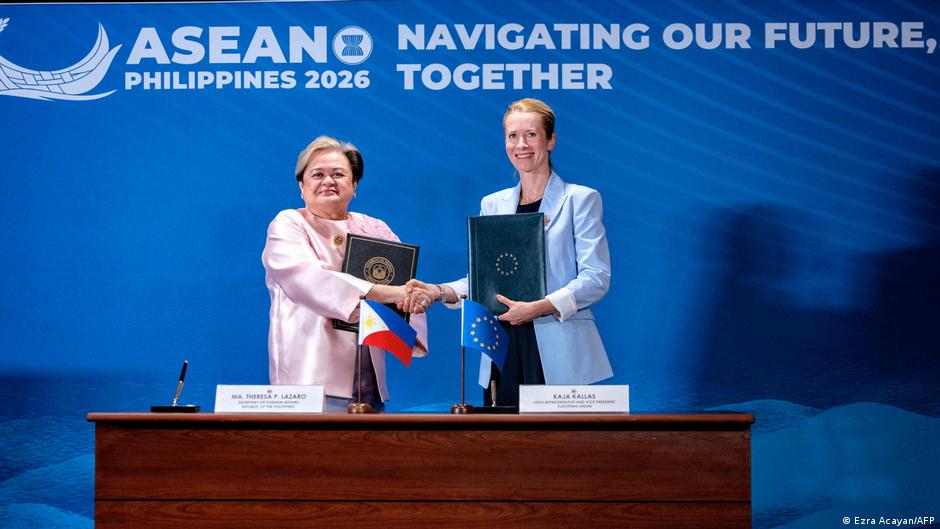
After years of arduous negotiations, the EU is closing on a string of bilateral trade deals with countries in Southeast Asia. And yet, a bloc-to-bloc agreement between the EU and ASEAN remains a distant prospect.
Sep 23, 2026 · byDeutsche Welle
In Southeast Asia, hundreds of thousands of people working in fraud centres are scamming people across the world. US authorities suggest the fraudsters are responsible for scams worth almost $10 billion a year against US nationals alone. Victims in Europe, the UK and China have also been targeted. Human rights groups further warn that those working in the centres are often themselves victims of human trafficking – forced to work as slaves.
This initiative could significantly enhance operational efficiency and competitiveness for Grab's partners, fostering economic growth in Southeast Asia. The post Grab partners with OpenAI to train 30,000 driver, delivery, and merchant partners in AI skills across Southeast Asia appeared first on Crypto Briefing .
Sep 23, 2026 · byCryptoBriefing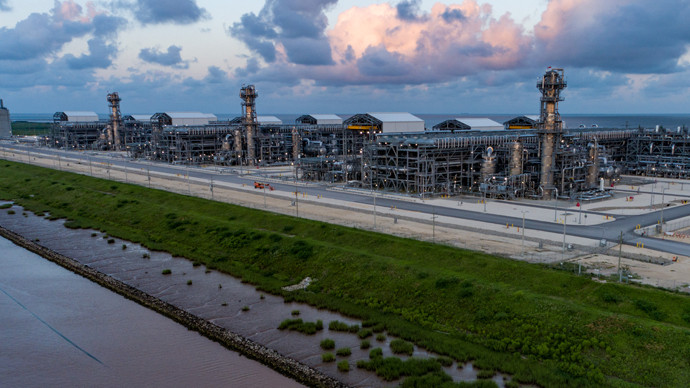
Xi Jinping arrives in Washington September 24, prepared to discuss reviving a $6 billion-a-year trade in US liquefied natural gas, contingent on lifting a 15% Chinese tariff that has blocked American gas since Q1 2025. Iranian missiles destroyed 17% of Qatar's LNG export capacity in March, and China absorbed that shock by buying more from everyone except the United States: Australia took 36% of its LNG imports from January through July, Southeast Asia 20%, Russia 12%, and Canada, a new entrant, 4%, according to Banchero Costa data. American cargoes…

Wired 's Andy Greenberg explains how a cybercrime operation in Southeast Asia trapped computer engineers into defrauding victims of billions of dollars. Plus, he discusses the scam involving Fresh Air.
 Sep 22, 2026 · byNPR
BlackRock's investment in Mynt's IPO could significantly boost fintech growth in Southeast Asia, enhancing digital financial inclusion. The post BlackRock poised to invest in Mynt’s IPO for GCash, the Philippines’ largest-ever public offering appeared first on Crypto Briefing .
Sep 22, 2026 · byCryptoBriefing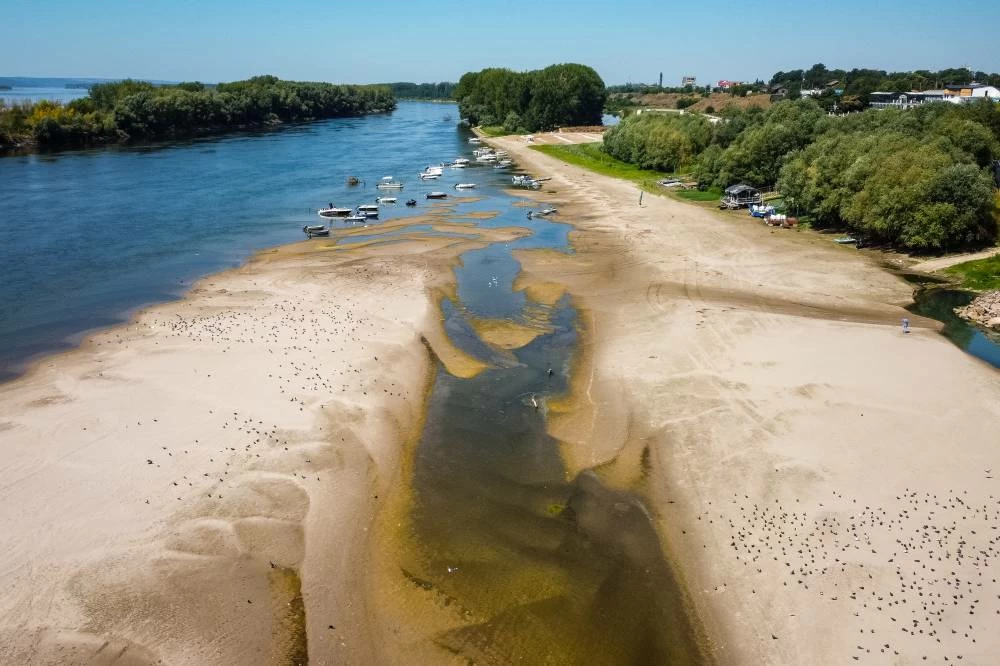
BANTEN, Indonesia : All signs are pointing toward a record-breaking El Nino this year, which experts say may cause severe drought in Asia and other extreme weather across the world, threatening food security for millions of people. El Nino is part of a natural climate cycle of warming ocean temperatures, but this year’s is expected to reach new extremes of drought, heat waves, flooding and other climate-related disruptions in South America, Africa and Asia. Southeast Asia is one of the world's most climate vulnerable regions. It's already beset by an energy crisis triggered by the war in Iran. El Nino is already fueling wildfires across farmland, depleting water supplies for major cities and hurting fish catches in the region. Asian governments that have been drawing on their financial reserves to mitigate the war's ripple effects of higher energy costs and scarce fertilizer supplies have less capacity to cope with this year's intensifying El Nino, which is forecast to peak in December. The phenomenon may amplify other crises in Southeast Asia, according to Paul Teng, with Singapore’s ISEAS-Yusof Ishak Institute, who said, "El Nino is only compounding all the other problems that we see.” During El Nino years, sea surface temperatures in the Pacific Ocean are warmer than usual. This happens every few years and often alters global weather patterns. This year, the seas already are hotter than average, with global oceans hitting new temperature records in August as the climate warms, said Kareff Rafisura, chief of the Disaster Risk Reduction Division at the U.N. Economic and Social Commission for Asia and the Pacific. This intensifying El Nino may be the "strongest in living memory,” according to the United Kingdom’s national weather and climate service. Similarly, the U.S.' National Oceanic and Atmospheric Administration said there is a 69% chance that this will be the strongest recorded El Nino since record-keeping began in 1950. El Nino's impact will be felt differently across regions, but it is expected to jeopardize food security worldwide. It could push at least 49 million more people into acute food insecurity by the end of 2027, according to the United Nations’ World Food Program. The problem will be worst in parts of Central America and southern Africa, with significant effects also anticipated in eastern Africa and South and Southeast Asia, warned the food agency. In Southeast Asia, wildfires are torching forests and peatlands in Indonesia, sending up plumes of toxic haze. The water level of a major reservoir supplying the bustling capital city of Jakarta - the world's biggest metropolis - is dropping inch by inch. As the lake dries, the ruins of one of 11 villages that had been inundated by the reservoir have emerged, as alarm grows over the need for alternative water supplies for the city of 42 million. "I would have rather not moved. There were plenty of livelihood opportunities here,” said Hussen, who only uses one name, as he ferried people across the receding reservoir. This is just the beginning, said Erma Yulihastin with Indonesia's Research Center for Climate and Atmosphere, who warned El Nino has only just begun its "super phase.” Less rainfall and hotter temperatures are putting pressure on Southeast Asia's fisheries, an essential source of protein. It's a pressing problem along the Mekong, a river basin that flows through six nations and is being disrupted by mining and construction of hydropower dams. "It’s one punch after another,” said Zeb Hogan, with the University of Nevada, Reno, who runs the research and conservation project, Wonders of the Mekong. "If the river doesn’t catch a break, we will reach a point where it’s no longer going to sustain people in the way that it always has.” Lower flows are especially hard on communities along the Mekong that depend on predictable water levels for fishing and farming, said Kongmeng Ly, with the Mekong River Commission, an intergovernmental group for Cambodia, Laos, Thailand and Vietnam. Southeast Asia's wet season generally runs from June to October, when rains usually replenish reservoirs, cool overheated cities and supply water for irrigation ahead of the next planting season. Drought may force farmers to delay planting, reduce acreage or switch crops entirely, said Rafisura, with the U.N. "Agriculture is definitely on the front line,” she said. Cutbacks in staple crops like rice and palm oil can have global impacts. The world's top three exporters of rice - India, Vietnam and Thailand - are among the nations most likely to be hit hard by El Nino this year. North of the Thai capital Bangkok, rice farmers like 55-year-old Boonmark Marksuuk are already facing tough choices. Apart from pricier fuel and fertilizer because of the war, he's spending most of his days pumping water into his rice fields because he no longer trusts the rain. El Nino is also bearing down on Indonesia and Malaysia, suppliers of about 85% of the world’s palm oil, which is used in everything from cookies and lipstick to toothpaste and laundry detergent. Malaysia’s prime minister has ordered its Ministry of Agriculture and Food Security to find ways to mitigate El Nino’s impact, which is forecast to hit Malaysia hardest in November. In Indonesia, farmers rely on rain to dissolve fertilizers into the soil to avoid burning the plants, explained Eddy Martono, chairman of the Indonesian Palm Oil Association. "If it doesn’t rain, everyone will definitely stop fertilizing,” which will hurt national production, he said. While the total economic fallout of an extreme El Nino is hard to calculate, losses from past events have reached trillions of dollars, according to HSBC’s Global Investment Research, which warns the numbers could be even bigger this time. Analysts at the investment bank Goldman Sachs estimate this El Nino could push global food commodity prices up more than 15%. "Whatever happens to agriculture really determines whether people stay below or just slightly above the poverty line,” Rafisura said. "Coming back to Southeast Asia, whatever happens here, the extent to which countries can protect production levels, will have global impacts.”

Rising electricity demand, shocks in energy security and climate commitments are reviving long-stalled plans for nuclear power across Southeast Asia. But proponents of nuclear energy still face formidable obstacles.
Sep 21, 2026 · byDeutsche Welle
All Nippon Airways (ANA) has introduced the Green Pokémon Jet, the second aircraft in ANA’s three-aircraft 2026 Pokémon Jet series. The aircraft, a Boeing 787-9 with aircraft number JA923A, will mainly operate over routes to the United States and Southeast Asia. Inaugural Flight to Honolulu The aircraft took off on its inaugural flight from Haneda […] The post ANA Launches Green Pokémon Jet in Three-Aircraft Series appeared first on Travel Radar - Aviation News .
 Sep 20, 2026 · byTravel Radar
Published at 0800PDT / 1500GMT 18SEP26 China Eastern earlier this month filed various frequency changes between Kunming and Southeast Asia for Northern winter 2026/27 season, as the carrier schedules service increase. Planned frequency comparison listed below are based on 30AUG26 vs 17SEP26. Kunming – Bangkok Suvarnabhumi eff 25OCT26 Increase from initially filed 3 daily to 6 daily, 737-800 (currently scheduled 4-5 daily) Kunming – Chiang Mai eff 25OCT26 Increase from initially filed 2 daily to 3 daily, 737-800 Kunming – Ho Chi Minh City eff 25OCT26 Increase from 7 to 11 weekly, 737-800 Kunming – Kuala Lumpur eff 25OCT26 Increase from initially filed 10 weekly to 13 weekly, A320neo/737-800 Kunming – Mandalay eff 25OCT26 Increase from initially filed 4 to 7 weekly, 737-800 Kunming – Singapore eff 25OCT26 Increase from initially filed 2 to 3 daily, 737-800/MAX 8 Kunming – Yangon eff 25OCT26 Increase from initially filed 1 to 2 daily, 737-800
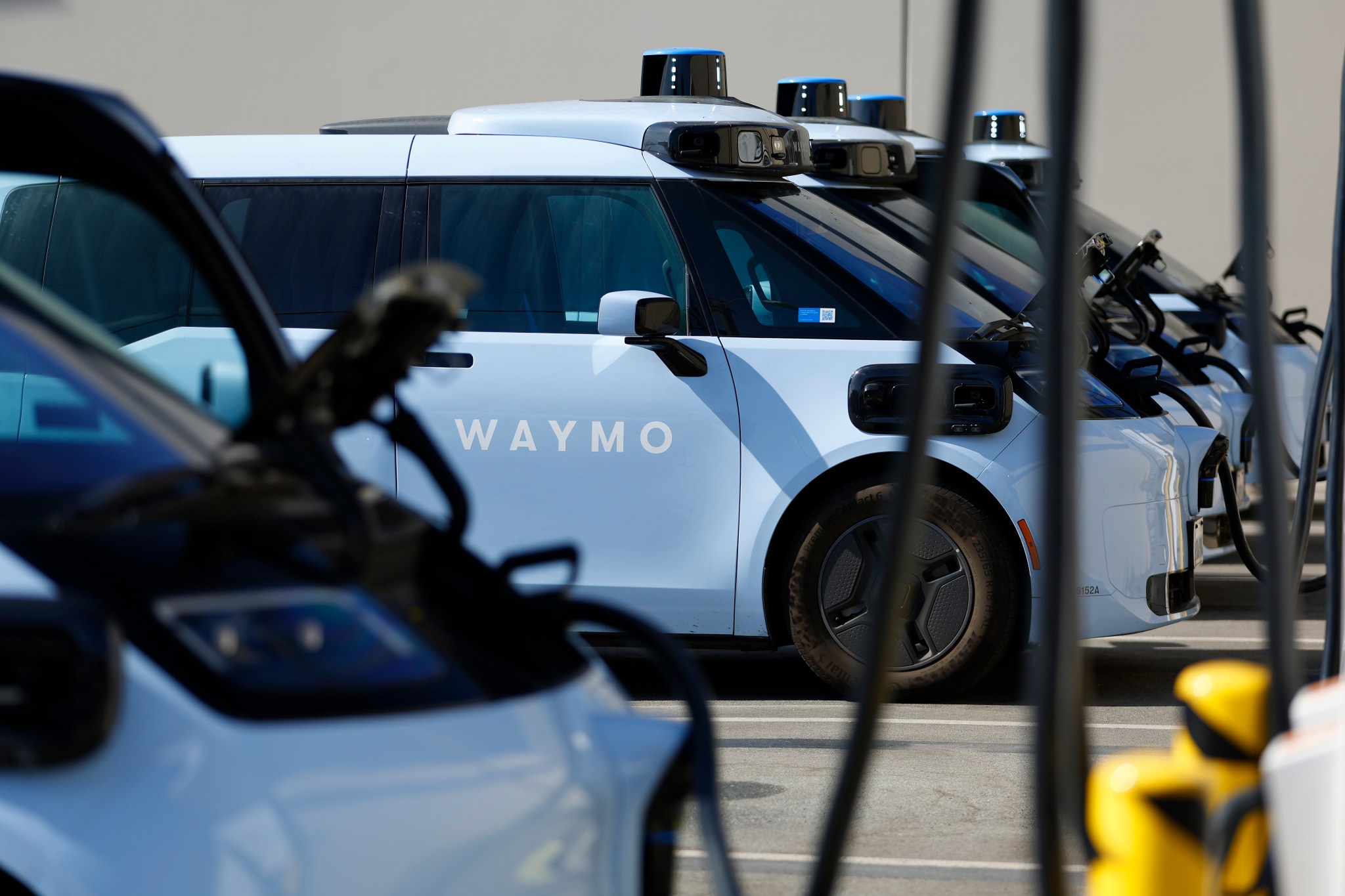
Singapore is already one of the world’s most crowded AV markets.

China's first modern river-to-sea canal could significantly cut down time and costs of trade to Southeast Asia.
 Sep 16, 2026 · byAl Jazeera
Grab is betting $1.49 billion on Atome Financial as it looks to expand its consumer lending business in Southeast Asia.

Grab's acquisition of Atome Financial could significantly enhance its competitive edge in Southeast Asia's burgeoning digital lending market. The post Grab acquires 60% of Atome Financial for $1.49B to expand lending across Southeast Asia appeared first on Crypto Briefing .
Sep 15, 2026 · byCryptoBriefing
Countries: World, United Kingdom of Great Britain and Northern Ireland Source: Government of the United Kingdom Hundreds of thousands of people around the world will be helped to prepare for extreme weather conditions next year. UK funding will support hundreds of thousands around the world to prepare for droughts, floods and food shortages before they escalate into humanitarian emergencies. Announcement follows devastating extreme weather this year, and will mitigate global impact by helping vulnerable communities protect livestock, reinforce homes and provide support to farmers before disaster hits. Comes ahead of UK Minister for Development speech setting out values-led modern approach to international development. Hundreds of thousands of people around the world will be helped to prepare for extreme weather conditions next year, as the UK steps up support for countries most at risk from El Niño. Up to £15 million is being made available through the Humanitarian Crisis Fund to support anticipatory action in countries most at risk from El Niño. Depending on the season, this includes drought-prone parts of southern Africa, Southeast Asia and Latin America, as well as flood-affected regions of East Africa and South America. UK funding will support practical and proven interventions that help communities prepare for extreme weather. These include vaccinating livestock before drought conditions take hold, reinforcing homes ahead of flooding, and providing cash support to farming families so they can buy essential supplies and protect their livelihoods. The impacts of extreme weather are felt everywhere, threatening lives, damaging harvests and disrupting food supplies, in the UK and around the world. As scientists warn a strengthening El Niño could trigger even more severe conditions in the coming months, the UK is acting now to help communities prepare before the worst impacts are felt. Kirsty McNeill, Minister for Development, said: The climate crisis isn’t something that’s round the corner – it’s already here and people need our help right now. The lesson of recent years is simple: climate shocks do not stop at national borders, whether that means extreme weather, pressure on food supplies or rising costs for families, shocks can affect all of us, wherever we live. That is why acting early matters, helping people in vulnerable communities prepare before disaster strikes so we can save lives and reduce suffering. It makes financial sense too - acting now to prepare costs less than picking up the pieces afterwards. Using the best science, forecasting and international partnerships to get ahead of risks before they become crises is a smarter approach to resilience and security. The announcement comes as the Minister for Development sets out her vision for a modern approach to development in a speech at the New Economics Foundation. In the speech, she will argue that the biggest global challenges demand a new focus on “mutual interest and shared resilience”. She will make the case that health security, climate security, economic security, human security, and food security affect us all, and that “the global problems we face today are not ones that any one country can deal with alone”. Around 35% of humanitarian shocks can be predicted in advance, yet less than 1% of global humanitarian funding is currently allocated to anticipatory action. The UK is a global leader in anticipatory action, working with partners to use early warning systems and pre-arranged finance to reduce suffering before it escalates and leading global efforts to scale-up early action before crises hit. Taking action early helps protect lives, reduce suffering and lower the long-term costs of responding to crises after they have escalated. Evidence consistently shows that acting early delivers better outcomes and better value than waiting until disaster has already caused widespread damage. Studies have shown proactive drought responses in the Horn of Africa could have prevented an estimated $2.5 billion in lost incomes and assets. Just as families insure their homes or businesses plan for a downturn, early action is helping to reduce costs and save lives by acting before a crisis takes hold, rather than paying a much higher price afterwards. Alongside efforts to tackle the global impact of extreme weather, the government is taking immediate action to build resilience at home. This includes investing £1.4 billion in flood defences this year as part of the largest flood defence programme in English history, building nine new reservoirs, and announcing a £65 million support package to help British farmers impacted by drought. Lisa Doughten, United Nations Office for the Coordination of Humanitarian Affairs (OCHA), said: In a world of increasing climate and humanitarian risks, we need to move from reacting to getting ahead of them. Anticipatory action based on credible forecasts save lives, reduces suffering and makes every humanitarian dollar go further. Partnerships and investments like this are essential to building a faster, more cost-effective humanitarian system that puts vulnerable communities at the centre. Aditya Bahadur, Director of Red Cross Red Crescent Climate Centre, said: As we approach the breach of the landmark 1.5C temperature threshold, we are set for a future with more frequent and intense, unprecedented events. Every tool in our toolbox needs to be deployed to manage the immense risk that confronts our most vulnerable communities. ‘Anticipatory action’ has proven immensely effective in preventing or reducing impacts on lives and livelihoods. From enhancing food security and reducing loss of livestock to preventing death and safeguarding assets - anticipatory action has consistently proven to be an impactful investment. Christina Bennett CEO, START Network said: When we know a drought is coming, we must not wait for families to lose their crops and incomes before we act. For communities now facing the impacts of El Niño, a small investment made early can make the difference between coping and crisis. Through Start Network’s work, we’ve seen that when support reaches people before a drought takes hold, families are better able to protect their harvests, keep their livestock healthy and put food on the table. Acting early helps people weather hard times with dignity, while reducing the human and financial cost of disaster. Professor Liz Stephens, University of Reading, said: El Niño loads the dice for extreme weather in many regions of the world, and advances in weather and climate prediction mean that El Niño events can be forecast many months in advance. This gives us a lengthy window of opportunity for anticipatory action to support communities to prepare and protect themselves, rather than waiting until disaster strikes and costly emergency assistance is needed. Daniel Clarke, Executive Director, Centre for Disaster Protection, said: Anticipatory action is one of the best-evidenced tools in disaster financing. In Bangladesh, families given cash five days before a flood hit were 62% less likely to go hungry, because they had time to prepare, not scramble to recover after the destruction. Scaling up anticipatory action effectively needs more than money: countries in the lead, backed by donors and investors who are ready to fund it for the long term, not just step in when disaster strikes. BACKGROUND El Niño is a naturally occurring climate pattern that typically occurs every two to seven years. What makes it different this year, which is forecast to be the largest El Niño in living memory, is the high levels of heat in the ocean which, according to the World Meteorological Organisation (WMO), could significantly shift rainfall and temperature patterns worldwide, fuelling extreme weather. The UK is bringing together science, humanitarian expertise and innovative finance to help countries prepare for El Niño before disaster strikes. This new support for anticipatory action, which will be allocated from the Humanitarian Crisis Fund, is one part of a broader UK response. This includes the new FCDO-Met Office partnership to expand access to AI-powered weather forecasting and early warning systems. By combining cutting-edge technology with UK scientific expertise, the partnership will help countries better predict, prepare for and respond to extreme weather events. The UK is working closely with global financial institutions to push for an earlier, better coordinated response and deployment of emergency finance for countries at greatest risk. By investing in early warning systems and pre-arranged financing, we are able to better monitor and respond to the emerging climate and food security risks before they turn into crises. The UK is supporting governments in priority countries to protect food production, livelihoods and markets before crises escalate. This includes shaping the World Bank’s Crisis Preparedness and Response Toolkit, launched in early 2024, which enables countries to access pre-arranged financing and repurpose unused project funds when a shock hits. The UK is working through the Multilateral Development Banks and UN humanitarian system to inform the wider disaster risk finance and insurance agenda to ensure vulnerable countries and communities have the finance and tools they need to reduce the impact of climate-related shocks. The UK-led Sevilla Platform for Action on Pre-arranged Finance aims to increase the proportion of pre-arranged finance within crisis finance from 2% towards 20% by 2035, helping move the international system from reacting to crises towards anticipating and preventing them. Media enquiries Email newsdesk@fcdo.gov.uk Telephone 020 7008 3100 Email the FCDO Newsdesk (monitored 24 hours a day) in the first instance, and we will respond as soon as possible.
 Sep 15, 2026 · byReliefWeb
TrueMoney's THBT wallet initiative could revolutionize digital payments in Southeast Asia, enhancing financial inclusion and cross-border transactions. The post Thailand’s dominant e-wallet TrueMoney partners with Fireblocks to embed THBT wallet in its app appeared first on Crypto Briefing .
Sep 15, 2026 · byCryptoBriefing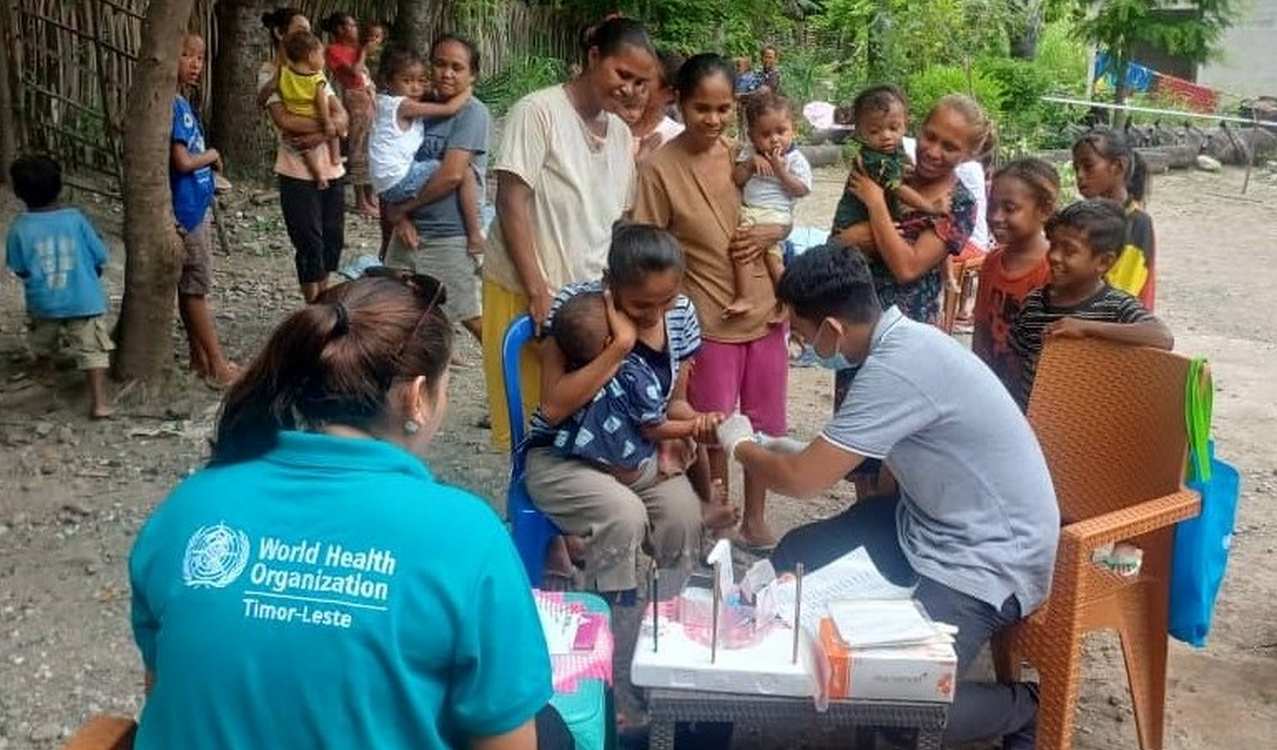
The World Health Organization (WHO) recently announced it has certified Timor-Leste as having eliminated trachoma as a public health problem. The leading infectious cause of blindness, the achievement on the island nation now means that the entire Southeast Asian region, as defined by the WHO, is trachoma-free. It means over 2 billion people now live […] The post Following Timor-Leste’s Triumph, All of Southeast Asia Has Eliminated Trachoma appeared first on Good News Network .
 Sep 14, 2026 · byGood News Network
The DOJ's Scam Center Strike Force seized an illicit Chinese-run scammer marketplace and restrained $52 million in crypto. A separate team assisted Madagascar authorities in dismantling 13 scam compounds as part of a crackdown extending beyond Southeast Asia. The post DOJ Strike Force Seizes Illicit Marketplace and Restrains $52,000,000 in Crypto appeared first on The Daily Hodl .
 Sep 14, 2026 · byThe Daily Hodl
Mondelez is expanding its chocolate manufacturing operations in Malaysia, with the company also seeing further room for growth across Southeast Asia.

Global air cargo volumes slipped -1% week on week (WoW) in week 36, as hostilities in the Middle East flared up again and exports from Southeast Asia were affected by […]

SOFAZ is the only founder from outside East and Southeast Asia, reflecting Azerbaijan’s position on the trade corridor between Asia and Europe.
 Sep 11, 2026 · byEuronews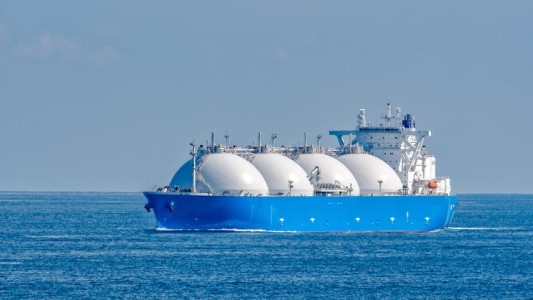
Demand for liquefied natural gas (LNG) in Southeast Asia has found a new major driver apart from the years-long efforts to switch away from coal-fired power generation. The AI boom and the data center construction in Asia are set to materially change Southeast Asia’s LNG demand outlook with a significant upside, as combined-cycle gas turbines (CCGT) remain the most reliable 24/7 power provider for hyperscalers amid relatively immature renewable energy-plus-batteries across the region, analysts at Wood Mackenzie say. As a result of the higher…

More than 400,000-year-old Homo erectus teeth from China may reveal a surprising link between this ancient human species, Denisovans, and some modern people. Scientists found protein mutations suggesting several East Asian Homo erectus populations belonged to the same evolutionary group, including one mutation previously associated with Denisovans. That variant may have passed from Homo erectus into Denisovans and eventually reached modern populations in Southeast Asia and Oceania.
 Sep 10, 2026 · byScienceDaily
Zankore's financing could accelerate AI development in Southeast Asia, fostering regional innovation and enhancing global tech competitiveness. The post Zankore secures $3.1B GPU financing to build AI factory in Indonesia appeared first on Crypto Briefing .
Sep 9, 2026 · byCryptoBriefing