← News
Topic · Organization

Rohingya

11 articles

See also
📰

Latest Rohingya articles

Malaysia: Press Myanmar Junta Leader to End Abuses

Malaysia: Press Myanmar Junta Leader to End Abuses

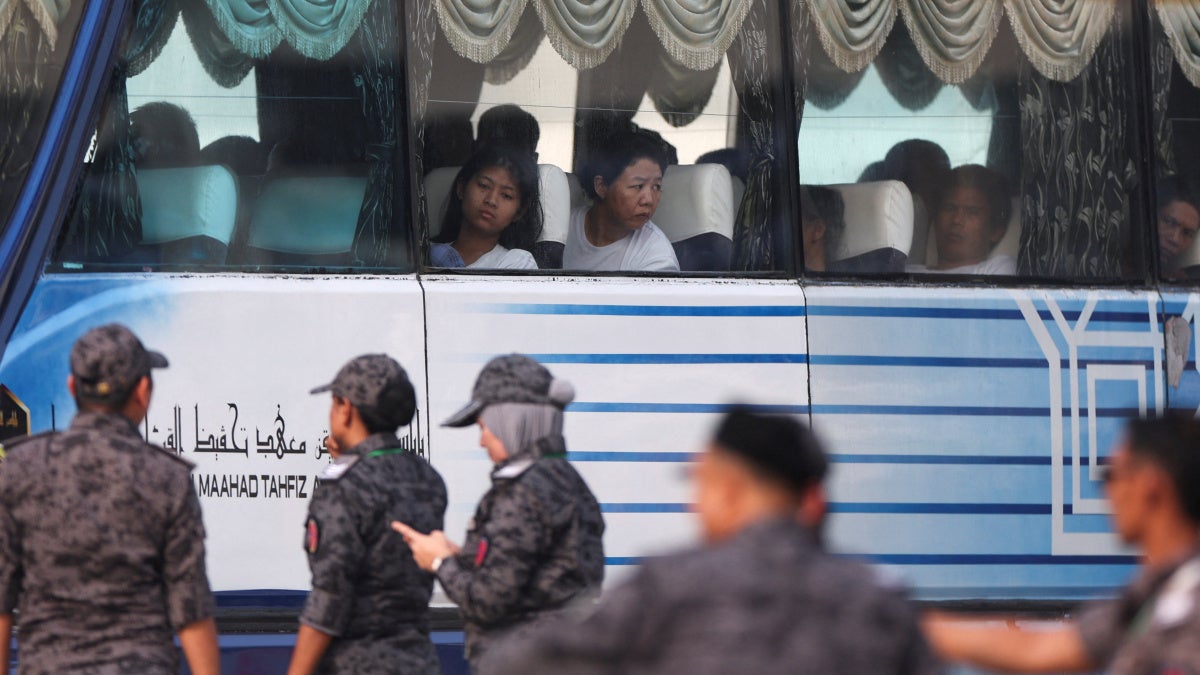
Click to expand Image Myanmar nationals to be repatriated from Malaysia sit inside a bus, at Lumut, Malaysia, September 29, 2026. © 2026 Hasnoor Hussain/Reuters (Bangkok) – Malaysian Prime Minister Anwar Ibrahim should press Myanmar’s junta leader, Min Aung Hlaing, to end human rights abuses during his visit to Kuala Lumpur on October 7, 2026, Human Rights Watch said today. The Malaysian government should also halt plans to forcibly return ethnic Rohingya and other people from Myanmar, where they face persecution and other rights violations. Malaysian authorities deported about 1,500 Myanmar nationals on September 29 in coordination with junta authorities, the first batch in a series of phased returns. “Malaysian Prime Minister Anwar Ibrahim’s invitation to Min Aung Hlaing to coordinate the forced return of people who fled military atrocities in Myanmar is an invitation for further abuse,” said Elaine Pearson, Asia director at Human Rights Watch. “The Malaysian government, which has provided protection to Rohingya and other refugees from Myanmar for decades, should halt any more returns and urge the junta leader to stop the abuses that have caused millions to leave the country.” On September 16, Prime Minister Anwar announced that he was inviting Min Aung Hlaing, who led the February 2021 military coup, to discuss the return of Myanmar nationals from Malaysia. This is Min Aung Hlaing’s sixth bilateral visit to an Asian country since he installed himself as president in April following sham elections and after stepping down as commander-in-chief of the Myanmar military. Min Aung Hlaing has been implicated in many abuses, and the International Criminal Court prosecutor has requested an arrest warrant for his alleged crimes against humanity. On September 29, Malaysian authorities sent back 1,476 Myanmar nationals—1,370 men, 79 women, 20 boys, and 7 girls, ages 8 to 60—according to Malaysia’s state news agency, Bernama, aboard two Myanmar navy ships and a hospital ship from Lumut naval base in Malaysia’s Perak state. The deportations come amid a wave of public hostility in Malaysia toward refugees, particularly Rohingya, that government officials have fomented. The Home Ministry has described refugees as a financial burden, a social problem, and a security threat. Online hate speech and misinformation targeting Rohingya and migrants generally have surged this year, leading to harassment and the closure of community schools. The transfer was the first phase of an arrangement between the Malaysian government and the Myanmar junta to return 5,000 people, initially announced by Malaysian officials in July. Based on media reports, Malaysia’s Home Ministry said the Myanmar junta authorities had identified those slated for return. It did not disclose their ethnicity or refugee status, or say whether Rohingya were among them. The ministry was quoted as saying that further phased returns would follow once identification, documentation, and verification were complete. Malaysian authorities have claimed the returns were strictly voluntary. But those deported were taken directly from immigration detention centers—where former detainees have reported physical abuse and psychological harm—raising serious concerns about whether consent was freely given. The United Nations Refugee Agency (UNHCR) said it had no role in the operation and was not involved in identifying those deported. Since 2019, the Malaysian government has denied UNHCR access to immigration detention centers, preventing the agency from reviewing asylum claims or assisting detainees who are registered refugees. Consent given while in indefinite detention, without access to UNHCR or a meaningful protection assessment, cannot be truly voluntary, Human Rights Watch said. A representative of the ethnic Chin refugee community in Malaysia told the media that community leaders knew of several asylum seekers among those deported, including one who had been recognized by UNHCR as a refugee. There are no authoritative figures on the number of Myanmar migrants, refugees, and asylum seekers in Malaysia. More than 224,000 refugees and asylum seekers are registered with UNHCR in Malaysia, about 90 percent from Myanmar, the vast majority ethnic Rohingya. Since Myanmar’s 2021 military coup, Malaysia has summarily deported thousands of asylum seekers to Myanmar without assessing their asylum claims or other protection needs, and in violation of a Malaysian court order. In May 2024, UNHCR issued guidance stating that people fleeing Myanmar “are likely in need of international refugee protection.” Conditions for safe, dignified, and voluntary return to Myanmar do not currently exist, Human Rights Watch said. The Myanmar military continues to commit war crimes and crimes against humanity. Junta authorities have arbitrarily arrested tens of thousands of people since the coup, and thousands have experienced torture and ill-treatment or died in custody. A day before the September deportations took place, Myanmar’s military carried out an airstrike near a market in the town of Kyauktaw, Rakhine State, killing 50 people. Rohingya face particular danger if they are forcibly returned. Myanmar authorities have long denied them citizenship and subjected them to atrocity crimes, including the ongoing crimes against humanity of apartheid, persecution, and deprivation of liberty. In Rakhine State since late 2023, Rohingya civilians have been caught in the fighting between the junta and ethnic Arakan Army forces. Both parties have carried out grave abuses, including extrajudicial killings, widespread arson, and unlawful recruitment. Malaysian Communications Minister Fahmi Fadzil said on September 30 that 3,524 people had been approved for a second phase of deportation from a list Myanmar authorities submitted in a diplomatic note dated August 13. Malaysia is awaiting a date from Myanmar. About 10,400 Myanmar nationals are held in Malaysian immigration detention, according to recent reports from the Malaysian Home Affairs Ministry. Malaysia has not ratified the 1951 UN Refugee Convention or its 1967 protocol, but it is still obligated to respect the international law principle of nonrefoulement, which prohibits countries from returning anyone to a place where they would face a real risk of persecution, torture or other serious ill-treatment, a threat to life, or other comparable serious human rights violations. The Malaysian government should immediately suspend all deportations to Myanmar, including its planned second phase, and grant UNHCR full and unimpeded access to all immigration detention centers. The Association of Southeast Asian Nations (ASEAN) should maintain the ban on Min Aung Hlaing and other junta leaders participating in the regional bloc’s meetings. ASEAN members should refrain from organizing bilateral visits that undermine their collective ban on junta officials. Concerned governments should press Malaysia to halt the returns, and expand resettlement places and support for countries hosting refugees from Myanmar. They should not treat returns arranged with Myanmar’s military-backed authorities as evidence that the country is safe. “The Malaysian government should not be outsourcing the decision about who can safely return to Myanmar to the junta authorities,” Pearson said. “Prime Minister Anwar should stop the next ships before they set sail, and provide the UN refugee agency access to refugees and asylum seekers.”

Oct 6, 2026 · byHuman Rights Watch
Bangladesh: Republic of Korea provides USD 5 million for life-saving food and nutrition assistance for Rohingya refugees | World Food Programme

Bangladesh: Republic of Korea provides USD 5 million for life-saving food and nutrition assistance for Rohingya refugees | World Food Programme

Countries: Bangladesh, Myanmar, Republic of Korea Source: World Food Programme DHAKA, Bangladesh – The United Nations World Food Programme (WFP) in Bangladesh has welcomed a USD 5 million contribution from the Republic of Korea. The contribution comes as humanitarian resources are increasingly stretched and it will help sustain life-saving food assistance, nutrition services and school feeding for more than 462,000 Rohingya refugees in Bangladesh over a 12-month period. Nearly 1.2 million Rohingya refugees in Cox’s Bazar and Bhasan Char continue to depend on humanitarian assistance, while food insecurity and malnutrition remain high and humanitarian funding is increasingly stretched. “As the Rohingya crisis approaches its tenth year, continued international support is essential to protect lives, uphold dignity and ensure that children and families can meet their basic food and nutrition needs,” said Coco Ushiyama, WFP Representative and Country Director in Bangladesh. “We are deeply grateful to the Government and people of the Republic of Korea for standing with the Rohingya at this critical time.” The new funding will enable WFP to deliver the following over a 12-month period: Provide life-saving food assistance for approximately 164,000 vulnerable Rohingya refugees through WFP’s e-voucher system; Deliver nutrition assistance to approximately 36,000 pregnant and breastfeeding women; Deliver specialized nutritious food (Super Cereal and vegetable oil) to approximately 2,500 pregnant and breastfeeding women; Provide school meals to 260,000 children attending learning centres. The funding will support the second phase of Responding with Emergency Assistance for Conflict-affected Households (REACH), a flagship humanitarian initiative of the Republic of Korea’s Ministry of Foreign Affairs, implemented in partnership with WFP. “Having once received international support, the Republic of Korea is proud to now stand alongside WFP in supporting people affected by humanitarian crises around the world, including Rohingya refugees in Bangladesh,” said H.E. Kim Ji-joon, Ambassador of the Republic of Korea to Bangladesh. “Through this partnership, we remain committed to protecting vulnerable communities and contributing to our shared global humanitarian efforts.” As the Rohingya crisis persists and humanitarian resources face growing pressure, sustained and predictable international support is essential for families to access food and nutrition assistance and live with dignity. # # # About WFP: The United Nations World Food Programme is the world’s largest humanitarian organization saving lives in emergencies and using food assistance to build a pathway to peace, stability and prosperity for people recovering from conflict, disasters and the impact of weather extremes. Follow us on X @wfp_bangladesh, Facebook @WFPinBangladesh, Instagram @wfp_bangladesh

World Food Programmeneutral
Oct 1, 2026 · byReliefWeb
‘They showed no mercy’: mapping the Rohingya villages being erased by rebel forces

‘They showed no mercy’: mapping the Rohingya villages being erased by rebel forces

Nearly a decade after the ethnic cleansing of Rohingya people by Myanmar forces, satellite images show the insurgent Arakan Army is now emulating the killings and land grabs There are at least 10 camps like the one on the paddy fields at Hnget Thay, built after the insurgent Arakan Army (AA) took control of most of northern Rakhine state in 2024. These are where many Rohingya people in the state now have to live. Others hide in the mountains, or flee abroad to the refugee camps of Bangladesh or make deadly boat journeys to Malaysia . The arrival of more than 155,000 Rohingya in Bangladesh since 2024 , which amounts to 25% of the 600,000 estimated to still be in Myanmar , has raised concerns about the very survival of a people who now mostly live abroad as refugees. Continue reading...

Rohingyafavorable
Oct 1, 2026 · byThe Guardian
📰

Myanmar: MSF: "Stop treating repatriation of Rohingya as a solution when conditions are clearly unsafe"

Countries: Myanmar, Bangladesh Source: Médecins Sans Frontières **29 September 2026 -**On 30 September 2025, the United Nations hosted a High-Level Conference in New York on the situation of Rohingya Muslims & Other Minorities in Myanmar. ​ The goal of those in attendance was to propose “a comprehensive, innovative and concrete plan for a sustainable resolution of the crisis, including efforts to create a conducive environment for the voluntary, safe, sustainable and dignified return of Rohingya’ to Rakhine state in Myanmar." One year on, the situation for over one million Rohingya refugees living in limbo across the camps in Cox’s Bazar, Bangladesh, and those remaining in conflict ravaged Rakhine state, remains dire and continues to deteriorate under global neglect. Civilians in Rakhine State, and across several other areas of Myanmar, face extreme violence. Myanmar’s health system continues to be torn apart by the ongoing violence: medicines and medical supplies are often depleted, unable to reach facilities because of the conflict, or blocked altogether resulting in severely disrupted access to healthcare. Despite these perilous conditions, regional pressure and dangerous moves toward returning refugees to Myanmar persist, while conditions are not yet safe enough to do so. Notably, Malaysia is planning to return nearly 1,500 refugees back to Myanmar, including Rohingya people, as of 29th September 2026. ​ Statement by Dr Javid Abdelmoneim, International President of Médecins Sans Frontières / Doctors Without Borders (MSF): "One year on since the conference, Rohingya communities have seen too little action, and too little accountability. There were strong words at that conference, but for people affected, words have not resulted in change. My message to world leaders is this: stop treating repatriation as a solution when conditions are clearly unsafe. ​ Myanmar remains a place of extreme violence. Civilians are facing aerial bombardment, mass killings, forced recruitment, and sever deprivation. Healthcare, food supplies, education, and livelihoods are all being disrupted by conflict and insecurity. MSF activities, like those of others, have contracted drastically because of insecurity. This is not only about the ability to keep our patients and staff safe from bombs and shelling but also the relentless bureaucracy we're faced with to secure the authorisations to respond, even as needs continue to escalate. And yet, we're still seeing dangerous moves towards return. In Malaysia, nearly 1,500 Myanmar refugees are at risk of being returned under a repatriation programme announced for the end of September. That's deeply alarming. Let's be clear. Return is not safe and it is not viable now. Rohingya people themselves are saying this. In our survey last year, 84% of Rohingya patients in Bangladesh said they would not feel safe returning to Myanmar. What is needed now is concrete action. Forced or premature returns must stop. Any returns must be truly voluntary, safe, and dignified. Host countries must protect refugees and assess protection needs properly. This means identifying if people are at risk of persecution if they are returned to their home countries and upholding the principle of non-refoulement. Humanitarian access [in Myanmar] must be expanded, assistance must be sustained, and there must be real accountability for the violence Rohingya people, and all other conflict affected communities in Myanmar continue to face." ENDS MSF UK media@london.msf.org +44 (0) 207 067 4236

Rohingyaneutral
Sep 29, 2026 · byReliefWeb
Myanmar: Armed conflict and violence prevent a safe return to Rakhine State

Myanmar: Armed conflict and violence prevent a safe return to Rakhine State

Country: Myanmar Source: UN Human Rights Council 24 September 2026 – The Independent Investigative Mechanism for Myanmar has collected and analysed extensive evidence that establishes that many serious international crimes continue to be committed across Myanmar. In Rakhine State, the situation remains extremely volatile and dangerous for all communities. Amid the ongoing conflict, civilians are frequently the victims of aerial bombings, artillery shelling, drone attacks, arbitrary detention, sexual and gender-based crimes, torture and killings. In many locations, civilians lack basic necessities and humanitarian assistance has been obstructed. The Mechanism takes note of recent statements by governments in the region concerning the possible return of people, including the Rohingya, who previously fled the violence in Myanmar. Conditions in Rakhine State are not yet conducive to their safe, voluntary, dignified and sustainable return. Before such returns can take place, the crimes and violence causing immense suffering to communities across Myanmar must end. The Independent Investigative Mechanism for Myanmar (IIMM or Mechanism) was created by the United Nations Human Rights Council in 2018 to collect and analyse evidence of the most serious international crimes and other violations of international law committed in Myanmar since 2011. It aims to facilitate justice and accountability by preserving and organizing this evidence and preparing analysis that can be used by authorities to prosecute individuals in national, regional and international courts. For more information, visit iimm.un.org or contact iimm@un.org .

Sep 24, 2026 · byReliefWeb
Bangladesh: Situation Report: August 2026 WHO Cox’s Bazar: Rohingya Emergency Response

Bangladesh: Situation Report: August 2026 WHO Cox’s Bazar: Rohingya Emergency Response

Country: Bangladesh Source: World Health Organization Please refer to the attached file. Overview In August 2026, WHO and Health Sector partners maintained continuity of essential health services while responding to monsoon-related emergencies across Rohingya camps and host communities. Key public health priorities included responding to rising dengue transmission, sustaining measles outbreak control efforts, strengthening population immunity through routine and supplementary immunization activities, and maintaining emergency readiness during the monsoon season. Critical funding gaps continue to threaten Health Sector coordination, surveillance, preparedness and response to outbreaks and health emergencies, and continuity of essential health services. Coordination and Leadership WHO, as Health Sector lead, continued to coordinate the health response for Rohingya refugees and host communities, supporting partner alignment, strategic planning, resource prioritization, and evidence-based decision-making. Key Updates The WHO-led Health Sector convened one Cox’s Bazar-level coordination meeting, 33 camp-level coordination meetings, and one Strategic Advisory Group (SAG) meeting, supporting partner coordination on epidemiological trends, disease surveillance, immunization, community health, mental health, emergency preparedness and response, and funding impacts. Coordination mechanisms continued to facilitate information sharing, operational planning, and partner engagement to address emerging public health risks and response priorities across Rohingya camps and host communities. Health Sector information products, including 4W, HeRAMS, EWARS, epidemiological updates, and training calendars, remain accessible at: https://rohingyaresponse.org/sectors/coxs-bazar/health/

Sep 21, 2026 · byReliefWeb
A Route-Based Snapshot: Data & Trends for Refugees from Myanmar, as of end-August 2026

A Route-Based Snapshot: Data & Trends for Refugees from Myanmar, as of end-August 2026

Countries: Myanmar, Bangladesh, India, Indonesia, Malaysia, Sri Lanka, Thailand Source: UN High Commissioner for Refugees Please refer to the attached Infographic. The humanitarian crisis in Myanmar remains one of the world’s most complex and protracted, marked by repeated waves of displacement and limited prospects for durable solutions. Escalating conflict and human rights violations have forced millions to flee within Myanmar and across borders. As of August 2026, 4 million people are internally displaced, and 1.63 million are refugees and asylum-seekers. The crisis has been worsened by disasters and extreme weather in recent years, including Cyclone Mocha (May 2023), Typhoon Yagi (September 2024), and a 7.7 magnitude earthquake (March 2025). With no sign of improvement, prospects for safe and voluntary returns, especially for 1.33 million Rohingya remain bleak. As humanitarian resources in host countries grow increasingly strained, thousands of Myanmar refugees are undertaking dangerous journeys in search of protection, safety, family reunification, and livelihoods. UNHCR is adopting a Route-Based Approach to improve early access to protection and solutions for refugees and asylum-seekers - ultimately reducing the need for risky onward movement. UNHCR continues to urge States across the region to strengthen coordination to save lives at sea, fully deploy rescue capacities, and ensure safe, timely disembarkation—upholding the principles of humanity, solidarity, and shared responsibility.

Sep 16, 2026 · byReliefWeb
Hate speech against Rohingya refugees on the rise in Malaysia

Hate speech against Rohingya refugees on the rise in Malaysia

Hostile social media content, disinformation campaigns, and a petition calling for their expulsion: in Malaysia, a wave of hate speech has been targeting Rohingya refugees, a Muslim minority driven out of Myanmar. The rising hostility has already led to the eviction of more than 100 people from a village and forced the temporary closure of schools serving refugee children.

Sep 11, 2026 · byFrance 24
Well-being and Labor Market Outcomes of Refugees in Malaysia: Insights from the HARMONY Survey, September 2026

Well-being and Labor Market Outcomes of Refugees in Malaysia: Insights from the HARMONY Survey, September 2026

Countries: Malaysia, Myanmar Sources: UN High Commissioner for Refugees, World Bank Please refer to the attached file. Executive Summary As of July 2024, 191,710 refugees and asylum seekers have been registered with UNHCR, the UN Refugee Agency in Malaysia. Some 88 percent are from Myanmar, comprising 110,365 Rohingya and 58,423 individuals of other ethnic groups. The remaining individuals comprise some 22,922 refugees and asylum seekers from 50 countries fleeing war and persecution. The country has allowed refugees and asylum seekers to temporarily remain in the country on humanitarian grounds despite not being a signatory to the 1951 Convention Relating to the Status of Refugees. In the absence of a formal refugee policy, refugees face a myriad of challenges, including the lack of access to legal work, public education, and social protection as well as the risk of exploitation, discrimination, arbitrary arrest and detention. Consequently, many refugees live in a perpetual cycle of poverty and lack resilience in the event of socioeconomic shocks. The challenges faced by refugees due to their lack of legal rights in Malaysia are further exacerbated by the ambiguity surrounding the management of refugees and asylum seekers. This is particularly exemplified in their access to legal work, with discussions of potential policy changes spanning several administrations. The population is not allowed to work formally and there are no clear guidelines surrounding the nature of work if they work informally, nor are there regulations that protect refugees from exploitation. Additionally, refugees face challenges in accessing assets that contribute to productive work, such as access to financial services and driver’s licenses. Discourse on the issue continued throughout 2024, with an increased acknowledgment that legal work for refugees can potentially address labor market gaps. Recent developments include the reported revision of the National Security Council Directive No. 23 (Illegal Immigrants Holding UNHCR Cards Management Mechanism) to address refugees’ access to work, education, and other basic services. The Ministry of Human Resources has also been tasked with leading a Work Committee on Work Permits for Refugees, whose main function is to discuss proposals on work permits for refugees and asylum seekers in various sectors (Parliament of Malaysia 2024). The Malaysian government has also announced that it will conduct a comprehensive study on allowing refugees to work in specific sectors of the country to collect relevant information and data to inform future directions (Mahari 2024). This report is based on analysis of the Hosts and Refugees in the Malaysian Economy (HARMONY) Survey—the first systematic and detailed survey comparing refugee and host community households in Malaysia. A collaboration between UNHCR and the World Bank, this study aims to generate a holistic picture of refugees’ human capital and skills, working conditions, and economic well-being as informal workers in Malaysia. Through the generation of comparative economic data on refugees and host communities, the HARMONY Survey seeks to contribute to the development of policies and actions related to refugees’ access to productive and decent work. It provides a basis for comparative analyses of the socioeconomic and labor market profiles of different groups of refugees with host communities in Malaysia. The HARMONY Survey was conducted between December 2023 and April 2024 in three states (Johor, Pulau Pinang, and Selangor) and the federal territory of Kuala Lumpur, which together account for 76 percent of all refugees in the country. It covers 3,967 households, of which 2,533 are refugee households (1,149 Rohingya refugee households, 999 non-Rohingya Myanmar refugee households, 385 refugee households from other countries) and 1,434 are host community households (of Malaysian nationals living near refugees).

Sep 11, 2026 · byReliefWeb