← News
Topic · Place

Nairobi

38 articles · 1+ stories

See also
📰

Latest Nairobi articles

📰

MSF Reaction to the announcement of the 1st Ebola case reported in Kenya

Countries: Kenya, Democratic Republic of the Congo, Uganda Source: Médecins Sans Frontières Following the announcement by Kenya’s Ministry of Health of the country’s first confirmed Ebola case and subsequent death in Nairobi, MSF in close coordination with the MoH and other actors is following the situation closely. Since the beginning of this regional outbreak in the DRC and Uganda, MSF has been actively supporting Kenya’s Ebola response preparedness in various locations. In June 2026, MSF opened an Ebola simulation and training center in Kajiado County, near Nairobi, to support the preparedness efforts among MSF staff deploying to the DRC, Ministry of Health personnel, local healthcare workers, and partner organizations. The facility replicates an Ebola treatment center and provides training on the safe use of personal protective equipment (PPE), infection prevention and control measures, and emergency response procedures. A total of 355 professionals, including 84 Kenyan healthcare workers, have been trained at the center. In July, the Mombasa County Department of Health, with support from MSF, established an Ebola training center at Port Reitz Sub-County Hospital to strengthen preparedness for a potential outbreak. More recently, in Busia County along the Kenya-Uganda border, MSF teams have been supporting Ministry of Health staff with preparedness activities, including the isolation and management of suspected Ebola cases and the implementation of infection prevention and control measures. MSF has extensive experience responding to Ebola outbreaks, including through its ongoing response in the DRC, where more than 8,200 people have been infected and 4,000 have died. Beyond providing patient care, MSF teams support infection prevention and control measures and invest heavily in community engagement. A key lesson from this experience is that strong community engagement and trusted sources of information are essential to addressing fear and misinformation, building trust, and enabling an effective public health response. END For almost 40 years, MSF has been providing medical and humanitarian assistance in Kenya, responding to disease outbreaks, health emergencies, and barriers to healthcare access alongside vulnerable groups such as refugees or marginalized populations. Working closely with health authorities and local communities, MSF keeps delivering a wide range of services including emergency medical care, disease prevention and surveillance, water and sanitation support, and essential healthcare services for populations in both urban and remote areas across the country.

Oct 7, 2026 · byReliefWeb
📰

Kenya confirms first imported Bundibugyo virus disease case; WHO supports control efforts

Countries: Kenya, Democratic Republic of the Congo Source: World Health Organization Nairobi— Following the confirmation by Kenyan authorities of the country's first imported case of Bundibugyo virus disease (BVD), the World Health Organization (WHO) is working closely with the Government of Kenya to intensify key control measures to prevent further spread of the virus. The government is strengthening its response coordination and case investigation, while monitoring and listing contacts for enhanced disease surveillance. At the core of the response efforts are screening at high-risk points of entry, and clear risk communication, while engaging communities to help prevent infection. These measures are rapidly being deployed to ensure the identification of cases and help contain further transmission. The patient, a Kenyan citizen, fell ill in the Democratic Republic of the Congo, where they had been living, and was treated at several health facilities there. The patient then travelled by road to Kampala, Uganda through Beni on 2 October 2026, and flew to Nairobi, arriving on 3 October 2026. On arrival, the patient was transported to a hospital in Nairobi and was quickly isolated. Samples tested positive for Bundibugyo virus at both the National Virology Reference Laboratory and the Kenya Medical Research Institute. Despite supportive care, the patient died on the night of 5 October 2026 and was buried on 6 October 2026 in line with the country’s Ebola safe and dignified burial protocol. The Government of Kenya notified WHO of the case in line with the International Health Regulations (2005) on 6 October 2026. Kenya is the fourth country to confirm BVD. The Democratic Republic of the Congo is responding to an ongoing BVD outbreak, while Uganda, where the Bundibugyo virus species was first detected in 2007, ended the latest outbreak in August 2026. Most cases in Uganda were imported from the Democratic Republic of the Congo and the remaining few were locally acquired among contacts and health workers linked to imported cases. France reported a travel-related case of BVD in June 2026. Health authorities in Kenya have so far listed 28 contacts, including family members and health workers who cared for the patient. They are also tracing 23 passengers and four crew members from the same flight, with arrangements underway for appropriate follow-up and quarantine of people assessed to be at risk. "Health emergency preparedness gives us a head start. Kenya has put important outbreak control measures in place. The priority now is to move swiftly to detect any further cases before the virus has an opportunity to spread. We're supporting the ongoing efforts to strengthen the response, and with rapid and coordinated action, we can prevent the virus from gaining a foothold and stop a potential larger outbreak," said Dr Mohamed Janabi, WHO Regional Director for Africa. Kenya has been on high alert since May 2026, when outbreaks were declared in the Democratic Republic of the Congo and Uganda. As of 6 October 2026, Kenya has screened over 652 000 travellers entering the country, tested 267 suspected samples and trained around 5000 health workers on Ebola prevention and management. WHO and partners have supported Kenya’s Ministry of Health and National Public Health Institute in these efforts. This includes Ebola simulation exercises and training a national pool of rapid response trainers, among them responders who served during the 2014–2016 West Africa outbreak. Isolation units across 27 high-risk counties in Kenya have been identified and assessed, case managers trained, and Ebola surveillance tools have been updated so that suspected cases can be quickly identified, reported and investigated. Risk communication and community engagement activities have also been strengthened through public messaging, media and community engagement, call centre support, and monitoring and responding to rumours and misinformation. WHO has also delivered about 1000 Ebola tests and 1000 personal protective equipment kits to high-risk counties in Kenya. Kenya's Ebola preparedness score, which tracks progress on key readiness measures such as surveillance, laboratory testing, isolation and treatment facilities and trained response teams, rose from 66% in May to 82% in July 2026. WHO advises against any restriction of travel to, or trade with, the Democratic Republic of the Congo, Uganda or Kenya based on the currently available information. WHO continues to closely monitor and, where necessary, verify travel and trade measures in relation to this event. WHO calls for continued support to the response in affected countries. Global solidarity, along with government-led responses with engaged communities, is the best route to ending the outbreak. Note to editors: Bundibugyo virus disease is a severe, often fatal illness. It spreads through direct contact with the blood or body fluids of an infected person, or with contaminated materials. There are currently no approved vaccines or specific treatments for Bundibugyo virus disease, but candidate products are being evaluated in clinical trials. Media contacts Saida Swaleh Communications and Media Relations Officer WHO Regional Office for Africa Email: saida.swaleh@who.int Collins Boakye-Agyemang Communications and marketing officer Tel: + 242 06 520 65 65 (WhatsApp) Email: boakyeagyemangc@who.int

Oct 7, 2026 · byReliefWeb
Kenya confirms first Ebola case imported from Congo and says patient has died

Kenya confirms first Ebola case imported from Congo and says patient has died

Health minister says 28 contacts identified after death of citizen who had arrived from DRC, which is facing largest-ever outbreak Kenya ⁠has recorded its ⁠first confirmed ​Ebola case, a Kenyan citizen who had been living in the Democratic ⁠Republic of the Congo and arrived in Nairobi on Saturday, the health minister, Aden ⁠Duale, has said. The patient has since died, ​and 28 contacts ‌have been identified ‌so far including family members and health ‌workers, Duale told a press conference. Continue reading...

Oct 6, 2026 · byThe Guardian
📰

Sudan: Today almost half a million people have lost life saving health, water and protection services amidst global funding cuts | The IRC

Country: Sudan Source: International Rescue Committee As of today at least 473,700 people have lost access to health care, nutrition support, clean water and protection services after funding for IRC's Sudan response ended. 36 health facilities, 29 nutrition centers, 8 Women and Girls Safe Spaces and 6 child-focused safe spaces have closed. Sudan is the world's largest displacement crisis, with 33.7 million people in need of aid and more than 9 million people displaced inside the country as the war continues well into its fourth year. Access to critical health and nutrition services will end for thousands of families amongst the nearly 20 million people facing food insecurity and famine conditions across Sudan. Donors must urgently fill the funding gap to prevent a collapse of the few services still reaching displaced families in Blue Nile, Khartoum, Darfur and beyond. Nairobi, Kenya, October 1, 2026 — As of today, almost half a million people across Sudan have lost access to lifesaving health care, nutrition support, clean water and protection services after U.S. funding ended in July and the additional bridge funding IRC sourced to maintain programming in the interim has now run out, with no resources to fill the gap. Three and a half years into the conflict, 33.7 million people in Sudan are in need of humanitarian aid and diseases such as cholera are spreading amid the funding collapse. The funding supported IRC's response across Blue Nile, Al Jazirah, River Nile, White Nile, Khartoum, West Darfur and North Darfur states, reaching displaced people, returnees and host communities with health care, nutrition treatment, clean water, sanitation and protection services. "We have spent over 3 years watching what happens when the world looks away from Sudan," said Mohammed Mahdi, IRC Director for East Sudan. "Right now, in the middle of one of the world’s largest humanitarian crises on earth, we're being forced to close the doors on people who have nowhere else to turn. Donors have the power to change that. This is the moment to show up for Sudan." The health and nutrition closures will hit hardest in Darfur, where malnutrition rates are already among the worst in Sudan and famine conditions have been confirmed in parts of the region. There, 14 facilities and mobile clinics provide care to an average of 16,900 patients and 6,381 young children a month–care that will disappear just as needs are spiking. IRC teams have already started transitioning service provision, including a water system supplying 24,000 liters a day to a returnee camp to other responders, but most services are not confirmed to continue now that IRC’s support is ending. The end of water and sanitation support is a particular concern: the IRC program closures come as cholera continues to spread in Sudan, and losing safe water, sanitation and hygiene programs for more than 100,000 people increases the risk of the disease taking hold in already-overcrowded displacement sites. Families in Tawila, North Darfur, an area that received thousands of displaced people from besieged El-Fasher last year, will also lose cash assistance for food, shelter, and water. Until today, the cash served as a safety net, helping households avoid taking harmful steps to survive, such as skipping meals or removing children from school. As of today, Sudan's humanitarian response plan for 2026 remains just 42.8 percent funded, leaving a substantial gap in the resources needed to reach the 14 million people still displaced within Sudan and across its borders. IRC urges donors to commit urgently to closing this shortfall before more lives are lost. Media contacts Madiha Raza International Rescue Committee madiha.raza@rescue.org IRC Global Communications communications@rescue.org

Oct 1, 2026 · byReliefWeb
Emirates brings the A350 to Nairobi, introducing new cabin experiences

Emirates brings the A350 to Nairobi, introducing new cabin experiences

From Oct. 25, 2026, Nairobi will become the 32nd destination served by Emirates’ Airbus A350.This aircraft model brings Emirates’ Premium Economy cabin to Kenya for the first time, along with an improved Business and Economy Class cabin. Onboard the next generation Airbus A350 As an aircraft model within Emirates’ fleet, the A350 can accommodate up […] The post Emirates brings the A350 to Nairobi, introducing new cabin experiences appeared first on Travel Radar - Aviation News .

Emiratesneutral
Sep 29, 2026 · byTravel Radar
Emirates to deploy the Airbus A350 to Nairobi

Emirates to deploy the Airbus A350 to Nairobi

From 25 October 2026, the A350 will operate on EK717 and EK718, bringing Emirates’ latest-generation cabin experience to customers travelling between Dubai and Nairobi. Follow Aeronews on Facebook, Twitter, LinkedIn...

Emiratesfavorable
Sep 29, 2026 · byAeroNews Global
People and healthcare must be protected amid escalating violence in Baidoa, Somalia

People and healthcare must be protected amid escalating violence in Baidoa, Somalia

Country: Somalia Source: Médecins Sans Frontières Nairobi/Baidoa — Médecins Sans Frontières (MSF) is deeply alarmed by the impact of the escalating violence in Baidoa, in Somalia’s South-West state, on civilians and their access to essential healthcare. MSF urgently calls on all parties to the conflict to protect civilians, patients, healthcare workers and medical facilities, and to ensure that people in need of medical care can reach hospitals safely and without obstruction. On the morning of Monday, 28 September, fighting erupted in and around Baidoa town for the third time since 17 August. A health facility was reportedly severely damaged, and a healthcare worker was killed. An ambulance was looted, while civilian homes were also reportedly attacked. Two medical staff working alongside MSF teams were robbed, and one was injured. “This is the third time in six weeks that fighting has erupted in Baidoa, with devastating consequences for civilians,” says Dr Elshafie Mohammed, MSF country representative in Somalia. “It is unacceptable that civilians and healthcare are being caught up in violence. Injured people need immediate medical attention, but many cannot reach hospital. Without timely treatment, many can bleed to death.” “Health facilities, healthcare workers and patients must never be targeted,” says Dr Mohammed. “We call on all parties to protect civilians and civilian infrastructure and to ensure that patients can reach healthcare facilities safely, without fear, delay or obstruction.” So far, medical teams working with the Ministry of Health at Bay Regional hospital have received 69 patients affected by the violence, including five children. Three deaths have been recorded. Roads leading to hospitals in Baidoa have been blocked since the fighting began, severely restricting access to medical care. Only a small number of wounded patients have managed to reach Bay Regional hospital. MSF is concerned that many wounded people remain unable to access treatment and we expect more patients to arrive at the hospital once access routes reopen. The disruption is affecting not only those wounded in the violence, but also people who need other urgent and essential medical care. Armed clashes also erupted in and around Baidoa town on 17 August, when teams at Bay Regional hospital received 94 wounded people, including 29 women and 20 children, five of whom were under the age of five. Four deaths were recorded, including that of a young woman. A new wave of clashes began on the morning of 3 September, when teams received 71 wounded people, including 15 women and 12 children. One death was also recorded. At Bay Regional hospital, MSF works in collaboration with the Ministry of Health, supporting the emergency, maternity, paediatrics, nutrition and outpatient departments.

Sep 29, 2026 · byReliefWeb
Ethiopia: Indiscriminate Airstrike in Tigray

Ethiopia: Indiscriminate Airstrike in Tigray

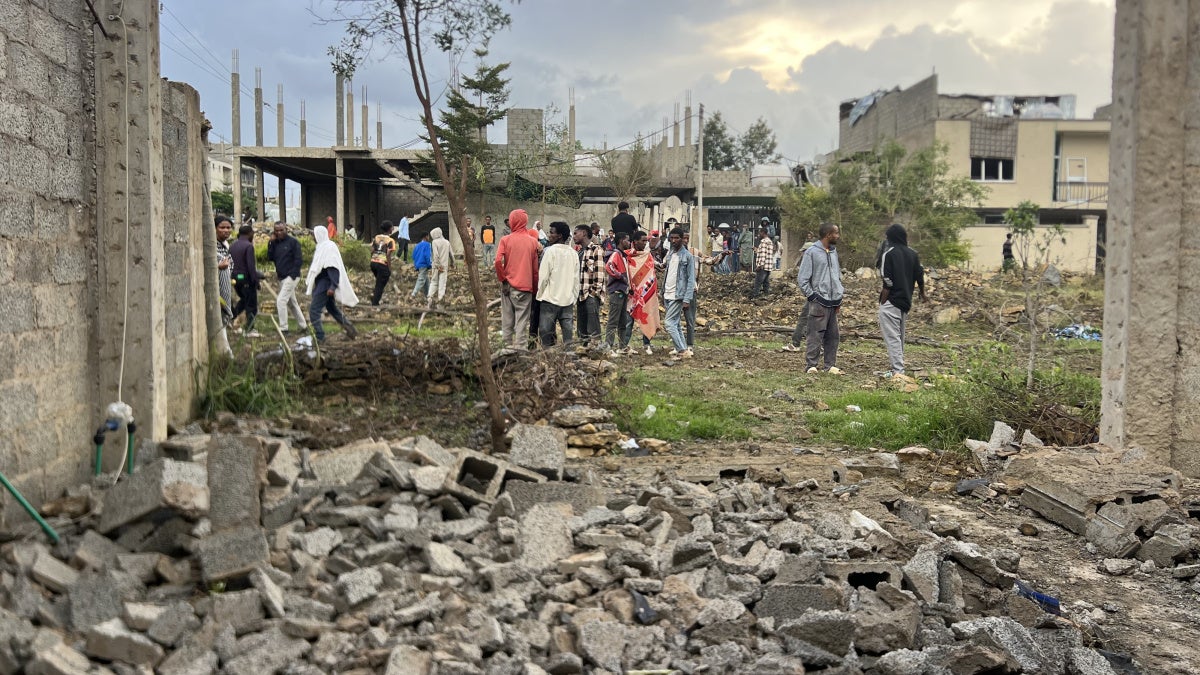
Click to expand Image A collapsed wall in a residential house following the August 20, 2026 airstrike on a residential compound in Daero neighborhood, Mekelle, Tigray region, Ethiopia. The image was taken the same day by a Mekelle resident. © 2026 Private (Nairobi) – An apparent Ethiopian government airstrike on a residential compound in Ethiopia’s northern Tigray region on August 20, 2026, should be investigated as a possible war crime, Human Rights Watch said today. The attack wounded 13 civilians, including seven children. The airstrike hit the Daero neighborhood of Mekelle, Tigray’s regional capital, which had no evident military targets, making the strike unlawfully indiscriminate. Ethiopian authorities should impartially and transparently investigate the attack, prosecute those responsible for any wrongdoing, and adequately compensate the victims. “The resumption of hostilities in northern Ethiopia heightens concerns about unlawful attacks and the grave threat posed to civilians,” said Laetitia Bader, deputy Africa director at Human Rights Watch. “To prevent further harm to civilians, the Ethiopian military needs to abide by the laws of war and ensure that they take all feasible precautions before carrying out any attack.” Between August 21 and September 6, Human Rights Watch interviewed three survivors of the Daero attack, two medical workers, and two residents who visited the site. Human Rights Watch also analyzed satellite imagery and verified photographs and videos depicting the attack site and remnants of an air-dropped munition. Additional photographs and descriptions of blast and fragmentation injuries were consistent with the detonation of an air-dropped general-purpose bomb. Human Rights Watch contacted and wrote to the army’s spokesperson with key questions but at publication had received no response. On the same day as the attack on the compound, a second airstrike hit Quiha, a neighborhood near Mekelle’s airport that has been used for military purposes. There were no reported casualties in the second strike. The strikes occurred amid renewed clashes between the Ethiopian federal government and forces of Tigray’s main political party, the Tigray People’s Liberation Front (TPLF), which fought during the 2020-2022 armed conflict. The parties had signed an African Union-mediated cessation of hostilities agreement in November 2022. Heavy fighting erupted between Ethiopian federal forces and Tigrayan forces on August 1 near the country’s border with Sudan, and sporadic clashes have continued. Tigrayan regional authorities have accused the federal government of carrying out several airstrikes causing civilian casualties. On September 21, a drone struck an aid convoy in Tigray, which the United States government condemned. On September 23, Tigrayan forces controlled key regional airports, leading Ethiopian airlines to suspend flights. Fighting intensified in Tigray, and spread to the Amhara and Afar regions, pitting federal forces against several armed groups, including Tigrayan forces. Daero residents said that on August 20, shortly after 11 a.m., they saw a likely fighter jet drop a munition that struck an open area in a residential compound for teachers and their families. Residents provided accounts and photos of collapsed walls, doors, and ceilings as the detonation’s blast wave significantly damaged concrete block houses surrounding the impact area. Click to expand Image A damaged residential house after the August 20, 2026 airstrike on a residential compound in Daero neighborhood, Mekelle, Tigray region, Ethiopia. The image was taken the same day by a Mekelle resident.  © 2026 Private One survivor, who suffered a blast-related soft tissue injury and a deep scalp wound requiring surgery, said: “I was inside with my family when I heard a very loud sound. I went out. A plane came lower and then climbed before it released a weapon. The explosion caused the wall of my compound to completely collapse.” Another survivor, whose four relatives were injured, said: “My children were in the kitchen. The explosion caused the house to fall on them. I had to dig three of them out from under the corrugated metal and wood.” A Mekelle resident who went to the site soon after the attack described seeing a “blackened crater” in the compound. The strike “had impacted around 10 houses on both sides of the [residential] block,” the resident said, and caused “holes in the walls [of the houses] struck by some kind of shrapnel.” A satellite image captured on September 1 shows a crater measuring about four meters in diameter and the collapsed wall of one house. Human Rights Watch also examined photographs and videos recorded by a witness on the day of the attack showing the strike’s aftermath. One video shows a crater in the courtyard and the same collapsed concrete wall visible in satellite imagery. Several photographs show gates and windows shattered by the blast, weapon remnants of various-sized steel fragments, and remnants of the bomb body within the crater. International humanitarian law, also called the laws of war, requires warring parties to distinguish between military objectives and civilians. Parties must take all feasible precautions to verify that targets are military objectives. Indiscriminate attacks, which strike military targets and civilians or civilian objects without distinction, including attacks not directed at a specific military objective, are prohibited. Individuals who commit serious violations of the laws of war with criminal intent—that is, deliberately or recklessly—can be prosecuted for war crimes. Click to expand Image A large crater caused by an air-dropped munition in the courtyard of a residential compound in Daero neighborhood, Mekelle, Tigray region, Ethiopia, August 20, 2026. © 2026 Private Residents and witnesses said that they saw no Tigrayan fighters or other military presence at the compound or in the vicinity before or following the strike. Human Rights Watch found no evidence to support some public reporting suggesting that the Daero attack was a failed attempt to strike Tigrayan military and civilian leaders nearby. Residents said they rushed the wounded to Ayder Referral Hospital, Tigray’s largest public hospital, for treatment. Medical workers said they treated 13 patients with trauma wounds, including 10 with soft tissue or mild chest injuries, and 3 with more severe injuries, including a 12-year-old girl who had a complicated leg fracture that required surgery. Availability of medical care in Tigray is minimal. One medical worker said Ayder lacked basic supplies: “We have nothing … We’ve not received anything from the federal government for the last 4-5 months … lifesaving equipment, tubes, anesthesia and the like, unless patients buy from a private pharmacy, we can’t treat.” Two teachers said they were still living in damaged homes in the compound. Some families of those injured were struggling to afford medical treatment. One survivor whose daughter was harmed in the attack said: “The kids aren’t playing outside anymore. My injured daughter is still in the hospital. We buy everything from outside – the hospital only provides a bed. She needs medication daily, which we can’t afford.” Following the November 2022 truce, the African Union established a monitoring mechanism, but it has not reported publicly on abuses against civilians. The AU should urgently convene the parties under the agreement’s framework and ensure that the mechanism provides a robust human rights monitoring component and public reporting. The AU, the UN, concerned governments, and the AU mediator, former Nigerian President Olusegan Obasanjo, and other key leaders, should also publicly call on all warring parties, including those that haven’t signed the agreement, to protect civilians and facilitate impartial investigations into alleged war crimes, Human Rights Watch said. The UN Office of the High Commissioner for Human Rights should closely monitor the situation in Ethiopia, release regular public reports, and brief the UN Human Rights Council. Ethiopia should endorse the Political Declaration on Strengthening the Protection of Civilians from the Humanitarian Consequences Arising from the Use of Explosive Weapons in Populated Areas. “The Ethiopian government is legally obligated to impartially investigate the airstrike in Daero and take appropriate action to reduce civilian harm,” Bader said. “Concerned governments should press all the warring parties to meet their international humanitarian law obligations and hold those responsible for abuses to account.”

Sep 25, 2026 · byHuman Rights Watch
📰

KLM NW26 A350 Operations – 22SEP26

Published at 1100PDT / 1800GMT 22SEP26 KLM in the last few days further revised Airbus A350-900 service debut, now scheduled on 30OCT26 instead of 23OCT26. KLM’s planned A350 operation as of 22SEP26 includes the following. Amsterdam – Kilimanjaro – Dar es Salaam – Amsterdam eff 01DEC26 2 weekly Amsterdam – Montreal eff 30NOV26 3 weekly Amsterdam – Nairobi eff 05JAN27 3 weekly Amsterdam – Toronto Pearson eff 30OCT26 KL691/692 5 weekly (1 daily from 03MAR27) Amsterdam – Zanzibar – Dar es Salaam – Amsterdam eff 06DEC26 1 weekly (2 weekly 08JAN27 – 19FEB27)

KLM Royal Dutch Airlinesneutral
Sep 22, 2026 · byAeroRoutes
📰

Drone strikes destroy more than 330,000 learning materials in Sudan’s North Kordofan State

Country: Sudan Source: UN Children's Fund NEW YORK/NAIROBI/KHARTOUM, 22 September 2026 – Drone strikes on two warehouses in Shikan locality, North Kordofan, on 20 September destroyed over 292,000 school textbooks, 40,000 Arabic Language and Mathematics Review Books, and other learning materials intended for distribution to children. The materials were to be distributed from October 2026, marking the start of the new school year, including to schools in West Bara, Bara and Um Dam, with the loss expected to affect the learning of thousands of children. “The destruction of these learning materials is a setback for children at a time when every effort is being made to get them back into the classroom,” said Angela Kearney, UNICEF Representative in Sudan. “Many children have missed years of schooling due to the conflict. With schools already facing shortages of teachers, desks and learning materials, this loss will further undermine children's access to quality education. Every child has the right to education, and that right must be protected.” Delivering education supplies to the conflict-affected areas in Sudan is often challenging, making the loss of these materials particularly significant. Access to safe learning opportunities remains essential to helping children learn, recover and build their futures. UNICEF calls on all parties to protect civilians and civilian infrastructure and uphold their obligations under international humanitarian law. Education supplies and facilities must be safeguarded to ensure children can fulfill their right to education. #####

Sep 22, 2026 · byReliefWeb
Niger: Junta Strips 5 More Exiled Critics of Nationality

Niger: Junta Strips 5 More Exiled Critics of Nationality

Click to expand Image Former Niger Prime Minister Ouhoumoudou Mahamadou speaks to the media in Paris, August 1, 2023. © 2023 AP Photo/Christophe Ena (Nairobi) – Niger’s junta has provisionally stripped five more exiled opposition figures of their nationality, extending a controversial policy increasingly used against critics of the military authorities, Human Rights Watch said today. On September 17, 2026, Gen. Abdourahamane Tiani, who has led Niger’s junta since the July 2023 coup, signed a decree removing the nationality of five prominent Nigeriens living in exile. The decree derives authority from a 2024 order creating a national terrorism database with overbroad inclusion criteria and inadequate due process requirements and safeguards for redress. The order jeopardizes privacy and data protection rights and increases the risk of statelessness. “The Niger junta’s use of a terrorism database to deprive people of their nationality without any meaningful legal safeguards raises serious human rights concerns,” said Ilaria Allegrozzi, senior Sahel researcher at Human Rights Watch. “Nationality is a fundamental legal status, not a privilege that governments can take from people for political reasons.” The five affected are former Prime Minister Ouhoumoudou Mahamadou; Amadou dit Ange Barou Chekaraou, Oumarou Moussa Ibrahim, and Ousmane Abdoul Moumouni, all former advisers to President Mohamed Bazoum, who was ousted in 2023 and remains arbitrarily detained; and Boubacar Seyni Souley, a social media activist critical of the junta. The September 17 decree accuses the men of various offenses, including disseminating information capable of disturbing public order, providing intelligence to foreign powers, electronic defamation, demoralizing the armed forces, and threatening state security. The decree raises questions about compliance with Niger’s existing legal framework. The 1984 Nationality Code does not provide for “provisional loss” of nationality. Where deprivation of nationality is permitted, the law requires the authorities to notify the person concerned and give them one month to submit a written defense before the measure is published in the official journal. “Nothing of the sort is happening here,” the Alliance of Sahel Democrats, a coalition of Nigerien, Malian, and Burkinabè diaspora political opposition groups advocating a return to constitutional rule, said in a statement on September 18. The alliance also noted that the September 17 decree is depriving individuals of their nationality while they are still being prosecuted, in contravention of the 2024 order, which states that deprivation of nationality can only be imposed after a conviction. According to Niger’s press agency, the junta’s latest action brings the number of people provisionally deprived of Nigerien nationality under the 2024 order to 25. In October 2024, the junta provisionally stripped nine people linked to former President Bazoum of their nationality. In June, authorities revoked the citizenship of Mariama Djibrine, an opposition figure living in exile. In a September 19 statement, the G25-Niger, an opposition coalition of civil society groups and media organizations formed in 2025, said the 2024 order “is being used as a tool of political repression … to crack down on opponents and other dissenting voices.” Since taking power in 2023, Niger’s military junta has entrenched authoritarian rule and  consolidated sweeping and unchecked powers, systematically weakening institutions capable of holding the military authorities to account. In the past year alone, the military authorities have dissolved all political parties and several independent unions, suspended dozens of civil society groups, detained journalists under a broad cybercrime law, criminalized consensual same-sex relations, announced Niger’s withdrawal from the International Criminal Court, and prolonged the country’s political transition without any roadmap toward democratic elections. In addition to Bazoum, the junta continues to arbitrarily detain Moussa Tchangari, a prominent human rights defender. The authorities have also taken steps to curb criticism from abroad. In June, Niger’s foreign affairs minister instructed diplomatic missions to monitor online criticism of the military authorities, signaling growing scrutiny of the diaspora’s discussions of the country’s political and human rights situation. The political climate in Niger has become increasingly tense in recent weeks, Human Rights Watch said. On August 28, mutinous soldiers attacked a military base at the international airport in Niamey, Niger’s capital, and the presidential palace, with hours of gunfire. The mutineers also briefly seized the headquarters of the state-run national television, disrupting broadcasts. General Tiani called in Russia’s government-controlled Africa Corps, whose intervention, including the use of armed drones, helped loyalist forces suppress the mutiny. Niger is a party to the United Nations Convention on the Reduction of Statelessness, which restricts states from depriving people of their nationality when doing so would leave them stateless. Colleagues of the five affected by the September 17 decree said that at least four of them only possess a Nigerien passport. Those who are without a nationality as well as their families risk being deprived of legal and social protection abroad. It could prevent them from returning to Niger, which is their right under international human rights law. “The Niger junta has been depriving perceived political opponents of their nationality without meaningful due process, and contrary to Niger’s obligations to prevent statelessness and protect fundamental rights,” Allegrozzi said. “The junta should immediately revoke the decree and suspend the use of the easily abused terrorism database.”

Sep 22, 2026 · byHuman Rights Watch
📰

World: Super El Niño threatens to push 8 million children into acute hunger across East and Southern Africa by early 2027 – Save the Children

Country: World Source: Save the Children NAIROBI, 22 September 2026 – About 8 million children across East and Southern Africa could face acute hunger by early 2027, a rise of 30%, as one of the strongest El Nino weather events in recent years fuels a growing food crisis, according to new analysis by Save the Children. Analysis of recent data from global hunger monitor, the Integrated Food Security Phase Classification (IPC), found that the number of people facing crisis levels of hunger or worse (IPC Phase 3+) in six countries is expected to surge from 12.6 million people to 16.4 million by March 2027 driven in part by the impacts of the looming “Super” El Niño. Currently six million children in those six countries are experiencing severe food shortages [1] but this is set to rise to eight million in the next few months unless urgent action is taken, Save the Children said. The agency’s analysis only covered countries with recent IPC reports where El Niño is projected to have devastating impacts including Madagascar, Malawi, Mozambique, Zambia, Uganda and Kenya. New hunger data is due out shortly for Somalia which has already been flagged for being at risk of El Nino-related floods . Uganda is projected to have the highest absolute number of people facing acute food insecurity in coming months, with 4.4 million people expected to be in crisis or worse levels of hunger by early 2027 – a 22% increase on previous figures. The situation is particularly bad in the Karamoja region of northeastern Uganda which has seen an increase of more than 40% in the number of people facing crisis or emergency food insecurity. Zambia is forecast to experience the sharpest deterioration, with the number of people facing crisis-level hunger rising by 80% to over 1.2 million people, while Madagascar, Mozambique and Malawi are expected to see increases of 75%, 55% and 35% respectively. While food security is expected to improve in Kenya overall by the start of 2027, having already deteriorated this year, the situation among refugees in the country is expected to deteriorate due to El Niño-related flooding. In Mozambique, the forecast comes as many communities in the central provinces are still recovering from severe flooding earlier this year, while conflict driven- displacement in Cabo Delgado continues to put pressure on food, water and health services. In Madagascar, about 502,000 children aged under 5 - or one in 10- are expected to suffer from acute malnutrition between May 2026 and April 2027. This includes about 78,000 children expected to have severe acute malnutrition, the most deadly form of malnutrition requiring urgent medical treatment [2]. The worsening food crisis across much of the region comes as a result of one of the strongest El Niño weather events in recent years, coupled with record-breaking global temperatures, a deadly combination that will cause dangerous droughts, crop failures and livestock losses across parts of Southern Africa. At the same time, the El Niño phenomenon will cause devastating floods in parts of East Africa, pushing already vulnerable families deeper into crisis. Save the Children said El Niño is unfolding against a backdrop of conflict, hunger, displacement, economic instability and humanitarian funding cuts. Without early action, the aid agency said, climate shocks are likely to compound existing vulnerabilities and deepen humanitarian needs, particularly for children and their families. Yvonne Arunga, Regional Director for Save the Children in East and Southern Africa, said: "Hunger is not just about empty stomachs. Children who do not have enough nutritious food are more likely to become malnourished, fall ill, miss school and face increased risks of exploitation and abuse. The longer families go without support, the harder it becomes for children to recover . “When families' livelihoods are destroyed by floods or drought, children may face greater risks of child labour, trafficking, neglect, violence, forced early marriage, and other forms of exploitation. “We know El Niño is coming. We know which children are most at risk. And we know that anticipatory action works. Governments must turn early warnings into early action to protect essential services like schools, hospitals, water and social protection systems, before the crisis hits. The international community and donors must invest now, before droughts, floods and food crises escalate. Every dollar spent helping communities prepare and act early can save lives, protect livelihoods, and reduce the need for much larger humanitarian responses late r .” Save the Children has invested significantly in anticipatory action, taking practical action ahead of forecasted shocks to reduce impacts on children and communities. Across the region, Save the Children is helping families prepare for floods, storms and droughts such as through early warning information targeted at children, evacuation planning, strengthening of community preparedness, and anticipatory cash assistance to allow families to prepare for disasters. Save the Children is also reinforcing health facilities, schools and water systems so they can better withstand floods, droughts and other climate-related shocks. Ends. Notes to Editors: [1] Save the Children compared the most recent Acute Food Insecurity analyses (IPC Phase 3+) from six countries in East and Southern Africa; the countries were selected due to having IPC analyses with a validity period as of September 2026 and a projection that looks ahead into the end of 2026/ the first quarter of 2027 when the effects of El Niño are expected to peak. In all cases, Save the Children compared the number of people currently facing IPC3+, with the projected figure for early 2027 within the same analysis report. The number of children in IPC3+ for each country was estimated by looking at the total number of people facing IPC3+ levels of food insecurity, and applying the national share of children in the population according to the UN’s World Population Prospects 2024 revision. [2] According to data from IPC - Integrated Food Security Phase Classification

Sep 21, 2026 · byReliefWeb