Signage at UK consulate in East Jerusalem removed as Israel’s deadline over
 Oct 8, 2026 · byAl Jazeera
21 articles

Thursday marks 30 days since Israel's foreign minister ordered the closure of the UK consulate in occupied East Jerusalem.
Oct 8, 2026 · byAl Jazeera
Former British consul Vincent Fean says Israel is acting unlawfully by demanding the UK close its consulate.
Oct 7, 2026 · byAl Jazeera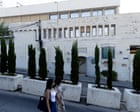
Forced closure marks low point in UK-Israeli relations, with reports UK is considering retaliatory expulsion of Israeli diplomats from London Israel marks three years since 7 October attack – live The UK consulate in East Jerusalem gave few signs that it was at the centre of a geopolitical controversy this week, with little movement around the high-walled building save the fluttering of the union jack and the occasional car exiting the compound. The mission is to shut its doors on Thursday after Israel ordered its closure in response to a UK ban on trade with illegal settlements in the occupied West Bank and sanctions on those who help build or finance them. Continue reading...
 Oct 7, 2026 · byThe Guardian
Israel has threatened to close the consulate, which handles UK relations with Palestinians in the city, over British sanctions on Israeli settlements.
 Oct 6, 2026 · byBBC
Israel ordered East Jerusalem consulate to be closed after Britain sanctioned settlements in the occupied West Bank.
Oct 5, 2026 · byAl Jazeera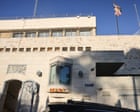
Tit-for-tat expulsions expected after relations deteriorate as a result of UK ban on goods from illegal settlements The UK has threatened to expel one Israeli diplomat for every British diplomat forced to leave Israel as a result of Israel’s decision to close the UK consulate in East Jerusalem later this week. This could means as many as 27 Israeli diplomats being expelled from the UK, a step that would arguably mark the lowest point in British-Israeli diplomatic relations since the formation of the state of Israel. Continue reading...
Oct 5, 2026 · byThe Guardian![oPt: UNRWA Situation Report #235 on the Humanitarian Crisis in the Gaza Strip and the occupied West Bank, including East Jerusalem [EN/AR]](https://reliefweb.int/sites/default/files/styles/thumbnail/public/previews/6c/f6/6cf669ba-4a3a-4719-b10f-4f3968be0d52.png)
Country: occupied Palestinian territory Source: UN Relief and Works Agency for Palestine Refugees in the Near East Please refer to the attached files. Highlights The Gaza Strip UNRWA started the 2026/2027 school year on 19 September across the Gaza Strip through a combination of in-person and distance learning. A launch event was held in Nuseirat Camp at an UNRWA school that has fully returned to education use, after having been used previously as an emergency shelter. During the first week of the school year, nearly 97,000 students attended UNRWA learning spaces across the Gaza Strip. Students also returned to in-person learning at both campuses of the UNRWA Rehabilitation Centre for the Visually Impaired (RCVI), with classes resuming in Deir El Balah on 19 September and in Gaza City on 20 September. UNRWA opened two additional carpentry workshops, bringing the total to three facilities operating in Khan Younis, Deir El Balah and Gaza City. Together, the workshops can produce approximately 450 school desks and chairs per week to support the expansion of learning spaces. Multiple war-damaged residential buildings collapsed in the Gaza Strip during the reporting period, highlighting the risks faced by families sheltering in unsafe structures. UN Humanitarian Coordinator Ramiz Alakbarov warned that people live in “hundreds of damaged structures assessed as unsafe, for lack of better options”. These include some families sheltering in non-operational UNRWA installations, which are no longer managed by UNRWA, for safety reasons. With winter approaching, risks are expected to increase as rainfall further weakens already compromised structures. UNRWA remains engaged in inter-agency efforts to address the issue and encourage families to relocate to safer shelter options where available. Over the reporting period, Israeli authorities issued multiple evacuation orders and shelter-in-place alerts affecting UNRWA installations across the Gaza Strip. Separately, hostilities in the vicinity of UNRWA facilities resulted in injuries to six displaced persons sheltering at UNRWA schools, including four children. One cash-for-work beneficiary supporting UNRWA operations was killed and one UNRWA staff member seriously injured in separate incidents linked to strikes by Israeli forces in their vicinity. Key points The Gaza Strip Fatalities and injuries Between 7 October 2023 and 20 September 2026, according to the Ministry of Health, as reported by the Health Cluster , 73,914 Palestinians were killed in the Gaza Strip and another 174,952 were injured. This includes 1,394 fatalities and 4,991 injuries between the announcement of a ceasefire agreement on 10 October 2025 and 20 September 2026. UNRWA has recorded 394 colleagues killed in the Gaza Strip since the start of the war (311 UNRWA personnel and 83 persons who were supporting UNRWA [2] , as of 22 September. Health crisis The worsening fuel and engine oil shortage is increasingly disrupting health services across the Gaza Strip. The UN warned that reduced fuel support to hospitals, driven by funding shortfalls and high procurement costs, could affect most hospitals and lead to cuts in primary and secondary healthcare services. Over the reporting period, several UNRWA health centres also experienced temporary disruptions due to generator overload, highlighting the growing operational impact of the shortage of fuel, lubricant oil and spare parts on the delivery of healthcare. Water, sanitation and hygiene (WASH) needs According to the WASH Cluster’s Light Touch Monitoring Survey , completed in early July 2026, 90 per cent of the population are experiencing frequent, unpredictable disruptions in access to safe, clean, and reliable water for daily drinking, cooking, and hygiene – an increase from 84 per cent the previous month. Shelter needs According to the Shelter Cluster’s classification , based on surveys conducted between 14 and 28 June 2026, an estimated 1.98 million people, representing 94 per cent of the population of the Gaza Strip, require shelter and non-food item assistance (NFI). The assessment also suggests that 58 per cent of the population is facing critical or catastrophic shelter needs, meaning severe deficiencies in shelter conditions or lack of access to essential services and NFIs that expose them to serious health, safety, and dignity risks. Protection needs According to UN Women , the number of women-headed households in the Gaza Strip has doubled since October 2023, reaching about 86,000 households – or almost one in every four families. This includes widows and women whose husbands are missing, detained, severely injured, or forcibly disappeared, or whose fate simply remains unknown. Operational implications and humanitarian response Around 10,500 Palestinian UNRWA personnel continue to provide services and assistance to people in the Gaza Strip. In the occupied West Bank, UNRWA also plays a central role with over 4,000 of the Agency’s Palestinian personnel providing education, health, and other services to Palestine Refugees. All UNRWA international staff are prevented from entering the Occupied Palestinian Territory - the Gaza Strip and the occupied West Bank, including East Jerusalem. This follows the implementation of laws passed by the Israeli parliament on 28 October 2024 [3] that purport to prohibit UNRWA’s operations in areas that Israel considers its sovereign territory, including occupied East Jerusalem, and seek to bar any contact between Israeli officials and UNRWA. Israeli authorities have not granted the Agency’s international staff visas or permits to enter the Occupied Palestinian Territory, including the Gaza Strip, since the end of January 2025. Since March 2025, the Israeli authorities have been blocking UNRWA from directly bringing humanitarian personnel and aid into the Gaza Strip. Despite the huge needs on the ground, UNRWA was therefore unable to distribute the aid it had pre-positioned outside Gaza, which included enough food parcels, flour, and shelter supplies for hundreds of thousands of people.
 Oct 1, 2026 · byReliefWeb
Country: occupied Palestinian territory Source: UN Special Coordinator for the Middle East Peace Process Please refer to the attached file. New York, UN Mister President, Excellencies, Today’s briefing is devoted to the thirty-ninth report of the Secretary-General on the implementation of Security Council resolution 2334 (2016). It covers the period from 13 June to 18 September. Security Council resolution 2334 (2016) calls on Israel to “immediately and completely cease all settlement activity in the occupied Palestinian territory, including East Jerusalem” and to “fully respect all of its legal obligations in this regard.” Settlement activity has, nevertheless, continued at high levels. During the reporting period, Israeli planning authorities advanced or approved nearly 4,570 housing units in Area C of the West Bank, and 3,515 units in East Jerusalem. The Israeli Housing Ministry published tenders for nearly 2,240 housing units in Area C of the West Bank, including for 1,234 units in the E1 area near Jerusalem. On 14 July, Israeli Finance Minister announced that the Israeli cabinet approved the establishment of a new settlement in the northern West Bank. He also announced that the Israeli Security Cabinet had allocated 1.3 billion Shekels [approximately USD 430 million] towards the placement of temporary housing units in dozens of new settlements throughout the West Bank. Temporary structures were reportedly placed in Kadim on 5 August, following its reported Cabinet approval for re-establishment in December 2025. On 31 August, some families reportedly moved into Noa, a new settlement reportedly approved by the Cabinet in March 2026. The IDF also issued an unprecedented seizure order for privately owned land in Area A near Qabatiya, south of Jenin City, to construct a road linking Noa and Emek Dotan - two of the 34 settlements recently approved. This marks the first reported seizure of Area A land explicitly for settlement infrastructure. Demolitions and seizures of Palestinian-owned structures also continued. Citing the lack of Israeli-issued building permits, which are almost impossible for Palestinians to obtain, Israeli authorities demolished, seized, or forced people to demolish 536 structures in the West Bank, including East Jerusalem, displacing 736 persons, including 347 children. Evictions of Palestinians from their homes in East Jerusalem also continued. On 12 August 2026, the Jerusalem Municipality demolished a Palestinian-owned house and animal barn in Silwan, East Jerusalem, forcibly displacing a family of eight. On 18 August, two Palestinian households comprising nine people, including one child, were evicted in Silwan following a court ruling in favour of the Ateret Cohanim settler organization. Settlers subsequently took over parts of the building. Mister President, Security Council resolution 2334 (2016) calls for “immediate steps to prevent all acts of violence against civilians, including acts of terror, as well as all acts of provocation and destruction.” Acts of violence against civilians continued, with the high number of fatal incidents precluding me from detailing all of them. The ceasefire in Gaza remained highly fragile as Israel Defense Forces (IDF) military operations continued west of the so-called yellow line, including small-arms fire, quadcopter fire, and shelling in support of clearance and demolition activity. Daily IDF airstrikes have also continued in densely-populated areas west of the so-called yellow line. According to the Gaza Ministry of Health, 360 Palestinians were killed, and over 1,600 including women and children were injured during the reporting period. At least 1,386 Palestinians have been killed since the October 2025 ceasefire went into effect, including over 300 children and 130 women, women and 4,784 injured. According to Israeli sources, there were no Israeli fatalities in Gaza during the reporting period. Several Israel Defense Forces soldiers were reportedly injured during military operations. In the West Bank, 32 Palestinians, including nine children, were killed during Israeli security forces operations, armed exchanges, settler attacks, and other incidents; three were killed by airstrike and 29 by live ammunition. 663 Palestinians, including 91 children, were injured by Israeli forces or settlers, including two in an airstrike, 93 due to tear gas inhalation and 90 by live ammunition. According to Israeli sources, two members of Israeli forces were killed by Palestinians, and another 49 Israelis, including 4 children and 2 women, and 4 Israeli security forces personnel were injured by Palestinians in shooting, stabbing and ramming attacks and other incidents. According to the Israel Prison Service, as of September 2026, Israel holds 9,329 Palestinians as “security” detainees, of them 3,176 under administrative detention without charges or trial, and 1,393 Palestinians as “unlawful combatants”. On 17 August, operations by Israeli forces in Tulkarm and Qabatiya, south of Jenin, resulted in displacement, damage to civilian infrastructure and mass detentions. In Qabatiya, Israeli forces raided and searched some 100 homes and detained more than 60 Palestinians, including two women. Some detainees were reportedly assaulted during interrogation. Most were subsequently released. On 28 August, an Israeli drone strike on a building under construction in Jenin city killed three Palestinian men. Israeli forces reportedly prevented Palestine Red Crescent Society personnel from reaching the building, briefly detained two emergency responders and confiscated equipment from an ambulance. The three refugee camps in Jenin, Tulkarm and Nur Shams remain empty, and their residents (more than 33,000) remain displaced, in the longest and largest displacement in the West Bank since 1967. Settler violence has reached unprecedented levels - often in the presence of Israeli forces. During the reporting period, the UN documented 630 settler attacks that resulted in casualties, property damage, or both, killing 11 Palestinians and injuring 430, including 113 by Israeli forces, and displacing 343 Palestinians across 17 communities. On 5 July, at least 100 settlers attacked al-Lubban al-Sharqiya in Nablus, damaging Palestinian homes and businesses. On 21 August, an Israeli settlement guard and an armed settler opened fire during an attack by more than 50 Israeli settlers near Sa'ir village in Hebron, killing a Palestinian boy and critically injuring another Palestinian. In Qusra, Nablus Governorate, three Palestinian families have been effectively confined to their homes without adequate supplies and systematically harassed and intimidated since 9 August amid the continued presence of Israeli settlers and Israeli forces in the area following the establishment of a nearby settler outpost. During the reporting period, three Palestinian communities were fully depopulated following sustained settler violence, bringing to 49 the number of communities fully displaced under similar circumstances since January 2023. While measures were taken by Israeli officials during the reporting period to prosecute several perpetrators, the vast majority of perpetrators have not been held accountable to date. Palestinian attacks against Israelis also continued. On 23 August, an Israeli man was stabbed and injured in Al Auja, near Jericho. Israeli forces subsequently detained a Palestinian boy alleged to have been connected to the attack. Mister President, The Security Council, in its resolution 2334 (2016), called upon both parties to refrain from provocative actions, incitement, and inflammatory rhetoric. Unfortunately, such acts continued. Hamas continued to praise attacks by Palestinians against Israelis. A Fatah official said that “In our region, everything that happens is because of Israel.” Other Palestinian officials continued to glorify perpetrators of previous attacks against Israelis. A senior Israeli Minister called “to take down thirty to forty” Palestinians in Gaza every night, adding that some there are “not even people.” Another senior Israeli minister repeated his calls for the Israeli army to “conquer [Gaza] completely, establish a military government there, establish Jewish settlements there.” Several Israeli officials also promoted policies characterized as Palestinian emigration from Gaza. Mister President, Resolution 2334 (2016) reiterated calls by the Middle East Quartet for “affirmative steps to be taken immediately to reverse negative trends on the ground that are imperiling the two-State solution.” Efforts to implement the Comprehensive Plan to End the Gaza Conflict continued. On 30 July, Hamas and other Palestinian factions announced they had accepted the 15-point Roadmap for completing the Implementation of the Comprehensive Plan, including commitments concerning full demilitarization and Israeli withdrawal. On 9 August, Prime Minister Netanyahu said that Israel did not accept the Roadmap. On 17 August, his Office announced an agreement between Israel and the Board of Peace to establish two working groups, one on disarmament and demilitarization of Gaza, and another on water, sanitation, and public health. The humanitarian situation in Gaza remains extremely grave. While there have been increased supplies of food and sanitary items in recent months, the health situation remains critical. Infectious diseases remain widespread amid overcrowded displacement sites and inadequate water, sanitation and hygiene conditions, while shortages of medical supplies, fuel and the overall humanitarian response are compounded by funding shortfalls. Restrictions on the entry of critical humanitarian items continue to impede the scale-up of the humanitarian response, including preparations for winterization. The Palestinian Authority’s fiscal situation remains critical. Israel continues to withhold some USD 6 billion in clearance revenues, and the Palestinian Authority is unable to deliver basic services, sustain social protection, or pay full salaries to civil servants and security personnel. The Palestinian Central Elections Committee advanced preparations for the Palestinian Legislative Council elections, scheduled for 28 November, including steps to update voter registration and the publication of the electoral timetable. On 25 August, Israeli authorities unlawfully entered and took control of the UNRWA Kalandia Training Centre, in East Jerusalem. Tensions continued at the Holy Sites. On 13 August, hundreds of Jewish worshippers engaged in open prayers, dancing and singing, and on 16 August, Israeli police reportedly further eased restrictions on Jewish prayer by allowing the use of prayer books. During the reporting period, the UN documented 13 instances of attacks on places of worship by Israeli forces or settlers in the West Bank, including four arson attacks on mosques in Ramallah governorate between 14 and 17 June. Mister President, In resolution 2334 (2016), the Security Council also called upon all States “to distinguish, in their relevant dealings, between the territory of the State of Israel and the territories occupied since 1967.” Resolution 2334 also called upon “all parties to continue, inter alia, to exert collective efforts to launch credible negotiations on all final status issues in the Middle East peace process.” On 23 July, the President of Ireland signed into law legislation prohibiting the importation of goods originating in Israeli settlements. The new Act has been in effect since 15 September 2026. On 21 July, the Government of the Netherlands published a decree banning the import, purchase, and sale of goods originating from illegal Israeli settlements located in occupied territories, including in the OPT, to prevent Dutch economic activities from helping to perpetuate a situation that contravenes international law beginning on 22 September. On 8 September, the Governments of Canada, France, and the UK jointly announced that they would “take steps to ban the importation of goods from settlements and enforce targeted measures against settlements and those who facilitate them or profit from them.” The same day, the UK Foreign Minister announced plans that include banning the import of goods from settlements into the UK, taking steps against individuals and companies that support, facilitate or profit from illegal settlement activity, and banning advertising or promotion of land and property in illegal settlements. On 13 July, the second meeting of the Palestine Donor Group was held in Brussels, co-chaired by the European Union and the Palestinian Authority. Mister President, In closing, allow me to share the Secretary-General’s observations on the implementation of Security Council resolution 2334 (2016) in the Occupied Palestinian Territory –comprising the West Bank, including East Jerusalem, and the Gaza Strip. I strongly condemn the relentless expansion of Israeli settlements in the West Bank, which fuels tensions, impedes access by Palestinians to their land, and threatens the viability of a fully independent, sovereign and contiguous Palestinian State. The rapidly expanding settlement footprint, including outposts, is taking place in conjunction with a rise in settler attacks. Developments in Areas A and B and the peripheries of larger Palestinian towns raise concern about encircling Palestinians, restricting their access to surrounding farmland and open space. These developments are in breach of international law, further entrenching the unlawful Israeli occupation and undermining the right of the Palestinian people to self-determination. I reiterate that all Israeli settlements in the Occupied Palestinian Territory and related infrastructure have no legal validity, constitute flagrant violations of international law and must cease. I strongly condemn developments related to the E1 settlement plan, which would effectively sever the connection between the northern and southern West Bank and further isolate East Jerusalem from the rest of the West Bank. As such, its implementation would have severe consequences for the territorial contiguity of the Occupied Palestinian Territory and present an existential threat to the two-State solution.I call upon Israel to refrain from taking further steps in this regard and to act in accordance with relevant United Nations resolutions and its obligations under international law, as confirmed by the International Court of Justice in its advisory opinion of 19 July 2024. The Israeli Government’s decisions to deepen Israeli administrative and territorial control of the West Bank are deeply concerning. These measures are likely to contribute to settlement expansion and to the dispossession of Palestinians of their property. They also undermine the Palestinian Authority, contravene existing agreements, and breach obligations under international law, as well as seriously eroding the prospects for a negotiated two-State solution. The creeping annexation of the West Bank is unlawful, has no legal effect, and must stop. The demolition and seizure of Palestinian civilian structures may entail numerous human rights violations and raise concerns about the risk of forcible transfer. I call on Israel to cease the unlawful demolition of Palestinian-owned civilian structures in accordance with its international obligations. I am deeply concerned by the scale of displacement of Palestinians in the West Bank, where entire communities have been displaced, some multiple times, which may raise concerns about ethnic cleansing.Such displacement may amount to forcible transfer, which is prohibited under international law. The extremely high levels of violence across the occupied West Bank are deeply alarming. I condemn all acts of violence against civilians. I am deeply concerned that persistent and intensifying settler attacks, often in the proximity, support or acquiescence of Israeli security forces, are further displacing Palestinian communities. Settler attacks are increasingly reported in Area B and even Area A. Entrenched impunity serves as a central driver in this violence. I call on Israel, as the occupying Power, to protect the Palestinian population against attacks and intimidation. Palestinian attacks against Israelis must also cease. All perpetrators must be held accountable. Multiple instances in which officials on all sides have glorified violence and engaged in dangerous provocations, incitement, and inflammatory language, are deeply troubling and must be unequivocally rejected. Israel’s implementation of punitive economic and fiscal measures is destabilizing Palestinian institutions and threatening the viability of the Palestinian Authority. I urge Israel to immediately cease all such unilateral steps. I encourage continued reforms by the Palestinian Authority and urge international partners to provide the necessary support to these efforts. I welcome ongoing electoral preparations, which are key to the reform process. I urge the international community to provide the necessary political and financial support to ensure that these preparations proceed effectively and that elections are held in a timely, inclusive, and transparent manner. The parties must respect and uphold the status quo at the Holy Sites in Jerusalem, taking into account the special and historic role of Jordan. I call for the full implementation of The Comprehensive Plan to End the Gaza Conflict, including the recovery and reconstruction in Gaza. In coordination with the Palestinian Authority, the United Nations is ready to support the efforts of the National Committee for the Administration of Gaza to provide critical public services, facilitate humanitarian aid and lay the groundwork for reconstruction, in accordance with international law. The humanitarian situation in Gaza remains catastrophic. Israeli authorities have confined Gaza’s population to about 30% of the territory, with continued killing of civilians. While the availability of certain food and certain sanitation items has improved due to increased aid and commercial deliveries, infrastructure damage is catastrophic, and there are severe shortages of clean water, medical care, education, fuel, health items, and shelter. Humanitarian access remains severely constrained by logistical and security obstacles, with only one crossing open for the passage of goods. Essential systems and services must be restored without further delay, and winterization efforts must be urgently scaled up and facilitated. I call upon all parties to comply with their obligations under international humanitarian law. The provision of humanitarian aid must never be used as a bargaining chip, and human dignity should not be conditional. The space for recovery has so far been denied. I strongly condemn the Israeli authorities’ continued actions against UNRWA, including the unlawful entry and demolition of property at the Kalandia Training Center in East Jerusalem. These actions are inconsistent with Israel’s clear obligations under international law. The International Court of Justice, in its Advisory Opinion of 22 October 2025 , confirmed that Israel must respect the inviolability of United Nations premises and not interfere with the performance of their functions.I again urge the Government of Israel to restore all affected premises to the United Nations without delay. I urge Member States to continue to politically support and financially sustain UNRWA. The New York Declaration, endorsed by the General Assembly, together, with the existing Security Council resolutions, provide the political vision and coordinated international effort to advance the two-State solution and resolve the conflict. As we approach ten years since the adoption of resolution 2334, the situation is morally, legally and politically intolerable. We must recommit ourselves to the two-State solution before it is too late. Continued efforts are essential to support Palestinians and Israelis in ending the unlawful occupation and resolving the conflict in line with international law, UN resolutions, and bilateral agreements, pursuing a two-State vision: Israel and a fully independent, democratic, contiguous, viable, sovereign Palestinian State living side by side in peace and security, based on pre-1967 lines, with Jerusalem as the capital of both States. Thank you.
Sep 28, 2026 · byReliefWeb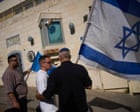
Former attorney general Dominic Grieve says Israel is not entitled to shut mission in occupied Palestinian territory UK politics live – latest updates Israel does not have a legal right to act on its plan to close the British consulate in East Jerusalem, the former attorney general Dominic Grieve has advised the UK Foreign Office. Israel has said it intends to shut the consulate on 8 October in response to the sweeping ban on trade with goods from Israeli settlements announced by the foreign secretary, Ed Miliband , this month. Continue reading...
Sep 28, 2026 · byThe Guardian
Country: occupied Palestinian territory Source: Save the Children Please refer to the attached file. For generations, education has been a cornerstone of Palestinian society. Despite decades of occupation, conflict, and forced displacement, Palestinians historically maintained some of the highest literacy and educational attainment rates in the region. Across the occupied Palestinian territory (oPt), Israeli authorities systematically undermine Palestinian children’s right to education through military attacks, destruction of educational infrastructure, movement restrictions, state-backed settler violence, forced displacement, attacks on educational institutions, and policies that have weakened the systems on which education depends. While these drivers predate October 2023, the scale and severity of what has followed mark a turning point. Since the start of the war in 2023, Israeli forces have obliterated Gaza’s education system, depriving all school-aged children – around 700,000 students – of proper education as schools have been damaged or destroyed. In the West Bank, including East Jerusalem, more than 834,000 students face Israeli imposed barriers to education, including physical danger on their journeys to school and schools threatened with demolition. The impact extends far beyond missed school days. For Palestinian children, schools are places of learning, protection, psychosocial support, and social development. Their loss has profound consequences for children’s wellbeing, cognitive development, and future life chances. Young children are missing critical developmental milestones; older students face interrupted examinations, delayed graduation, and shrinking opportunities to pursue further education. This systematic dismantling of Palestinian education is denying an entire generation of its right to learn and the opportunities, dignity, and future that education makes possible.
Sep 28, 2026 · byReliefWeb
Country: occupied Palestinian territory Sources: ActionAid, American Friends Service Committee, DanChurchAid, Danish Refugee Council, Islamic Relief, Japan International Volunteer Center, Medical Aid for Palestinians, medico international, Mennonite Central Committee, Norwegian Church Aid, Oxfam, PAX, Refugees International, Save the Children, Terre des Hommes Italia, War Child International Please refer to the attached file. Executive summary This snapshot is based on a survey of 29 international and national NGOs conducted in the first week of September and covering the previous six months, from March through August 2026. While the results do not capture every NGO operating in the West Bank, they reflect the persistently constrained operating environment and impact on Palestinian communities. Israeli policies in the West Bank, including East Jerusalem, are pushing Palestinians deeper into humanitarian crisis. State-backed settler violence is escalating sharply, targeting Palestinians in their homes, on the roads and on their land. Combined with military raids, settlement expansion, demolitions and movement restrictions, these policies and practices are further consolidating annexation of the occupied West Bank, forcibly displacing communities and making it increasingly difficult for Palestinians to remain on their land. For humanitarian organisations, the consequences are immediate. Needs are rising while the space to respond is shrinking. Staff and partners face attacks and threats, routes are closed or too dangerous to use, and communities are increasingly cut off from essential assistance and services. National and international NGOs are consistently being forced to delay, relocate, scale back or suspend services, while adopting alternative ways of working to maintain operations wherever possible. Despite reducing their visibility to mitigate risk, they continue to face attacks. At the same time, many of these organisations are facing shrinking budgets as donors reduce funding, forcing cuts to essential services for families in need. As Israeli elections approach, the government is not restraining these dynamics, and instead is allowing them to accelerate. Political measures and increasingly extreme rhetoric are emboldening settlers and entrenching impunity, leaving already displaced and isolated communities to face even greater danger.
Sep 25, 2026 · byReliefWeb
Country: occupied Palestinian territory Source: Education Cluster Please refer to the attached file. September should mark a return to classrooms, teachers and learning. For Palestinian children, it instead begins with profound uncertainty. In Gaza, normal formal schooling remains unavailable for a third consecutive year, deepening an unprecedented learning and protection crisis. In the West Bank, including East Jerusalem, violence, movement restrictions, school closures and fiscal pressures interrupt attendance and disrupt learning. Urgent action is needed to protect education, preserve system continuity and ensure safe, inclusive and meaningful learning.
Sep 19, 2026 · byReliefWeb![oPt: UNRWA Situation Report #234 on the Humanitarian Crisis in the Gaza Strip and the occupied West Bank, including East Jerusalem [EN/AR]](https://reliefweb.int/sites/default/files/styles/thumbnail/public/previews/0c/30/0c30414c-7c2b-41d1-ba8a-a7313b897c42.png)
Country: occupied Palestinian territory Source: UN Relief and Works Agency for Palestine Refugees in the Near East Please refer to the attached files. Highlights The Gaza Strip Humanitarian partners warned of major gaps ahead of the 2026-2027 winter preparation phase, driven by severe funding shortfalls and continued restrictions on the entry of critical supplies and equipment into the Gaza Strip. UNRWA continues to play a central role in the response, co-leading the Site Management Cluster and running the largest network of collective displacement sites – currently hosting approximately 65,000 internally displaced persons across 114 emergency shelters. As part of efforts to streamline and strengthen primary healthcare delivery, UNRWA integrated services previously provided through four medical points located within emergency shelters into nearby health centres. The Agency also continues piloting the Family Health Team model in three health centres across the Gaza Strip, whereby the same medical specialists are assigned to a family throughout its medical history, to improve service quality, efficiency, continuity, and patient-centred care. UNRWA’s Summer Activities Programme concluded on 3 September 2026. Over 47,700 children participated in recreational and psychosocial support activities, as well as in remedial classes in literacy, numeracy, and foundational English and science skills. The summer learning activities were delivered in-person across 686 classrooms in 83 UNRWA collective emergency shelters, with support from over 3,000 UNRWA education staff. The occupied West Bank, including East Jerusalem Following the forced entry into Kalandia Training Centre on 25 August 2026, Israeli authorities have remained on site inside the compound. The centre was due to start classes this week for more than 340 Palestine Refugee students from across the occupied West Bank. Approximately 48,000 Palestine Refugee students started the new academic year at 90 UNRWA schools across the occupied West Bank on 7 September, amid challenges to their right to education, including movement and access restrictions, security operations in and around schools, and high levels of occupation-related violence. Three Palestinians were killed in incidents linked to Israeli settler violence, as the occupied West Bank continues to experience heightened levels of violence and harassment perpetrated by Israeli settlers. Settlement expansion – contrary to international law – also continued, with a new settlement established near Qabatiya on 31 August.
Sep 16, 2026 · byReliefWeb
About Pew Research Center’s Spring 2026 Global Attitudes Survey Results for the survey are based on face-to-face interviews conducted in Israel and the West Bank and East Jerusalem under the direction of Gallup. The results are based on national samples, unless otherwise noted. Read more about our international survey methodology and country-specific sample designs. For […]
This Pew Research Center report on Israeli and Palestinian views of peaceful coexistence between Israel and an independent Palestinian state uses data from nationally representative surveys conducted in Israel and the West Bank and East Jerusalem. We surveyed 1,001 Israeli adults from April 5 to May 6, 2026, and 1,038 Palestinian adults from March 30 […]
On military assistance to Israel, roughly half of Israeli adults say the U.S. is providing about the right amount and a majority of Palestinians in the West Bank and East Jerusalem say the U.S. is providing too much.
Israelis and Palestinians in the West Bank and East Jerusalem reflect on the viability of a two-state solution
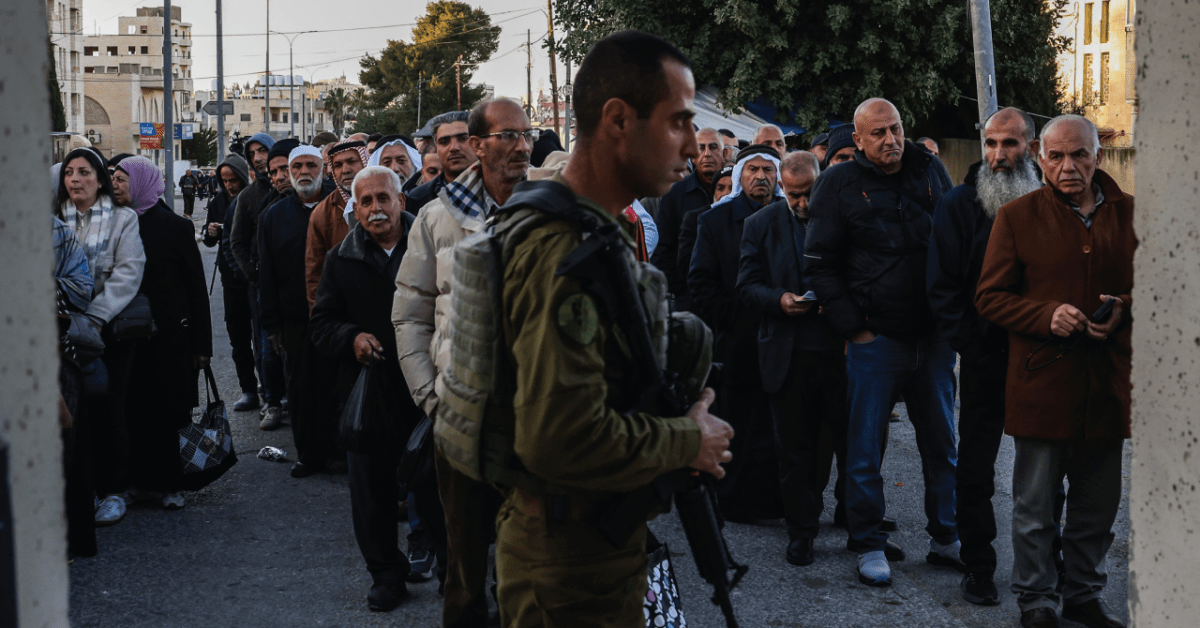
A large majority of Palestinians in the West Bank and East Jerusalem (85%) also say that opportunities for work are a major problem for them and their families.

Country: occupied Palestinian territory Source: Save the Children All 1.5 million school-aged children in the occupied Palestinian territory are being denied their right to a safe and quality education for a fourth consecutive academic year, said Save the Children on International Day to Protect Education from Attack [1]. Nearly three years since war started in Gaza, almost all school buildings (97.5%) are damaged while 86% of 649 kindergartens assessed have either been destroyed, sustained damage, or are located in inaccessible areas [2], according to new Save the Children data. In the West Bank, including East Jerusalem, more than 834,000 school-aged children do not have access to safe and quality education, according to the Education Cluste r, of which Save the Children is a member. Since the start of the school year on Sunday 8 September, Israeli forces have killed at least two school-aged children in Gaza and raided schools in the West Bank, according to news reports. Saadi Ghaliya, 7, was killed when Israeli forces attacked Sukaina School east of Deir al-Balah, and Wafaa Akila, 8, was killed alongside her father in western Gaza when an Israeli strike hit their car as the returned home from school. Israeli forces raided two schools in Nablus this week and forced school administrations to remove Palestinian flags. Save the Children said Israeli military attacks on schools, students and teachers, restrictions on movements, and state-backed settler violence against students and teachers are grave violations of the fundamental right to education under international law. The demolition, confiscation, and closure of schools and education infrastructure are also violations of this right. Despite all the challenges, Palestinian children said they are determined to continue their education. “We are all in agreement to continue in our right to education and we have very big hopes to continue and achieve our ambitions,” said Lama, a 13-year-old student in the West Bank. "For me, school is not just maths and Arabic. School is life”, said Amjad, a 13-year-old student from Gaza. Ahmad Alhendawi, Save the Children’s Regional Director for the Middle East, North Africa and Eastern Europe, said: “As children around the world return to school, reconnect with their classmates, and settle into new routines, Palestinian children continue to face barriers that deny them safe and consistent access to education. “The impact extends far beyond missed school days. For Palestinian children, schools are places of learning, protection, psychosocial support, and social development. Their loss has profound consequences for children's wellbeing, cognitive development, and future life chances. Young children are missing critical developmental milestones; older students face interrupted examinations, delayed graduation, and shrinking opportunities to pursue further education. “This systematic dismantling of Palestinian education is denying an entire generation of its right to learn and the opportunities, dignity, and future that education makes possible." Save the Children has worked in the occupied Palestinian territory since 1953, with a permanent presence since 1973. We work with partners to help provide quality education, protection for children, early childhood development support, and employment opportunities for young people. Four Palestinian children have reportedly been killed and several injured by Israeli forces over the past six days, including a 10 year old in a tent in Gaza today, said Save the Children. The child rights organisation called once again for urgent international intervention. Homes, schools, health facilities and infrastructure have been completely destroyed in Khan Younis in the Gaza Strip. The war on Gaza since the 7 October attacks on Israel by Palestinian armed groups has resulted in horrendous consequences for children. More than 13,800 children in Gaza have been killed, as well as 106 children in the West Bank and 33 children in Israel. The humanitarian situation in Gaza is dire. Homes, hospitals and schools have been destroyed. More than 1.7 million people have been displaced. Now, more than one million children face the imminent threat of famine. Amidst extremely challenging conditions, Save the Children staff and partners have been working around the clock to support the most vulnerable children and families. Sacha Myers / Save the Children At least 19 Palestinian children have been killed by Israeli forces in the occupied Palestinian territory so far in July, with four children reportedly killed in Gaza this morning, with attacks near-daily despite a ceasefire. Kareem* is a 16-year-old boy living in a rural village in the West Bank. On his way to school, he is often harassed and sometimes attacked by settlers, who have torn his schoolbooks and stolen his bag. What was once an easy walk to class has become “the path of fear,” forcing him to take long and difficult routes over mountains. Despite living in such a hostile environment, Kareem* finds joy in playing football with his friends and remains determined to stay on his land. Students supported by Save the Children have been blocked from entering their school by an illegal barbed-wire fence, erected by Israeli settlers in the West Bank.
Sep 14, 2026 · byReliefWeb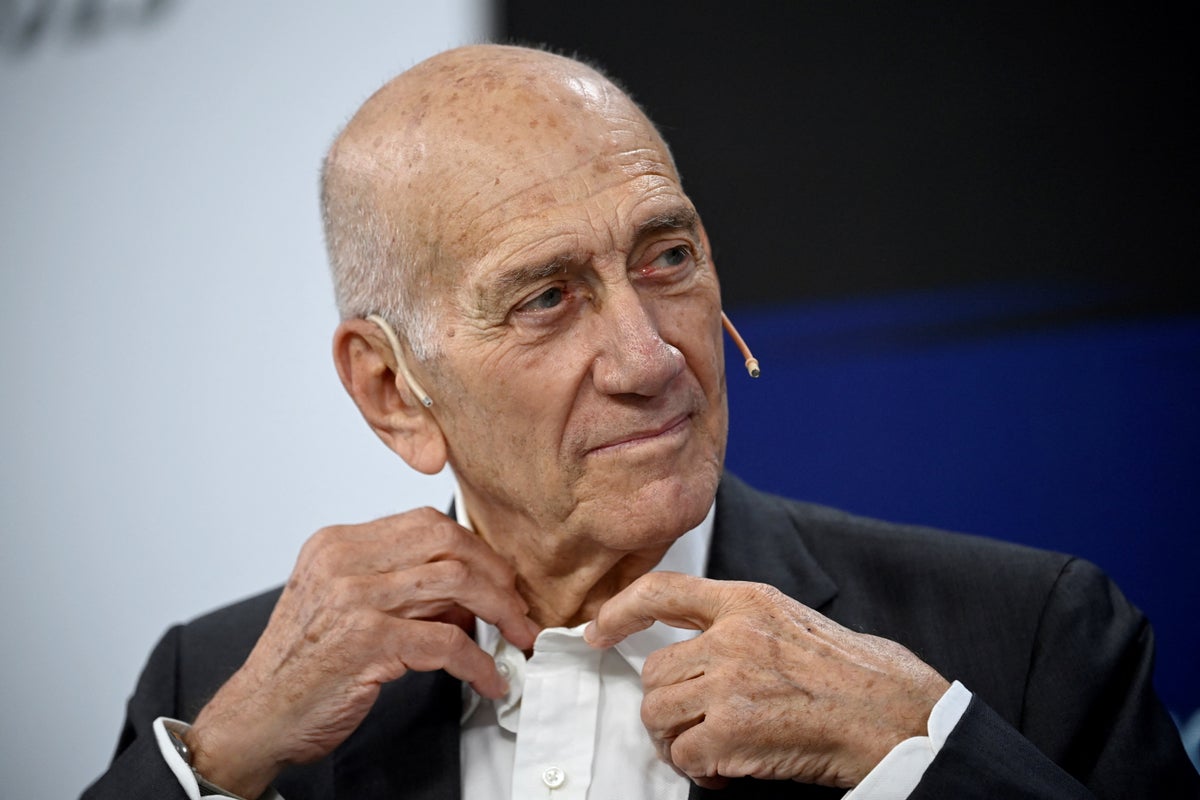
Ehud Olmert criticises Israeli government after it reacted furiously and shut down the UK consulate in East Jerusalem