← News
Topic · Organization

Super El Niño

12 articles

See also
📰

Latest Super El Niño articles

'Super El Niño' explained and how it will affect the weather

'Super El Niño' explained and how it will affect the weather

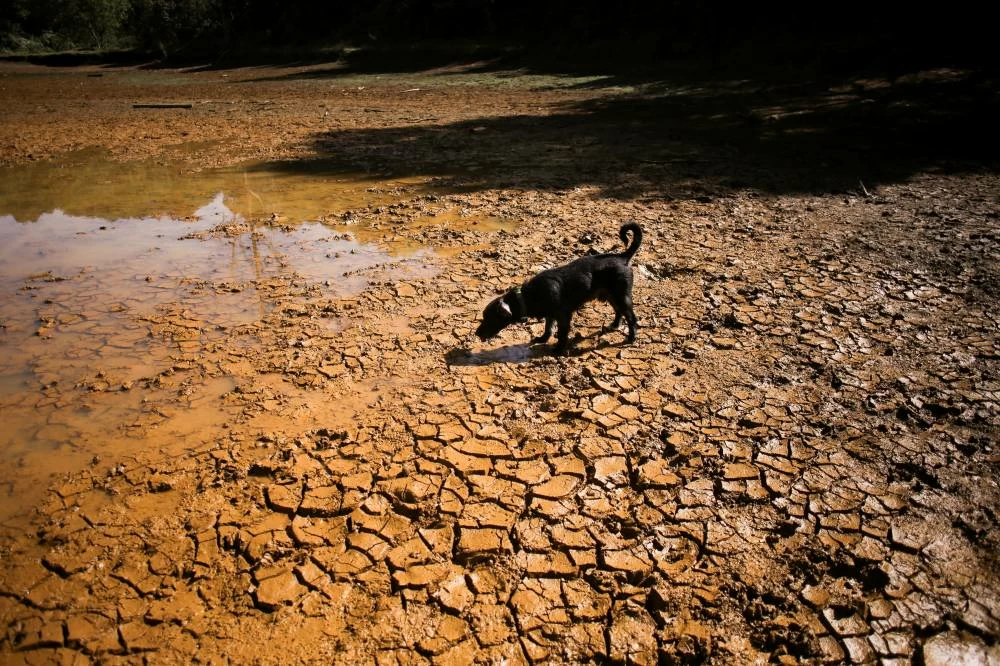
BRUSSELS: The El Niño weather pattern developing in the Pacific Ocean could be one of the strongest on record, with the potential to cause floods, droughts, extreme heat and crop losses across the world. The phenomenon, which the World Meteorological Organization expects to ‌reach peak intensity by early 2027, could result in 451,000 excess deaths by February, the University of Chicago's Climate Impact Lab said on Wednesday. Here's what you need to know. What is El Nino? El Niño is the warm phase of the naturally occurring El Niño-Southern Oscillation cycle, a climate pattern that influences weather around the world. It tends to cause higher global temperatures and disrupt rainfall pattens across large regions - meaning drought in some areas and heavy rains in others. El Niño typically occurs every two to seven years, when weakening trade winds result in warmer ⁠waters in the eastern Pacific. What makes an El Nino Super? Elevated Pacific Ocean temperatures are the telltale sign that El Niño is forming. This month equatorial Pacific sea surface temperatures hit 3.05 degrees Celsius (5.49 Fahrenheit) above normal levels - the highest temperature anomaly for any El Niño since records began, and far above the 0.5°C threshold for defining the phenomenon, data from the US National Oceanic and Atmospheric Administration, or NOAA, showed. The ‌government agency formally declared El Niño conditions had begun in June. Equatorial Pacific temperatures of 0.5°C above the norm constitute a weak El Niño, versus 1.0°C for a moderate one, 1.5°C for a strong one, and 2.0°C for a very strong one, according to NOAA. The WMO does not officially use the ‌term super, but forecast this month that the developing El Niño will intensify into "a very strong event" ‌with significant impacts on rainfall and temperatures. The last strong El Niño in 2023 to 2024, combined with climate change, pushed 2024 to ‌become the planet's hottest year on record. That year, ‌Bolivia and Venezuela suffered disastrous fires, torrential floods hit Nepal, Sudan and Spain, and heatwaves in Mexico and Saudi Arabia killed thousands. Is El Nino linked to climate change? El Niño is a natural climate pattern and is not ‌caused by climate change. However, global warming can make El Niños more intense. Greenhouse gas emissions have increased the ⁠planet's average temperature by around 1.4C since pre-industrial times. That higher baseline supercharges the effects of El Niño - enabling higher temperature spikes, more intense droughts, rains and the resulting disasters, including bushfires, floods and crop failures. Some scientists have said the destruction likely from this year's El Niño could provide a foretaste of extremes that will become the ⁠norm in the coming decades even ⁠without an El Niño, as a result of human-caused global warming. What to expect from this El Nino? The combination of climate change and El Niño has led the WMO to warn that 2027 could be the hottest year since records began. Of the 451,000 excess heat-related deaths that the ⁠coming El Niño could cause, Nigeria is expected to suffer 31,400, followed by Indonesia with 19,300 and Sudan with 17,600, the Climate Impact Lab said. Emergency response efforts, including early warning systems and protection for outdoor workers, could save tens of thousands of these lives, the researchers said. Typically, regions such as southern South America and parts of Central Asia get more rain in an El Niño, which can trigger disastrous flooding. In 2024, floods in Rio Grande do Sul in Brazil killed more than 180 people and displaced 600,000. Southern Africa, ‌Central America and Australia tend to dry out, with potentially severe consequences for crop yields and energy production from hydropower. Rice exporters expect the harvest in India, the world's top producer, to decline this year by the most since 2009 to 2010, when an El Niño-induced drought curtailed production. Nearly 50 million people are at risk of acute hunger by the end of 2027 as a result of the developing El Nino, with southern Africa and South America among the worst-hit regions, according to U.N. World Food Programme forecasts. El Niño also intensifies heatwaves, including in regions far from the Pacific, such as Europe, and tends to increase hurricane activity in the ‌central and eastern Pacific ocean.

Super El Niñoneutral
Sep 24, 2026 · byMobile Business
Are baby girls more sociable? Super El Niño, meningitis outbreak explained – podcast

Are baby girls more sociable? Super El Niño, meningitis outbreak explained – podcast

Madeleine Finlay sits down with her co-host and Guardian science editor, Ian Sample, to discuss three science stories from the week, including a study that offers a clue in the age-old debate about whether sex differences are present from birth or a product of socialisation. Also on the agenda is the super El Niño, which is predicted to lead to 450,000 deaths in the next six months, and an answer to why the UK’s meningitis outbreak earlier this year was so big. Baby girls’ greater interest in faces offers clue to nature v nurture debate Huge El Niño projected to cause 450,000 deaths in next six months Continue reading...

Super El Niñoneutral
Sep 24, 2026 · byThe Guardian
Super El Niño to Cause 451,000 Heat Deaths

Super El Niño to Cause 451,000 Heat Deaths

More than 451,000 people are projected to die across the globe in the next six months from the additional heat brought by a super El Niño, according to estimates from climate scientists released Wednesday.  The El Niño—the warm phase of the Pacific Ocean’s recurring cycle, when heat from the ocean is released into the atmosphere—began […]

Super El Niñoneutral
Sep 23, 2026 · byInside Climate News
Somalia's women and girls face a risk of famine as hunger deepens and El Niño nears

Somalia's women and girls face a risk of famine as hunger deepens and El Niño nears

Country: Somalia Source: CARE Mogadishu, Somalia, September 23, 2026 – Across Somalia, as food becomes increasingly scarce, women and girls are bearing the heaviest burden. Mothers are struggling to keep their children fed, pregnant and breastfeeding women are battling to meet their own nutritional needs, and girls face growing risks of dropping out of school, exploitation and early marriage. As needs rise and support dwindles, a looming Super El Niño threatens to bring flooding, disease outbreaks and displacement to communities already pushed to their limits. The latest Integrated Food Security Phase Classification (IPC) analysis confirms that hunger is worsening across Somalia. An estimated 5.4 million people are projected to face Crisis (IPC Phase 3) levels of hunger or worse between October and December 2026, compared to 4.4 million people during the same period in 2025. The number of people facing Emergency (IPC Phase 4) levels of hunger is projected to rise from 921,000 during October to December 2025 to 1.48 million during the same period this year. 26,000 people in Baidoa are projected to face Catastrophe (IPC Phase 5) by the end of 2026, placing them at risk of famine if worsening floods, rising food prices, and humanitarian funding shortfalls are not addressed. The deterioration comes as humanitarian funding continues to shrink. The number of people receiving food assistance, including food baskets, cash vouchers and agricultural support, has almost halved between January and June 2026. As a result, just 1 per cent of people in need are expected to receive food assistance during October to December. Women and children in displacement sites are likely to bear the brunt of these cuts. For Fadumo, a 42-year-old displaced mother living in a camp on the outskirts of Mogadishu, hunger has become a daily reality. “Today, I have zero food in the house and we have not eaten anything yet,” she said. “We wait for my son to return. Only then will I know if we will eat today.” Fadumo fled violence in Somalia’s Hiiraan region with her family. Today, she shares a cramped shelter with her disabled husband, her elderly mother, nine children, and seven nieces and nephews. Their entire survival hinges on what her 11-year-old son earns shining shoes in the streets of Mogadishu, a few dollars on a good day, and nothing on others. Since May 2026, health services, food assistance, water distribution, emergency cash, and dedicated safe spaces for women and girls have all been suspended due to funding cuts. The impact on women and children is already severe. An estimated 1.1 million women and children are expected to miss lifesaving treatment and preventative nutrition services following the closure of 233 nutrition centres. Nine in ten children suffering from moderate acute malnutrition are expected to lose access to support from October onwards. Admissions to stabilization centres for severely malnourished children have already increased by 40 per cent. Between March and August 2026, 15,505 acutely malnourished children were treated at CARE and partner-supported health facilities across Somalia. However, due to funding shortages, only six of the 75 CARE and partner-supported health facilities across Somalia that had been supporting the treatment of acute malnutrition are expected to remain operational after September 2026. “Somalia’s mothers are fighting an agonizing battle on every front, doing whatever it takes to feed their children today, while fearing the floodwaters of tomorrow,” says Ummy Dubow, CARE Somalia Country Director . “Hunger is rising, aid is shrinking and women and children are being left with fewer and fewer ways to cope. We are being forced to close lifesaving health centres not because the need has disappeared, but because the funding has. If these facilities shut their doors just as the rains arrive, the consequences will be measured in children’s lives. The window to act is closing fast.” Forecasts indicate a high likelihood of a very strong El Niño during Somalia’s October to December Deyr rains. Above-average rainfall could trigger severe flooding, damaging crops and infrastructure, disrupting markets, contaminating water sources, spreading disease, and displacing large numbers of people. In Beletweyne, one of Somalia’s largest displacement hubs, flooding could displace more than 200,000 people. Displaced communities in the area could face Extremely Critical (IPC Phase 5) levels of acute malnutrition, as flooding, disease outbreaks and reduced services combine to create catastrophic conditions. “El Niño-related risks can quickly become a protection, health and livelihoods crisis in Somalia,” says Ahmed Nasir, Deputy Director, Save Somali Women and Children (SSWC) . ” In Beletweyne, for instance, women and girls face increased risks when floods displace families. Water sources become contaminated, while damaged latrines increase risks of disease outbreaks and make essential services harder to reach. Communities have strong local coping capacity, but they need early warnings, anticipatory finance, safe evacuation routes, emergency cash and protection services designed with women and girls at the centre.” CARE is calling for an immediate and significant increase in humanitarian funding. Quality funding that is flexible and predictable is urgently needed and must be channeled as directly as possible to national and international organizations, including to women-led organizations, as central actors in the response. CARE also calls on all parties to ensure safe, rapid and unhindered humanitarian access to affected people and to uphold their obligations under international humanitarian law. Without urgent action, millions of women, children and vulnerable families will face an increasingly dangerous combination of risks, including hunger, malnutrition, displacement, protection and violence against women and girls, making them even more vulnerable to ongoing and future climate shocks. About CARE in Somalia CARE has been working in Somalia since 1981, supporting vulnerable communities affected by conflict, climate shocks, displacement, and poverty. Working alongside local partners, authorities, and communities, CARE is delivering cash assistance, healthcare, nutrition and protection services such as safe spaces for women and girls, psychosocial support, and emergency care for survivors of violence, where possible. For media inquiries , please email usa.media@care.org, or contact Pauline Hurungudo , CARE East and Southern Africa, Regional Communications Advisor, Pauline.Hurungudo@care.org

Sep 23, 2026 · byReliefWeb
Super El Niño could cause 451,000 excess deaths worldwide

Super El Niño could cause 451,000 excess deaths worldwide

Extreme heat linked to this year’s “super El Niño” could cause up to 451,000 excess deaths worldwide in the six months to February 2027, according to researchers at the University of Chicago’s Climate Impact Lab. The number of extremely hot days is expected to rise by 44%, with Nigeria, Indonesia and Sudan among the countries likely to be most affected. Researchers warn that the impact could extend well beyond the six-month period studied. Chloe Brimicombe, a climate scientist from the University of Oxford, shares further details about this climate phenomenon.

Super El Niñoneutral
Sep 23, 2026 · byFrance 24