← News
Topic · Event

Olympics

32 articles

See also
📰

Latest Olympics articles

South Africa in running to stage Africa’s first Olympics as 2036 race hots up

South Africa in running to stage Africa’s first Olympics as 2036 race hots up

Qatar frontrunners of bidders, with India and Hungary Turkey, Germany and Korea to present to IOC next month South Africa is in the hunt to stage Africa’s first Olympics after it was named as one of seven countries that will formally present its case to host the 2036 Games in November. However its bid, which would likely be spread across Cape Town, Johannesburg and Durban, is seen as a distinct outsider, with Qatar widely regarded as the frontrunners ahead of India and Hungary. Continue reading...

Oct 6, 2026 · byThe Guardian
Olympics 2036: India among seven countries vying for event, IOC says

Olympics 2036: India among seven countries vying for event, IOC says

BERLIN: Seven countries, including India, Germany and Qatar, are in the running to stage the 2036 Summer Olympics, the International Olympic Committee said on Tuesday. Hungary, Turkey, South Africa and South Korea complete the list of interested parties, who are in preliminary talks with ⁠the IOC, with a shortlist to be drawn up in March next year and some countries progressing to a strategic dialogue phase. "Wherever the Games take place, one thing must never change: athletes have to be at the ‌heart of everything we do ," said IOC President Kirsty Coventry. "That is why, for every future host, delivering the best possible experience for the athletes must always be the ‌starting point.” India, the world's most populous nation, is attempting to ‌land its first Olympics while Qatar, which has bid before with Doha, ‌is campaigning to become the ‌first Muslim-majority nation to host the world's biggest multi-sports event. Qatar staged the 2022 soccer World Cup. Hungary, which most recently bid ‌for the 2024 Olympics, has never staged the Games while Munich, ⁠host of the 1972 Olympics, is Germany's candidate. Istanbul tries again Turkey's Istanbul has failed in five previous attempts while South Africa is hoping to become the first African host of ⁠the Olympics. South Africa ⁠has major event experience, having organised the 2010 soccer World Cup. South Korea has staged both summer and winter Olympics in Seoul in 1988 and Pyeongchang in 2018. Preferred ⁠hosts will be named after the dialogue phase in 2028 and a final decision is expected in mid-2029. Any other interested countries have until October 31 to come forward but new candidates are highly unlikely to emerge with less than four weeks before the deadline. Bidding rules changed under Coventry this ‌year, adding the strategic dialogue stage and involving members more throughout the process. It is also very likely that more than one country will be named as preferred hosts, unlike in past votes where just one bidder was put forward by the IOC executive board. Los Angeles will stage the 2028 Summer Games and Australia's Brisbane will host them four years ‌later.

Oct 6, 2026 · byMobile Business
India retain Asian Games cricket title, Kim lands golf gold and military reprieve

India retain Asian Games cricket title, Kim lands golf gold and military reprieve

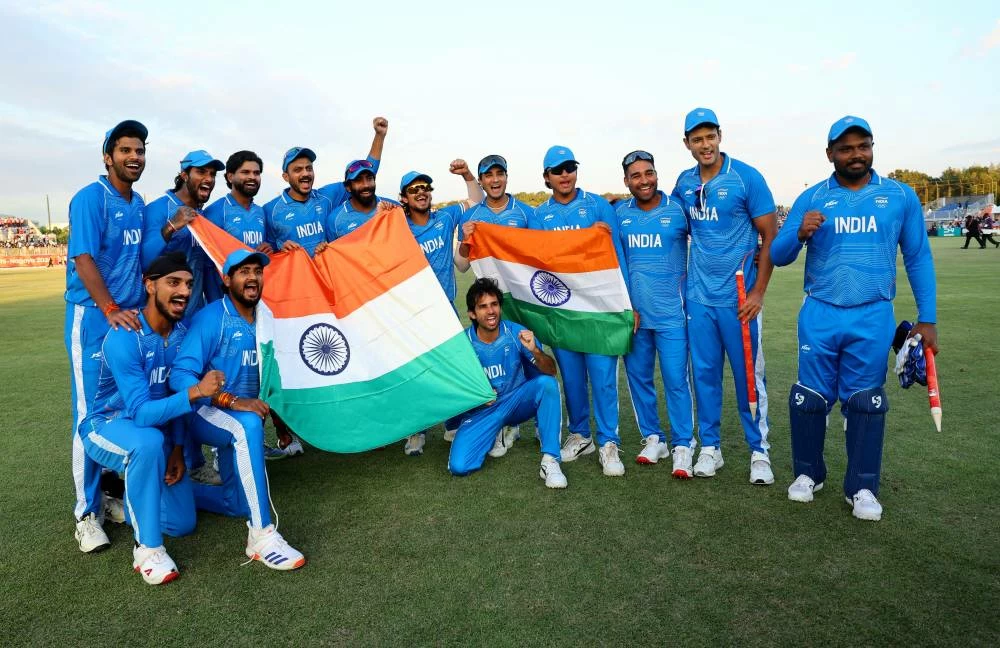
NAGOYA, Japan: ‌India beat arch-rivals Pakistan on a converted baseball field to retain their Asian Games cricket title on Saturday as South Korean golfer Tom Kim clinched a gold medal and a military service exemption. In a late soccer showdown at Toyota Stadium, Eom Ji-sung scored the winner as South Korea held off Japan 1-0 in another Asian Games final to extend their dynasty to a fourth successive men's gold. Two years before cricket returns to the Olympics, India cruised to a 19-run win over Pakistan, with Abhishek Sharma and ⁠Tilak Varma smashing fifties in the T20 final. "A huge occasion when you are playing Pakistan in the final, the whole country is watching and you have that pressure," said India captain Shreyas Iyer. A jet-lagged Kim felt the pressure on the final day at the Kasugai Country Club, two years after narrowly missing out on a medal at the Paris Olympics. The four-times ‌US PGA Tour winner played superbly, though, carding a final-round 64 to finish three strokes clear. South Korea offers Asian Games champions an exemption from compulsory military service. "This day was the longest day I think I’ve ever had in my life. It’s only been six, five hours ‌but it is definitely the longest, and I’m just glad it’s done," said a relieved Kim, ‌who also won a team silver for South Korea. The South Korean men's soccer team can also skip military service thanks ‌to Swansea City winger Eom, who swooped on ‌a loose ball parried down by goalkeeper Rui Araki and smashed in a left-foot shot on the hour-mark. Japan battled desperately to the finish, with midfielder Hisatsugu Ishii striking the post in the 79th minute, but ‌the hosts were denied for a third successive final against the Koreans in the Under-23 tournament. Planning ⁠problems The Games has been blighted by organisational problems, drawing complaints from teams about accommodation and transport. The women's hockey final was delayed by nearly an hour on Friday after the shuttle buses taking India and China's teams got stuck in traffic en route to the venue. Japan's Olympic Committee president said Aichi-Nagoya ⁠organisers needed to reflect on their ⁠planning after they struggled to manage logistics for 17,000 athletes and officials. The home athletes have done the country proud, though, and will finish with a national record haul of over 260 medals, smashing their previous best (218) at Hiroshima 1994. China will top the table easily ⁠once again. They had 169 golds among 341 medals at the end of the day's competition, with second-placed Japan on 83 golds. Coleman Wong won Hong Kong a first men's tennis singles gold and a provisional berth to the Los Angeles Olympics with victory over China's Wu Yibing. "It’s going to be my first Olympics, it’s going to be amazing," said the 22-year-old world number 100. Japan's Kae Tokumoto and Saki Tsukamoto won padel's first gold medal on the racket sport's Games debut, beating an ‌Indonesian duo for the women's pairs gold. Iran's proud taekwondo record was burnished by towering Olympic champion Arian Salimi, who bested Uzbek Marat Mavlonov for the +80kg gold, three years after taking silver at Hangzhou. "I love pain, I love fighting and I love my life,” said the tough 22-year-old. Anti-doping testers said two more athletes had failed drug tests, dealing provisional suspensions to Tajik tennis player Issamjon Sharifov and Kazakh middle-distance runner Aiana Bolatbekkyzy. In a huge programme of 469 gold medals, the final two will be contested on Sunday in the equestrian in Tokyo before the Games end with a closing ceremony at ‌Nagoya's Mizuho Park Athletic Stadium.

Kimneutral
Oct 3, 2026 · byMobile Business
Bruce Baird, former federal Liberal MP and NSW minister, dies aged 84

Bruce Baird, former federal Liberal MP and NSW minister, dies aged 84

Baird, father of former NSW premier Mike Baird and journalist Julia Baird, helped win the Olympics for Sydney Get our breaking news email , free app or daily news podcast Bruce Baird, a former federal Liberal MP and deputy leader of the party’s New South Wales branch, has died aged 84. Baird, who also served as the NSW transport minister from 1988 to 1995, is the father of former state premier Mike Baird, the ABC journalist Julia Baird, and the marketing executive Steve Baird. Sign up for Guardian Australia’s Politics, really newsletter here Continue reading...

Oct 2, 2026 · byThe Guardian
Could we see MMA at the Olympics?

Could we see MMA at the Olympics?

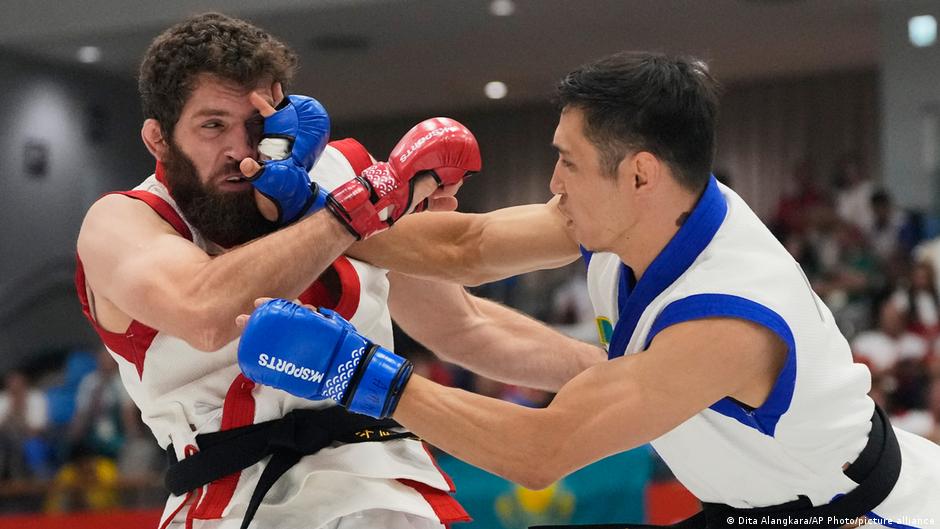
Mixed martial arts has made its debut at the Asian Games this week. It takes the sport closer to the Olympics but there are doubts about the next step, and the influence of the popular and lucrative UFC.

Sep 22, 2026 · byDeutsche Welle
There’s a long history of athletes pooing themselves mid-race – why, and how can you avoid it?

There’s a long history of athletes pooing themselves mid-race – why, and how can you avoid it?

Since the ancient Olympics, athletes like Hyrox competitor Joanna Wietrzyk have experienced runner’s diarrhoea. What does the science say about extreme exercise’s ‘mechanical jostling of the intestines’? Soiling yourself in public sounds like a bad dream. But the Australian athlete Joanna Wietrzyk has now apologised for doing just that at the Hyrox games in Beijing on Saturday. Wietrzyk won the fitness race but not before using communal equipment with faecal matter visibly running down her legs – and muddying Hyrox’s reputation. Continue reading...

Sep 18, 2026 · byThe Guardian
Break the Supreme Court law clerk cartel

Break the Supreme Court law clerk cartel

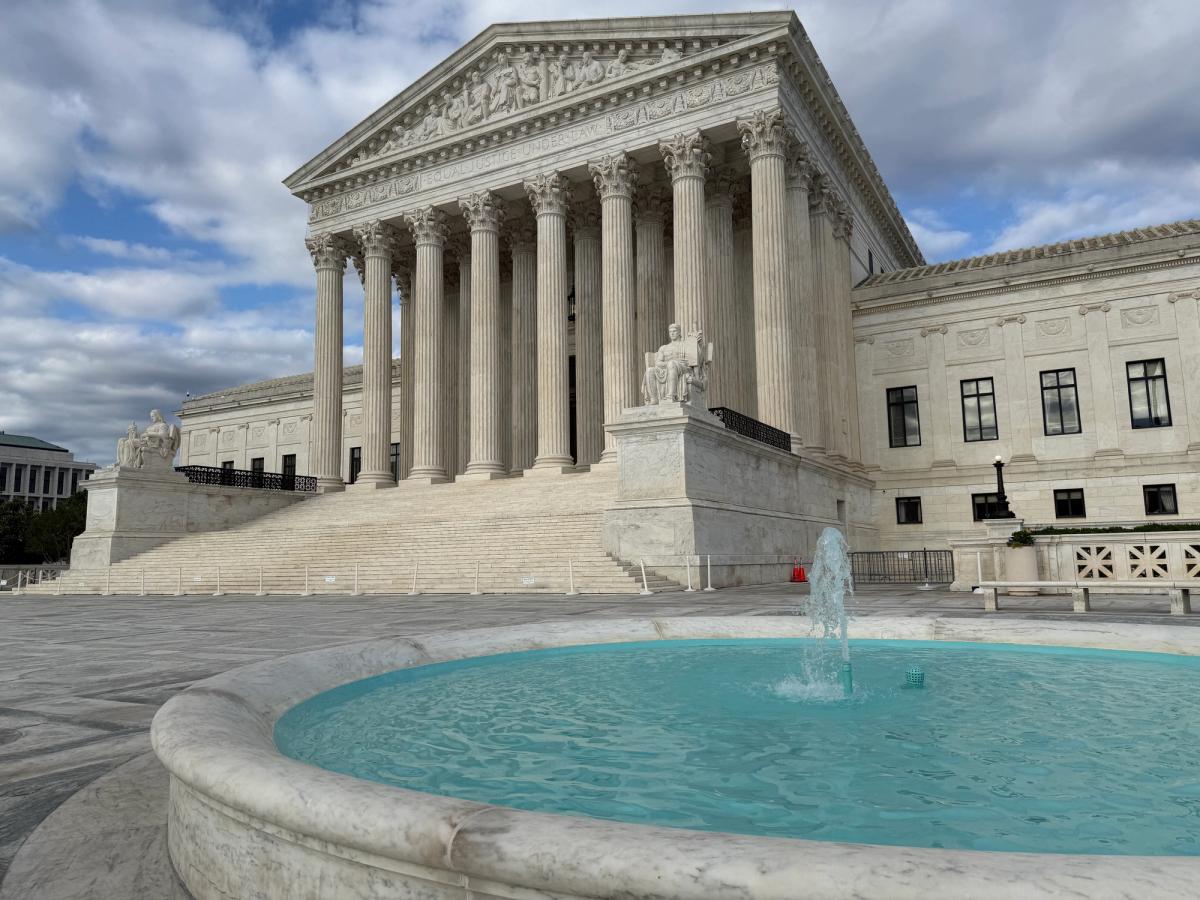
This is the eighth and final piece in a series on what I believe the court can, and should, do better. *** Every year, each justice hires four law clerks. Under the current practice, the justices will hire young lawyers with sterling credentials who secured two or three prior clerkships from “feeder” judges. Often, interviews are scheduled while applicants are still in law school, and before they have even started their first clerkship. Justices have built elaborate screening networks with former clerks, as applicants have to traverse multiple rounds of interviews. The justices would acknowledge that for every clerk that is hired, there are many more equally qualified candidates. Getting the job is like winning the gold medal at the Olympics – you are the best of the best but conditions have to be just right. During the term, the clerks are privy to most things that happen at the court. The information they learn makes them extremely valuable. Accordingly, clerks are handsomely rewarded. Some law firms pay signing bonuses in excess of $700,000, even as former clerks are barred from practicing before the court for two years. Invariably, these former clerks often become the biggest boosters for their justice and the court itself. I have been critical of this law clerk cartel. Far too much power is granted to people with so little experience. As a thought experiment, I proposed how Congress could phase out Supreme Court law clerks altogether. This plan is extremely unlikely. But perhaps the justices can constrain their own process. Justice Ketanji Brown Jackson has taken some important first steps . For starters, she only considers applicants who have already completed an appellate clerkship. This step eliminates the unusual phenomenon in which law students are applying for Supreme Court clerkships before actually completing, or even starting, their first clerkship. Moreover, Jackson limits the application process to the submitted materials. There are no backdoors or secret paths to the clerkship. The notice states clearly that “[n]o information will be considered outside of the formal application process.” And references are barred from contacting the justice: “Neither applicants nor their references, recommenders, or other advocates should contact Justice Jackson or her current or former staff regarding a pending or prospective application.” If there are any doubts, the penalty is stated clearly: “Failure to follow this instruction may disqualify an application from further consideration.” Good for KBJ. Perhaps as the newest member of the court, she is still able to assert control over the hiring process before it explodes beyond her control. Other justices could have followed her lead, but they apparently have not. I would adopt all of Jackson’s preconditions and go several steps further. First, the justice should ask all of their clerks, following their clerkship, to work for two years in government service, for a non-profit, or some other public interest work. Implicit in this commitment is a postponement, or even rejection, of the gratuitous signing bonus. The justice would make clear that they are looking to hire clerks with an eye towards public interest. Moreover, these clerks will likely get far more practical experience following their clerkships outside of the private sector, where they can do far more good. Second, I have proposed that the justices should spend part of their time working in the courthouses across the country. Their law clerks should join them. This project is mostly about keeping the judges grounded, but I do think there is value in keeping the law clerk’s feet planted on the ground. Working in a marble palace can distort any sense of reality. Perhaps law clerks could spend part of the year in the home chambers and part of the year at the Supreme Court. Or some law clerks could spend all of their time in either location. Or perhaps a justice could go to D.C. without any law clerks. The third proposal will perhaps be the most draconian: the clerks should be barred from talking about cases with anyone in other chambers. Books and exposés about the Supreme Court recount how law clerks will often engage in shuttle diplomacy between the chambers. Documents about the so-called “Shadow Papers” may have leaked from someone who kept clerkship records from 2016. The law clerks become part of the deliberations. This approach may be useful and convenient for the justices, but I think it can distort the power structure. The clerks should be reminded that the justices are in charge, and they are just helpers. If the clerks are unable to talk with other chambers, then perhaps the justices would be forced to talk to each other more. And that is a very good thing. *** This concludes my eight-part series on unilateral Supreme Court reform. The first installment proposed eliminating the summer recess. The second installment urged the justices to hold regular press conferences. The third installment called on the justices to hold oral argument outside of Washington, D.C. The fourth installment considered how the chief justice could share much of his power. The fifth installment would restore the practice of the justices riding circuit. The sixth installment would enhance the Supreme Court minority’s procedural powers. And the seventh installment proposed empowering the Supreme Court’s supermajority on substantive matters. My sincere hope is that this series will generate discourse and debate. Unlike most proposals for court reform, these ideas should garner bipartisan support. None of them purport to change how many justices there are and how they decide cases. All of these proposals would maintain the independence of the court. Indeed, many of these ideas could be adopted by the justices unilaterally. Ultimately, the justices should not be bystanders in debates about SCOTUS reform. If the justices take the initiative to adopt reforms on their own, the impetus for external reform will decline. These changes would not only be good for the court but society as a whole.

Sep 15, 2026 · bySCOTUSblog
USA defend Fiba Women’s World Cup title after early scare against France

USA defend Fiba Women’s World Cup title after early scare against France

USA overcame a 14-point France lead in first half Breanna Stewart scores 22 points; Caitlin Clark gets 12 Defending champions USA fell behind early but stormed back past ⁠France 97-79 on Sunday to win the Women’s World Cup. In a rematch of the 2024 ⁠Olympic final , ⁠the ​American women came out on top once more, earning their fifth consecutive World Cup title ⁠and stretching their impressive unbeaten run at Olympics or World Cups to 20 years. Continue reading...

Sep 13, 2026 · byThe Guardian