In El Salvador’s mass trials, lawyers struggle to defend hundreds
 Oct 7, 2026 · byAl Jazeera
83 articles · 5+ stories

El Salvador retains a reported $666 million Bitcoin reserve after an IMF review. The IMF waived missed Bitcoin accumulation criteria and released $138 million in funding. It expects no further accumulation beyond documented donations and continued reductions in the state’s role in Bitcoin-related activities.
 Oct 1, 2026· Bitcoin.com News
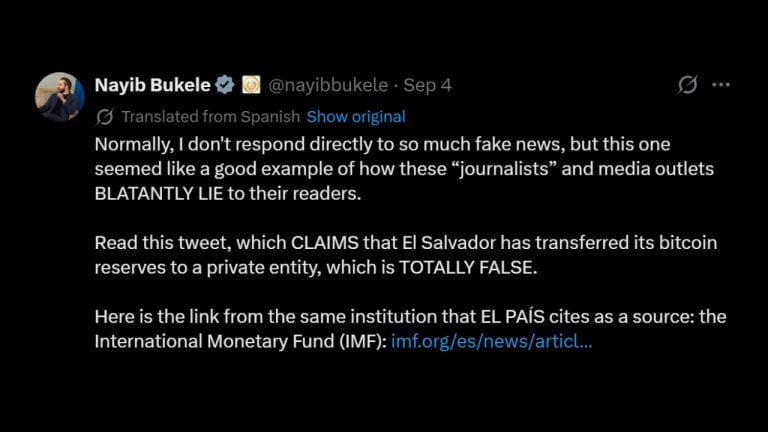 Sep 5, 2026· Bitcoin.com News
 Sep 4, 2026· BeInCrypto


Human Rights Watch says defendants face proceedings where lawyers have struggled to access case files.
Oct 7, 2026 · byAl Jazeera
Countries: Brazil, Argentina, Colombia, Costa Rica, Dominican Republic, Ecuador, El Salvador, French Guiana (France), Grenada, Honduras, Mexico, Panama, Paraguay, Peru, Saint Lucia, Saint Vincent and the Grenadines, United States Virgin Islands, Venezuela (Bolivarian Republic of) Source: Pan American Health Organization Please refer to the attached file. In the epidemiological week (EW) 36 of 2026, a total of 1,695,825 suspected cases of dengue were reported, resulting in a cumulative incidence of 162 cases por 100,000 population. This represents a decrease of 56% compared to the same period in 2025 and 63% compared to the average of the last 5 years. Figure 1 shows the trend of suspected dengue cases as of EW 36.
 Oct 7, 2026 · byReliefWeb
Lawyers warn that the mass trials of people imprisoned during President Nayib Bukele’s gang crackdown are marred by vague evidence and restrictions on a proper defense.
 Oct 7, 2026 · byThe New York Times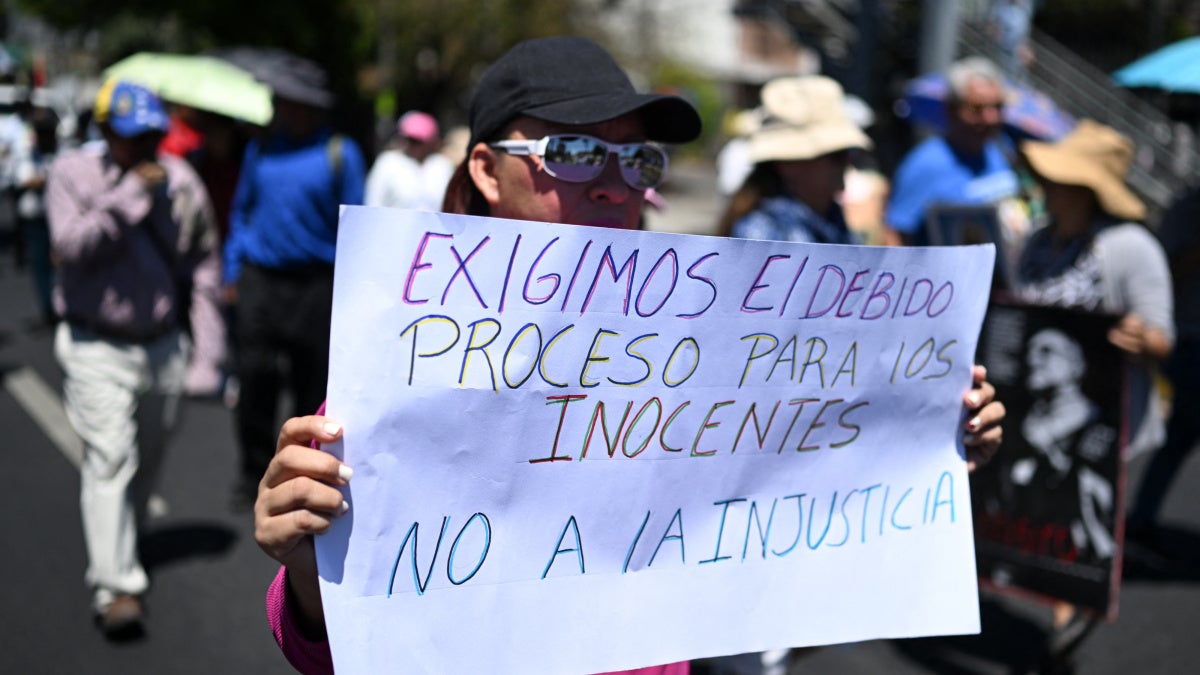
Click to expand Image A woman holds a sign reading "We demand due process for the innocent. No to injustice" during a protest against the state of emergency imposed by the government since March 2022, in San Salvador, El Salvador, on March 24, 2026. © 2026 AFP via Getty Images (Washington, DC) – Since early 2026, Salvadoran courts have begun convicting people in mass trials of hundreds of defendants at a time, relying on weak evidence and giving them no real chance to defend themselves, Human Rights Watch said today. For months, courts in El Salvador have held mass trials of people detained under the state of emergency, which has been in place for over four years. Many people have been sentenced for “unlawful association,” a vaguely defined crime, on the basis of weak evidence in closed proceedings that are kept under judicial seal. Lawyers representing the accused say they have had no meaningful chance to contest evidence or prepare an adequate defense. The prosecutors and judges involved have little, if any, independence from the executive branch. “El Salvador’s mass trials are a mockery of justice,” said Juanita Goebertus, Americas director at Human Rights Watch. “These hearings are designed to produce guilty verdicts, not to weigh evidence under due process. The result is not accountability for the victims of gang violence, it is simply rubber stamping the mass incarceration under four years of the state of emergency.” Human Rights Watch interviewed 15 private defense lawyers representing people detained during the state of emergency and reviewed four indictments covering over 600 defendants and one judicial decision sentencing over 120 people. Researchers also interviewed members of civil society organizations with direct knowledge of the proceedings and, for a prior publication, several police officers whose descriptions of investigations were generally consistent with those of defense lawyers. Human Rights Watch also reviewed publications by the Salvadoran government and by Salvadoran and international news outlets describing the mass trials. Human Rights Watch also requested information from the Salvadoran Supreme Court and the Attorney General’s Office about the criminal proceedings of people detained under the state of emergency, including the total number of convictions and the number of people held in pretrial detention. The Attorney General’s Office responded that the requested records “were not found.” The Supreme Court had not responded at time of writing. Since March 2022, El Salvador has been under a state of emergency that suspends some due process rights, a measure cast as a necessary tool to fight gang violence. Security forces have detained over 93,000 people, including more than 3,000 children. Human Rights Watch has documented widespread abuses, including arbitrary detention, enforced disappearances, torture and other forms of ill-treatment in detention, and severe due process violations. Many people with no connection to gang activities have been detained. Lawyers said they were routinely blocked from mounting an adequate defense. They said judges denied them access to case files, saying that the cases were under “seal.” They also said they could not speak with their clients privately. Some lawyers also said that prosecutors had threatened proposed defense witnesses with criminal prosecution. Defense lawyers said that judicial proceedings are conducted at such a fast pace that respecting due process is virtually impossible. “It is macabre,” one said. “They need the machine to run like clockwork.” They described being given only minutes at hearings to present a defense: about 10 minutes at the initial hearing and just 15 minutes at the sentencing hearing. Public defenders, they said, were given a few minutes to represent dozens and, in some instances, hundreds of defendants at a time. The lawyers interviewed said that prosecutors routinely relied on police reports to seek convictions. Police officers have previously told Human Rights Watch that many police reports are based on fabricated or uncorroborated evidence, such as anonymous calls, and that police were pressed to produce them to comply with an arrest quota. Prosecutors have also relied on anonymous testimony by witnesses who entered plea agreements. These witnesses testify behind screens or wooden partitions, with their voices distorted. “You don’t see them,” one lawyer said. “They are covered in a little box; you see a wooden board. The voice is distorted. Only the judge, the court clerk, and the prosecutor have access.” “We presented witnesses, family members, neighbors, who would testify he was not a gang member,” a lawyer said about her defense of a young man who has been in detention for more than four years accused of being a “gang collaborator.” “They are intimidated by the prosecutor’s office, which threatened to detain them.” The trials have been conducted before the Tribunals Against Organized Crime, which have been staffed by the Supreme Court through an ad hoc, opaque process. The identity of these judges has not been disclosed, even to the lawyers involved in the proceedings. One lawyer said that a judge opened a mass hearing by saying: “We are here to convict all MS-13 members.” An estimated 120,000 people are incarcerated in El Salvador today. That amounts to roughly 2 percent of the population, one of the highest incarceration rates in the world. Salvadoran prisoners have long suffered from overcrowding, violence, and inadequate access to food, water, and medical care. The state of emergency has sharply worsened these dire detention conditions by tripling the prison population, pushing it to more than double the system’s capacity. At least 513 people have died under state custody during the state of emergency, according to Cristosal, a human rights organization. Over 90 percent of people behind bars have been imprisoned for years awaiting trial, in part because of recent legal reforms that extended pretrial detention terms. The International Covenant on Civil and Political Rights and the American Convention on Human Rights, to which El Salvador is a party, guarantee everyone charged with a crime the right to be informed promptly and in detail of the charges against them, to have adequate time and facilities to prepare a defense, and to examine prosecution witnesses and present their own on equal terms. Salvadoran authorities should ensure proceedings comply with fair trial standards, carefully assess the evidence and charges against each individual, end the excessive use of pretrial detention and judicial seals, and disclose how the specialized tribunals were appointed. The Salvadoran government should also establish an independent, transparent mechanism to review the cases of people detained during the state of emergency and identify people who have been detained without adequate credible evidence, whom authorities should promptly release. The mechanism should prioritize reviewing cases of children, people with disabilities, pregnant women, and people with serious health conditions. “The government has built a system designed to convict hundreds at once, with no mechanism to separate the innocent from the guilty,” Goebertus said. Vague Accusations, Weak Evidence Many of the people sentenced in El Salvador’s mass trials have been accused of the vaguely defined crime of “unlawful association,” based on weak and uncorroborated evidence. The offense criminalizes not only those who create, lead, or finance gangs, but also anyone who “promotes, helps, facilitates or favors” such groups, or receives a direct or indirect benefit from a relationship “of any nature” with them, even without being a member. Human Rights Watch found that prosecutors have classified defendants by their alleged rank or role in gangs, in most cases as “collaborators” or “lookouts,” but have not further specified what activities specific defendants allegedly engaged in as part of the gang, or during what time periods. The indictments reviewed relied heavily on a set of recurring documents produced by the police: the arrest report, a police report about the defendant, and photographs taken when the detainee enters prison. In many cases, prosecutors also relied on testimony from one or two anonymous witnesses who entered plea deals. Lawyers said that the crime has at times been applied to sentence people who were gang victims. “In El Salvador, many people were coerced into ‘collaborating’ with gangs,” one lawyer said. “For example, prosecutors accused one woman of being the girlfriend of a gang leader, when in fact she had been forced into the relationship out of fear for her own life and the lives of her family members.” Human Rights Watch reviewed a judgment of a single mass trial in which over 120 people were convicted for “unlawful association.” Nobody was acquitted. Defendants were sentenced to either 30 or 45 years in prison. Almost all of those sentenced to 30 years were accused only of being “collaborators,” the lowest level of gang association under Salvadoran law. For the vast majority, the only evidence connecting them to a gang was a statement by one of two anonymous witnesses, who had received immunity from prosecution, together with police paperwork recording the arrest and a police-generated “criminal profile” of the defendant. Even when witnesses said that some of the defendants were fishermen, housewives, farmers, or students, and had no connection with gangs, the judge concluded, without explaining why, that the anonymous witnesses were more credible and convicted the defendants. Lawyers said that prosecutors frequently rely on the police report as the key piece of evidence, even though the defense is often unable to verify how it was created or the underlying sources used to create it. “Prosecutors say a person is a gang member because a police officer says so,” a lawyer said. “The prosecutor relies on the police report, and the police report relies on unspecified official intelligence or public rumors,” he added. Lawyers said police logs of the anonymous calls that allegedly trigger many arrests are not disclosed to the defense, making it impossible to even verify what was said. Several lawyers said prosecutors have also relied on witnesses who reached plea bargain agreements and then put forward broad, unverifiable allegations of gang membership. Lawyers said that in many cases the witnesses are unable to provide any meaningful details that might give credibility to their allegations. One lawyer said a protected witness described his client as a “lookout who moved drugs,” but was unable to specify when, where, with whom, or what kind of drugs. Severe Restrictions on the Right to Defense Lawyers consistently described a series of severe limitations on their ability to defend their clients. Many said that defense lawyers, especially public defenders, are given just minutes to present a defense at multiple stages of the proceedings—from initial hearings on pretrial detention to opening and closing arguments during trials—in some cases for hundreds of defendants at a time. One lawyer described an initial pretrial detention hearing in which a single public defender was given 10 minutes to defend 102 defendants. Another described a pretrial detention hearing, which he attended, where a public defender had between 20 and 30 minutes to present his defense for 200 defendants. A private defense lawyer said that in one hearing he was given between 30 and 40 seconds to defend his client. Defense arguments are “a mere formality,” one said. Defense lawyers said they are not given an opportunity to contest much of the evidence presented by prosecutors. They said courts have routinely denied requests for independent judicial assessments of whether a particular defendant had a stable job prior to their arrest and was therefore unlikely to be a gang member. Many requests to present witnesses for further information about police reports have gone unanswered, lawyers said. In some cases, prosecutors also are allowed to introduce written records of police interviews as evidence, giving defense lawyers no opportunity to cross-examine the officers. Prosecution witnesses who offer testimony as part of plea deals, defense lawyers said, testify behind screens or wooden partitions, with their voices distorted. “As defense lawyers, we don’t know who they are,” one said. “There is no control [by the defense] over protected witnesses. We don’t know what their motivations are besides getting a reduction of their sentence.” Several lawyers said that court clerks routinely deny them copies of case files, contending that they are subject to seal on “public security grounds.” “If you ask for a copy of the case file, they don’t give a copy,” one said. “The secrecy is generalized.” Defense lawyers also said that they are unable to meet in a confidential setting with their client to prepare their defense. One lawyer said that on the few occasions she was allowed, through virtual means, to speak with her client, the conversation was recorded and prison guards were nearby. “You are careful with what you can ask and what you can say,” she said. Another lawyer said she had never been able speak with her client, a young woman who has been detained since 2024. Climate of Fear Lawyers said that the widespread arrests under the state of emergency have created a climate of fear that dissuades many lawyers and witnesses from getting involved in these cases. As one lawyer put it: “Neighbors, friends, family members, co-workers, bosses are afraid to serve as witnesses because of the state of emergency, that there could be reprisals, police harassment.” Defense lawyers also said that in some cases, prosecutors threaten the best positioned people to contest accusations of gang membership—family members, neighbors, and employers—with criminal prosecution. This contrasts with the voice distortion, physical screens, and sealed identities for anonymous prosecution witnesses. Because the crime of “unlawful association” criminalizes “relationships of any nature” with a gang, anyone who vouches for a defendant risks being portrayed as a collaborator themself. One lawyer said: “In the hearing [prosecutors] question them, but before questioning them, they say ‘if you’re lying to me you can go to prison too’… ‘stop going around defending gang members.’ … This is a tool to intimidate, to instill fear, and it’s generalized.” Lack of Judicial Independence, No Meaningful Judicial Recourse Since President Nayib Bukele’s Nuevas Ideas (New Ideas) party won a supermajority in the Legislative Assembly in 2021, the legislature has approved a series of changes that have weakened judicial independence. The assembly replaced the attorney general and justices on the Constitutional Chamber of the Supreme Court with loyalists and then gave them broad powers to remove or relocate judges and prosecutors. The Constitutional Chamber of the Supreme Court has since stopped ruling in a timely manner when lawyers file habeas corpus petitions to protect the rights of their clients. According to the University Observatory of Human Rights at the Central American University (Observatorio Universitario de Derechos Humanos, Universidad Centroamericana, OUDH), the number of habeas corpus petitions the chamber admitted, which ranged between 24 and 46 percent in the years before the state of emergency, collapsed to 3 percent in 2022 and fell below 1 percent in 2023. A law passed in 2022 allows courts to hide the name of the judge handling the case to the defendants and the general public. The provision was employed in the ruling Human Rights Watch reviewed. While protecting a judge’s life and physical integrity is fundamental to ensuring the proper administration of justice, the Inter-American Court of Human Rights has ruled that “faceless judges” make it impossible for defendants to assess whether judicial authorities have a conflict of interest and are independent and impartial, violating due process protections. One lawyer said she has filed seven habeas corpus petitions in the cases she has handled since April 2022 and has received no meaningful response. “We are using the available remedies,” she said, “but we are not getting answers.” Severe staffing capacity shortfalls have also undermined access to a meaningful defense. The OUDH reported that, as of 2024, there were 165 public defenders for over 93,000 people detained during the state of emergency, an average of 550 cases per defender. The Public Defender’s Office’s budget fell from US$38 million in 2024 to $34 million in 2025, a cut of nearly 10 percent, before an increase to $35 million in 2026. In the 2026 budget, the Criminal Public Defense Unit (Unidad de Defensa Pública Penal), responsible for the defense of everyone charged with a crime including people detained under the state of emergency, was allocated approximately $9 million, a small increase from the $8.7 million it received in the 2025 budget.
Waivers for missed accumulation criteria accompany renewed commitments, with no further Bitcoin accumulation envisaged beyond documented donations. The post El Salvador’s $666 million Bitcoin reserve survives IMF review appeared first on CryptoSlate .
 Oct 5, 2026 · byCryptoSlate
While El Salvador remains one of the most closely watched countries for its Bitcoin strategy, the IMF agreement calls for less direct state involvement in crypto assets.
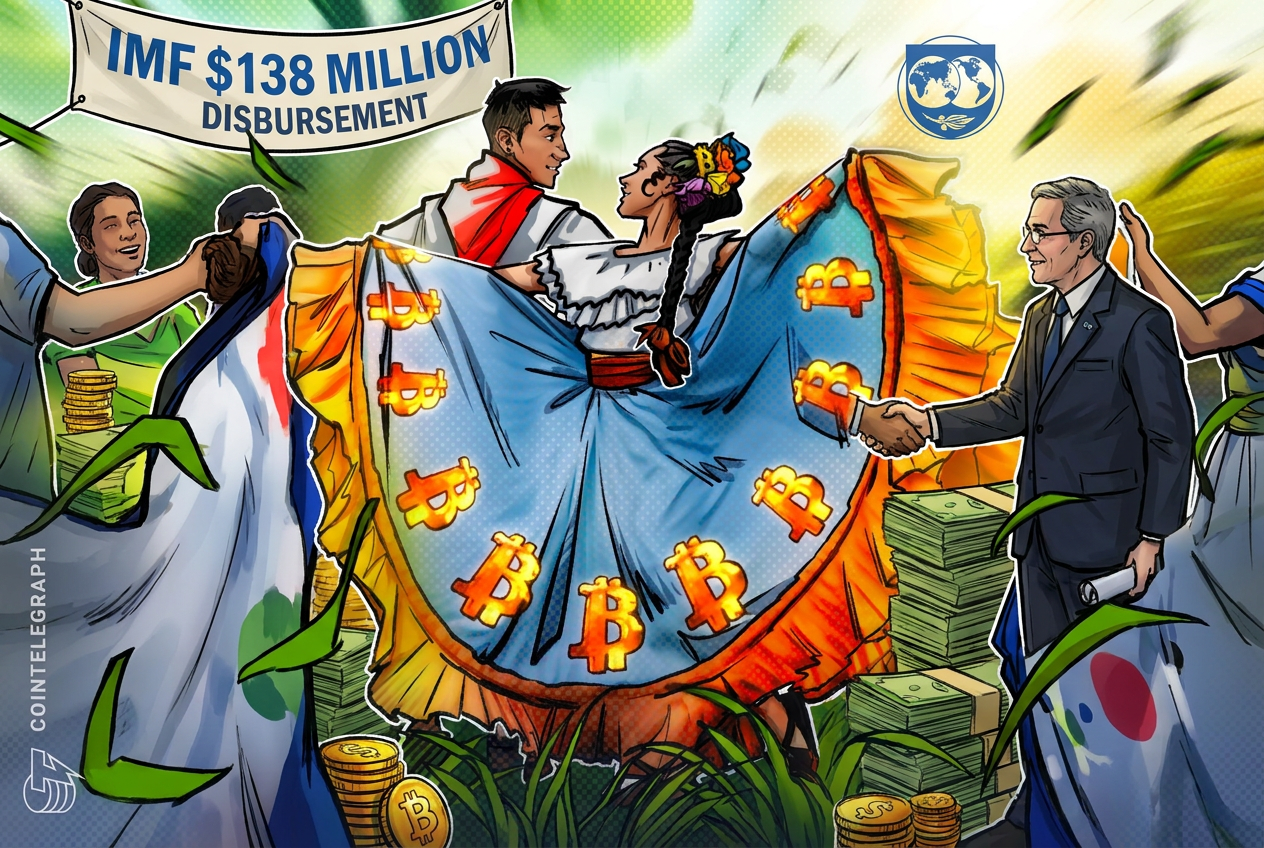
Efforts will continue to reduce the state’s involvement in Bitcoin-related activities and to strengthen crypto‑asset regulation and governance, the IMF said.
 Oct 4, 2026 · byCointelegraph
Bitcoin Magazine IMF Praises El Salvador — But Still Tries To Scale Back Its Bitcoin Project The International Monetary Fund approved a $139 million disbursement to El Salvador but still wants it to scale back its Bitcoin project. This post IMF Praises El Salvador — But Still Tries To Scale Back Its Bitcoin Project first appeared on Bitcoin Magazine and is written by Mathew Di Salvo .

Countries: Mexico, Chile, Cuba, El Salvador, Guatemala, Haiti, Honduras, Panama, Peru Source: UN Office for the Coordination of Humanitarian Affairs Please refer to the attached Infographic. KEY FIGURES 86M people across the region potentially exposed to El Niño impacts 30M people at risk of humanitarian needs due to El Niño impacts 1.8M people targeted for food assistance in Haiti still not receiving enough food MEXICO: HURRICANE Fuelled by abnormally warm waters owing to El Niño, Polo rapidly intensified from a tropical storm into a Category 5 hurricane on 22 September, registering the second-lowest pressure reported in the eastern Pacific. It struck Baja California Sur near Las Barrancas as a Category 2 hurricane late on 28 September, causing flooding and power outages, then made a second landfall near Guaymas, Sonora, in northwestern Mexico, as a Category 1 hurricane on 29 September. Media reports put Polo’s toll at two dead and three missing in Jalisco. Hurricane Rachel is moving away from land but will send life-threatening surf and rip currents to west-central Mexico and the Baja California Peninsula through 4 October. Nearly 6,900 federal, state and military personnel are responding, according to media reports. The UN Emergency Technical Team (UNETT) is monitoring the developments. CARIBBEAN: TROPICAL STORMS Tropical Storm Hanna formed in the central Atlantic on 28 September as the hurricane season’s eighth named storm, alongside Tropical Depression Fay, but both dissipated without threatening the Caribbean. The season is one storm short of the nine Colorado State University projected in July, down from 13 in its April outlook, and has yet to produce a hurricane, with El Niño-driven wind shear suppressing storm development. With the season in its final two months, the UN Emergency Technical Team (UNETT) for Barbados and the Eastern Caribbean continues to review readiness for a regional response and is preparing for El Niño’s potential impacts on the subregion. REGIONAL: EL NIÑO UNICEF warns that El Niño, forecast to peak at very strong intensity in late 2026 and last until at least February 2027, could expose 86 million people, including 25.8 million children, to its hazards, with up to 30 million at risk of humanitarian need. Drought has damaged the first harvest in the Central American Dry Corridor, where El Salvador recorded its driest August since 1971 and 3 million people in Guatemala and 1.8 million in Honduras face crisis-level hunger or worse. Across the Caribbean, dry conditions threaten water access, with 2.6 million people in Cuba facing service cuts. Pacific coasts face higher flood and landslide risks, and July storms in Chile killed 13 people. Ecuador, El Salvador, Honduras, Panama and Peru have declared national emergencies or red alerts. A full outlook is avaliable on ReliefWeb . HAITI: FOOD SECURITY Food insecurity is expected to remain severe across Haiti through at least January 2027, with Crisis (IPC Phase 3) outcomes widespread and Emergency (IPC Phase 4) conditions persisting in parts of Port-au-Prince and border areas. According to the Famine Early Warning Systems Network (FEWS NET), insecurity, displacement and lost livelihoods continue to limit access to food, while El Niño-related drought has caused crop losses and water shortages in several departments. Below-average autumn and winter harvests could further deplete food stocks and farm income. The Food Security Cluster warns that 1.8 million people targeted for assistance are still not receiving enough food, as national acute malnutrition prevalence has climbed from 5.1 per cent in 2023 to 7.4 per cent in 2026.
Oct 2, 2026 · byReliefWeb
Countries: Mexico, Chile, Cuba, El Salvador, Guatemala, Haiti, Honduras, Panama, Peru Source: UN Office for the Coordination of Humanitarian Affairs Please refer to the attached Infographic. CIFRAS CLAVE 86M personas en la región potencialmente expuestas a impactos de El Niño 30M personas en riesgo de tener necesidades humanitarias por impactos de El Niño 1,8M personas destinatarias de asistencia alimentaria en Haití que aún no reciben suficiente alimento MÉXICO: HURACÁN Impulsado por aguas anormalmente cálidas debido a El Niño, Polo pasó rápidamente de tormenta tropical a huracán categoría 5 el 22 de septiembre, con la segunda presión más baja registrada en el Pacífico oriental. Tocó tierra cerca de Las Barrancas, Baja California Sur, como categoría 2 la noche del 28, con inundaciones y apagones, y luego cerca de Guaymas, Sonora, en el noroeste de México, como categoría 1 el 29 de septiembre. Según medios, Polo dejó dos fallecidos y tres desaparecidos en Jalisco. El huracán Rachel se aleja de tierra, pero generará oleaje y corrientes de resaca peligrosos en el centro-oeste mexicano y la península de Baja California hasta el 4 de octubre. Unos 6.900 efectivos federales, estatales y militares atienden la emergencia, según la prensa. El Equipo Técnico de Emergencias de la ONU (UNETE) monitorea la situación. CARIBE: TORMENTAS TROPICALES La tormenta tropical Hanna, octava con nombre de la temporada de huracanes, se formó el 28 de septiembre en el Atlántico central junto a la depresión tropical Fay, pero ambas se disiparon sin amenazar al Caribe. La temporada está a una tormenta de las nueve proyectadas en julio por la Universidad Estatal de Colorado, frente a 13 en su pronóstico de abril, y aún no registra huracanes por la cizalladura del viento ligada a El Niño. A dos meses del fin de temporada, el Equipo Técnico de Emergencias de la ONU (UNETE) para Barbados y el Caribe Oriental revisa su alistamiento para una respuesta regional y se anticipa al posible impacto de El Niño. REGIONAL: EL NIÑO UNICEF advierte que El Niño, que alcanzaría una intensidad muy fuerte a fines de 2026 y duraría al menos hasta febrero de 2027, podría exponer a sus amenazas a 86 millones de personas, incluidos 25,8 millones de niños, niñas y adolescentes, con hasta 30 millones en riesgo de necesitar ayuda. La sequía dañó la primera cosecha del Corredor Seco Centroamericano, donde El Salvador registró su agosto más seco desde 1971, y 3 millones de guatemaltecos y 1,8 millones de hondureños están en crisis alimentaria o peor. En el Caribe, la sequía amenaza el acceso al agua: 2,6 millones de cubanos sufren cortes del servicio. Crece el riesgo de inundaciones y deslizamientos en la costa del Pacífico; en julio, tormentas en Chile dejaron 13 fallecidos. Ecuador, El Salvador, Honduras, Panamá y Perú han declarado emergencias nacionales o alertas rojas. Panorama completo en ReliefWeb . HAITÍ: SEGURIDAD ALIMENTARIA La inseguridad alimentaria seguiría siendo grave en Haití al menos hasta enero de 2027, con Crisis (CIF Fase 3) generalizada y Emergencia (CIF Fase 4) persistente en partes de Puerto Príncipe y zonas fronterizas. Según la red de alerta temprana FEWS NET, la violencia, el desplazamiento y la pérdida de sustento limitan el acceso a alimentos, mientras la sequía ligada a El Niño causó pérdidas de cultivos y escasez de agua en varios departamentos. Cosechas de otoño e invierno inferiores al promedio podrían mermar aún más las reservas alimentarias e ingresos agrícolas. El Clúster de Seguridad Alimentaria advierte que 1,8 millones de personas destinatarias de asistencia no reciben alimentos suficientes, y la prevalencia nacional de desnutrición aguda subió del 5,1% en 2023 al 7,4% en 2026.
Oct 2, 2026 · byReliefWebEl Salvador's Bitcoin strategy highlights the complexities of balancing national financial autonomy with international loan conditions. The post El Salvador’s Bitcoin stash sits at $618 million despite IMF strings appeared first on Crypto Briefing .
 Oct 2, 2026 · byCryptoBriefing
The fund still expects no further Bitcoin accumulation beyond documented donations and wants the state’s remaining Chivo exposure fully unwound.
 Oct 2, 2026 · byThe Defiant
The IMF praised El Salvador’s performance, declaring that its economy continued to perform strongly amidst ongoing security improvements and efforts to reduce imbalances. Nonetheless, the institution highlighted that the bitcoin goals were not met, but issued a waiver based on “strong corrective measures and renewed commitments.” IMF Issues Bitcoin Waiver, Authorizes $138 Million Disbursement to […]
Oct 2, 2026 · byBitcoin.com News
El Salvador Bitcoin policy shifts as the IMF releases $138 million, waives a missed criterion and presses for less state involvement in crypto. The post El Salvador Agrees to Halt Further Bitcoin Accumulation Under IMF Deal appeared first on Cryptonews .

IMF approved about $138M for El Salvador after waiving a Bitcoin accumulation breach and urged the government to reduce its crypto role.
El Salvador's economic resilience, bolstered by strategic policies and IMF support, may inspire other nations to explore unconventional fiscal paths. The post El Salvador’s economy performs strongly, IMF says, as Bitcoin waiver clears the way for funding appeared first on Crypto Briefing .
Oct 1, 2026 · byCryptoBriefing
Countries: Guatemala, Colombia, Cuba, Ecuador, El Salvador, Haiti, Honduras, Nicaragua, Peru, Venezuela (Bolivarian Republic of) Source: UN Office for the Coordination of Humanitarian Affairs Please refer to the attached file. Mensajes Clave • El Niño se intensifica y se prevé que alcance su pico hacia finales de 2026. Se pronostican condiciones más intensas para septiembre– noviembre. Los impactos variarán según el lugar y deben evaluarse frente a las condiciones observadas, los calendarios estacionales y la vulnerabilidad. • La región enfrenta amenazas simultáneas y contrapuestas que exigen una preparación diferenciada. La sequía, el calor, el estrés hídrico y los incendios forestales amenazan a Centroamérica, el Caribe y partes del norte de Sudamérica, mientras que condiciones más húmedas podrían aumentar el riesgo de inundaciones y deslizamientos en zonas costeras del occidente y el sur de Sudamérica. • En Centroamérica, las graves pérdidas de la cosecha de primera aceleran la inseguridad alimentaria a medida que disminuyen las reservas, los ingresos y el poder adquisitivo de los hogares. En 354 comunidades evaluadas en Guatemala, Honduras y El Salvador, el 78,6% de los hogares productores de maíz reportó pérdidas del 75–100%, y el 64,2% tenía reservas de maíz para tres semanas o menos. • Se requieren ahora, en paralelo, respuesta inmediata y acción anticipatoria. Las pérdidas de la primera (mayo–agosto) por la sequía exigen asistencia urgente en alimentos, efectivo, agua y medios de vida, mientras aún hay oportunidad de mitigar los impactos en la postrera con semillas, insumos, apoyo hídrico e información climática oportunos. Una postrera débil agravaría las pérdidas de la primera. • El estrés hídrico empieza a afectar servicios críticos y la logística regional. La menor precipitación ha limitado el suministro de agua, la agricultura y la generación hidroeléctrica en varios contextos, y ha obligado a reducir temporalmente la capacidad de tránsito del Canal de Panamá.. Los efectos indirectos en los costos de fletes, alimentos e insumos agrícolas deben vigilarse de cerca, no darse por sentados. Riesgo Climático Y Perspectiva Humanitaria Subregional • De pronóstico a evento establecido. Se esperan condiciones de El Niño más intensas en septiembre– noviembre de 2026, con un pico hacia finales de año. La perspectiva abarca hasta noviembre 2026–enero 2027 y debe actualizarse conforme los servicios hidrometeorológicos nacionales emitan nuevas orientaciones. • Septiembre–noviembre de 2026. Lluvias por debajo de lo normal y temperaturas superiores a lo normal siguen siendo la señal principal en Centroamérica, el Caribe y gran parte del norte de Sudamérica. El Corredor Seco es el contexto de respuesta más inmediato: las pérdidas de la primera se traducen en brechas de consumo alimentario, endeudamiento, menores ingresos y menor capacidad y disposición para sembrar la postrera. En el Caribe, debe intensificarse el monitoreo de la sequía, el calor y la seguridad hídrica, sin descuidar la preparación ante ciclones e inundaciones repentinas. Podrían darse condiciones más húmedas de lo normal en zonas costeras del noroeste y en el sur de Sudamérica. Allí, el monitoreo de la sequía y la preparación ante inundaciones deben completarse antes de que las amenazas se intensifiquen a finales de año. Estas son señales de riesgo —no atribución de impactos— y deben interpretarse desde una perspectiva nacional y subnacional. • Finales de 2026 hasta 2027. Las pérdidas agrícolas, el estrés hídrico, la disrupción de mercados, la desnutrición y las enfermedades podrían hacerse evidentes solo después de acumularse los déficits de lluvia o las inundaciones. Una cosecha de postrera débil podría prolongar la temporada de escasez en el Corredor Seco y aumentar las necesidades alimentarias, nutricionales y de medios de vida hasta 2027. Los impactos de la sequía podrían agravarse al entrar el Caribe en su estación seca, mientras que el riesgo localizado de inundaciones y deslizamientos podría aumentar en partes de la costa del Pacífico de Sudamérica. El monitoreo debe vincular los indicadores de lluvia, cultivos y agua con los de precios, nutrición, enfermedades, desplazamiento y funcionamiento de servicios.
Oct 1, 2026 · byReliefWeb
Countries: Guatemala, Colombia, Cuba, Ecuador, El Salvador, Haiti, Honduras, Nicaragua, Peru, Venezuela (Bolivarian Republic of) Source: UN Office for the Coordination of Humanitarian Affairs Please refer to the attached file. Key Messages • El Niño is strengthening and is expected to peak towards the end of 2026. Stronger conditions are forecasted for September–November. Impacts will vary by location and must be assessed against observed conditions, seasonal calendars and vulnerability. • The region faces simultaneous and contrasting hazards that require differentiated readiness. Drought, heat, water stress and wildfire threaten Central America, the Caribbean and parts of northern South America, while wetter conditions may increase flood and landslide risk in parts of western and southern coastal South America. • In Central America, severe losses of the first agricultural season (Primera) are accelerating food insecurity as household stocks, income and purchasing power decline. Across 354 assessed communities in Guatemala, Honduras and El Salvador, 78.6 per cent of maize-growing households reported losses of 75–100 per cent, while 64.2 per cent had maize reserves for three weeks or less. • Immediate response and anticipatory action are now required in parallel. Impacts of drought on primera season (May-August) losses require urgent food, cash, water and livelihood assistance, while there is still an opportunity to mitigate impacts in the second agricultural season (Postrera) by providing timely seed, inputs, water support and climate information. A weak postrera would compound the impacts of the primera season losses. • Water stress is beginning to affect critical services and regional logistics. Reduced precipitation has constrained water supply, agriculture and hydropower in several contexts and prompted temporary reductions in Panama Canal transit capacity. Downstream effects on freight, food and agricultural-input costs should be closely monitored, not assumed. Climate Risk & Subregional Humanitarian Outlook From forecast to established event. Stronger El Niño conditions are expected during September– November 2026, followed by a peak toward the end of the year. The outlook extends through November 2026–January 2027 and should be updated as national hydrometeorological services issue new guidance. September–November 2026. Below-normal rainfall and above-normal temperatures remain the main signal across Central America, the Caribbean and much of northern South America. The Dry Corridor is the most immediate response context: primera-season crop losses are translating into food-consumption gaps, debt, reduced income and diminished ability and willingness to plant during the postrera season. In the Caribbean, drought, heat and water-security monitoring should intensify while maintaining cyclone and flash-flood readiness. Wetter-thannormal conditions may develop in north-western coastal areas and southern South America. There, drought monitoring and flood-readiness measures should be completed before hazards intensify later in the year. These are risk signals—not impact attribution— and must be interpreted from a national and subnational perspective. Late 2026 into 2027. Agricultural losses, water stress, market disruption, malnutrition and disease may become clearer only after rainfall deficits or floods have accumulated. A weak postrera harvest could extend the Dry Corridor’s lean season and increase food, nutrition and livelihood needs into 2027. Drought impacts may deepen as the Caribbean enters its dry season, whilelocalized flood and landslide risk may rise along parts of South America’s Pacific Coast. Monitoring must connect rainfall, crops and water indicators with prices, nutrition, disease, displacement and service functionality.
Oct 1, 2026 · byReliefWeb
A trio of shows at Michigan’s Grand Rapids Art Museum humanizes people who are incarcerated and celebrates the resilience of creativity With nearly 2 million people behind bars, America is the global leader in incarceration. When you look at it per capita, we have the highest rate of incarceration of any independent democracy and rank fourth overall in the world, just behind El Salvador, Cuba and Turkmenistan. Despite these troubling numbers, mass imprisonment is largely invisible. “Our carceral system is something we as a society try to separate out from the everyday,” observes Terra Warren, an assistant curator at Grand Rapids Art Museum, Michigan , who alongside curator Jennifer Wcisel brings audiences three solo shows from artists Julie Green, Gary Tyler and Ray Materson. They collectively aim to make us examine more closely just what prisons are doing to our society – and how art can prove transformative to those incarcerated. Continue reading...
 Oct 1, 2026 · byThe Guardian
El Salvador will hold presidential elections on February 28, 2027, the electoral tribunal said Wednesday, opening the way for President Nayib Bukele to seek a third term after constitutional changes removed presidential term limits. Bukele has drawn praise for sharply reducing gang violence but faced criticism over rights abuses during his crackdown.

El Salvador’s National Bitcoin Office has dismissed reports that the country is pivoting to stablecoins, calling it “fake news,” and confirmed it has no plans to launch or run any crypto or stablecoin wallets. Government Denies Stablecoin Pivot El Salvador has dismissed a Bloomberg report that the country is turning to stablecoins nearly five years […]
Sep 30, 2026 · byBitcoin.com News
A federal judge’s finding that there was probable cause the Trump administration willfully ignored court orders and could face criminal contempt proceedings has been on hold since April 2025.
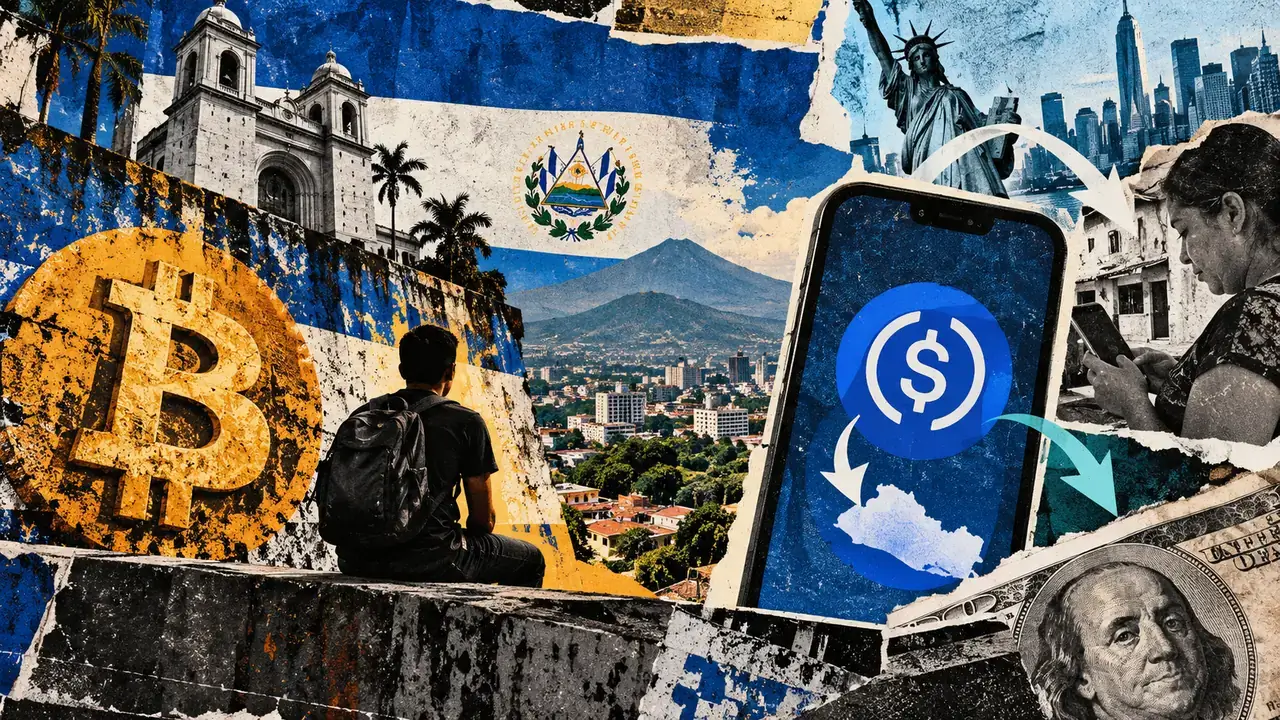
El Salvador is turning to stablecoins for remittances, further separating everyday payments from the country's pioneering Bitcoin experiment. Sivar, a new national community and payments app developed by Modveon, will use Coinbase infrastructure to settle transfers in stablecoins on Base, according to a Sept. 29 announcement. Users in the US can fund transfers with debit […] The post El Salvador targets $9 billion in transfers, but chooses stablecoins appeared first on CryptoSlate .
Sep 29, 2026 · byCryptoSlate
Countries: Brazil, Argentina, Colombia, Costa Rica, Dominican Republic, Ecuador, El Salvador, French Guiana (France), Grenada, Honduras, Mexico, Panama, Paraguay, Peru, Saint Lucia, Saint Vincent and the Grenadines, United States Virgin Islands, Venezuela (Bolivarian Republic of) Source: Pan American Health Organization Please refer to the attached file. In the epidemiological week (EW) 35 of 2026, a total of 1,658,783 suspected cases of dengue were reported, resulting in a cumulative incidence of 159 cases por 100,000 population. This represents a decrease of 57% compared to the same period in 2025 and 64% compared to the average of the last 5 years. Figure 1 shows the trend of suspected dengue cases as of EW 35.
Sep 29, 2026 · byReliefWeb