Ecuador
100 articles · 6+ stories
Stories about Ecuador

Crypto meets the World Cup as Jiménez powers Mexico past Ecuador at Estadio Azteca
 Jul 1, 2026· CryptoBriefing
Germany exits 2026 World Cup after 2-1 loss to Ecuador
Jun 29, 2026· CryptoBriefing
Canada advances to World Cup Round of 16 with historic 6-0 win over Qatar
Jun 28, 2026· CryptoBriefing
Mexico to face Ecuador in Round of 32 at 2026 World Cup on June 30
Jun 28, 2026· CryptoBriefing
World Cup 2026 becomes crypto’s biggest stage as FIFA partner Kraken activates during Ecuador vs Germany clash
Jun 25, 2026· CryptoBriefing
Croatia faces Panama in World Cup clash as crypto prediction markets heat up
Jun 23, 2026· CryptoBriefingLatest Ecuador articles


Pentagon, under Hegseth, expands war against drug cartels in South America
The Pentagon is expanding the U.S. military’s multifront war against drug cartels in South America. For more than a year, the U.S. military has been blowing up alleged drug boats on both sides of the continent. Forces have also begun interdicting refueling vessels off the coast of Ecuador before destroying them. And recently, U.S. special…
 Oct 7, 2026 · byThe Hill
Ecuador: ECU: Inundación - 10-2026 - Inundaciones por enos 2026 (2026-10-07)
Country: Ecuador Sources: Cruz Roja Ecuatoriana, International Federation of Red Cross and Red Crescent Societies Please refer to the attached file. Descripción De acuerdo con el Comité Nacional para el Estudio Regional del Fenómeno El Niño (CN-ERFEN), al 1 de octubre de 2026, el fenómeno El Niño se mantiene activo y fortalecido, con calentamiento persistente del océano Pacífico frente a Ecuador, favoreciendo condiciones de lluvias por encima de lo normal en el Litoral y una mayor probabilidad de crecidas y desbordamientos, principalmente en sectores del centro y norte del país. Para el mes de octubre, el Instituto Nacional de Meteorología e Hidrología (INAMHI) prevé la continuidad de precipitaciones de intensidad variable, con eventos puntualmente fuertes, tormentas y ráfagas de viento, principalmente en sectores del Litoral y las estribaciones de la cordillera occidental. Las provincias de Esmeraldas, Santo Domingo de los Tsáchilas, Manabí, Los Ríos y Guayas se mantienen entre las zonas con mayor presencia de lluvias, con posibilidad de inundaciones, acumulación de agua, crecidas y desbordamientos de cuerpos hídricos y movimientos en masa. ESMERALDAS: Desde el 15 de septiembre al asta el 5 de octubre de 2026, se han registrado 53 eventos adversos en siete cantones, principalmente inundaciones y deslizamientos, con aproximadamente 9.740 personas afectadas. Las mayores incidencias se concentran en Muisne, Eloy Alfaro, Esmeraldas y Quinindé, donde el incremento de caudales provocó desbordamientos e inundaciones en comunidades y viviendas. También se registran daños en vías y cultivos. Guayas: La provincia registra aproximadamente 2.211 personas afectadas por eventos asociados a las lluvias. Las principales emergencias se concentraron en Balao, Jujan, Naranjito, Guayaquil, Durán, El Triunfo, Marcelino Maridueña, Salitre, Daule, Yaguachi y Simón Bolívar, donde se reportaron inundaciones, desbordamientos de ríos, anegamientos y afectaciones en viviendas y vías, incremento de caudales y saturación del drenaje. Entre los eventos destacados se encuentran el desbordamiento de los ríos Amarillo, El Chorrón y Gala, con afectaciones en sectores y familias. Se mantiene el monitoreo y la evaluación de daños. SANTO DOMINGO DE LOS TSÁCHILAS: En el cantón La Concordia, se reportaron afectaciones por lluvias intensas en sectores como Las Vegas, San Pablo 2, San Carlos, San Luis y La Nueva Concordia, donde familias requirieron atención y asistencia humanitaria. Se han registrado aproximadamente 250 personas afectadas. LOS RÍOS : La provincia registra aproximadamente 1.385 personas afectadas por eventos asociados a las lluvias. Las principales afectaciones se concentran en Babahoyo, Urdaneta, Montalvo, Baba, Mocache, Palenque, Puebloviejo y Buena Fe, donde las precipitaciones intensas y el incremento de caudales han generado inundaciones, desbordamientos de ríos afectando a viviendas y extensas áreas agrícolas. Los cultivos de arroz, maíz y soya se encuentran entre los más perjudicados, además de registrarse daños por vendavales, principalmente en Buena Fe. Cabe señalar que los datos detallados son preliminares y corresponden a la fase inicial de manifestación del ENOS en Ecuador. En este contexto, y con base en el conocimiento técnico y científico proporcionado por las instituciones especializadas, la Cruz Roja Ecuatoriana ha desarrollado un DREF Inminente.
 Oct 7, 2026 · byReliefWeb
India Could Boost Crude and Critical Minerals Supply from Ecuador
India and Ecuador are discussing increasing sales of Ecuadorean crude oil, copper, and other critical minerals to India, Fernando Buchelli, the Ecuadorean ambassador to India, told Indian news outlet Mint in an interview published on Tuesday. Ecuador plans to invite Indian companies to invest in its oil and minerals sector, while the South American country seeks to buy medical products from state-held healthcare product manufacturing group HLL Lifecare Limited, the official said. India, the world’s third-largest crude oil importer and a major…

U.S. Sends Reaper Drones to Colombia and Ecuador to Hunt Cartels
MQ-9 Reaper drones — known for high-profile deadly strikes — have been shifted from Africa to Colombia and Ecuador, U.S. officials said.
 Oct 6, 2026 · byThe New York Times
Delta-LATAM joint venture grows capacity 31% in three years
Brazil and Ecuador post some of the largest increases as partnership reaches 17.4 million passengers since its launch in 2022
 Oct 5, 2026 · byAir Data News
UNHCR Ecuador: 2026 Funding Update (as of 30 September 2026)
Countries: Ecuador, Venezuela (Bolivarian Republic of) Source: UN High Commissioner for Refugees Please refer to the attached file.
Oct 5, 2026 · byReliefWeb
US: Rights Concerns for Maritime Operations Near Ecuador
Click to expand Image A group of detained fishermen are transported on a National Police bus to the Community Surveillance Unit (UVC) from the port of Manta, Ecuador, on September 4, 2026. © 2026 ARIEL OCHOA / AFP via Getty Images (Washington, DC) – United States forces intercepted and destroyed eight Ecuadorian fishing vessels between August 28 and September 16, 2026, detaining over 140 of 160 crew members and abusing some, Human Rights Watch said today. The US and Ecuadorian governments should disclose the legal basis for these operations and promptly investigate the abuses. US military forces have alleged that the vessels were operating as floating refueling stations for drug trafficking operations linked to Los Choneros, an Ecuadorian criminal group. However, neither the US nor the Ecuadorian government has publicly disclosed compelling evidence linking individual crew members to any crime. Of the 160 crew members, 90 are facing criminal investigations in Ecuador, while Ecuadorian judges ruled that the arrest of 56 was unlawful, and 14 were not brought before a judge. Some reported being beaten, threatened in an effort to coerce them into confessing that they were trafficking fuel, and forced to sign documents could not understand. “Intercepting fuel trafficking at sea may be an important step to stop criminal groups, but that doesn’t allow security forces to arrest people without evidence, destroy their vessels, or abuse them,” said Juanita Goebertus, Americas director at Human Rights Watch. “Ecuador and the United States should disclose the legal basis for these operations, clarify the criteria used to intercept and destroy vessels, and establish robust safeguards to prevent further abuse.” Human Rights Watch interviewed 27 people, including captains, crew members, relatives of people detained, and lawyers representing some detained crew members. Researchers also reviewed photographs and videos of the interceptions, reports by Ecuador’s Judicial Police, court proceedings, statements by US authorities, and Ecuadorian media reports. Human Rights Watch requested comments from the Ecuadorian Attorney General’s Office and the US Southern Command regarding its findings, but has not received a response. Human Rights Watch could not determine whether any of the vessels operated as illicit refueling stations. US authorities alleged that they did, while crew members interviewed denied involvement. Neither government has publicly disclosed evidence supporting the allegations, and the destruction of the vessels may have eliminated evidence that could have helped establish what happened. On August 28, US military forces intercepted Los Tres Hermanos, the first vessel. The captain and crew members said that armed US forces ordered them to lie face down and restrained them with zip ties without any explanation. They said that US forces did not inspect the vessel in their presence before taking them aboard the USS San Antonio. US forces then replaced the plastic restraints with tightly fastened metal handcuffs, they said, covered their eyes and ears, collected biometric data, and questioned some about their alleged links to organized crime. The crew members denied any such links and said they had no criminal records. After about seven hours, US forces placed them aboard the Los Tres Hermanos’ four support boats, ordered them to leave, and then destroyed the main vessel. None were detained when they reached shore. “I asked what evidence they had found, what procedure they were following, and whether I should take the boat to Jaramijó or Manta,” the captain said. “One of the US forces asked me, ‘What do you prefer, death or prison?’ I said, ‘Neither.’ He then told me not to return to the boat and ordered us to go to Manta in our support boats.” Crew members from at least four vessels said that US forces kicked and struck them while boarding their fishing vessels, although they offered no resistance. Once aboard the USS San Antonio, US forces punched or kicked them for moving or failing to follow orders, crew members said. They said the orders were in English, which they do not speak. Crew members said that US forces covered their eyes and ears and forced them to remain seated for hours without moving, denying them food, adequate water, and access to toilets. US forces did not tell them why they were being held or what would happen to them. Several said US forces, speaking through interpreters, threatened them with prison or said they would go after crew members’ families unless they admitted to supplying fuel to boats carrying drugs. “He threatened me, saying that if I did not confess that we were trafficking fuel, I would go to prison, and that if I did not cooperate, they would come after my family,” a crew member from the María Candelaria said. He said two armed US military members interrogated him through an interpreter. A member of the US forces made him sign an electronic document that he was not allowed to read. “I do not know what that document said,” he said. “We were not doing anything wrong; we were only fishing. It is very unfair.” On September 5, a judge in Manta ruled as unlawful the detention of 28 crew members—9 from the Conquista II and 19 from the OM 2—and ordered their release without charges. An official record of the hearing reviewed by Human Rights Watch shows that the judge rejected prosecutors’ request to treat the arrests as “flagrancy” for alleged unlawful association, and found they had presented no evidence that the crew members had committed a crime. On September 10, a judge on San Cristóbal Island, Galápagos, ordered the release without charge of 28 crew members, 22 from the Montecristi and 6 from the Don Rufo. Ecuadorian prosecutors have charged 90 crew members with “unlawful association,”8 from the Conquista II, 26 from the María Candelaria, 10 from the Don Rufo, 26 from the X Siempre Don Carlos, and 20 from the Karla Franccesca. They are required to report weekly to the court and the prosecutor’s office and are not allowed to leave the country. On September 28, a Manta court held a trial hearing for 8 crew members of the Conquista II and 26 of the María Candelaria. Defense lawyers told Human Rights Watch that the prosecutor presented a forensic report on some crew members’ phones, which contained only photos of them and their families, along with seafarers’ registration cards and a Judicial Police report. They also said Ecuadorian police and Navy officials acknowledged in court that US forces had provided no evidence of a crime and that Ecuadorian authorities had collected none. The court is expected to rule on October 7. Human Rights Watch reviewed two Ecuadorian Judicial Police reports concerning 74 of the detained crew members. Both reports state that the Ecuadorian Navy brought the crew members to the port of Manta as “shipwreck survivors” and handed them over to the Judicial Police there. At the direction of the prosecutor on duty, police nevertheless recorded them as having been apprehended in the act of committing a crime and detained them. The reports list only seafarers’ registration cards and some identity documents as evidence and identify no drugs, fuel, cargo, or other evidence to support allegations of fuel trafficking or “unlawful association.” International human rights law prohibits arbitrary detention and cruel and inhumane ill-treatment. The US and Ecuadorian governments should ensure that any interception and detention is lawful and promptly reviewed by a judge. “Ecuador and the United States are not going to dismantle organized crime networks by arresting fishermen in cases backed by dubious evidence,” Goebertus said.

U.S. Diesel Export Ban Would Hit Latin America Hardest: Goldman
A potential ban on exports of diesel fuel from the United States would affect Latin America the most, Goldman Sachs has said, despite reports that the pain from such a ban would be the greatest for Europe. U.S. diesel imports cover as much as 50% of the fuel’s consumption across Mexico, Ecuador, Chile, and Peru, the investment bank said in a note quoted by Reuters, which makes these countries very vulnerable to a suspension in shipments abroad. “Supply will likely adjust quickly given the global nature of diesel markets, so in practice…

Guatemala: El Niño 2026-2027: Riesgo climático y perspectiva humanitaria para América Latina y el Caribe al 18 de septiembre 2026
Countries: Guatemala, Colombia, Cuba, Ecuador, El Salvador, Haiti, Honduras, Nicaragua, Peru, Venezuela (Bolivarian Republic of) Source: UN Office for the Coordination of Humanitarian Affairs Please refer to the attached file. Mensajes Clave • El Niño se intensifica y se prevé que alcance su pico hacia finales de 2026. Se pronostican condiciones más intensas para septiembre– noviembre. Los impactos variarán según el lugar y deben evaluarse frente a las condiciones observadas, los calendarios estacionales y la vulnerabilidad. • La región enfrenta amenazas simultáneas y contrapuestas que exigen una preparación diferenciada. La sequía, el calor, el estrés hídrico y los incendios forestales amenazan a Centroamérica, el Caribe y partes del norte de Sudamérica, mientras que condiciones más húmedas podrían aumentar el riesgo de inundaciones y deslizamientos en zonas costeras del occidente y el sur de Sudamérica. • En Centroamérica, las graves pérdidas de la cosecha de primera aceleran la inseguridad alimentaria a medida que disminuyen las reservas, los ingresos y el poder adquisitivo de los hogares. En 354 comunidades evaluadas en Guatemala, Honduras y El Salvador, el 78,6% de los hogares productores de maíz reportó pérdidas del 75–100%, y el 64,2% tenía reservas de maíz para tres semanas o menos. • Se requieren ahora, en paralelo, respuesta inmediata y acción anticipatoria. Las pérdidas de la primera (mayo–agosto) por la sequía exigen asistencia urgente en alimentos, efectivo, agua y medios de vida, mientras aún hay oportunidad de mitigar los impactos en la postrera con semillas, insumos, apoyo hídrico e información climática oportunos. Una postrera débil agravaría las pérdidas de la primera. • El estrés hídrico empieza a afectar servicios críticos y la logística regional. La menor precipitación ha limitado el suministro de agua, la agricultura y la generación hidroeléctrica en varios contextos, y ha obligado a reducir temporalmente la capacidad de tránsito del Canal de Panamá.. Los efectos indirectos en los costos de fletes, alimentos e insumos agrícolas deben vigilarse de cerca, no darse por sentados. Riesgo Climático Y Perspectiva Humanitaria Subregional • De pronóstico a evento establecido. Se esperan condiciones de El Niño más intensas en septiembre– noviembre de 2026, con un pico hacia finales de año. La perspectiva abarca hasta noviembre 2026–enero 2027 y debe actualizarse conforme los servicios hidrometeorológicos nacionales emitan nuevas orientaciones. • Septiembre–noviembre de 2026. Lluvias por debajo de lo normal y temperaturas superiores a lo normal siguen siendo la señal principal en Centroamérica, el Caribe y gran parte del norte de Sudamérica. El Corredor Seco es el contexto de respuesta más inmediato: las pérdidas de la primera se traducen en brechas de consumo alimentario, endeudamiento, menores ingresos y menor capacidad y disposición para sembrar la postrera. En el Caribe, debe intensificarse el monitoreo de la sequía, el calor y la seguridad hídrica, sin descuidar la preparación ante ciclones e inundaciones repentinas. Podrían darse condiciones más húmedas de lo normal en zonas costeras del noroeste y en el sur de Sudamérica. Allí, el monitoreo de la sequía y la preparación ante inundaciones deben completarse antes de que las amenazas se intensifiquen a finales de año. Estas son señales de riesgo —no atribución de impactos— y deben interpretarse desde una perspectiva nacional y subnacional. • Finales de 2026 hasta 2027. Las pérdidas agrícolas, el estrés hídrico, la disrupción de mercados, la desnutrición y las enfermedades podrían hacerse evidentes solo después de acumularse los déficits de lluvia o las inundaciones. Una cosecha de postrera débil podría prolongar la temporada de escasez en el Corredor Seco y aumentar las necesidades alimentarias, nutricionales y de medios de vida hasta 2027. Los impactos de la sequía podrían agravarse al entrar el Caribe en su estación seca, mientras que el riesgo localizado de inundaciones y deslizamientos podría aumentar en partes de la costa del Pacífico de Sudamérica. El monitoreo debe vincular los indicadores de lluvia, cultivos y agua con los de precios, nutrición, enfermedades, desplazamiento y funcionamiento de servicios.
Oct 1, 2026 · byReliefWeb
Guatemala: El Niño 2026-2027: Climate Risk & Humanitarian Outlook for Latin America and the Caribbean - As of September 2026
Countries: Guatemala, Colombia, Cuba, Ecuador, El Salvador, Haiti, Honduras, Nicaragua, Peru, Venezuela (Bolivarian Republic of) Source: UN Office for the Coordination of Humanitarian Affairs Please refer to the attached file. Key Messages • El Niño is strengthening and is expected to peak towards the end of 2026. Stronger conditions are forecasted for September–November. Impacts will vary by location and must be assessed against observed conditions, seasonal calendars and vulnerability. • The region faces simultaneous and contrasting hazards that require differentiated readiness. Drought, heat, water stress and wildfire threaten Central America, the Caribbean and parts of northern South America, while wetter conditions may increase flood and landslide risk in parts of western and southern coastal South America. • In Central America, severe losses of the first agricultural season (Primera) are accelerating food insecurity as household stocks, income and purchasing power decline. Across 354 assessed communities in Guatemala, Honduras and El Salvador, 78.6 per cent of maize-growing households reported losses of 75–100 per cent, while 64.2 per cent had maize reserves for three weeks or less. • Immediate response and anticipatory action are now required in parallel. Impacts of drought on primera season (May-August) losses require urgent food, cash, water and livelihood assistance, while there is still an opportunity to mitigate impacts in the second agricultural season (Postrera) by providing timely seed, inputs, water support and climate information. A weak postrera would compound the impacts of the primera season losses. • Water stress is beginning to affect critical services and regional logistics. Reduced precipitation has constrained water supply, agriculture and hydropower in several contexts and prompted temporary reductions in Panama Canal transit capacity. Downstream effects on freight, food and agricultural-input costs should be closely monitored, not assumed. Climate Risk & Subregional Humanitarian Outlook From forecast to established event. Stronger El Niño conditions are expected during September– November 2026, followed by a peak toward the end of the year. The outlook extends through November 2026–January 2027 and should be updated as national hydrometeorological services issue new guidance. September–November 2026. Below-normal rainfall and above-normal temperatures remain the main signal across Central America, the Caribbean and much of northern South America. The Dry Corridor is the most immediate response context: primera-season crop losses are translating into food-consumption gaps, debt, reduced income and diminished ability and willingness to plant during the postrera season. In the Caribbean, drought, heat and water-security monitoring should intensify while maintaining cyclone and flash-flood readiness. Wetter-thannormal conditions may develop in north-western coastal areas and southern South America. There, drought monitoring and flood-readiness measures should be completed before hazards intensify later in the year. These are risk signals—not impact attribution— and must be interpreted from a national and subnational perspective. Late 2026 into 2027. Agricultural losses, water stress, market disruption, malnutrition and disease may become clearer only after rainfall deficits or floods have accumulated. A weak postrera harvest could extend the Dry Corridor’s lean season and increase food, nutrition and livelihood needs into 2027. Drought impacts may deepen as the Caribbean enters its dry season, whilelocalized flood and landslide risk may rise along parts of South America’s Pacific Coast. Monitoring must connect rainfall, crops and water indicators with prices, nutrition, disease, displacement and service functionality.
Oct 1, 2026 · byReliefWeb
Green flood alert in Ecuador
On 27/09/2026, a flood started in Ecuador, lasting until 29/09/2026 (last update). The flood caused 0 deaths and 400 displaced .

Brazil: Dengue Epidemiological Situation in the Region of the Americas - Epidemiological Week 35, 2026
Countries: Brazil, Argentina, Colombia, Costa Rica, Dominican Republic, Ecuador, El Salvador, French Guiana (France), Grenada, Honduras, Mexico, Panama, Paraguay, Peru, Saint Lucia, Saint Vincent and the Grenadines, United States Virgin Islands, Venezuela (Bolivarian Republic of) Source: Pan American Health Organization Please refer to the attached file. In the epidemiological week (EW) 35 of 2026, a total of 1,658,783 suspected cases of dengue were reported, resulting in a cumulative incidence of 159 cases por 100,000 population. This represents a decrease of 57% compared to the same period in 2025 and 64% compared to the average of the last 5 years. Figure 1 shows the trend of suspected dengue cases as of EW 35.
Sep 29, 2026 · byReliefWeb
Survey reveals plastic 12,800 feet deep off Ecuador as beach waste rises
Plastic pollution is a growing threat to marine environments, with discarded waste reaching from coastlines to the deepest parts of the ocean. Now, a six-year study has revealed how quickly debris can accumulate on a beach in Ecuador, with one monitoring site collecting about 570 grams (1.25 pounds) of debris every week.

US revokes Latin American officials’ visas
The Trump administration revoked visas from 27 Latin American officials, including Bolivia’s top prosecutor, former officials and their family members over allegations of corruption and ties to drug trafficking. The visa revocations targeted officials and their family from Bolivia, Colombia, Ecuador and Peru, the State Department announced Monday. Earlier this month, Secretary of State Marco…
Sep 29, 2026 · byThe Hill
Bolivia: UNICEF Latin America and Caribbean Region Humanitarian Situation Report No.1 (El Niño Multi-Country Preparedness and Response), 11 June - 18 September 2026
Countries: Bolivia (Plurinational State of), Colombia, Cuba, Ecuador, El Salvador, Guatemala, Haiti, Honduras, Nicaragua, Peru, Venezuela (Bolivarian Republic of) Source: UN Children's Fund Please refer to the attached file. Highlights On 11 June 2026, the National Oceanic and Atmospheric Administration (NOAA) declared El Niño conditions, which are expected to reach very strong intensity between November 2026 and January 2027. Across Latin America and the Caribbean (LAC), impacts will vary considerably by location. Drought and extreme heat are anticipated across the Central American Dry Corridor, the Caribbean and parts of South America, while the Pacific coasts of Mexico, Central America and South America, face heavy rainfall, flooding and landslides during an above-normal hurricane season. UNICEF’s preliminary regional estimates indicate that 86 million people, including 25.8 million children, are exposed to El Niño-related hazards across LAC. Of these, up to 30 million people, including 9 million children, are at risk of humanitarian need, with an estimated 5 million children at heightened risk across 11 high-priority countries. UNICEF and partners continue to prepare and respond accordingly. In Central America, CERF-funded Anticipatory Action is delivering nutrition and WASH support in the Dry Corridor, and offices in Guatemala, Nicaragua and Mexico are scaling up drought response. In South America, Country Offices have activated emergency teams, updated contingency plans and pre-positioned supplies ahead of the rainy season, while Caribbean countries are strengthening water management, early warning and community preparedness. El Niño requirements are being consolidated under UNICEF’s 2026 Humanitarian Action for Children appeal for LAC. UNICEF is seeking early, predictable funding to sustain access to essential services and reach children before the worst impacts arrive, when acting will cost more and the window to prevent harm will have closed.
Sep 29, 2026 · byReliefWeb
US strikes on Ecuadorian fishing boats raise humanitarian concerns but Trump admin not wavering
Attorney says fishers ‘losing their livelihoods’, but Marco Rubio maintains US still willing to ‘blow up ships if need be’ While the US secretary of state, Marco Rubio , was being decorated in Quito by Ecuador’s president for “helping to promote peace in the region”, 10 Ecuadorian fishers whose boat had been blown up by US forces were adrift in the eastern Pacific. On 8 September, a day before Rubio arrived, a US patrol vessel intercepted the fishing boat Don Rufo in international waters near Ecuador. Continue reading...
 Sep 26, 2026 · byThe Guardian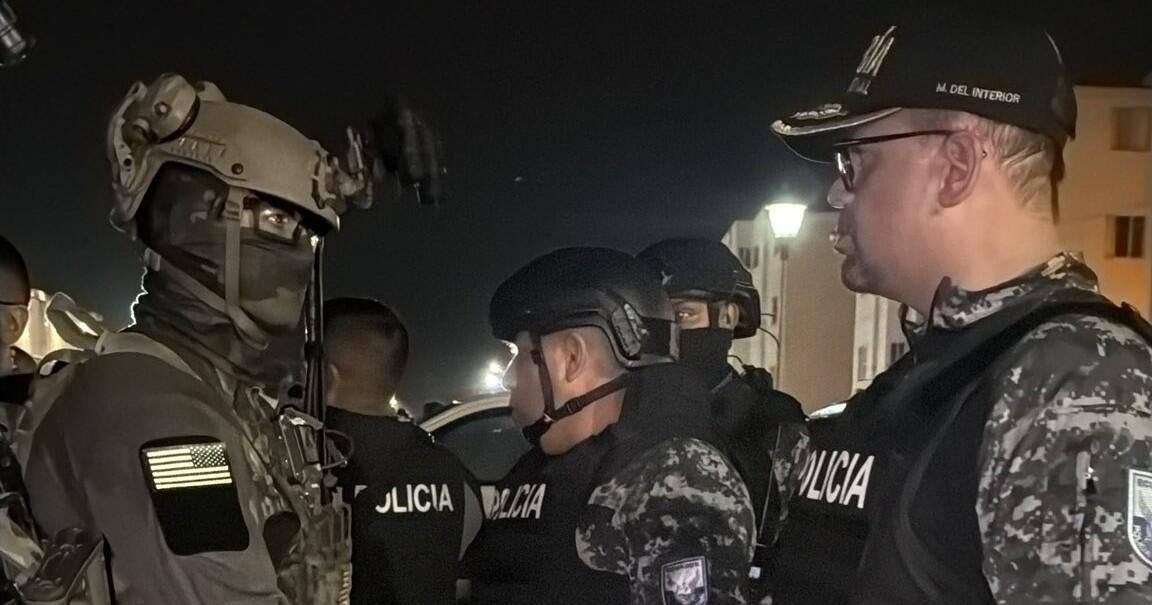
U.S. troops help Ecuador arrest dozens linked to ruthless cartel
The operation "was conducted jointly with U.S. troops and the Drug Enforcement Administration (DEA)," Ecuador's interior minister said.

Americas First: Trump and Latin America
While Secretary of State Marco Rubio's recent travels to Colombia, Ecuador and Peru faced criticism regarding legal overreach and geopolitical tension, the article argues that the United States must prioritize deep economic and security partnerships in Latin America to counter China's growing influence.
Sep 24, 2026 · byThe Hill
Why Trump should designate Ecuador as a major non-NATO ally
Under President Daniel Noboa, Ecuador has restored extradition and expanded military, intelligence and law-enforcement cooperation with Washington.
Sep 24, 2026 · byThe Hill
ACNUR Ecuador: Informe Operacional No. 8 | Agosto 2026
Countries: Ecuador, Colombia, Venezuela (Bolivarian Republic of) Source: UN High Commissioner for Refugees Please refer to the attached file. Contexto operacional ACNUR Ecuador opera en un entorno complejo y cambiante, marcado por factores de seguridad, humanitarios y ambientales. En agosto de 2026, Ecuador recibió 1.441 nuevas solicitudes de asilo, de las cuales 766 correspondieron a personas venezolanas y 675 a personas colombianas. Si bien las solicitudes disminuyeron en comparación con julio de 2026 (64% para venezolanos y 53% para colombianos), aumentaron significativamente frente a agosto de 2025, con incrementos del 72% y 239%, respectivamente. En lo que va de 2026, las personas venezolanas representan el 62% de todas las solicitudes de asilo y las colombianas el 40%, reflejando la persistente necesidad de protección internacional pese a las mayores restricciones de movilidad y acceso al territorio. Los incidentes relacionados con la seguridad continuaron afectando varias zonas de la Costa, entre ellas Guayas, Manabí, Esmeraldas y Santa Elena, incluidos homicidios en espacios públicos durante feriados nacionales, reflejando los desafíos de seguridad que enfrenta el país. Asimismo, la frontera norte continuó siendo un área de especial atención debido a la presencia y actividad de grupos criminales y armados transnacionales en la zona entre Colombia y Ecuador. Estas dinámicas requirieron un monitoreo constante de los posibles riesgos de protección y sus efectos en las comunidades, incluidos refugiados, solicitantes de asilo y otras personas que necesitan protección internacional. Ante estos acontecimientos, las autoridades nacionales mantuvieron sus esfuerzos para enfrentar el crimen organizado y fortalecer la seguridad pública, incluida la extensión del estado de excepción por 30 días en varias provincias y cantones. En paralelo, cambios legislativos fortalecieron el marco para las operaciones de seguridad mediante una mayor coordinación entre las Fuerzas Armadas y la Policía Nacional, así como la cooperación internacional. Los riesgos ambientales añadieron otra dimensión al contexto durante el período. Las autoridades nacionales mantuvieron medidas de preparación ante los posibles impactos del fenómeno de El Niño, que se prevé afecte al país durante los próximos meses. El aumento del nivel del mar y los cambios climáticos han generado preocupación por posibles inundaciones, erosión costera e impactos en los medios de vida y la infraestructura, particularmente en zonas costeras vulnerables. También existe preocupación por posibles efectos en la generación de energía y los servicios esenciales debido a la reducción de los caudales que afectan la generación hidroeléctrica. El terremoto de magnitud 7,4 que afectó el occidente de Colombia se sintió en varias provincias de Ecuador. Como muestra de solidaridad regional, el Gobierno de Ecuador estableció puntos de recolección de ayuda humanitaria para apoyar a las poblaciones afectadas en Colombia. Además, ACNUR continuó participando en discusiones nacionales y técnicas sobre protección y desplazamiento interno. ACNUR participó en el diálogo “Reflexiones sobre el desplazamiento interno en Ecuador” , organizado por FLACSO Ecuador y 3iS, con la participación de la Relatora Especial de las Naciones Unidas sobre los derechos humanos de las personas desplazadas internas. El intercambio aportó evidencia y análisis académico sobre el desplazamiento interno y contribuyó a las discusiones sobre protección y respuesta en Ecuador. En general, el contexto operacional de agosto requirió flexibilidad, monitoreo de riesgos y coordinación con autoridades, socios y otros actores humanitarios. ACNUR mantuvo su enfoque en garantizar el acceso a protección y asistencia para refugiados, solicitantes de asilo y otras personas que necesitan protección internacional, así como sus comunidades de acogida.
Sep 23, 2026 · byReliefWeb
UNHCR Ecuador: Operational Update No. 8 | August 2026
Countries: Ecuador, Colombia, Venezuela (Bolivarian Republic of) Source: UN High Commissioner for Refugees Please refer to the attached file. Operational context UNHCR Ecuador operates in a complex and evolving environment shaped by security, humanitarian and environmental considerations. In August 2026, Ecuador received 1,441 new asylum applications, including 766 from Venezuelans and 675 from Colombians. Applications increased sharply compared to August 2025, rising by 72% and 239% respectively. Venezuelans accounted for 62% of all asylum claims processed in 2026, while Colombians represented 40%, underscoring the continued demand for international protection despite increased border restrictions and reduced mobility. Security-related incidents continued to affect several coastal areas, including Guayas, Manabí, Esmeraldas, and Santa Elena, including targeted killings in public spaces such as beaches during national holidays, reflecting the continued security challenges affecting the country. Also, the northern border remained an area of particular attention given developments involving transnational criminal and armed groups operating in the wider Colombia-Ecuador area. These dynamics continued to require close monitoring of protection risks and their effects on communities, including refugees, asylum-seekers and other people in need of international protection. In light of these developments, national authorities maintained efforts to address organized crime and strengthen public security including the extension of the state of exception for 30 days across several provinces and cantons. In parallel, legislative developments further strengthened the framework for security operations through enhanced coordination between the Armed Forces and the National Police, and international cooperation. Environmental risks added a further layer of complexity during the reporting period. National authorities maintained a high level of preparedness in anticipation of the potential impacts of the El Niño phenomenon, which is expected to affect the country over the coming months. Rising sea levels and changing weather conditions have increased concerns of flooding, coastal erosion, and potential impacts on livelihoods and infrastructure, particularly in vulnerable coastal areas where forcibly displaced people reside. Authorities also expressed concern about the possible effects on energy production and essential services due to reduced water inflows affecting the country’s hydroelectric generation capacity. The 7.4-magnitude earthquake that struck western Colombia was felt across several Ecuadorian provinces. In a demonstration of regional solidarity, the Government of Ecuador established humanitarian aid collection points to support affected populations in Colombia. Additionally, UNHCR continued to contribute to national and technical discussions on protection and internal displacement. UNHCR participated in the dialogue “Reflexiones sobre el desplazamiento interno en Ecuador” , organized by FLACSO Ecuador and 3iS, with the participation of the United Nations Special Rapporteur on the Human Rights of Internally Displaced Persons. The exchange contributed evidence-based analysis and fostered academic reflections on internal displacement, supporting ongoing efforts to strengthen understanding of displacement dynamics and protection responses in Ecuador. Overall, the August operational context required continued flexibility, risk monitoring and coordination with national and local authorities, partners and other humanitarian actors. UNHCR maintained its focus on ensuring access to protection and assistance for refugees, asylum-seekers and other people in need of international protection as well as host communities, while adapting its operational approach to the country’s evolving security and humanitarian environment.
Sep 23, 2026 · byReliefWeb
Colombia | Earthquake - Operation Update #1 (MDRCO036)
Country: Colombia Source: International Federation of Red Cross and Red Crescent Societies Please refer to the attached file. A. SITUATION ANALYSIS Description of the crisis On 10 August 2026 at 07:34 local time, a magnitude 7.4 earthquake struck western Colombia, with its epicentre near the municipality of San José del Palmar in Chocó Department, at a depth of 103 km. The earthquake was followed by multiple aftershocks and was felt across much of the country, affecting densely populated urban centres and rural communities alike. The departments most severely impacted include Chocó, Valle del Cauca, Risaralda, Caldas, and Quindío, while significant impacts were also reported in Antioquia, Cundinamarca, Huila, Boyacá, Tolima, Cauca, Putumayo, Sucre, and Santander. As of 14 September, the National Disaster Risk Management Unit (UNGRD) reports indicate impacts across 16 departments and 500 municipalities, while the earthquake was felt across much of Colombia and reported in Ecuador, Panama, and Venezuela. Search and rescue efforts were concentrated in these departments and, as of this date, operations have concluded. In total, 16 accredited Colombian USAR teams, 4 international support teams from the United States, Ecuador and Israel, as well as 34 other support teams were deployed, comprising a total of 1,849 rescuers. These efforts resulted in a total of 356 people rescued and 259 bodies recovered. According to the UNGRD report of 10 September, in terms of human impact, 778,281 people were reported as affected (364,672 families), with 4,505 people injured and 331 deaths. In terms of infrastructure, 36,327 houses were destroyed, 758 buildings collapsed, and 6,047 buildings and more than 200,000 houses were damaged. Additionally, essential basic services remain in a critical situation, with 4,316 educational facilities and approximately 400 health facilities reported as affected. Likewise, according to the Ministry of Housing, City and Territory, 137 municipalities reported disruptions to water supply, sewerage and solid waste management services, of which 93 have not been able to restore these services. In addition, 286 Colombian Red Cross Society volunteers were themselves directly affected by the earthquake. The impacts of the earthquake are estimated to have caused direct physical damage to structures amounting to COP 42.1 trillion (USD 13.2 billion), equivalent to approximately 2.3 per cent of Colombia’s Gross Domestic Product (GDP). The damage is highly concentrated in Risaralda, Valle del Cauca, Chocó, Caldas and Quindío. (UNDP, 2026)1 . Critical disruptions to electricity, telecommunications, and health services have been reported in several affected areas. Airport closures, damaged roads, communication outages, and continuing aftershocks are affecting access to communities and delaying comprehensive damage and needs assessments, particularly in Chocó, where connectivity remains intermittent and some municipalities remain difficult to reach. Pre-existing vulnerabilities, poor health outcomes, and limited access to health services already constrained the ability of communities to cope with additional shocks. On the day of the earthquake, the Government of Colombia declared a national State of Emergency and activated national and departmental emergency management mechanisms. The Colombian Red Cross Society (Cruz Roja Colombiana – CRC) immediately activated its National Crisis Room and emergency response mechanisms. This response is unfolding against the backdrop of the El Niño phenomenon. The Institute of Hydrology, Meteorology and Environmental Studies (IDEAM)2 confirmed that El Niño conditions are already present in the equatorial Pacific Ocean and atmosphere, with more than 95% probability of strengthening during the second half of 2026 and persisting into the first quarter of 2027, potentially reaching “very strong” intensity comparable to the most significant events recorded since 1950. According to the United Nations Office for the Coordination of Humanitarian Affairs (OCHA)3 , the phenomenon is expected to act as a multiplier of humanitarian risk nationwide, with an estimated 4.3 million people across 508 municipalities (45% of the country) facing severe impacts, particularly water shortages, increased wildfire risk, and rising food insecurity. For the departments already affected by the earthquake, these compounding hazards risk further straining water, health and shelter systems that remain damaged, delaying recovery, and deepening the needs of already vulnerable households.
Sep 22, 2026 · byReliefWeb
This Curious Bird Had Never Been Seen Before, and its Discovery Changed Ecuador–Perhaps Forever
In the late 1990s, a group of scientists were birdwatching in a remote forest in Ecuador when they heard a call like no other. Following the mysterious avian siren, they saw a fairly large bird colored grey, black, and brown standing up on stilted legs like a wading bird. None of them had ever seen […] The post This Curious Bird Had Never Been Seen Before, and its Discovery Changed Ecuador–Perhaps Forever appeared first on Good News Network .
 Sep 22, 2026 · byGood News Network