← News
Topic · Person

Dhubab

7 articles

See also
📰

Latest Dhubab articles

📰

Yemen Faces Growing Humanitarian Risks Following Major Escalation, Warns Action For Humanity

Country: Yemen Source: Action for Humanity Action For Humanity (AFH), one of the leading humanitarian organisations operating in Yemen, is warning that the country's humanitarian situation could deteriorate further following the latest escalation in fighting across western Yemen. Over the past 24 hours, intensified military activity has been reported around Mocha, Dhubab and the Bab al-Mandab area, raising concerns about the humanitarian consequences for civilians and the potential for further displacement. Media and humanitarian monitoring indicate that the situation remains highly fluid as military operations continue. The latest developments come as Yemen continues to face one of the world's most severe humanitarian crises. According to Action For Humanity's most recent situation reporting, more than 174,000 people have been displaced since August 2026, while humanitarian needs continue to grow across conflict-affected communities. Action For Humanity is monitoring developments closely through its teams and partners across Yemen. The organisation is reviewing preparedness and response measures to provide emergency food assistance, multipurpose cash support, water and sanitation assistance, emergency shelter support and rapid assessments of newly displaced communities. Mohammed Bahashwan, Country Director for Action For Humanity Yemen, said: "Here in Yemen, the immediate concern is what happens to the civilians caught in the middle of the ongoing escalation." "Many families here were already struggling to meet their most basic needs before this latest escalation. Every day of renewed fighting increases the risk of displacement, restricts movement and places additional pressure on communities that have already endured years of hardship." "The humanitarian consequences could be significant if the situation continues to deteriorate. Families may lose access to food, clean water, healthcare and sources of income at a time when many have already exhausted their ability to cope." "Action For Humanity is actively preparing to respond. Our teams and partners continue to monitor developments closely and are prepared to support vulnerable families through food assistance, cash support, water and sanitation interventions and other life-saving humanitarian services." "However, humanitarian needs are increasing while funding remains under immense pressure. Yemen remains one of the world's most underfunded crises. Without urgent support, humanitarian organisations will struggle to meet growing needs." Action For Humanity is calling on donors and the international community to increase support for humanitarian operations in Yemen and help ensure vulnerable families can access life-saving assistance. How the Public Can Help £60 could provide a 30-day food parcel for a family affected by the crisis. £80 could provide essential non-food items to a displaced family, helping them meet basic needs during displacement. £150 could provide emergency cash assistance for one month, helping a family cover essential costs such as food, rent and medicine. Action For Humanity is preparing food assistance, water and sanitation support, emergency cash assistance and other humanitarian interventions for vulnerable families affected by displacement and conflict. Donate today and stand with families in Yemen.

Oct 7, 2026 · byReliefWeb
Saudi-backed forces recapture key areas around strait from Houthis in Yemen

Saudi-backed forces recapture key areas around strait from Houthis in Yemen

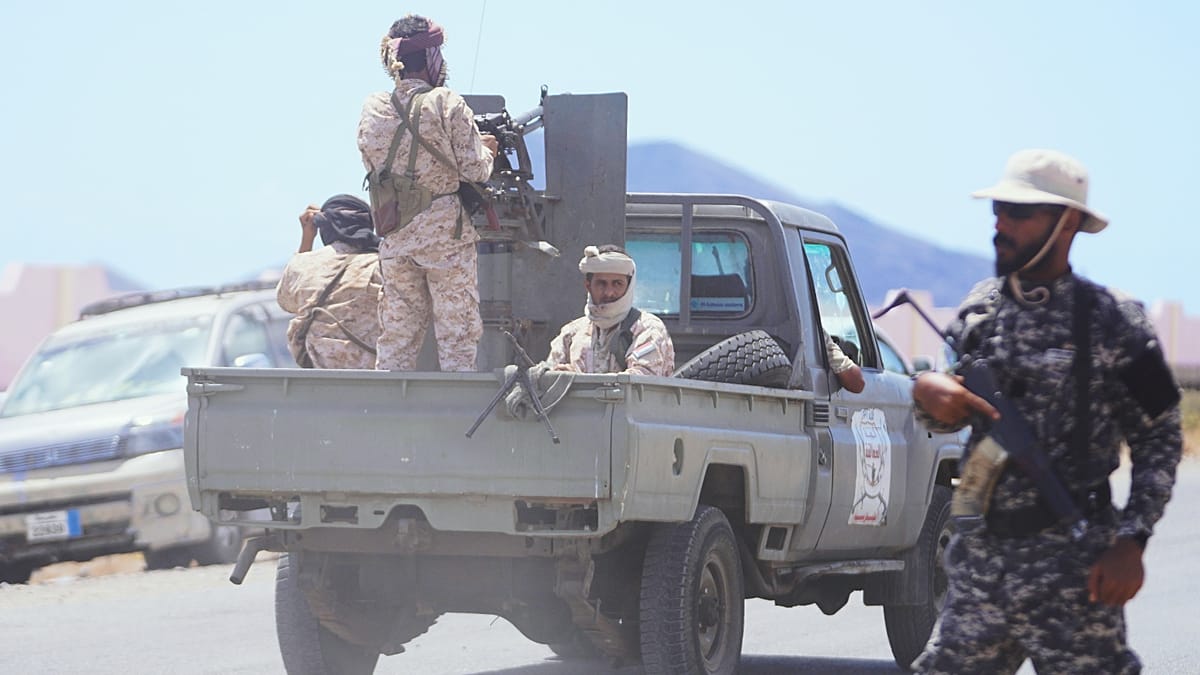
Government push comes as part of major offensive launched under air cover by Saudi military coalition, aiming to retake all territory held by Houthis Forces of the Saudi-led coalition fighting in Yemen have recaptured several key areas around Bab el-Mandeb Strait from Iran-backed Houthi rebels, Yemeni officials said Monday. The officials said forces allied with the internationally recognized government have retaken the crucial town of Dhubab just north of the strait. They also captured the towns of Bab and Hadeid, said the officials, who spoke on condition of anonymity because they were not authorized to speak to reporters. Witnesses said they saw government tanks and forces entering the towns. Continue reading...

Oct 5, 2026 · byThe Guardian
Yemen Conflict Escalation Situation Report: Taiz / West Coast / Bab el-Mandeb, Taiz, Marib, Al-Jawf, Lahj and other affected governorates - Situation Report #3 (Issue date 13 September 2026 | Reporting period 6 - 12 September 2026)

Yemen Conflict Escalation Situation Report: Taiz / West Coast / Bab el-Mandeb, Taiz, Marib, Al-Jawf, Lahj and other affected governorates - Situation Report #3 (Issue date 13 September 2026 | Reporting period 6 - 12 September 2026)

Country: Yemen Sources: Health Cluster, World Health Organization Please refer to the attached file. Key Highlights • The conflict has entered a multi-front, mass-casualty phase. Since Sitrep #2 the Marib front has re-ignited alongside the West Coast and Taiz. Marib City recorded 469 casualties on 9 September, the largest single-day toll of the emergency, followed by 177 on 10 September and 219 on 11 September. Casualties reported in the seven days of this period (1,746) exceed the entire cumulative toll at the last report. • Casualty burden has more than doubled in one week. Cumulative casualties rose from 1,137 (register re-issued 9 September) to 2,883 as of 12 September: 2,379 injuries and 504 deaths. The case-fatality ratio remains at 17%, consistent with blast and shelling injuries reaching hospitals late. Marib now carries 49% of the cumulative burden and Taiz/West Coast 43%; Lahj has emerged as a third recurrent source (149 casualties, 126 of them this period). • DFA forces seized the Bab el Mandeb coast on 10–11 September. Mocha, Dhubab and Perim (Mayyun) Island are under DFA control. Al-Mokha, the casualty collection point for the West Coast and the head of the ambulance corridor to Aden, is no longer accessible to the IRG-side health system; Taiz city has lost its western approaches and must plan for isolation. • Displacement has become a mass movement across six governorates. Exec. Unit for IDPs reports through 11 September, 11,096 displaced families (~77,789 people) verified across Taiz, Lahj, Al-Hodeidah, Aden, Abyan and Shabwah, up sharply from 1,790 households on 4 September and IOM’s 46,000 estimate on 10 September. Taiz accounts for the largest share (6,436 families), followed by Lahj (2,338) and Al-Hodeidah (1,471). Displacement continues, with villages emptied in Maqbanah, Jabal Habashi and Al Ma’afer, overnight departures from Mokha, and reported movement north towards Ibb. Many families have been displaced for a second or third time. In Taiz, an estimated 2,685 women and girls of reproductive age, including 240 pregnant women, are among those registered. IOM suspended operational movements on 11 September due to the deteriorating security environment. • Attacks on health care and civilians in camps. Seven health facilities or assets have been damaged, put out of service or directly hit in Taiz, Lahj and Al-Hodeidah. Asdas IDP camp in Raghwan (Marib) was shelled on 7 September, killing two children and injuring eight. • MoPHP has issued a 72-hour operational package and a formal support request to WHO (9 September): ten ambulances deployed from Aden to Al-Mokha, blood to 22 May Surgical and Aboud hospitals, two supply trucks to Taiz and the West Coast, a unified casualty line list, and nine prioritised requests to WHO led by trauma/anaesthesia supplies, blood-bank consumables and fuel. • WHO's third dispatch is under way. In line with the MoPHP request, surgical supplies, commodities and antibiotics are being dispatched to four hospitals: 22 May Hospital and Al-Gamhoriah Teaching Hospital in Aden, and Marib General Hospital Authority and Kara Hospital in Marib governorate. The Aden consignments are being dispatched on 13 September; the Marib consignments are ready. WHO is also procuring 17,000 single blood bags (450 ml) and 3,000 paediatric blood bags (250 ml), at an estimated cost of US$ 32,000, in response to the MoPHP blood-bank request. The Aden warehouse remains at stock-out for normal saline, sterile surgical gloves, atropine and potassium chloride, and without TESK/trauma kits and anaesthetic drugs.

Sep 15, 2026 · byReliefWeb