





UAE ruling: Filming a violation is legal, but posting it on WhatsApp or social media could land you in court
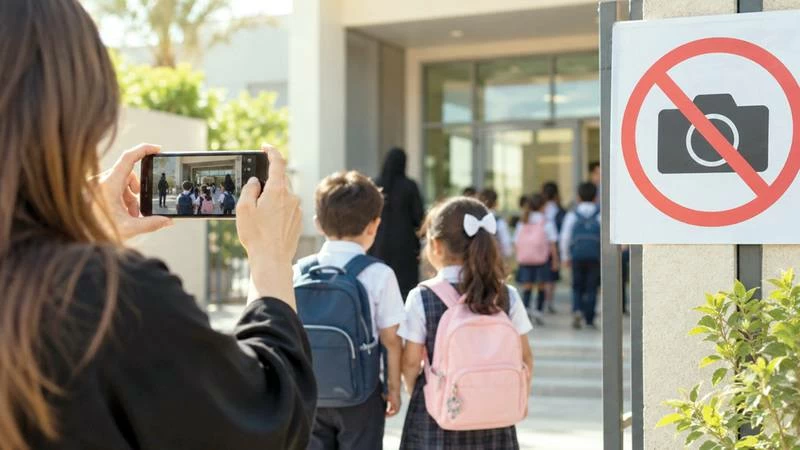
Fujairah: Consumers resort to protecting their rights by filming a violation, with the intention of documenting it. However, the way the video is used after filming may move its owner from the position of a reporter to the position of one accused of defamation, if it turns out that the goal of the recording is to offend. Legal experts stressed the consumer's right to document violations and not to treat the phone as an open permit to publish or share clips with others, stressing that the legal rule is simple in appearance and decisive in its effect, and stipulates that "the violation should not be made a subject of public condemnation before the competent authorities have their say," noting that the line between legitimate documentation and defamation is very fine, determined by the way the clip is used and the entity to which it is sent. They explained that filming an incident that a person believes constitutes a violation and sending it to a competent authority is legally different from publishing it through social media platforms or circulating it among family or professional WhatsApp groups, especially if it is accompanied by accusations or phrases that harm the reputation of a person or establishment, such as ‘Do not buy this product’. They stressed that the right to report does not mean having an absolute right to publish or issue judgments before the competent authorities verify the incident. Consumer case Recently, there were reports about a consumer case in which, insects were found inside a product displayed in a supermarket, and an individual photographed it with his phone, and sent the video to the relevant authorities, fulfilling his duty to protect consumers. However, the supermarket management sued him, turning him from a complainant into someone accused of defamation before the courts. The Court of First Instance acquitted him, while the Court of Appeal convicted him and fined him Dh3,000, and ordered the confiscation of the phone used in the filming, before the case reached the Federal Supreme Court, which confirmed that merely taking the clip is not enough to establish the crime, and that the matter requires proof of bad faith and intent to offend or harm the reputation of others, noting that the consumer filmed the product because he believed there was a violation that required reporting to the competent authorities, and it was not proven that his goal was to defame the store or harm its reputation. Legal advisor and lawyer Mohammed Ali Al Hammadi said that the importance of the ruling does not stop at the acquittal of the accused in the incident in question. Picture credit: Supplied Legal advisor and lawyer Mohammed Ali Al Hammadi said that the importance of the ruling does not stop at the acquittal of the accused in the incident in question, but extends to the principle established by the Federal Supreme Court, which relates to the consumer’s right to document the violations he sees and report them to the competent authorities, as long as this is done in good faith and within the limits required by the reporting process. He added that the ruling drew a clear distinction between documentation for the purpose of reporting and filming for the purpose of defamation or abuse, explaining that “merely carrying a phone and filming a violation does not automatically turn the act into a crime, but rather the intention behind the filming, the purpose of using the clip, and the party to whom it was sent are considered.” He added that a consumer who sees a product that he believes is unfit for consumption, or a violation that affects health, safety, or consumer rights, can document the incident to the extent necessary and refer it to the competent authorities to verify it, stressing that this is completely different from posting the clip on social media or circulating it among others with the intention of offending or defaming. He said that in such cases, the phone may be a means of proving the violation and protecting the right, or it may turn into a tool of crime, and the difference between the two cases is determined by the purpose of the filming, and the method of using the filmed material afterwards. He stated that the principle issued by the Federal Supreme Court carries an important message to consumers about the need to be aware of their right to report violations, while at the same time adhering to the legal limits of this right. What the law says Al-Hammadi continued: “If a consumer witnesses a violation, he has the right to document it to the extent necessary and send it directly to the competent authority. However, this right does not mean publishing the clip widely or turning the report into a means of defaming the establishment or individuals.” He pointed out that legislation differentiates between handing over evidence or a picture to a competent authority for the purpose of verifying a violation, and using the picture or clip with the intention of offending a person or establishment or harming its reputation, because violating privacy or publishing materials with the intention of harming may entail legal responsibility for the perpetrator. He explained that the legal principle presents consumers with three essential elements to consider when filming any violation: the purpose of the filming, how the footage will be used, and the entity to which it will be sent. He emphasised that "the rule consumers should understand is: if you witness a violation, document it only when necessary, and send it only to the competent authority; do not turn the report into a means of defamation." Lawyer and legal consultant Abdullah bin Hatem said that a person may be faced with a real incident that deserves to be reported, but that does not necessarily give him the right to turn it into a campaign against an establishment or person. Picture credit: Supplied For his part, lawyer and legal consultant Abdullah bin Hatem said that describing an act as defamation is not related to the mere existence of a picture or video clip, but rather it looks at the way the image material is used and the accompanying phrases, the extent of its publication, and the purpose of its circulation. He explained that the matter is different when a person goes beyond submitting a report to publishing the clip in front of the public, especially if the publication is accompanied by accusations or descriptions that affect the reputation, or is based on personal opinions and conclusions or information and facts narrated by the owner of the clip without verifying their accuracy or proving them with the competent authorities. He added that a person may be faced with a real incident that deserves to be reported, but that does not necessarily give him the right to turn it into a campaign against an establishment or person, or to issue a prejudgment against them before the official authorities have investigated the incident and taken the necessary measures. Bin Hatem pointed out that social media platforms increase the sensitivity of these incidents, because the clip may spread within hours to thousands of people, which may result in damage that cannot be easily remedied, even if it is later proven that some of the published information was not accurate. He stressed that the main difference is that “the informant presents his evidence to the competent authority, while the one who publishes in front of the public bears the responsibility for what he publishes and the statements and accusations he accompanies it with.” He explained that technological development and the spread of smartphones have made photography a part of daily life, but the ease of recording any incident does not mean that its subsequent use is free from responsibility. Bin Hatem pointed out that good faith is not measured simply by a person saying they intended to report something, but rather by the circumstances of the incident, the method of filming, what they did with the material afterward, and the recipient. He emphasised that consumers should not refrain from documenting violations for fear of repercussions, but at the same time, they should not treat their phones as an open license to publish or defame. He explained that “the rule established by the ruling appears simple on the surface, but it is decisive in its effect: Do not make the violation a subject for public condemnation before the competent authorities have their say.” Limits of photography or videography Lawyer and legal consultant Sarah Al-Baqishi said that documentation remains within the framework of legitimate use when it is linked to a real need to prove an event or situation, and is done only to the extent necessary. Picture credit: Supplied For her part, lawyer and legal consultant Sarah Al-Baqishi said that documentation remains within the framework of legitimate use when it is linked to a real need to prove an event or situation, and is done only to the extent necessary, provided that the image or photographed material is submitted to the competent authority to verify it, and not published publicly or circulated among people, including through family groups or other private communication channels. She added that examples include photographing a product that shows signs of damage or spoilage, a violation related to health and safety, or a situation that the consumer needs to prove exists within a formal complaint. She explained that the consumer should limit the photography to the location of the violation as much as possible, and avoid photographing people or private data that is not related to the report, especially if there is no need to show it to the competent authority. She pointed out that having a picture or video does not give its owner absolute freedom to publish it, as there is a difference between using it as evidence in an official complaint and using it as public content on social media. Al-Baqishi stressed that the best way to protect the person who filed the report is to keep the material, document the time and place of the incident, send it directly to the concerned authority, and leave the task of verifying the violation and taking legal action to the competent authorities.











![Google Messages adding official chat thread that showcases features [Gallery]](https://9to5google.com/wp-content/uploads/sites/4/2026/09/google-messages-thread-1.jpg?quality=82&strip=all&w=1600)