Wegovy
12 articles
Latest Wegovy articles


Weight-loss drug developers line up to tap lucrative market as competition heats up
The weight-loss drug market is booming, with biotech firms racing to capture a slice of the fast-growing sector dominated by Novo Nordisk and Eli Lilly. Analysts expect the weight-loss sector to generate about $100 billion in annual sales in the next decade. The following is a list of weight-loss drugs in development by Novo, Lilly and other companies chasing the next blockbuster treatment: Novo Nordisk Novo Nordisk CEO Mike Doustdar said in September weight-loss pills could capture as much as half of the global obesity drug market by 2030. The company is also developing several experimental weight-loss drugs, including a next-generation injection called amycretin and CagriSema, touted as a potent successor to its blockbuster weight-loss injection Wegovy. Amycretin, which targets GLP-1 and amylin hormones, showed statistically significant weight loss of up to 14.5% at 36 weeks in patients with type 2 diabetes in a mid-stage study. CagriSema produced weaker-than-expected data in two separate late-stage trials. The drug helped overweight patients cut their weight by 22.7% in one of the trials, below Novo's expectations of 25%. Novo filed a marketing application for potential US approval of CagriSema in December. It has also signed licensing agreements for drugs in earlier stages of testing, including a deal worth up to $2 billion with China-based United Laboratories for its "triple-G" weight-loss drug candidate that targets three hormones. Pfizer Pfizer through a buyout last year gained access to Metsera's obesity drugs, such as MET-097i - a GLP-1 therapy designed for a once-monthly injection, compared with weekly treatments from Lilly and Novo. The drug, now known as PF-3944, led to up to 12.3% weight loss in patients without diabetes, with no plateau observed at week 28 when given as a monthly injection, Pfizer said in February. Pfizer said it is targeting 2028 for its first approval in the fast-growing weight-loss drug market. Pfizer's monthly obesity shot showed a side-effect profile similar to rival Novo Nordisk's weekly Wegovy injection, according to data presented at a medical meeting in June. Eli Lilly Lilly said in September its experimental combination weight-loss drug, EloraTZP, outperformed its blockbuster treatment Zepbound in a head-to-head trial. Patients with diabetes on the highest tested dose of EloraTZP lost an average of 23.3% of body weight over 48 weeks, Lilly said, compared with 14.8% for patients on the highest dose of Zepbound in the mid-stage trial. EloraTZP combines tirzepatide, the active ingredient in Zepbound, and experimental drug eloralintide. Lilly is advancing eloralintide, a once-weekly amylin-based obesity drug, into late-stage trials after it helped patients lose up to 20.1% weight in a mid-stage study. Lilly's orforglipron, branded as Foundayo, became the second oral pill for weight loss to gain US approval. Britain's medicines regulator approved Foundayo in August, making the country the first in Europe to greenlight the oral medicine for diabetes and weight management. Eli Lilly said at an industry conference in September that it has captured more than 30% of new patients in the US market for oral obesity treatments, narrowing the early lead gained by Novo with its Wegovy pill. Lilly's next-generation obesity drug retatrutide showed a significant reduction in blood sugar levels and weight in a late-stage trial in March. In May, Lilly said retatrutide helped patients lose more than 28% weight over 18 months in a key trial, positioning the drug for potential regulatory submission and a possible launch of the next-generation drug next year. Roche Roche's experimental dual-acting obesity drug, enicepatide, helped overweight or obese patients with type 2 diabetes lower blood sugar levels and lose an average 15.5% of their body weight in a mid-stage trial. The company plans to start late-stage glycemic-control and cardiovascular outcomes studies in the first half of 2027. Enicepatide was acquired through a $2.7 billion purchase of US biotech firm Carmot Therapeutics in 2023. Its other experimental obesity drug, which it is developing with Denmark's Zealand Pharma, helped patients lose up to 10.7% body weight in a mid-stage study in March. Amgen Amgen is currently conducting six late-stage trials of experimental drug MariTide across obesity and related conditions such as heart disease and sleep apnea. It plans to begin late-stage trials of the drug for diabetes patients this year. In January, an extension study found that MariTide helped people maintain weight loss when given at a lower dose or less frequently. In 2024, data showed MariTide helped overweight patients shed up to 20% of their body weight in a year-long mid-stage trial. Merck Merck in 2024 signed a licensing deal worth up to $2 billion for Chinese biotech Hansoh Pharma's experimental oral drug to treat obesity, becoming a late contender in the race to offer a weight-loss pill to replace weekly shots. The drug, HS-10535, is a GLP-1 receptor agonist candidate similar to Wegovy and Zepbound. Viking Therapeutics Viking Therapeutics said in September that overweight adults with obesity maintained up to 97% of the weight loss achieved with its experimental obesity drug VK2735 after switching from weekly injections to every-other-week dosing for three months in a maintenance study. Patients who switched to monthly dosing maintained up to 90% of their prior weight loss, compared with 61% for those switched to placebo, the company said. The company said in February it plans to test its experimental oral obesity drug in a late-stage study later this year. Viking said last year its oral weight-loss drug, VK2735, helped patients lose 12.2% of their body weight after 13 weeks in a mid-stage trial of 280 overweight adults, missing Wall Street's top-end expectations of 15%. Scholar Rock Last year, the company said its experimental drug, apitegromab, combined with Lilly's Zepbound, helped patients preserve significantly more lean mass in a mid-stage trial. In Scholar Rock's study, patients who received a combination of tirzepatide - the active ingredient in Zepbound - and Scholar's apitegromab lost 3.4 pounds of lean mass after 24 weeks, compared with those on tirzepatide alone, who lost 7.6 pounds of lean mass. Astrazeneca AstraZeneca in January said it will license experimental drugs for obesity and weight-related conditions from CSPC Pharmaceutical Group and collaborate on other projects, paying $1.2 billion upfront and up to $17.3 billion more if milestones are met. The newly licensed drug candidates from CSPC include SYH2082, which is designed for once-monthly dosing, which can help patients stick to weight-loss therapy for longer. The company in June said patients lost 10.5% of their body weight after 26 weeks in a mid-stage trial of its experimental obesity pill, elecoglipron. Structure Therapeutics The company said its once-daily pill, aleniglipron, helped patients lose up to 16.3% or 39 lbs on the 180 mg dose after 44 weeks, compared with a placebo, in a mid-stage trial in March. In June, the company said its experimental GLP-1 obesity pill showed no signs of drug-induced liver injury, while patients continued to lose weight even at lower doses. Structure said 10.4% of patients taking the experimental small-molecule drug, aleniglipron, discontinued treatment. Boehringer Ingelheim Boehringer Ingelheim said in June its experimental obesity drug cut visceral and liver fat while minimizing loss of lean mass in a late-stage study. The drug, survodutide, licensed from Zealand Pharma, is an injectable that mimics the proteins GLP-1 and glucagon to create a feeling of fullness. Trial results announced in April showed patients lost an average of 16.6% of their weight over 76 weeks. Kailera Therapeutics Kailera Therapeutics said in July its oral obesity drug, HRS-7535, known as KAI-7535 outside Greater China, helped patients lose an average 10.9% of their body weight after 44 weeks, compared with 2.5% for placebo, and a mean weight loss of up to 11.1% at week 50. Kailera is also advancing HRS-7535 in a global mid-stage clinical trial in overweight or obese adults. The trial started in April, with data expected next year. In February, Kailera's once-daily drug, ribupatide, helped patients lose up to 12.1% body weight at 26 weeks in a mid-stage study in China. Partner Hengrui Pharma will test oral ribupatide in a late-stage obesity trial in China, while Kailera plans to start a global mid-stage trial this year.
Regeneron weight-loss drug halves muscle loss with Novo's semaglutide
An experimental weight-loss drug being developed by Regeneron used in combination with Novo Nordisk's semaglutide reduced the loss of muscle mass by 50% compared with the loss seen with semaglutide alone in a study of patients with obesity, according to data being presented at a medical meeting. With the explosive popularity of GLP-1 weight-loss drugs such as Novo's semaglutide, sold as Wegovy for obesity, there has been growing concern about significant loss of muscle accompanying rapidly shed pounds. The Regeneron drug, trevogrumab, belongs to a different class of medicines that inhibits the protein myostatin, which is linked to loss of muscle mass. When researchers measured thigh muscle in patients with MRI scans, the addition of a 75-milligram dose of trevogrumab preserved over 70% of muscle mass loss compared with semaglutide alone at 52 weeks, a summary of the data showed. "We confirmed that indeed patients that take GLP-1s lose about 30% of their weight in the form of lean muscle mass, that with trevogrumab we can prevent," said Regeneron executive Boaz Hirshberg, adding the greatest benefit could potentially be for patients who begin treatment with lower muscle mass. Data from the trial of nearly 1,000 patients between the ages of 18 and 65 was being presented at the European Association for the Study of Diabetes conference in Milan on Thursday. Wall Street and the medical community are looking for evidence that next-generation drugs like anti-myostatins can prevent the body from breaking down muscle during weight loss. At least a dozen companies are working on muscle-preserving therapies, with analysts forecasting the medicines could reach $30 billion in annual sales by 2035. The multi-pronged trial initially included a second experimental Regeneron antibody drug, garetosmab. In the first 26 weeks, two participants who received higher doses of trevogrumab in combination with garetosmab died. One death was due to an undetermined cause in a patient with multiple cardiovascular risk factors and the second was caused by cardiac arrest in a person with a history of cardiovascular disease, the company said. Trevogrumab alone showed a safety profile similar to semaglutide, with no unexpected side effects, the company said. The trevogrumab/garetosmab combination led to greater lean-mass preservation than trevogrumab alone but had a high rate of adverse side effects, including muscle spasms. Regeneron said it will not move forward with the triple combination. The mid-stage study was performed as a two-part trial. In one part of the trial, patients on semaglutide alone lost 6.7% of their lean muscle mass over 26 weeks. Those who also took 75 milligrams of trevogrumab lost only 3.3% of muscle mass. The combination with 25 mg of trevogrumab led to 4.7% loss of muscle mass. When patients stopped semaglutide but kept taking trevogrumab, their muscle mass returned to where it started before the study, suggesting the drug could help rebuild the lost muscle, the company said. Regeneron said it has selected the 75-mg once-weekly dose for further studies and plans another mid-stage trial in patients over 65. "What we want to do is concentrate on the quality of weight reduction," Regeneron's Hirshberg said. "We want to find the best way to approach weight reduction, especially in vulnerable patients."

‘Godzilla’ of weight-loss drugs could provide other important health benefits
Though not yet approved by any regulatory agency, retatrutide could help improve blood sugar levels and reduce inflammation The ‘Godzilla’ of weight-loss drugs could help improve blood sugar levels, reduce inflammation and cut a person’s body weight by a quarter, according to the largest study of its kind. Retatrutide mimics three key gut hormones that help control appetite, blood sugar and metabolism: GLP-1, GIP and glucagon. Unlike other drugs such as Wegovy, which primarily targets the GLP-1 pathway to suppress appetite, or Mounjaro, which contains GLP-1 plus GIP to control blood sugar levels, retatrutide also engages the glucagon receptor, which helps increase energy expenditure. Continue reading...
 Sep 29, 2026 · byThe Guardian
Novo Nordisk’s next-gen weight loss drug outperforms Zepbound in new trial
Novo Nordisk says its potential Wegovy successor helped patients lose more weight than Zepbound in a major clinical trial.
 Sep 28, 2026 · byThe Hill
Pharma stock soars 150% on injectables deal with Wegovy maker Novo
Shares in Swedish microcap stock Nanexa more than doubled after the drug-delivery group revealed a licensing deal with European pharma giant Novo Nordisk.
Ozempic and Wegovy linked to nearly 40% fewer asthma attacks
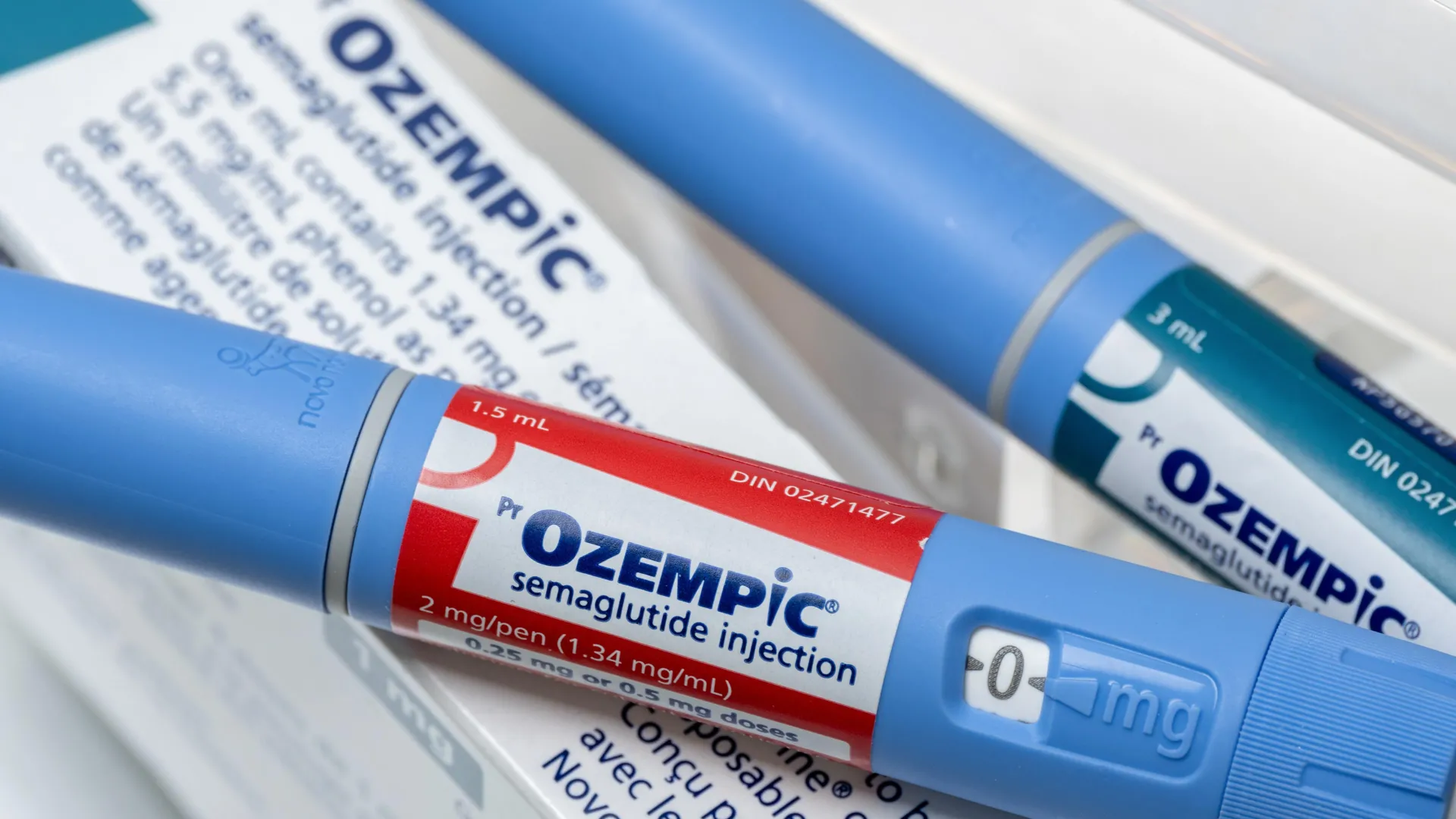
Semaglutide, the drug found in Ozempic and Wegovy, was linked to nearly 40% fewer asthma attacks in a large real-world study. It was also associated with about 20% fewer COPD flare-ups. Researchers say GLP-1 drugs may offer respiratory benefits in addition to their effects on diabetes and obesity, but clinical trials are needed to confirm the findings.
 Sep 9, 2026 · byScienceDaily
Novo Nordisk CEO Concedes Eli Lilly’s Market-Share Gains as Stock Slumps
Novo Nordisk's CEO conceded Eli Lilly is gaining market share even as oral Wegovy hits record prescriptions and the stock keeps falling. The post Novo Nordisk CEO Concedes Eli Lilly’s Market-Share Gains as Stock Slumps appeared first on BeInCrypto .
 Aug 13, 2026 · byBeInCrypto
Most Americans who want to lose weight don’t want to take GLP-1 drugs like Wegovy and Zepbound, new survey says
Men, baby boomers, and postgraduate-degree holders were among those most likely to say they wouldn’t choose medication over dieting.

GLP-1 drugs like Wegovy are all the rage—but people are quitting them too fast to achieve meaningful weight loss, finds 170,000-patient study
Sales of antiobesity drugs hit $1.1 billion in the second quarter of 2023.