← News
Topic · Organization

The Apple Watch

17 articles

See also
📰

Latest The Apple Watch articles

Apple Watch Series 12 and Ultra 4 Score 4/10 for Repairability

Apple Watch Series 12 and Ultra 4 Score 4/10 for Repairability

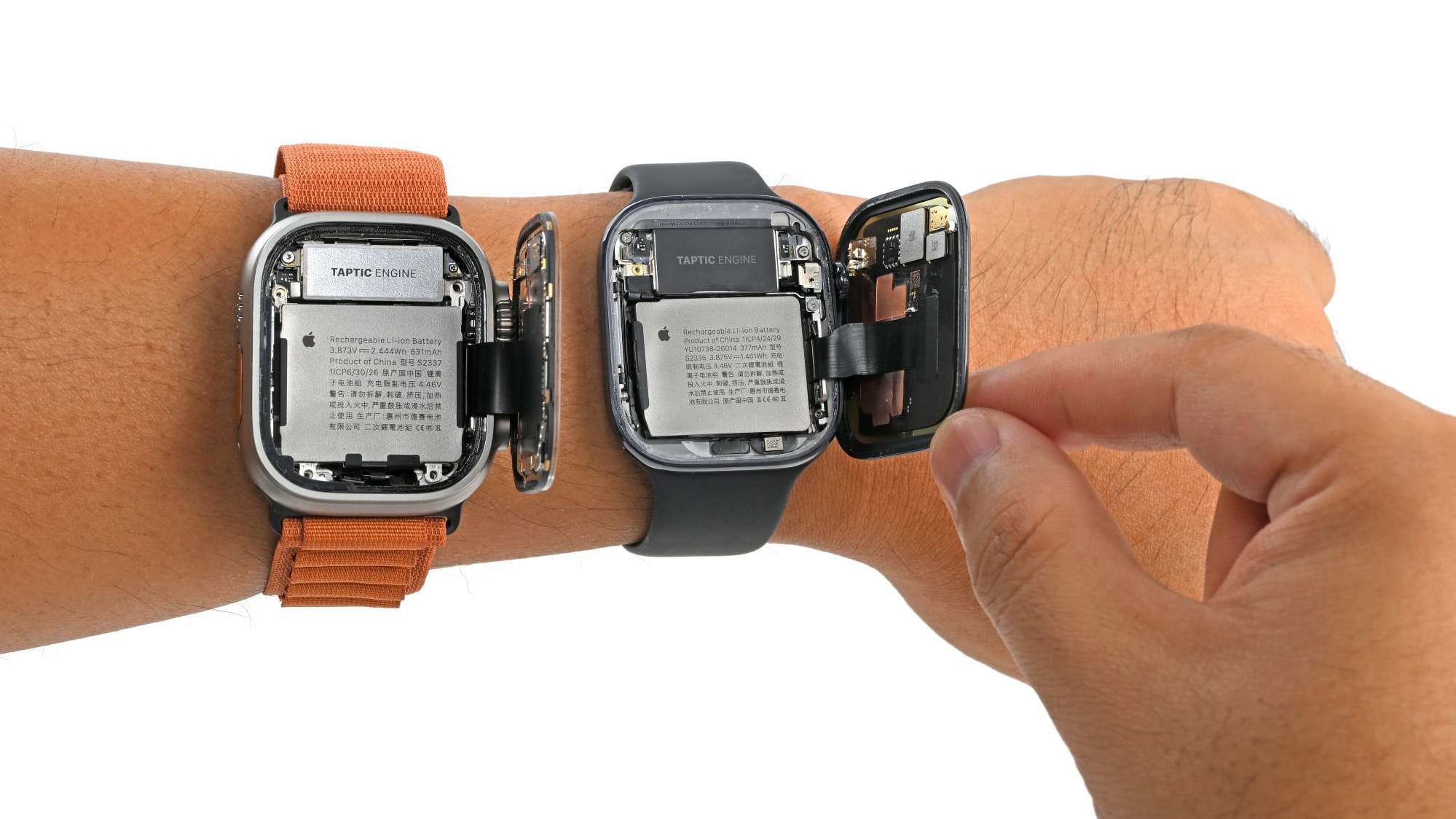
Repair site iFixit this week continued taking apart the latest Apple devices, this time tearing down the Apple Watch Series 12 and the Apple Watch Ultra 4 . The ‌Apple Watch Ultra 4‌ has no repairability changes. There are copious amounts of glue between the casing and the display for waterproofing, and getting to the battery has to be done through the screen. It's easy to slice through the display cable when attempting to pry the device open. The Apple Watch Series 12 is also difficult to get into, but it has a pull tab for the adhesive holding the battery in place, which iFixit says is a "modest" repairability improvement. The Series 12 also drops the ZIF connector that made repairs more difficult, which makes for a simpler process. There is no way to access the battery without removing the display, and no way to swap the display without removing the battery. The ‌Apple Watch Ultra 4‌ has a 2.444Wh battery, up from 2.313Wh in the Apple Watch Ultra 3. The 46mm Series 12 has a 1.461Wh battery, up from 1.403Wh for the Series 11. With the pull tab and the improved cable layout, iFixit gave the Apple Watch Series 12 a repairability score of 4 out of 10, an improvement over the last base model iFixit scored. The Ultra 4 also earned a 4 out of 10, which is the same score iFixit has given to all prior Apple Watch Ultra models. The site points to Google as proof that a wearable can be repairable. Google's Pixel Watch 5 earned a repairability score of 9 out of 10. The Pixel Watch 5's display and battery can be accessed by removing a few screws and a gasket, with no adhesive to deal with. iFixit claims Apple is "out of compliance" with the Right to Repair laws in Washington, Oregon, California, Nevada, Colorado, Minnesota, Texas, New York, Maryland, and Connecticut because it does not sell Apple Watch repair parts or service tools, nor does it offer repair manuals. iFixit says it is preparing evidence to help attorneys general in states with Right to Repair laws understand that Apple is not complying with the law. Related Roundups: Apple Watch 12 , Apple Watch Ultra 4 Buyer's Guide: Apple Watch (Buy Now) , Apple Watch Ultra (Buy Now) Related Forum: Apple Watch This article, " Apple Watch Series 12 and Ultra 4 Score 4/10 for Repairability " first appeared on MacRumors.com Discuss this article in our forums

Oct 7, 2026 · byMacRumors
Apple Watch Series 12, Ultra 4 Owners Report Skin Irritation

Apple Watch Series 12, Ultra 4 Owners Report Skin Irritation

Some Apple Watch Series 12 and Ultra 4 owners have experienced unexpected skin irritation with the new models, according to reports on the MacRumors forums and Reddit . Affected users complain of a burning sensation and redness under the sensor area. The Apple Watch Series 12 and Ultra 4 measure heart rate every five seconds, and some people have wondered if that's the cause of the skin irritation. Along with more frequent heart rate readings, the Series 12 and Ultra 4 have a larger ECG electrode surface, photodiodes in a ring-shaped arrangement, and larger green LEDs. It is unknown if any of these design changes are a problem, but wrist irritation from the Apple Watch is a complaint that dates back to the original model. Apple says reactions can be caused by wearing a band too tight or too loose, or by irritants like soap and sweat under the watch. Some Apple Watch models contain nickel, but it is a low amount below EU limits, and Apple says it's unlikely to be a problem. The Apple Watch case and certain Apple Watch bands have trace amounts of acrylates and methacrylates from adhesives, but Apple says it designs the watch and bands to keep those components away from skin. Apple recommends making sure a band fits well and keeping the Apple Watch, bands, and skin clean and dry. Apple adds that cleaning may be required after workouts or exposure to liquids like sweat, soap, sunscreen, and lotion. Some users have seen the issue clear up after an adjustment period wearing the watch, and cleaning the back of the watch and the band has also helped in some cases. Other users have returned their devices. Apple advises that users experiencing redness, swelling, itchiness, or other irritation consult a physician before putting the watch back on. Related Roundups: Apple Watch 12 , Apple Watch Ultra 4 Buyer's Guide: Apple Watch (Buy Now) , Apple Watch Ultra (Buy Now) Related Forum: Apple Watch This article, " Apple Watch Series 12, Ultra 4 Owners Report Skin Irritation " first appeared on MacRumors.com Discuss this article in our forums

Oct 7, 2026 · byMacRumors
The Apple Watch Series 12 is a good deal at $50 off

The Apple Watch Series 12 is a good deal at $50 off

Several configurations of the Apple Watch Series 12 are $50 off for the first time for the remainder of Amazon’s Prime Big Deal Days. This includes both sizes (42mm and 46mm) of the GPS + Wi-Fi watches, as well as their pricier 5G-ready counterparts. Normally $399, the 42mm Series 12 is currently set at $349.99 […]

Oct 7, 2026 · byThe Verge
Apple Watch Series 9 vs. Series 12 Buyer's Guide: Is It Worth Upgrading?

Apple Watch Series 9 vs. Series 12 Buyer's Guide: Is It Worth Upgrading?

The Apple Watch Series 12 is now available, three years after the Series 9. In that time, Apple has introduced a thinner design, larger displays, faster charging, new water sensors, and a substantially more capable health sensing system. Is that enough to justify replacing a Series 9? Apple discontinued the Series 9 in 2024. The older watch still supports watchOS 27 , so the decision comes down to the hardware and features you would gain. Here are the key differences between the Apple Watch Series 9 and Series 12: Apple Watch Series 9 Apple Watch Series 12 41mm and 45mm cases, 10.7mm thick 42mm and 46mm cases, 9.7mm thick in aluminum and titanium; ceramic cases are 9.85mm thick Aluminum or stainless steel case Aluminum, titanium, or ceramic case Aluminum : Silver, Starlight, Midnight, Pink, and (PRODUCT)RED Aluminum : Dark Bronze, Light Gold, Black, and Space Gray Stainless steel : Silver, Gold, and Graphite Titanium : Radiant Gold and Natural Ceramic : Pearl White and Night Blue Ion-X front glass on aluminum models; sapphire crystal on stainless steel models Ceramic Shield 2 on aluminum models; sapphire crystal on titanium and ceramic models Ceramic and sapphire crystal back Case-matched metal or ceramic and zirconia back 41mm : 904 sq mm display area 45mm : 1,143 sq mm display area 42mm : 970 sq mm display area 46mm : 1,196 sq mm display area LTPO OLED Always-On Retina display LTPO3 wide-angle ‌OLED‌ Always-On Retina display with a 1Hz refresh rate, enabling a live ticking seconds hand on select watch faces S9 chip S11 chip 2GB RAM 4GB RAM Electrical heart sensor Second-generation electrical heart sensor Third-generation optical heart sensor Fourth-generation, always-on optical heart sensor Periodic background heart rate readings Background heart rate readings every five seconds Heart rate variability (HRV) measurements Recovery HRV and overall HRV, measured up to 24 times more frequently Vitals app with overnight health metrics Vitals app with Recovery HRV and a daytime vitals view Readiness app with a daily score and recommendation Step tracking Redesigned step tracking and a Steps watch face complication Wrist temperature sensor Wrist and water temperature sensors Depth gauge to 6 meters and Depth app Microphone Microphone with Voice Isolation Speaker Redesigned speaker with media playback Audio Intelligence, including Sound Recognition, faster Shazam, Live Rewind, and Siri Recap LTE and UMTS on cellular models LTE and 5G RedCap on cellular models Up to 18 hours of normal use; up to 36 hours in Low Power Mode Up to 24 hours of normal use; up to 38 hours in Low Power Mode Up to 80% charge in about 45 minutes Up to 80% charge in about 30 minutes; 15 minutes of charging provides up to 12 hours of normal use Now discontinued From $399 Design The Series 12 uses a similar version of the thinner design introduced with the Series 10. Its display area is about 7% larger in the smaller size and 5% larger in the larger size than the corresponding Series 9 models. The Series 12 figures below are for aluminum models; its ceramic cases are slightly larger and heavier: Apple Watch Series 9 Apple Watch Series 12 Smaller case 41mm × 35mm × 10.7mm 42mm × 37mm × 9.7mm Larger case 45mm × 38mm × 10.7mm 46mm × 40mm × 9.7mm Smaller aluminum model, GPS 31.9 grams 32.2 grams Larger aluminum model, GPS 38.7 grams 39.5 grams Smaller aluminum model, cellular 32.1 grams 31.5 grams Larger aluminum model, cellular 39.0 grams 38.6 grams The Series 12 is noticeably thinner, but the comparable aluminum GPS models are slightly heavier than their Series 9 counterparts. Buyers moving from a stainless steel Series 9 to a titanium Series 12 will see a more substantial weight reduction because the case material has changed. Is It Worth Upgrading? For Series 9 owners, the Series 12 is a meaningful cumulative upgrade, particularly if you use your watch for training and recovery. Its more frequent heart rate and HRV readings support Readiness, Recovery HRV, and daytime vitals, while the redesigned case provides a larger, squarer display with a more modern feel. The depth gauge and water temperature sensor also add useful information for swimmers and snorkelers. Those improvements are less compelling if you mainly use your watch for notifications, everyday activity tracking, and occasional workouts. The Series 9 still has an always-on display, ECG, wrist temperature sensing, Double Tap, sleep apnea and hypertension notifications, and support for ‌watchOS 27‌. ‌Siri‌ AI is also available on the Series 9 when paired with a compatible iPhone. The Series 12 also has a slightly larger battery and charges faster, but likely not by enough to justify an upgrade alone. The Series 12's Audio Intelligence features may strengthen the case for some users, especially Sound Recognition for people who are deaf or hard of hearing. Live Rewind and ‌Siri‌ Recap will arrive in beta in late 2026. Which to Buy Today? For a new purchase, the Series 12 is clearly the better choice. It offers three generations of accumulated improvements at the same $399 starting price the Series 9 had when new. The older model makes sense only at a substantial discount if you are satisfied with its existing health features. A used or refurbished Series 9 can still be good value, but check its battery health, physical condition, and warranty before comparing prices. A worn battery could quickly erase the saving. Related Roundup: Apple Watch 12 Buyer's Guide: Apple Watch (Buy Now) Related Forum: Apple Watch This article, " Apple Watch Series 9 vs. Series 12 Buyer's Guide: Is It Worth Upgrading? " first appeared on MacRumors.com Discuss this article in our forums

Oct 6, 2026 · byMacRumors
Upgrading From an Older Apple Watch? Here's How the New Features Stack Up

Upgrading From an Older Apple Watch? Here's How the New Features Stack Up

The Apple Watch has received some incremental updates in recent years, with significant upgrades becoming fewer and farther between as the device has progressed. Since the Apple Watch's generation-over-generation enhancements are relatively small, it is all the more important to consider when an upgrade is justified and whether an older model could suffice for your needs. The Apple Watch Series 12 brings a more substantial set of changes than the Series 11, which was one of the smallest refreshes in the device's history. While Apple has discontinued previous Series models, older watches may still be available at lower prices from third-party retailers or secondhand. Read on to see the breakdown below for each new feature, change, and improvement that was added with each Apple Watch model compared to its direct predecessor. Viewing each generation's changes in this way helps weigh up the accumulative upgrades one receives by skipping multiple generations when buying a new device, as well as get a sense of which generations offered the biggest overall upgrades. Apple Watch Series 12 (2026) S11 chip (based on A20 Pro) 4GB of RAM New Health Sensing System Second-generation electrical heart sensor Fourth-generation, always-on optical heart sensor Background heart rate measurements every five seconds throughout the day Heart rate variability measured up to 24x more often Recovery HRV metric Readiness app Daytime view in the Vitals app More accurate step tracking Steps and real-time heart rate watch face complications Audio Intelligence with Sound Recognition and automatic Shazam detection Live Rewind and Siri Recap Ceramic Shield 2 front glass, 60% tougher than Series 11's Ion-X glass (aluminum models only) Aluminum or titanium and zirconia back replaces metal and sapphire crystal back Up to 10 hours of outdoor workout tracking (25% longer than Series 11) 15 minutes of charging provides up to 12 hours of normal use (up from eight hours) Five minutes of charging provides up to 10 hours of sleep tracking (up from eight hours) Aluminum and titanium cases are 1mm wider and around two grams heavier Slightly larger bezels and display area is approximately 2% smaller despite unchanged screen resolutions Ceramic case option introduced in Pearl White and Night Blue, with slightly larger dimensions than aluminum and titanium models Dark Bronze, Light Gold, and Black aluminum finishes replace Silver, Rose Gold, and Jet Black; Space Gray remains available Radiant Gold titanium replaces Gold and Slate; Natural titanium remains available Apple Watch Series 11 (2025) 2x more scratch-resistant Ion-X glass (aluminum models only) 5G connectivity (cellular models only) 7–10% larger battery Space Gray aluminum option reintroduced Apple Watch Series 10 (2024) Refined design with a thinner casing, display with more rounded edges and a wider aspect ratio, and front glass that extends further over the sides for a higher screen-to-body ratio 42mm and 46mm case sizes Larger displays LTPO3 display for faster refresh rate in always-on mode, enabling a live ticking seconds hand on select watch faces Wide-angle OLED (up to 40% brighter when viewed at an angle) S10 chip (same CPU as S9, but more compact) Water temperature sensor Depth app and Depth gauge to 6m Microphone with voice isolation Redesigned speaker with media playback Metal back with larger charging coil and integrated antenna Faster charging (0–80% in about 30 minutes) Titanium casing replaces stainless steel option, now in Silver (matches previous stainless steel casing, Apple Watch Hermès only), Gold, Slate, and Natural Starlight, Midnight, Pink, and (PRODUCT)RED finishes discontinued, replaced with Silver, Rose Gold, and polished Jet Black finishes Apple Watch Series 9 (2023) Retina display with up to 2,000 nits of brightness Display can get dimmer in dark rooms and at night (down to 1 nit of brightness) Double tap gesture Wrist flick gesture Sleep apnea detection Hypertension detection S9 chip (based on A15 Bionic) 2GB of RAM 4-core Neural Engine (2x faster than Series 8) ‌Siri‌‌ processed on-device for requests that do not need information from the internet ‌‌Siri‌‌ can access health and fitness data 25% more accurate dictation Second-generation Ultra Wideband chip Precision Finding for iPhone 15 models HomePod proximity integration 64GB storage Pink aluminum casing introduced Apple Watch Series 8 (2022) S8 chip (same CPU as S6) More powerful gyroscope and high dynamic range accelerometer ‌Crash Detection Body temperature sensor Wrist temperature sensing during sleep mem Cycle tracking with retrospective ovulation estimates Blue and Green aluminum casings discontinued, Silver aluminum reintroduced Apple Watch Edition discontinued Apple Watch Series 7 (2021) 41mm and 45mm case sizes 1.7mm display borders for almost 20% more screen area than Series 6 QWERTY keyboard Up to 70% brighter display than Series 6 indoors when wrist is down S7 chip (Same CPU as S6) Crack-resistant front crystal (50% thicker) IP6X dust resistance Fast charging for up to 80% charge in about 45 minutes (33% faster than Series 6) Silver and Space Gray aluminum casings discontinued, Midnight, Starlight, and Green introduced Apple Watch Series 6 (2020) Up to 2.5x brighter always-on display Access Notification Center, Control Center, and Complications when display is asleep S6 chip (based on A13 Bionic, 20% faster than S5) 1.5GB of RAM Always-on altimeter First-generation Ultra Wideband chip 2.4GHz and 5GHz Wi-Fi Blood oxygen sensor Faster charging for a full charge in under 1.5 hours Improved battery life for tracking certain workouts, such as indoor and outdoor runs Blue and (PRODUCT)RED aluminum casing options introduced Space Black stainless steel casing available with Apple Watch Hermès only, Graphite option introduced Ceramic Apple Watch Edition discontinued Apple Watch Series 5 (2019) Always-on Retina display Force Touch removed S5 chip Compass 32GB storage Apple Watch Edition reintroduced with White Ceramic, Natural Titanium, and Space Black Titanium casing options Apple Watch Series 4 (2018) 40mm and 44mm case sizes Over 30% larger display with curved corners 3.0mm display borders S4 chip (2x faster than S3) Gyroscope and accelerometer Barometric altimeter Fall detection 2.4GHz Wi-Fi Optical heart sensor and electrical heart sensor for ECG 16GB storage Digital Crown with haptic feedback 50% louder speaker Relocated microphone for reduced echo and better sound quality Faster charging for a full charge in 1.5 hours Gold stainless steel casing introduced Apple Watch Edition discontinued Apple Watch Series 3 (2017) S3 chip (70% faster than S2) Barometric altimeter Bluetooth 4.2 ‌Siri‌ able to speak through the onboard speaker LTE cellular model available with red Digital Crown Rose Gold aluminum casing discontinued Gray Ceramic Apple Watch Edition model introduced Apple Watch Series 2 (2016) Retina display with up to 1,000 nits of brightness (2x brighter than previous generation) S2 chip (dual‑core) 1GB of RAM GPS and GLONASS receiver Water resistant up to 50 meters Gold and Rose Gold aluminum casing options added 18K Gold and Rose Gold Apple Watch Edition discontinued, Ceramic model introduced in White Apple Watch Nike+ variant introduced The Series 12 has a stronger case than the Series 11 as an upgrade in general, but most Series 11 owners still have little reason to get a new device. Its new heart sensors, more frequent HRV measurements, Readiness app, and longer workout battery life matter most if you rely on your Apple Watch for training and recovery insights. Sound Recognition may also appeal to deaf or hard of hearing users, while the ceramic case offers a finish unavailable with the Series 11. Upgrading from a Series 10 brings these changes alongside the Series 11's 5G connectivity on cellular models and longer rated everyday battery life. From a Series 9, you would also gain the thinner Series 10 design, larger display, depth gauge, and water temperature sensor. The cumulative upgrades become more compelling for Series 8 users and older, particularly if battery wear is affecting daily use. Series 7 owners gain Crash Detection and temperature sensing as well as the newer design and Series 12 health features. The biggest differences will be felt by those with a Series 6 or older, though the condition of your current watch and the cost of replacing it still matter. watchOS 27 supports Series 9 and later, leaving the Series 8 and older without the latest major software release. That does not mean they will immediately stop working or receiving all security updates, but they are now considered old devices. If you are shopping for a replacement, a discounted or secondhand Series 11 may offer better value if you do not need the Series 12's health features, providing you can find it at a sufficiently low price. watchOS 26 is not supported by the Series 5 or older, so anyone with one of these devices should definitely consider upgrading soon. Looking to the future, it looks like next year's Apple Watch Series 13 could offer some major upgrades including a redesign and new sensors. This could make it a great upgrade for those with a Series 11 or older. Related Roundup: Apple Watch 12 Buyer's Guide: Apple Watch (Buy Now) Related Forum: Apple Watch This article, " Upgrading From an Older Apple Watch? Here's How the New Features Stack Up " first appeared on MacRumors.com Discuss this article in our forums

Oct 2, 2026 · byMacRumors
Siri AI Coming to HomePod

Siri AI Coming to HomePod

Apple's smarter, more capable version of Siri is expanding to the HomePod , according to details found by code sleuth pdfu . According to pdfu, ‌HomePod‌ Software 27 includes the system behind ‌Siri‌ AI, called "Linwood," along with new status lights in the ‌Siri‌ AI colors. Since ‌HomePod‌ Software 27 is out and ‌Siri‌ AI isn't available on existing HomePods, it's possible support will be limited to new ‌HomePod‌ models. Get ready for Siri AI on HomePod. audioOS 27 includes Linwood, the system behind Siri AI, plus a new look and sound for Siri on HomePod. May require new hardware. The new status lights emphasize white, blue and orange, matching Siri AI's palette on other devices. 🔊 Sound on pic.twitter.com/jZKzLx946y — pdfu (@itspdfu) September 23, 2026 Rumors suggest Apple is working on an updated HomePod mini , and the main upgrade will be a faster processor. Apple is expected to equip it with an S9 chip or newer, and it's possible the ‌HomePod mini‌ could even get the latest S11 chip that's in the Apple Watch Series 12. The Apple Watch Series 9 and later support ‌Siri‌ AI, though a connected iPhone with Apple Intelligence is required for the ‌Siri‌ functionality. The next ‌HomePod mini‌ models are expected to work in the same way, offering some ‌Siri‌ AI and ‌Apple Intelligence‌ features when used with a compatible iPhone. The ‌HomePod mini‌ isn't expected to get a redesign, but along with an updated processor, Apple could add its N1 networking chip, a newer Ultra Wideband chip, and updated colors. The Apple TV 4K is also expected to get a processor capable of supporting ‌Siri‌ AI, and Apple is working on a dedicated home hub with ‌Siri‌ AI integration. All of the new products, ‌HomePod mini‌ included, could launch as soon as October . Apple is also working on an updated full-size ‌HomePod‌, but it isn't clear when it will launch . Related Roundups: HomePod , HomePod mini Tag: Siri Buyer's Guide: HomePod (Caution) , HomePod Mini (Don't Buy) Related Forum: HomePod, HomeKit, CarPlay, Home & Auto Technology This article, " Siri AI Coming to HomePod " first appeared on MacRumors.com Discuss this article in our forums

HomePodneutral
Sep 23, 2026 · byMacRumors
Apple Watch Series 10 vs. Series 12 Buyer's Guide: Should You Upgrade?

Apple Watch Series 10 vs. Series 12 Buyer's Guide: Should You Upgrade?

The Apple Watch Series 12 is now available, two years after the Series 10 introduced the current thinner design. But is it worth upgrading? While last year's Series 11 brought just four changes , the Series 12 is a much more substantial update, with a new chip, twice as much RAM, redesigned health sensors, exclusive health and audio features, tougher cover glass, 5G connectivity, and new case materials. The Series 12 starts at the same $399 price as the Series 10 did in 2024. Apple has now discontinued the Series 10, but remaining units may still be available from third-party retailers and on the refurbished or second-hand market. Here are all of the key hardware and feature differences between the Apple Watch Series 10 and Apple Watch Series 12: Apple Watch Series 10 Apple Watch Series 12 S10 chip (2024) S11 chip (2026) 2GB RAM 4GB RAM Electrical heart sensor Health Sensing System with second-generation electrical heart sensor Third-generation optical heart sensor Fourth-generation, always-on optical heart sensor Periodic background heart rate tracking High-frequency background heart rate tracking every five seconds Heart rate variability Recovery HRV and overall HRV, measured up to 24x more frequently Vitals app with heart rate, respiratory rate, wrist temperature, and sleep duration Vitals app with heart rate, respiratory rate, wrist temperature, sleep duration, and HRV, plus daytime vitals Readiness app with daily score and recommendation Standard step tracking Redesigned pedometer model with more accurate all-day step tracking Steps watch face complication Audio Intelligence, including Live Rewind, Siri Recap, Sound Recognition, and faster Shazam Ion-X front glass (aluminum models) Ceramic Shield 2, 60% tougher than Ion-X (aluminum models) Metal and sapphire crystal back Case-matched metal or ceramic and zirconia back Aluminum or titanium case Aluminum, titanium, or ceramic case Aluminum : Jet Black, Rose Gold, and Silver Aluminum : Dark Bronze, Light Gold, Black, and Space Gray Titanium : Slate, Gold, and Natural Titanium : Radiant Gold and Natural Ceramic : Pearl White and Night Blue Hermès : Silver titanium Hermès : Silver and Radiant Gold titanium LTE and UMTS (cellular models) LTE and 5G RedCap (cellular models) Up to 18 hours of normal use Up to 24 hours of normal use Up to 36 hours in Low Power Mode Up to 38 hours in Low Power Mode 15 minutes of charging for up to eight hours of normal use 15 minutes of charging for up to 12 hours of normal use Eight minutes of charging for up to eight hours of sleep tracking Five minutes of charging for up to 10 hours of sleep tracking Now discontinued From $399 Design and Display The Series 12 retains the same basic design introduced by the Series 10, including 42mm and 46mm size options and a 9.7mm-thick case. Nevertheless, Apple has made some subtle dimensional changes. Both sizes are now 1mm wider, and every equivalent aluminum or titanium configuration is between 2.1 and 3.3 grams heavier than its Series 10 counterpart. At the same time, the display has shrunk slightly . Resolution is unchanged, but the active display area is around 2% smaller on both sizes. The combination of a wider, receded case and smaller display produces thicker borders around the screen. Here is how the 46mm models compare: 46mm Apple Watch Series 10 Apple Watch Series 12 Dimensions 46mm x 39mm x 9.7mm 46mm x 40mm x 9.7mm Resolution 416 x 496 pixels 416 x 496 pixels Display area 1,220 sq mm 1,196 sq mm Aluminum (GPS) 36.4 grams 39.5 grams Aluminum (Cellular) 35.3 grams 38.6 grams Titanium 41.7 grams 44.9 grams The 42mm models compare as follows: 42mm Apple Watch Series 10 Apple Watch Series 12 Dimensions 42mm x 36mm x 9.7mm 42mm x 37mm x 9.7mm Resolution 374 x 446 pixels 374 x 446 pixels Display area 989 sq mm 970 sq mm Aluminum (GPS) 30 grams 32.2 grams Aluminum (Cellular) 29.3 grams 31.5 grams Titanium 34.4 grams 36.5 grams The Series 12 also marks the return of a ceramic Apple Watch for the first time since the Series 5 Edition in 2019. The ceramic models are larger and heavier than their aluminum and titanium counterparts: Ceramic 46mm 42mm Dimensions 47mm x 41mm x 9.85mm 43mm x 37mm x 9.85mm Pearl White 51.3 grams 41.7 grams Night Blue 52.9 grams 42.8 grams Is It Worth Upgrading? Two generations on, the Series 12 represents a meaningful cumulative upgrade over the Series 10, but it is far from an essential replacement. The two models share the same basic design, display brightness, resolution, storage capacity, core safety features, and more. The Series 10 is only two years old, and supports watchOS 27 and ‌Siri‌ AI, so it remains a capable and modern Apple Watch. For existing Series 10 owners, upgrading is easiest to justify if health and fitness tracking is a priority. The Series 12's high-frequency heart rate sensing, Recovery HRV, daytime vitals, Readiness score, and improved step tracking provide substantially more useful training and recovery data. Sound Recognition may be compelling for deaf or hard of hearing users, while 5G, faster charging, tougher cover glass on aluminum models, and the ceramic case provide additional reasons for some buyers to upgrade. Beyond this, the practical difference between the two devices is relatively small. The Series 12 is also slightly wider and heavier, and its active display area is around 2% smaller despite retaining the same resolution. Its 24-hour battery rating is also not directly comparable with the Series 10's 18-hour figure because Apple changed its testing methodology. If your Series 10 still comfortably lasts through the day and you are satisfied with its existing health features, there is no strong general-purpose reason to replace it. Which to Buy Today? At its $399 starting price, the Series 12 is the obvious choice over a Series 10 selling for anything close to its original price. The newer model offers a better health sensing system, twice as much RAM, the S11 chip, exclusive Audio Intelligence features, faster charging, 5G, and more case options. A saving of only $50 to $100 is unlikely to compensate for giving up those improvements. The Series 10 becomes attractive when it is at least around $150 cheaper than an equivalent Series 12 and is in excellent condition. It still offers an always-on display, ECG, temperature sensing, sleep apnea and hypertension notifications, advanced workout tracking, and ‌Siri‌ AI. Buyers should pay particular attention to battery health and warranty coverage, since replacing a degraded battery could quickly erode the saving. Related Roundup: Apple Watch 12 Buyer's Guide: Apple Watch (Buy Now) Related Forum: Apple Watch This article, " Apple Watch Series 10 vs. Series 12 Buyer's Guide: Should You Upgrade? " first appeared on MacRumors.com Discuss this article in our forums

Sep 22, 2026 · byMacRumors
Hands-On With the Apple Watch Series 12

Hands-On With the Apple Watch Series 12

The Apple Watch Series 12 came out today, and we picked one up to get a look at the new feature set. There are no major external changes, but Apple updated the device's internals and health sensors. Subscribe to the MacRumors YouTube channel for more videos. The Apple Watch Series 12 has the same design as the Series 11, but it does come in different colors. The aluminum models are available in a light gold shade that's distinct from the rose gold Apple used last year, as well as dark bronze, black, and space gray. There are also ceramic models in pearl white and night blue, and polished titanium models in radiant gold and natural. On the aluminum models, Apple is now using Ceramic Shield 2 instead of Ion-X glass, and the new material is 60 percent tougher. You might not be able to tell a Series 11 apart from a Series 12 when looking at the front, but the back has been updated. Apple says the upgraded sensors make the Apple Watch Series 12 the most accurate wearable for heart rate sensing. The Series 12 has a Health Sensing System that pairs the new sensors with an S11 chip that's faster than the S10 in the prior-generation model. It takes heart rate readings every five seconds now and measures heart rate variability as often as every five minutes. It's early, but so far we haven't seen the higher sampling rates cause excessive battery drain. The Apple Watch Series 12 is still rated for all-day battery life, and charging is faster this year. You can get up to 12 hours of normal usage from a 15-minute charge, but you need to use the Apple Watch charger that comes with the Series 12. Older chargers won't give you the faster charging rate. The Health Sensing System powers a readiness score that lets you know whether to go all-out on activity or take a rest day. It's based on metrics such as recent activity, vitals, and sleep, and will adjust as the day continues. It takes about a week of data collection from the Series 12 before you start getting a readiness score. The S11 chip will power Live Rewind and Siri Recap features, but those won't be available until later this year. Even though the Apple Watch hasn't seen a design refresh, the health features make this a decent update. You may not want to upgrade if you have the Series 10 or Series 11, but anything older is worth upgrading from. The Series 12 comes in 42mm and 46mm size options with pricing starting at $399. Related Roundup: Apple Watch 12 Buyer's Guide: Apple Watch (Buy Now) Related Forum: Apple Watch This article, " Hands-On With the Apple Watch Series 12 " first appeared on MacRumors.com Discuss this article in our forums

Sep 18, 2026 · byMacRumors
Apple Watch Series 12 vs. Ultra 4 Buyer's Guide

Apple Watch Series 12 vs. Ultra 4 Buyer's Guide

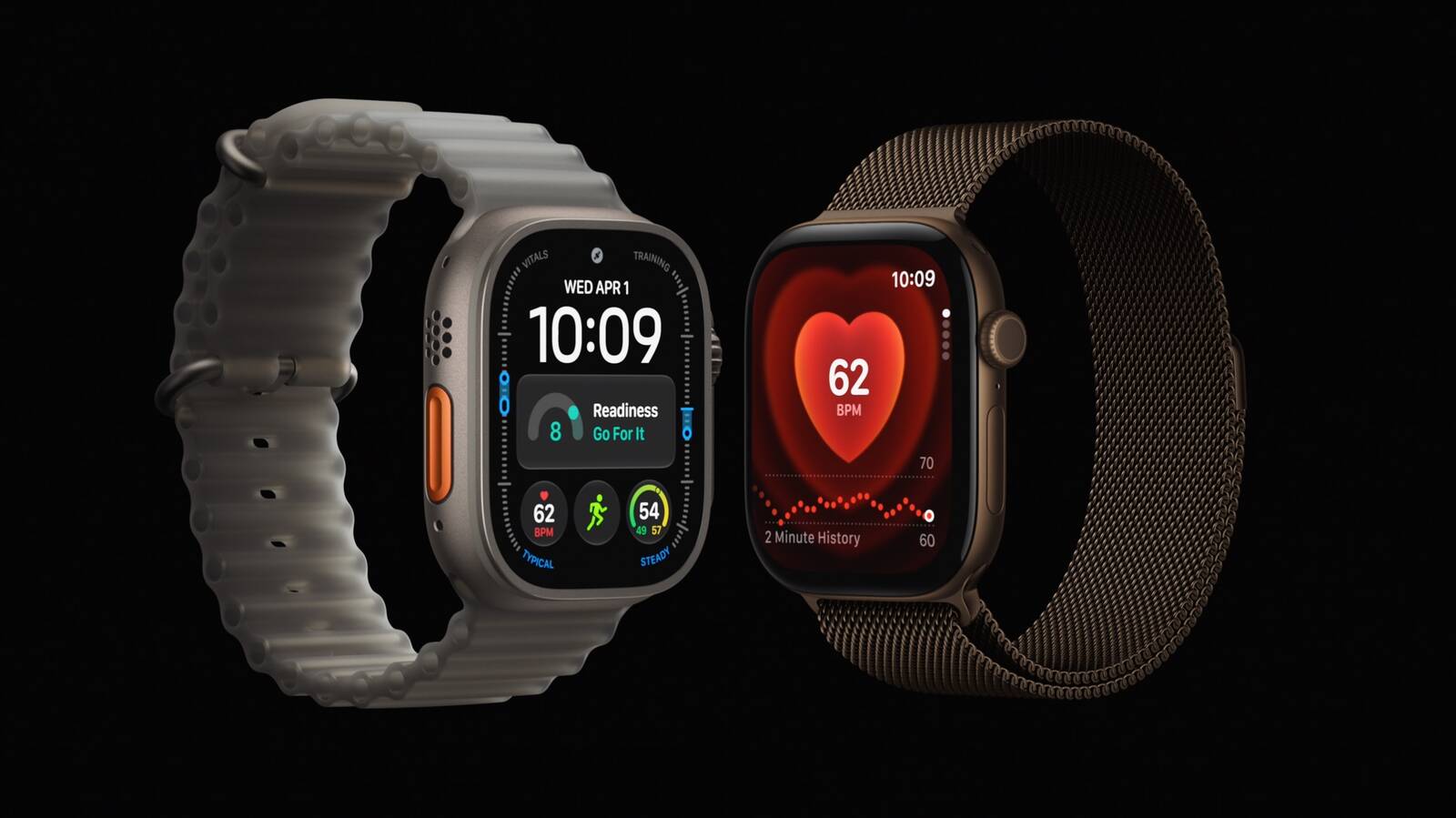
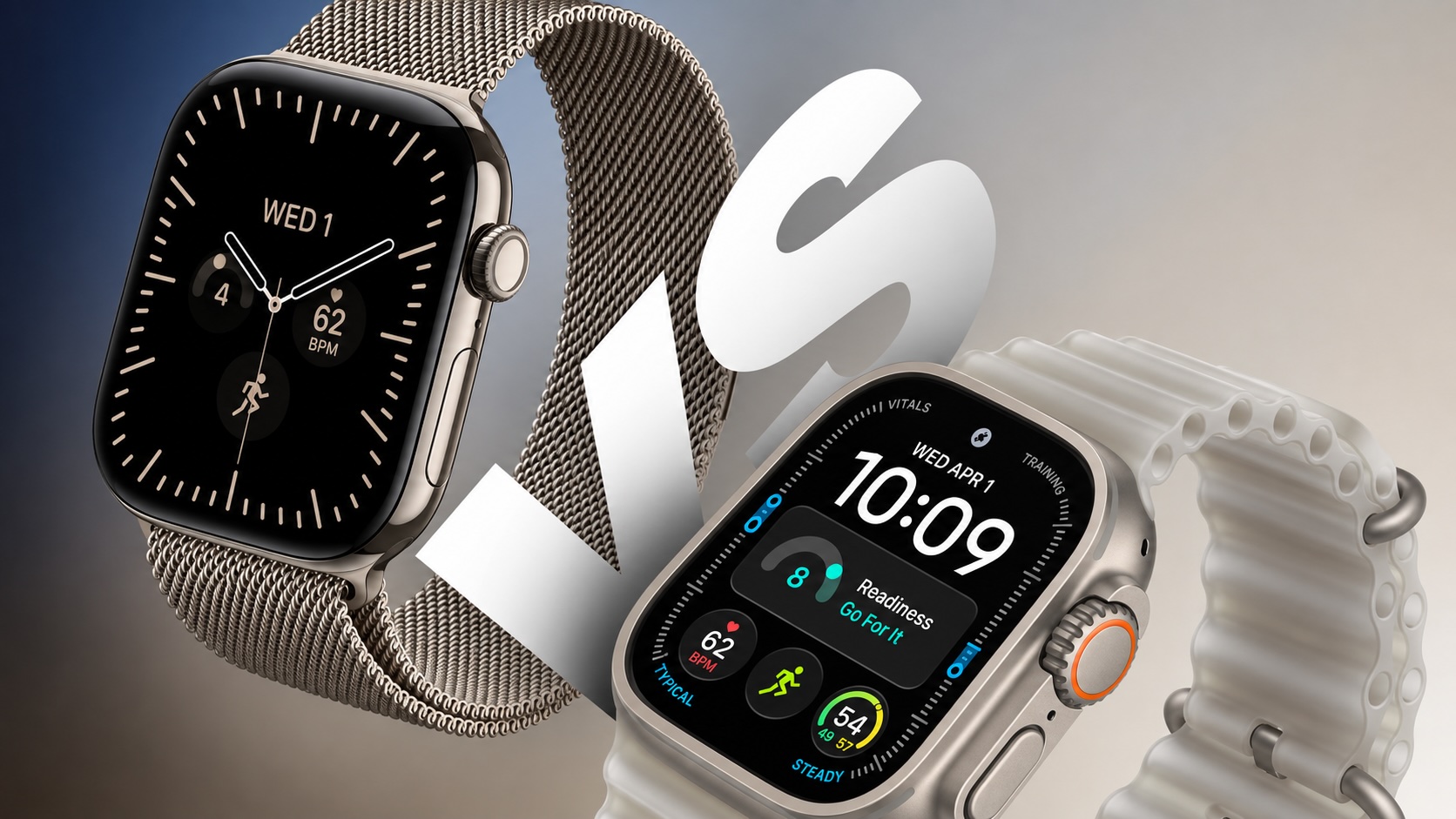
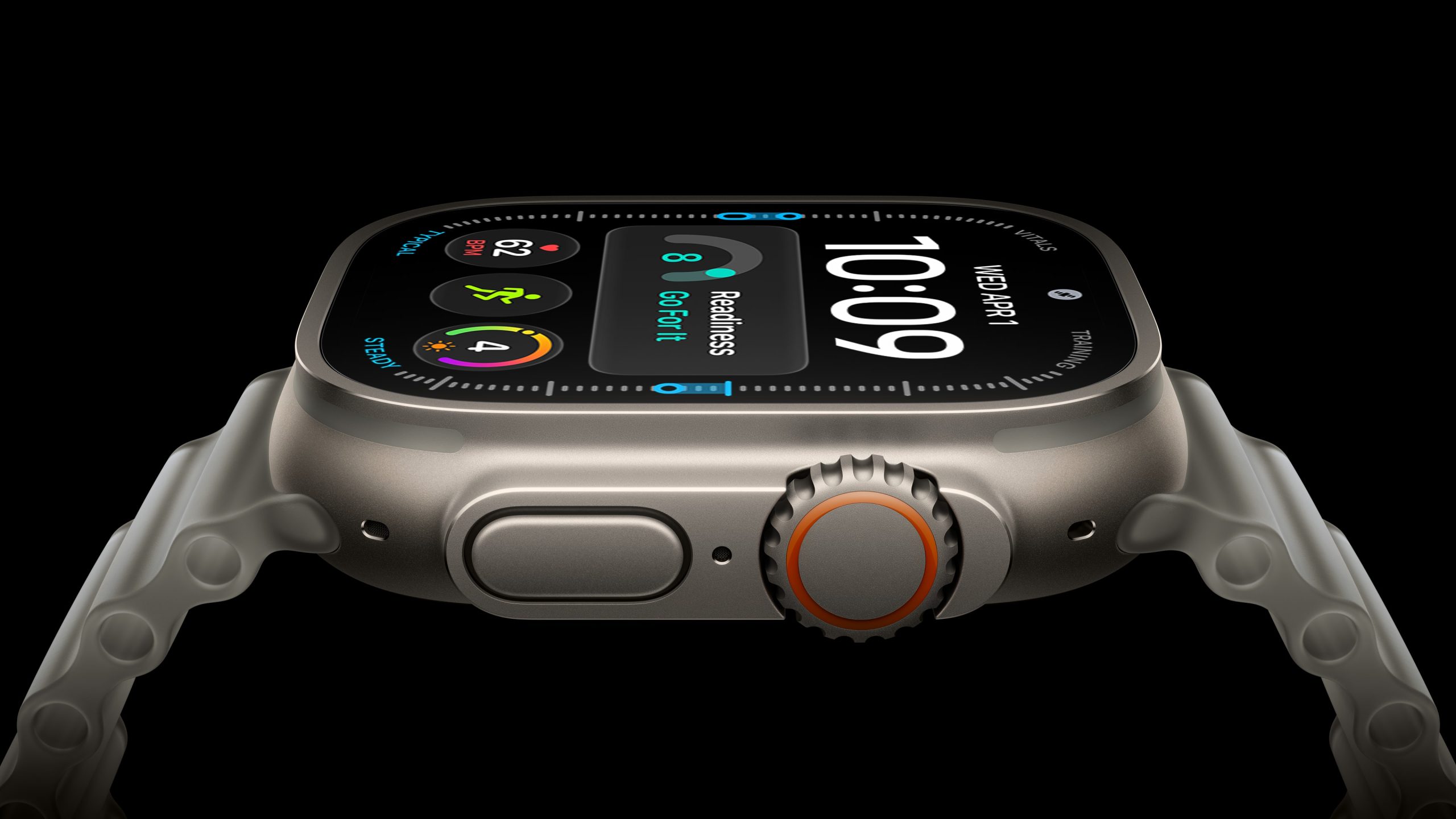
The Apple Watch Series 12 and Apple Watch Ultra 4 bring new health sensors, a new chip, and more detailed recovery insights to Apple's smartwatch lineup, so how do they compare? Both models feature the S11 chip, 4GB of RAM, 64GB of storage, and the new Health Sensing System, which measures heart rate every five seconds throughout the day. They also share Readiness, Recovery HRV, daytime vitals, improved step tracking, hypertension notifications, sleep apnea notifications, Sleep Score, and more. This means that the Ultra 4's higher price does not buy you more advanced everyday health tracking. The Apple Watch Series 12 starts at $399, while the Apple Watch Ultra 4 starts at $799. The gap narrows if you want a premium case material, with the titanium Series 12 starting at $699. This year, the Series 12 also gains a ceramic option starting at $899, making it more expensive than the Ultra despite its smaller size and shorter battery life. The Apple Watch Ultra continues to focus on durability, extended battery life, and additional capabilities for activities like diving and exploration. Our guide helps to answer the question of how to decide which of these two Apple Watches is best for you. The differences between the Apple Watch Series 12 and ‌Apple Watch Ultra 4‌ are as follows: Apple Watch Series 12 ‌Apple Watch Ultra 4‌ Rounded design with a thinner case and front glass that curves at the edges Rugged design with a thicker case and slightly raised edges to protect the flat front crystal Aluminum, polished titanium, or polished ceramic case Blasted titanium case Aluminum and titanium : 42mm and 46mm case sizes Ceramic : Marketed as 42mm and 46mm, with actual heights of 43mm and 47mm 49mm case size 42mm aluminum and titanium : 37mm case width 43mm ceramic : 37mm case width 46mm aluminum and titanium : 40mm case width 47mm ceramic : 41mm case width 49mm titanium : 44mm case width Aluminum and titanium : 9.7mm case depth Ceramic : 9.85mm case depth 12mm case depth Weighs 31.5 to 52.9 grams depending on case size, material, finish, and connectivity Natural titanium : 63.0 grams Black titanium : 63.1 grams Aluminum : Ceramic Shield 2 front glass Titanium and ceramic : Sapphire front crystal Sapphire front crystal 42mm : 374 by 446 pixels 46mm : 416 by 496 pixels 422 by 514 pixels 42mm : 970 sq mm display area 46mm : 1,196 sq mm display area 1,245 sq mm display area Up to 2,000 nits peak brightness Up to 3,000 nits peak brightness Exclusive Wayfinder, Modular Ultra, and Orienteering faces Night Mode on Apple Watch Ultra faces Customizable Action button, including Precision Start for workouts 86-decibel Siren to attract attention Single speaker Dual speakers Single microphone with Voice Isolation Three-microphone array with beamforming and wind noise mitigation Aluminum : GPS or GPS + Cellular options Titanium and ceramic : GPS + Cellular GPS + Cellular on all models U.S. TDD cellular bands : 5G n38, n40, and n41; LTE 38, 39, 40, and 41 U.S. TDD cellular bands : 5G n38, n40, n41, and n53; LTE 38, 39, 40, 41, and 53 Satellite communications for Emergency SOS, Messages, and Find My Precision L1 GPS Precision dual-frequency GPS (L1 and L5) GPS, GLONASS, Galileo, QZSS, and BeiDou support GPS, Galileo, QZSS, and BeiDou support Water resistant to 50m Water resistant to 100m Suitable for swimming and snorkeling Suitable for swimming, snorkeling, high-speed water sports, and recreational scuba diving to 40m Depth gauge and Depth app to 6m Depth gauge and Depth app to 40m Tested to MIL-STD 810H EN13319 certification for recreational scuba diving Recommended ambient operating temperature of 0°C to 35°C On-wrist operating temperature of -20°C to 55°C Always-on altimeter Always-on altimeter with expanded operating range from -500m to 9,000m Operating altitude from 0m to 3,000m Operating altitude from -500m to 9,000m Up to 24 hours of normal use Up to 50 hours of normal use Up to 38 hours in Low Power Mode Up to 84 hours in Low Power Mode Up to 10 hours of standard outdoor workout tracking Up to 18 hours of standard outdoor workout tracking Up to 25 hours in Extended Workout mode with full GPS and heart rate readings Up to 45 hours in Max Extended Workout mode, retaining GPS readings every second Charge from 0 to 80% in about 30 minutes Charge from 0 to 80% in about 45 minutes 15 minutes of charging for up to 12 hours of normal use 15 minutes of charging for up to 18 hours of normal use Aluminum : Dark Bronze, Light Gold, Black, and Space Gray Titanium : Radiant Gold and Natural Ceramic : Pearl White and Night Blue Natural Titanium or Black Titanium Hermès : Silver or Radiant Gold titanium Hermès : Natural titanium 40% recycled content in aluminum and titanium models 45% recycled content Aluminum : Starts at $399 Titanium : Starts at $699 Ceramic : Starts at $899 Hermès : Starts at $1,399 Standard : Starts at $799 Hermès : Starts at $1,499 For most users, the Apple Watch Series 12 is the better choice. It offers the same performance, health sensors, Readiness insights, and Audio Intelligence features as the Ultra 4 in a thinner, lighter device. The aluminum model delivers these benefits for $400 less, making it the stronger option for everyday use and regular workouts. The Ultra 4's most broadly useful advantage is battery life. Its longer endurance makes overnight wear and extended workouts easier to fit around charging. You do not need to be an endurance athlete to appreciate less frequent charging, but the premium is easier to justify if the Series 12 cannot comfortably cover your usual activities and charging habits. For hiking away from cellular coverage, recreational scuba diving, or very long events, the Ultra has a clearer purpose. Satellite communications, dual-frequency GPS, greater water resistance, and extended workout modes address needs that the Series 12 cannot fully meet. The Action button and brighter display may also appeal to enthusiasts who simply want more capable hardware. Size and appearance remain substantial trade-offs. The Ultra is considerably bulkier and heavier despite offering a display only slightly larger than the 46mm Series 12's. The Series 12 is more discreet and offers polished titanium and ceramic finishes, making it better suited to buyers who prioritize comfort or appearance. Try on the Ultra before buying if you are unsure about its size. The decision becomes closer if you already want the titanium Series 12, since its starting price is just $100 below the Ultra's. At that point, paying more for longer battery life and additional hardware is reasonable if you are comfortable with the larger case. The $899 ceramic Series 12 is primarily a choice of material and finish; choose it because you prefer its appearance, rather than expecting more capabilities than the $799 Ultra. Related Roundups: Apple Watch 12 , Apple Watch Ultra 4 Buyer's Guide: Apple Watch (Buy Now) , Apple Watch Ultra (Buy Now) Related Forum: Apple Watch This article, " Apple Watch Series 12 vs. Ultra 4 Buyer's Guide " first appeared on MacRumors.com Discuss this article in our forums

Sep 18, 2026 · byMacRumors
New iPhone 18 Pro Models Will Have Day One Update

New iPhone 18 Pro Models Will Have Day One Update

Customers receiving an iPhone 18 Pro , ‌iPhone 18 Pro‌ Max, an Apple Watch Series 12, or an Apple Watch Ultra 4 tomorrow will need to install a software update right away. The ‌iPhone 18 Pro‌ and ‌iPhone 18 Pro‌ Max ship with iOS 27 variants with a 24A427 or 24A8428 version number. The launch version of ‌iOS 27‌ is version 24A437, so if you're getting an ‌iPhone 18 Pro‌, expect a software update during the setup process. The Apple Watch Series 12 and the ‌Apple Watch Ultra 4‌ have watchOS 27 with a version number of 24R359, but the launch version of ‌watchOS 27‌ is 24R364. We're also expecting the AirPods 5 to have a day one firmware update, though that will happen over the air. Apple recently released 9A350 AirPods firmware to add support for ‌iOS 27‌ features. All of the new products are set to launch on Friday, September 18. Related Roundup: iPhone 18 Pro Buyer's Guide: iPhone 18 Pro (Buy Now) Related Forum: iPhone This article, " New iPhone 18 Pro Models Will Have Day One Update " first appeared on MacRumors.com Discuss this article in our forums

Sep 17, 2026 · byMacRumors
The Apple Watch Series 12 is the start of a new wearable era

The Apple Watch Series 12 is the start of a new wearable era

You wouldn't know that the Apple Watch Series 12 is a big deal just by looking at it. It has the same design, buttons, sizes, and sensor types as generations of Apple Watches before it. But under the hood, the Series 12 builds in major changes that lay the groundwork for big ideas about the […]

Sep 17, 2026 · byThe Verge
Apple Watch Series 11 vs. Series 12 Buyer's Guide: 25+ Upgrades Compared

Apple Watch Series 11 vs. Series 12 Buyer's Guide: 25+ Upgrades Compared

The Apple Watch Series 12 is now available for pre-order, and unlike last year's model, it brings a substantial list of changes over its predecessor. Here's everything that's new. Last year, the Series 11 introduced just four changes over the Series 10, making it perhaps the smallest generational upgrade in the device's history. The Series 12 is a far more meaningful refresh, even though it essentially retains the same design for a third consecutive year. It launches on Friday, September 18, at the same $399 starting price as the Series 11, which Apple has now discontinued. This guide lists all of the differences between the Series 11 and Series 12 models to help you understand the changes: Apple Watch Series 11 Apple Watch Series 12 S10 chip (2024) S11 chip (2026) 2GB RAM 4GB RAM Electrical heart sensor "Health Sensing System" with second-generation electrical heart sensor Third-generation optical heart sensor Fourth-generation, always-on optical heart sensor Heart rate tracking High-frequency background heart rate tracking (every five seconds) HRV Recovery HRV and overall HRV (measured up to 24x more often) Vitals app with heart rate, respiratory rate, wrist temperature, and sleep duration Vitals app with heart rate, respiratory rate, wrist temperature, sleep duration, and HRV, plus daytime vitals view Readiness app More accurate step tracking Steps complication Audio Intelligence (Live Rewind, Siri Recap, Sound Recognition, and Shazam) Ion-X glass with 2x scratch resistance (aluminum models) Ceramic Shield 2, 60% tougher than Ion-X (aluminum models) Metal and sapphire crystal back Aluminum or titanium and zirconia back Aluminum or titanium case Aluminum, titanium, or ceramic case Aluminum : Jet Black, Rose Gold, Silver, and Space Gray Aluminum : Dark Bronze, Light Gold, Black, and Space Gray Titanium : Slate, Gold, and Natural Titanium : Radiant Gold and Natural Ceramic : Pearl White and Night Blue Hermès : Silver titanium Hermès : Silver and Radiant Gold titanium 15 minutes of charging for up to 8 hours of normal use 15 minutes of charging for up to 12 hours of normal use 5 minutes of charging for up to 8 hours of sleep tracking 5 minutes of charging for up to 10 hours of sleep tracking Now discontinued From $399 The new ceramic case marks the first ceramic Apple Watch since the Series 5 Edition in 2019, but it is slightly larger than the other models and weighs up to 52.9 grams in its 46mm Night Blue configuration. Even the aluminum and titanium models are now 1mm wider and around 2 grams heavier than their predecessors. At the same time, the display appears to have shrunk slightly , even though its resolution is unchanged. Apple lists the 46mm Series 12 with 1,196 sq mm of display area, 2% less than the 1,220 sq mm of the Series 11, while the 42mm model drops 1.9% from 989 sq mm to 970 sq mm. A marginally smaller screen in a wider case means thicker borders, and Apple also appears to have pulled the case back slightly around a larger front glass, which could make them look even more prominent. The Series 10 went through a similar change in 2024, when its visible aluminum edge shrank compared to the Series 9 but its overall bezel, including the black border under the glass, actually grew. The shift is less dramatic this time around, since the Series 12 keeps the same basic case design. Here's how the two generations compare in size, weight, and display area: 46mm Apple Watch Series 11 Apple Watch Series 12 Dimensions 46mm x 39mm x 9.7mm 46mm x 40mm x 9.7mm Display area 1,220 sq mm 1,196 sq mm Aluminum (GPS) 37.8 grams 39.5 grams Aluminum (Cellular) 36.9 grams 38.6 grams Titanium 43.1 grams 44.9 grams 42mm Apple Watch Series 11 Apple Watch Series 12 Dimensions 42mm x 36mm x 9.7mm 42mm x 37mm x 9.7mm Display area 989 sq mm 970 sq mm Aluminum (GPS) 30.3 grams 32.2 grams Aluminum (Cellular) 29.7 grams 31.5 grams Titanium 34.6 grams 36.5 grams The new ceramic models, which have no Series 11 equivalent, are larger and considerably heavier still: Ceramic 46mm 42mm Dimensions 47mm x 41mm x 9.85mm 43mm x 37mm x 9.85mm Pearl White 51.3 grams 41.7 grams Night Blue 52.9 grams 42.8 grams The most significant upgrade between the two devices is the new Health Sensing System. It uses a larger electrode surface for better skin contact during ECG readings, redesigned photodiodes laid out in a ring for more efficient light capture, and bigger, more power-efficient green LEDs. The result is that the Series 12 measures heart rate every five seconds throughout the day, 60 times more frequently than before, and samples HRV up to 24 times more often. Apple claims this gives the Series 12 the most accurate heart rate sensing of any wearable. That higher-frequency data powers several new health features that are exclusive to the Series 12. The Readiness app weighs up your recent activity, training load, vitals, and sleep score to produce a single daily score out of 10, alongside a recommendation ranging from "Recover" to "Go For It." There is also a separate Recovery HRV metric, a daytime view in the Vitals app, and new watch face complications for real-time heart rate and step count. Apple has also rebuilt its pedometer model and says the Series 12 now offers the most accurate step tracking of any smartwatch. The Series 12 is the first model in two years to get a new chip, with the S11 replacing the S10 that powered both the Series 10 and Series 11, which itself was almost identical to the S9 chip from 2023. The new model also has twice as much RAM , with 4GB compared to 2GB in the Series 11. The S11 chip enables Audio Intelligence , a new set of features exclusive to the Series 12 and Ultra 4. Live Rewind displays a transcript of the last 15 seconds of conversation with a double press of the Digital Crown, ‌Siri‌ Recap generates summaries of conversations, Sound Recognition alerts deaf or hard of hearing users to sounds like sirens and doorbells, and Shazam can automatically identify music playing nearby. According to Apple, audio is processed in a hardware-isolated Secure Exclave on the S11 chip and is never recorded. Everyday battery life is unchanged at up to 24 hours, or up to 38 hours in Low Power Mode. The improvements instead focus on workouts and charging. The Series 12 offers up to 10 hours of battery life during an outdoor workout, which Apple says is 25% more than the Series 11, and 15 minutes of charging now delivers up to 12 hours of use rather than eight. All other aspects, such as display resolution and brightness, 64GB of storage, 5G connectivity, and water and dust resistance all carry over from the Series 11 unchanged. Is It Worth Upgrading? For new buyers, the Series 12 is the obvious choice. It costs the same $399 that the Series 11 did at launch, while adding a more capable health sensing system, double the RAM, and a considerable list of exclusive features. With a new chip and more memory, it is also likely to be better placed for future Apple Intelligence features. The Series 11 is the better value option only when it can be found heavily discounted, which is likely as third-party retailers clear their remaining stock. Last year, we concluded that virtually no users should upgrade from a Series 10 to a Series 11. This year, the picture is more nuanced. For most Series 11 owners, there is still no general-purpose reason to upgrade, since many key features are unchanged and ‌Siri‌ AI is coming to the Series 11 anyway. However, the Series 12 is worth considering if you rely on your Apple Watch for training and recovery insights, since continuous heart rate tracking, Recovery HRV, and Readiness are all exclusive to the new model. Deaf and hard of hearing users may find Sound Recognition a compelling reason to upgrade on its own, and some users will simply want the new ceramic finish. Series 11 owners who are happy to wait may prefer to hold out for next year's "Series 13," which is rumored to bring the first major redesign since the Series 10, including a new band attachment system. By contrast, upgrading is much easier to justify if you have a Series 9 or older. Series 10 owners would gain a new, thinner design with a wider screen, a tougher display on aluminum models, and a longer battery life in addition to all of this year's changes. Related Roundup: Apple Watch 12 Buyer's Guide: Apple Watch (Buy Now) Related Forum: Apple Watch This article, " Apple Watch Series 11 vs. Series 12 Buyer's Guide: 25+ Upgrades Compared " first appeared on MacRumors.com Discuss this article in our forums

Sep 11, 2026 · byMacRumors
Apple Explains What Happens to Conversations Siri Recap Hears

Apple Explains What Happens to Conversations Siri Recap Hears

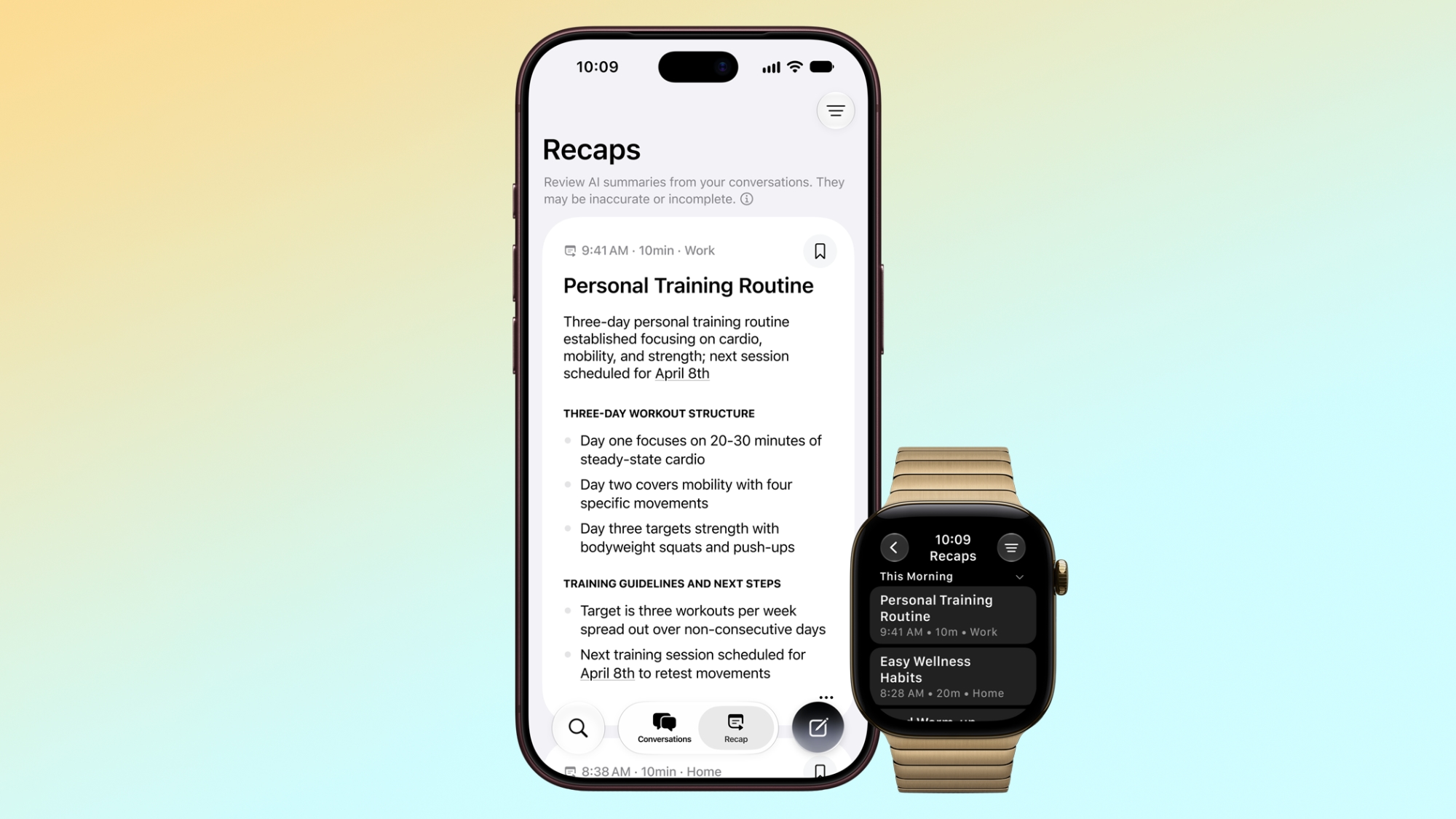
The Apple Watch Series 12 and Ultra 4 have new Audio Intelligence features that include Sound Recognition, Music Recognition, Live Rewind, and Siri Recap. When these features are activated, the new Apple Watches are always listening to what's going on around the wearer. With ‌Siri‌ Recap, the Apple Watch listens to your conversations throughout the day and takes notes. It uses Apple Intelligence to continually generate summaries that Apple says are meant to "jog your memory" on events so you can stay present in the moment. Apple anticipated negative reactions to a wearable that's always listening, so it has a detailed explainer on the privacy features that have been added. No speaker attribution - ‌Siri‌ Recap will not identify and attribute speakers. Names can be included if mentioned in the conversation, but nothing is directly attributed to a specific person. Omitted information - ‌Siri‌ Recaps will omit potentially harmful content or sensitive data, which Apple says includes language that promotes self-harm or hateful speech, financial data, government-assigned identifiers, authentication data, and certain personal identifiers. Caveats - Apple warns that ‌Siri‌ Recap summaries can be incomplete or inaccurate, and filtering may not remove all sensitive information. No transcript - Apple says ‌Siri‌ Recap doesn't produce a full transcript of a conversation. It's just a summary, comparable to notes one might jot down after a conversation. Condensed conversations - Encrypted, condensed text versions of a conversation are sent to Private Cloud Compute. The text is less than half the length of the original transcript, and distills the conversation to its core meaning. Conversation tone, non-essential language, filler words, and redundancies are removed. No audio recording - Audio is sent to the Secure Exclave on Apple Watch and iPhone for processing and analysis. It can't be accessed by the operating system, apps, the user, or Apple, and no audio is recorded or stored. Private Cloud Compute - ‌Siri‌ Recap uses Apple Foundation Models running on Private Cloud Compute to summarize and format the final output. Data is not accessible to Apple or anyone else. Opt in, not opt out - ‌Siri‌ Recap can be turned on in the Apple Watch app on iPhone, and set to listen on a schedule. You can have it on only at work, or set it to never listen at night. There will be a quick access toggle in Control Center for turning it on and off. Auto-delete - Summaries auto-delete after seven days if not saved to the ‌Siri‌ app. Siri app - Summaries are saved to the ‌Siri‌ app and can be deleted at any time from all synced devices. Saved summaries can be exported to other apps like Notes. Encryption - Summaries are end-to-end encrypted when synced to your other devices via iCloud so only your trusted devices can access them. Apple suggests that Apple Watch wearers "be mindful" of the people around them. "While audio is not recorded and stored, and no speakers are attributed, consider those around you where conversations might be private or sensitive," reads Apple's document. ‌Siri‌ Recap requires one of the new Apple Watch models and an iPhone 16 or later (except the iPhone 16e). The feature is launching later this year. Related Roundup: Apple Watch 12 Tag: Siri Buyer's Guide: Apple Watch (Buy Now) Related Forum: Apple Watch This article, " Apple Explains What Happens to Conversations Siri Recap Hears " first appeared on MacRumors.com Discuss this article in our forums

Sep 10, 2026 · byMacRumors
Apple Watch Ultra 4 Drops GLONASS Support

Apple Watch Ultra 4 Drops GLONASS Support

Apple removed GLONASS support from the Apple Watch Ultra 4 , according to technical specifications listed for the device. The Ultra 4 supports GPS, Galileo, QZSS, and BeiDou, while the prior-generation Ultra 3 supported GPS, GLONASS, Galileo, QZSS, and BeiDou. GPS, Galileo, BeiDou, and QZSS use CDMA-based signaling and support multiple frequencies for more accurate positioning. Consumer devices typically only receive an L1 signal from GLONASS, so it is less useful on devices with dual-frequency support. GLONASS also uses a different signal architecture, and receivers have to correct for hardware timing delays on a per-satellite basis, which can lead to positioning errors. Apple did not say why GLONASS support was removed, but dropping it could improve accuracy, reduce processing, and possibly improve battery life. The Apple Watch Series 12 continues to support GLONASS, likely because the L1-only limitation is less relevant on a single-frequency device. Related Roundup: Apple Watch Ultra 4 Buyer's Guide: Apple Watch Ultra (Buy Now) Related Forum: Apple Watch This article, " Apple Watch Ultra 4 Drops GLONASS Support " first appeared on MacRumors.com Discuss this article in our forums

Sep 10, 2026 · byMacRumors
Upgrading to Apple Watch Series 12 Could Cost You Hypertension Notifications

Upgrading to Apple Watch Series 12 Could Cost You Hypertension Notifications

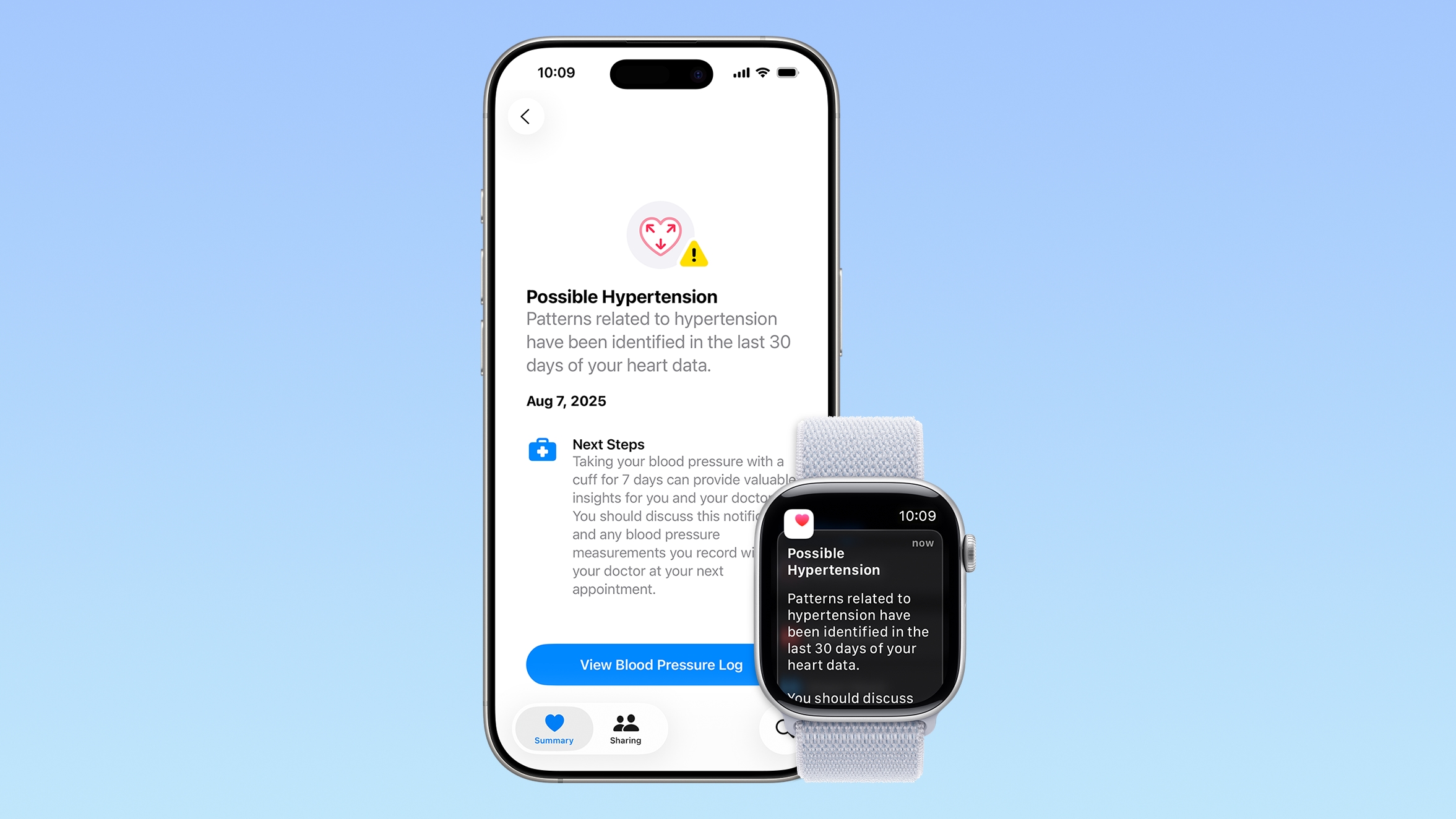
Some Apple Watch users who upgrade to the Series 12 or the Ultra 4 might temporarily lose access to hypertension notifications. On the watchOS feature availability page , Apple says notifications might not be available on the Series 12 or Ultra 4 at launch because regulatory clearances are in process. Hypertension Notifications may not be available on Apple Watch Series 12 or Ultra 4 in your region, as additional regulatory clearances for these devices are in process. The warning applies to 33 countries and regions, including Canada, Australia, India, Brazil, Singapore, Japan, Taiwan, South Africa, South Korea, and the UAE, with a full list on Apple's website. The Apple Watch Series 12 and Apple Watch Ultra 4 have revamped sensors and a new Health Sensing System. Apple added new optical and electrical heart sensors for more frequent and accurate tracking, and the change appears to require new regulatory approval in some locations. What's new: ECG - The electrodes in the watch cover more surface area for improved skin contact during ECG readings. Optical sensing - Redesigned photodiodes are organized in a ring to capture light more efficiently. Heart rate measurement - Larger, power-efficient green LEDs in the optical heart rate sensor allow the new watches to measure heart rate every five seconds all day, offering more data on a user's fitness and physiological state. Real-time heart rate is available in the updated Heart Rate app, and Exercise and Move Activity rings are more accurate. HRV is also measured as often as every five minutes. Apple Watch users who get these notifications today may lose the option when upgrading to the Series 12 or Ultra 4 until regulatory clearance is granted. Countries not on Apple's list with a footnote will continue to get notifications as usual. This includes the United States, UK, and all EU countries. Related Roundups: Apple Watch 11 , watchOS 26 , watchOS 27 Buyer's Guide: Apple Watch (Buy Now) Related Forum: Apple Watch This article, " Upgrading to Apple Watch Series 12 Could Cost You Hypertension Notifications " first appeared on MacRumors.com Discuss this article in our forums

Sep 10, 2026 · byMacRumors
Apple Watch Series 12 Has Smaller Screens and Bigger Cases

Apple Watch Series 12 Has Smaller Screens and Bigger Cases

The Apple Watch Series 12 pairs a smaller display with a wider case than Series 10 and Series 11, even though the pixel resolution hasn't changed, according to Apple's own tech specs. For the 46mm Series 12, Apple's tech specs page lists the display area at 1,196 sq mm, down 2% from 1,220 sq mm on Series 10 and Series 11 . The 42mm size shows a similar 1.9% drop, from 989 sq mm to 970 sq mm. Pixel counts are identical across all three generations: 416 by 496 at 46mm, and 374 by 446 at 42mm. The case grows as the screen shrinks. Apple's Series 12 tech specs list the 46mm case at 46mm by 40mm by 9.7mm, a millimeter wider than the 46mm by 39mm by 9.7mm case on Series 10 and Series 11, a roughly 2.6% increase in case footprint. The 42mm case grew from 42mm by 36mm to 42mm by 37mm over the same span, about 2.8%, with depth unchanged at 9.7mm for both sizes. A smaller display combined with a bigger casing means bigger borders around the display, and it looks like Apple has also tweaked the design of the Series 12 to recede the casing and expand the front glass, which makes the borders look even larger. There's recent precedent for a change like this translating into a visibly thicker bezel. Series 10 went through a similar shift when it replaced Series 9 in 2024, growing the case around the display. The Series 10's visible aluminum edge had actually shrunk by around 33% versus Series 9, while the total bezel, including the black glass border, had grown by about 17%, even though the case and display figures looked like an improvement on paper. It looks like the Series 12 repeats that pattern, although to a less extreme extent. Unlike the Series 9 to Series 10 change, which was a full case redesign, Series 10, Series 11, and Series 12 all share the same approximate case design. The Apple Watch Series 12 starts at $399 and launches on September 18. Related Roundup: Apple Watch 11 Buyer's Guide: Apple Watch (Buy Now) Related Forum: Apple Watch This article, " Apple Watch Series 12 Has Smaller Screens and Bigger Cases " first appeared on MacRumors.com Discuss this article in our forums

Sep 10, 2026 · byMacRumors