Serbia to release reserve diesel due to global shortage, energy minister says
Sep 24, 2026 · byGlobal Banking & Finance Review
41 articles

Two capital city airports in the former Yugoslavia are set to see scheduled seat capacity decline this October compared to the same month last year, continuing a trend observed over recent months. Wizz Air will remain the region’s largest carrier, followed by Air Serbia. Belgrade Airport has the most available seats on scheduled flights in October, standing at 1.008.451. The figure represents an increase of 3.6% on 2025. Air Serbia will continue to maintain its position as the largest carrier with 516.421 seats, up 8.2% or an additional 39.000. Wizz Air, which may yet modify its operations from the last week of October in response to Serbia’s new regulations governing foreign carriers, will currently reduce seats by some 200, contracting by 0.1%. Zagreb follows as the second largest with 563.881 available seats on scheduled flights during the month. It represents a decrease of 5.1% on the previous year. Croatia Airlines will decrease its capacity by 6.2% but will continue to be the airport’s largest carrier with 206.848 seats. It is ahead of Ryanair with 187.144 seats, down 5.3%. Skopje Airport will boast 414.412 seats in October, representing a 19.6% increase compared to the same month in 2025, with all the growth driven by Wizz Air. The low cost carrier will add 90.348 seats, marking a 50.1% increase year-on-year. Collectively, the remaining carriers will decrease capacity by 13.5%. Pristina Airport will have 383.086 available seats, with capacity currently projected to decline 7%. It follows frequency cuts by GP Aviation, the lack of Condor, SAS and ASL Airlines France services, which operated last year, as well as cuts made by Pegasus Airlines and Turkish Airlines. Podgorica Airport will continue to grow at record pace on the back of Wizz Air’s new base, with the airport registering 301.090 seats on scheduled flights during the month, up 55.6%. Wizz Air will be the largest carrier by adding 102.792 seats, representing growth of 315%, for a total capacity share of 45%. It is followed by Ryanair with 11.6% of the market. Sarajevo will have 232.216 scheduled seats in October, representing an increase of 1% on 2025, despite the temporary withdrawal of Ryanair starting from the last week of the month. Ryanair will still be the largest carrier, with 37.556 seats, down 14.1% on last year. It is followed by Pegasus Airlines with 14.1% of total capacity. Finally, Ljubljana has a total of 207.353 seats on scheduled services, up 15.9% on October 2025. Lufthansa, despite having 12% fewer flights, will have 26.1% more seats, retaining its position as the airport’s largest, holding 16.7% of capacity. It is followed by Turkish Airlines which is reducing its seat count by 6.3%. Largest carriers by scheduled seat capacity in the former Yugoslavia, October 2026 Overall scheduled seat capacity in October across all former Yugoslav markets and airports combined: 4.240.540, up 3.4% year-on-year Please note that the above figures are correct as of the date of publication. As the month progresses, they may change due to schedule revisions or equipment adjustments. Nevertheless, they provide a reliable indication of overall capacity trends across the airports. EX-YU Aviation News

Southeastern Europe and the Balkans are a key region for understanding the European Neolithic. Many ways of life and economic systems that continue to shape our lives today first emerged there in Europe and later spread across the continent. An archaeological culture named after the Vinča site in present-day Serbia marks a late phase of the Neolithic period in the region. More than 6,500 years ago, people there lived in large settlements for extended periods for the first time. They maintained extensive trade networks. Pottery and stonework demonstrate extensive knowledge of materials and a wide range of decorative styles.
Country: Serbia Source: HALO Trust Pristina, Kosovo, 23 September 2026 - The HALO Trust is celebrating the conclusion of its humanitarian landmine clearance in Kosovo today after 27 years. In 1999, when Kosovo’s refugees returned home, they found a country devastated by war — and a landscape scarred by landmines and unexploded cluster munitions. The conflict had ended, but danger remained just below the surface. More than 800,000 people were displaced during the 1998–99 conflict. In the first month after the war, an estimated 150 people were killed or injured by landmines, 71% of them under 24-years-old. “I have just come back from Gaza and the destruction there is very familiar to me. It’s what Kosovo looked like when the refugees returned home in 1999,” said Agron Boshtraj, who was trained by HALO and joined as a deminer when the conflict ended. Today, Kosovo is a very different country. Its economy has grown to more than $14 billion, life expectancy is close to 78 years, and communities have rebuilt their homes, schools, businesses,, and lives. “Kosovo shows us that the real impact of removing landmines and cluster bombs is not measured in hectares cleared, but in what that land makes possible over time,” said Atholl Stewart, HALO Kosovo’s last programme manager. Cleared land has become fertile farmland and safe roads have enabled vital infrastructure to develop, giving families and businesses the confidence to rebuild and invest. Pristina Airport, which now welcomes almost five million passengers every year, could only be redeveloped after a nearby minefield was cleared, and hundreds of cluster bombs had to be removed before the key E851 motorway corridor could be built through areas such as Arllat. Around Peja in the west, clearing contaminated mountain trails has helped to unlock a flourishing tourism economy, with the city now receiving around 150,000 visitors a year. The country’s recovery reflects many factors — peace, political stabilisation, investment,, and the determination of its people - but those things needed safe ground on which to take root. “Mine clearance was not the outcome of Kosovo’s recovery. It was one of the prerequisites that made recovery possible,” Stewart added. ENDS Notes to editors: Some of HALO’s Kosovar employees are now leading its operations in Syria and Ukraine. Investing in their endeavours now will be critical to stabilising both countries. The HALO Trust is the world's largest humanitarian landmine clearance organisation. HALO works in 30+ countries including Ukraine, Afghanistan, Yemen, Syria, Colombia, Angola and Sri Lanka. We deploy groundbreaking technology in conflict and post-conflict settings to help people rebuild their homes, restore their livelihoods and keep their children safe. HALO also runs programmes in weapons and ammunition management and safety training. During emergencies, we also provide humanitarian aid and logistical support. HALO was founded in 1988 in Afghanistan. We employ over 8,000 staff worldwide and recruit 95% of them locally.
 Sep 23, 2026 · byReliefWeb
NEWS FLASH Air Serbia and China Southern Airlines are set to begin codeshare cooperation on flights between Belgrade and China, more than a year and a half after signing their initial agreement . From mid-October, t he Chinese carrier will place its flight number and designator code onto Air Serbia’s operations between Belgrade and Guangzhou (CZ7301/2), as well as Belgrade and Shanghai (CZ7303/4). In return, Air Serbia will do the same on China Southern Airlines' operations between Guangzhou and Belgrade (JU8800/1). Meanwhile. a Shanghai Pudong International Airport delegation visited Air Serbia’s headquarters in Belgrade this month. The airport’s senior representatives, comprised of leaders responsible for airport operations, service management, terminal area management, site development, as well as marketing and operations, met Air Serbia CEO Jirí Marek and General Manager of Commercial and Strategy Boško Rupić to discuss Shanghai’s airport development plans and opportunities for further cooperation. "The visit marks another important step in strengthening ties between one of East Asia’s leading aviation hubs and Serbia’s national airline. Since launching direct flights between Belgrade and Shanghai in January 2025, Air Serbia has been continuously building connectivity between Serbia and China, supporting business, tourism and cultural exchange between the two markets", Air Serbia said. EX-YU Aviation News

Ryanair, Turkish Airlines and Lufthansa will record the largest year-on-year reductions in available capacity across the former Yugoslavia this coming winter season, which begins on October 25 and runs until March 27. Ryanair will offer 225.092 fewer seats, taking its total below one million. Most of the reduction stems from the termination of its Niš operations and the suspension of its Sarajevo flights for the winter. Turkish Airlines will cut 75.029 seats as it reduces services to Podgorica, Pristina, Skopje and Zagreb, and suspends flights to Tivat. Lufthansa’s capacity will fall by 51.792 seats following the temporary suspension of Munich - Ljubljana flights, the termination of Frankfurt - Skopje services and reductions on its Zagreb routes. The use of larger aircraft elsewhere in the region will offset part of that decline. Ryanair will account for the largest capacity reductions in both Serbia and Bosnia and Herzegovina. In Croatia, Lufthansa will make the biggest cut, primarily because its Munich - Zagreb flights will be taken over by Air Dolomiti under the latter’s own code and flight numbers in January and February of next year, while overall frequencies will be halved during that period. Air Dolomiti will record the largest reduction in Slovenia. It operated services on Lufthansa’s behalf last winter but will not serve Ljubljana this winter. It will be followed by Swiss. Lufthansa itself will offer more seats in Slovenia than last winter despite suspending Munich - Ljubljana flights, thanks to the use of larger Airbus A321 aircraft on its Frankfurt service. Lufthansa will also make the largest capacity cut in Macedonia following the termination of Frankfurt- Skopje service this summer. In Montenegro, Turkish Airlines will record the biggest reduction as it scales back Podgorica operations and suspends winter flights to Tivat. At Pristina, locally based GP Aviation will make the largest cut after reducing its network and frequencies amid the opening of Wizz Air’s base at the airport. EX-YU Aviation News
![Albania: Western Balkans — Mješoviti Migracijski Tokovi (August 2026) [BS]](https://reliefweb.int/sites/default/files/styles/thumbnail/public/previews/51/35/51353f03-0710-5dc8-9ac3-8e73cc12a561.png)
Countries: Albania, Bosnia and Herzegovina, Montenegro, Serbia, the Republic of North Macedonia, World Source: International Organization for Migration Please refer to the attached Infographic.
Sep 22, 2026 · byReliefWeb![Albania: Western Balkans — Flukset e Përziera Migratore (Gusht 2026) [AL]](https://reliefweb.int/sites/default/files/styles/thumbnail/public/previews/d5/ee/d5eefccd-95b3-5887-835b-2b2d953e6d74.png)
Countries: Albania, Bosnia and Herzegovina, Montenegro, Serbia, the Republic of North Macedonia, World Source: International Organization for Migration Please refer to the attached Infographic.
Sep 22, 2026 · byReliefWeb
Countries: Albania, Bosnia and Herzegovina, Montenegro, Serbia, the Republic of North Macedonia, World Source: International Organization for Migration Please refer to the attached Infographic.
Sep 22, 2026 · byReliefWeb![Albania: Western Balkans - Мешани Миграциски Текови (Август 2026) [MK]](https://reliefweb.int/sites/default/files/styles/thumbnail/public/previews/08/ab/08ab70a5-3d8f-55bb-9264-238b9b98f096.png)
Countries: Albania, Bosnia and Herzegovina, Serbia, the Republic of North Macedonia, World Source: International Organization for Migration Please refer to the attached Infographic.
Sep 22, 2026 · byReliefWebPublished at 1600PDT / 2300GMT 19SEP26 Air Serbia and China Southern from mid-October 2026 plans to launch reciprocal codeshare partnership, initially covering service between Serbia and China. Planned codeshare routes below to commence on 16OCT26. Air Serbia operated by China Southern Belgrade – Guangzhou China Southern operated by Air Serbia Belgrade – Guangzhou Belgrade – Shanghai Pu Dong

Critics say Serbia's military ties with Israel are rising significantly.
 Sep 17, 2026 · byAl Jazeera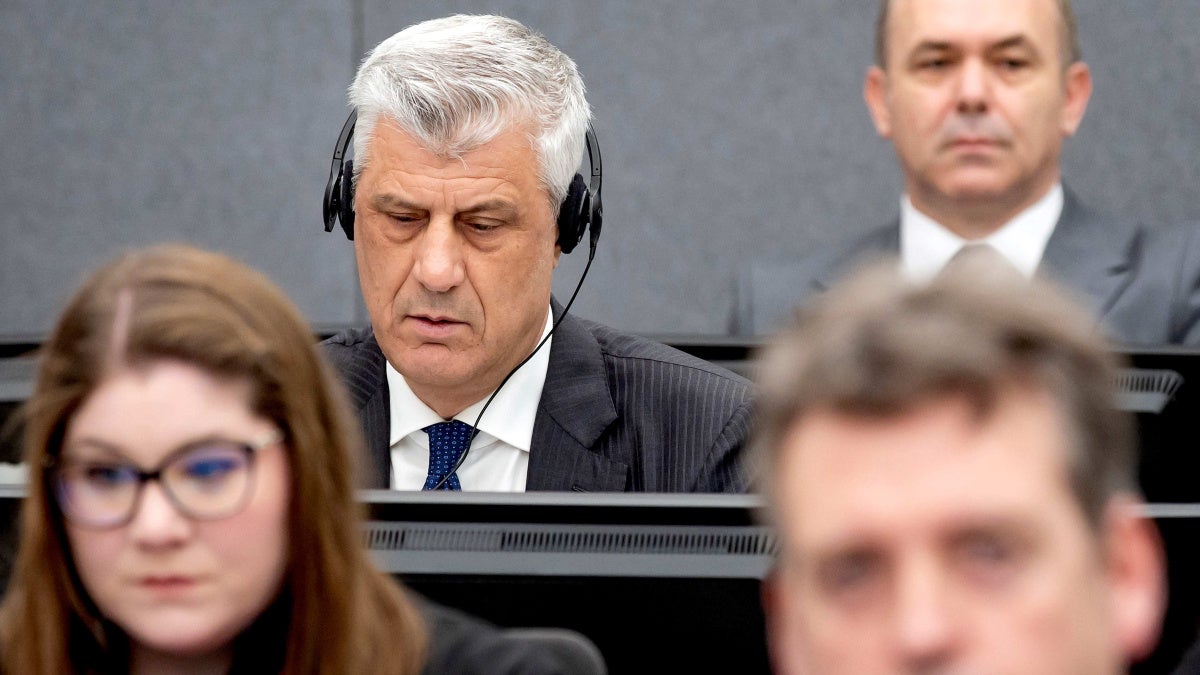
Click to expand Image Former Kosovo President Hashim Thaci, top left, appears before the Kosovo Tribunal as he defends himself against charges including murder, torture and persecution allegedly committed during Kosovo’s war with Serbia, The Hague, April 3, 2023. © 2023 Koen van Weel/Pool via REUTERS (Berlin, September 17, 2026) – The convictions of Kosovo’s former President Hashim Thaçi and three senior former Kosovo Liberation Army (KLA) leaders for war crimes on September 16, 2026, are an important step toward accountability for victims of the 1998-1999 Kosovo conflict, Human Rights Watch said today. The Kosovo Specialist Chambers, based in The Hague, found Thaçi, Kadri Veseli, Jakup Krasniqi, and Rexhep Selimi guilty of war crimes including murder, torture, cruel treatment, and arbitrary detention. The court acquitted the four men on charges of crimes against humanity. The convictions were for crimes committed during the war in Kosovo and northern Albania, against Kosovo Albanians, Serbs, Roma, and others. The court sentenced Thaçi and Krasniqi to 25 years, Veseli to 18 years, and Selimi to 13 years in prison. “This verdict sends an important message to victims and their families that even powerful leaders are not beyond the reach of justice,” said Hugh Williamson, Europe and Central Asia director at Human Rights Watch. “The court’s findings underscore that accountability for serious wartime crimes should apply to everyone, regardless of their position or affiliation.” The judgment documents the scale and severity of the abuses. The judges found that between April 1998 and June 20, 1999, the defendants were criminally responsible for the arbitrary arrest and detention of 385 people at KLA detention sites, the torture of 303 people, the cruel treatment of 49 people, and the murder of 96 people. The victims included Kosovo Albanians perceived as political opponents or collaborators, as well as Serbs and Roma. The judges found that the accused shared a common criminal purpose to target, detain, and if necessary, kill perceived opponents of the KLA, which sought independence from Serbia. They found that the four men worked together to implement the criminal plan, including through detention facilities, military police, intelligence structures, and special units. The court acquitted all four defendants of the six crimes against humanity charges, finding that the prosecution had not proved beyond reasonable doubt that the specific acts were “directed against a civilian population:” one of the required elements to establish crimes against humanity, in addition to the acts being part of a widespread or systematic attack. The court also found the four men not guilty in relation to a number of other alleged war crimes incidents, which it found were either not proven beyond reasonable doubt, absorbed by another more specific charge, or outside the court’s jurisdiction. The latter included alleged incidents after June 20, 1999, when the court found that the armed conflict had ended and the conduct could therefore not qualify as war crimes. The judges stressed that the KLA itself was not on trial and that the case was not about the legitimacy of the KLA’s struggle, the crimes Serbian and Yugoslav forces committed against Kosovo Albanians, or an effort to balance crimes committed by one side against those committed by another. The judgment concerned the individual criminal responsibility of the four defendants for specific crimes against Serbs, Roma, and Kosovo Albanians. The judges said that the trial had taken place in a “climate of witness intimidation.” The court said some witnesses had lied before the judges or changed previous accounts, and that fear for their safety may have affected some testimony. Separately, Thaçi faces a second case, along with four others, before the Kosovo Specialist Chambers for alleged obstruction of justice. The judgment comes against a wider backdrop of incomplete accountability for crimes committed during the Kosovo conflict, including crimes committed by Serbian and Yugoslav forces, Human Rights Watch said. As Human Rights Watch has documented, Serbian and Yugoslav forces were responsible for systematic and widespread crimes, during the conflict including torture, killings, rape, and forced expulsions. At the senior level, former Serbian President Slobodan Milošević and, in separate trials, seven other high-ranking Serbian and Yugoslav officials were tried at the International Criminal Tribunal for the former Yugoslavia. One man was acquitted and six were convicted; Milošević died during his trial. Some Serbian and Yugoslav officials convicted by the United Nations tribunal have subsequently been publicly celebrated in Serbia, underscoring the continuing need for political leaders in Serbia and the region to acknowledge established facts about wartime crimes and support accountability for them. At the domestic level, Serbian courts have convicted 17 individuals by final judgment for war crimes related to Kosovo, including 15 Serbs. Domestic prosecutions in Serbia have largely focused on lower-level perpetrators rather than senior military or police officials. For the vast majority of war crimes, however, no one has been held to account. The September 16 ruling should spur renewed efforts to deliver justice for all the victims of the Kosovo war, Human Rights Watch said. The Kosovo Specialist Chambers has jurisdiction over crimes against humanity, war crimes, and other crimes under Kosovo law related to allegations made in a 2010 Council of Europe report. Dick Marty, the Swiss senator who wrote it, said in the report that some senior former members of the KLA were responsible for abductions, beatings, and summary executions during and after the war. Human Rights Watch documented post-war attacks on Serbs and Roma. Based on the Council of Europe report, the European Union, with strong support from the United States, created the Special Investigative Task Force (SITF), based in Brussels with an international staff, to investigate the allegations. The task force’s lead prosecutor presented his findings in 2014, including on witness intimidation, and concluded there were credible grounds to issue indictments. After Kosovo amended its constitution and introduced a new law in 2015, the Kosovo Specialist Chambers was created, based in The Hague with funding from the EU, as well as from Canada, Norway, Switzerland, Türkiye, and the United States. All three of the chief prosecutors have come from the United States. “For the Kosovo Albanians, Serbs, Roma, and others who suffered these dreadful crimes, this judgment provides a measure of long-delayed justice,” Williamson said. “It is a reminder that all victims of serious crimes committed during and after the Kosovo war deserve justice, regardless of the ethnicity or affiliation of the victim or perpetrator.”
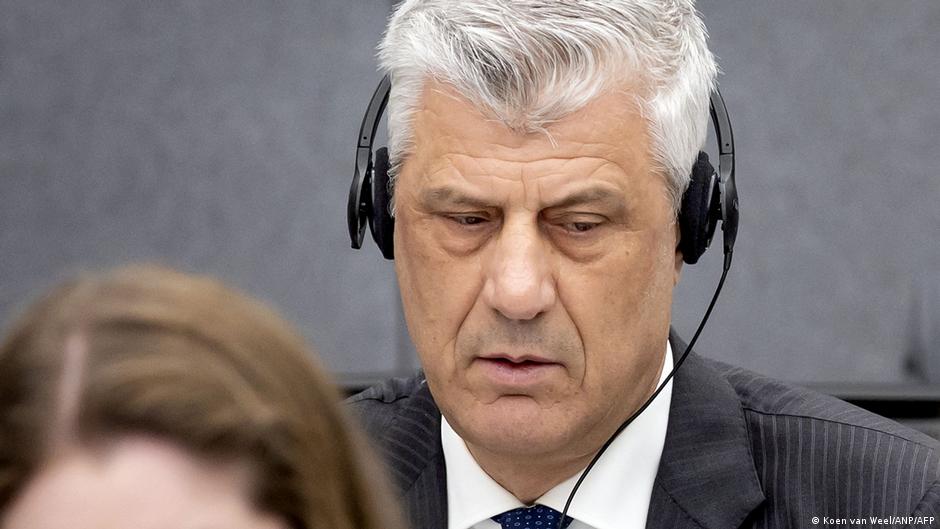
The conviction of four former Kosovo Liberation Army leaders has drawn sharply different reactions across the Balkans, with Serbia accusing the court of failing to fully address crimes against Serbs.
 Sep 17, 2026 · byDeutsche Welle
Air Serbia has inaugurated direct flights between Belgrade and Tenerife, expanding its Spanish network and establishing a nonstop link with the Canary Islands. The service will operate twice weekly, departing Belgrade on Tuesdays and Saturdays and returning from Tenerife on Wednesdays and Sundays. The airline expects the route to attract passengers from Serbia and neighbouring […]
 Sep 16, 2026 · byAviation24.be
Hashim Thaçi, 58, was convicted by The Hague for crimes committed while he was senior commander of the Kosovo Liberation Army Europe live – latest updates Hashim Thaçi, the former president of Kosovo, has been sentenced to 25 years by a tribunal in The Hague for war crimes, including dozens of murders, committed during his time as a senior commander of the Kosovo Liberation Army during the country’s war for independence from Serbia in the late 1990s. The European-backed Kosovo Specialist Chambers, convicted Thaci, 58, and three other former senior commanders of 96 murders, and counts of torture, cruel treatment and arbitrary detention directed at political opponents and civilians. Continue reading...
 Sep 16, 2026 · byThe Guardian
Countries: Albania, Serbia, Syrian Arab Republic, Ukraine Source: UN High Commissioner for Refugees Please refer to the attached file. UNHCR advocates for a strengthened national asylum system and refugee inclusion in line with the Strategy for UNHCR Engagement in Mixed Movements in the Western Balkans. UNHCR supports the government on further align its asylum legal framework and implementation with international and EU law. UNHCR advocates for improving access to protection and inclusion opportunities. UNHCR’s work on strengthening asylum system and inclusion remains a priority under the EU-funded EU4Migration project in Albania and IPAIII Regional Programme. HIGHLIGHTS Access to territory and asylum UNHCR continues to advocate for access to territory and asylum. This includes identification and referral of people with specific needs, which remains a priority in the context of the ongoing mixed movement in the Western Balkans. Based on UNHCR and partner protection monitoring data, from 1 January - 31 December 2025, 778 people arriving as part of mixed movements were intercepted by border guards at Albania’s borders. Of this number, 13 per cent were referred to the asylum procedure. First instance decisions on asylum claims From 1 January - 31 December 2025, 20 first instance decisions on asylum claims were issued, granting subsidiary protection to nationals of the Syrian Arab Republic, Afghanistan and Cameroon, Cote d’Ivoire, Nigeria, Türkiye; seven (7) decisions granting refugee status were issued to nationals of State of Palestine and China.
Sep 16, 2026 · byReliefWeb
Air Serbia sees sustainable aviation fuel (SAF) as an important element of the aviation industry’s decarbonisation efforts but says its price and limited availability remain major obstacles to wider adoption. Speaking at the OIE Serbia conference, the carrier’s General Manager for Commercial and Strategy, Bosko Rupić, said SAF currently accounts for around 1.7% of the airline’s fuel use, up from approximately 0.67% in 2024. Although Serbia is not a member of the European Union, a significant proportion of Air Serbia’s operations involve EU markets, where regulations are gradually increasing the required share of SAF. Under current targets, the proportion will rise from 2% to 6% by 2030 and eventually reach 70% by 2050. SAF supplies are currently not available at Belgrade Airport. Mr Rupić noted that SAF is between two and three times more expensive than conventional jet fuel. “Fuel accounts for between 20% and 30% of an airline’s total costs”, Mr Rupić said, adding that carriers generally operate with margins of only 3% to 4%. He argued that the financial burden of aviation’s decarbonisation cannot be placed solely on airlines or passed on entirely to passengers through higher ticket prices. According to Mr Rupić, greater involvement from governments and the wider public sector will be necessary to support the transition and offset some of the additional costs. Fleet modernisation is another important part of Air Serbia’s efforts to reduce emissions. Mr Rupić pointed to the usage of newer-generation aircraft, including the Airbus A220, through a wet-lease arrangement, which offer lower fuel consumption and consequently reduced carbon emissions. New-generation aircraft can consume between 15% and 20% less fuel than the equipment they replace. EX-YU Aviation News

A European Union-backed court on Wednesday convicted former Kosovo president Hashim Thaçi of four counts of war crimes committed during his country's war for independence from Serbia and sentenced him to 25 years in prison.
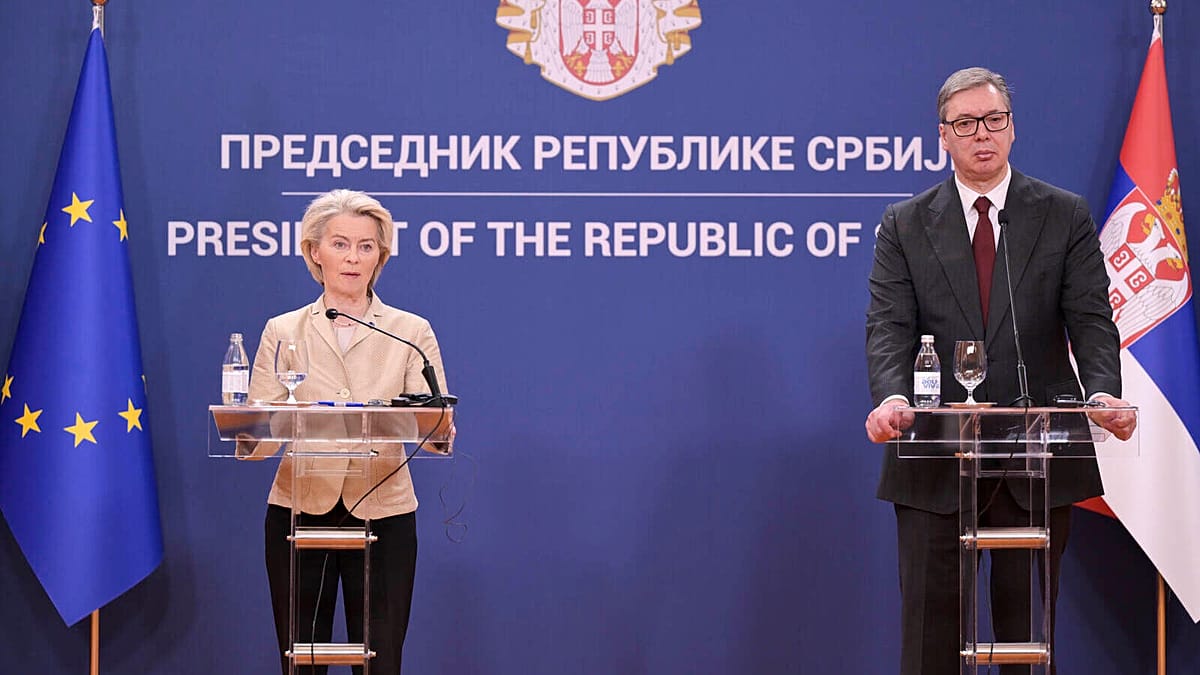
The Commission chief is resisting calls on the EU to impose consequences on Serbia, which remains a candidate country for membership of the bloc alongside other Western Balkan states.
 Sep 16, 2026 · byEuronews
Countries: Montenegro, Cuba, Russian Federation, Serbia, Türkiye, Ukraine, World Source: UN High Commissioner for Refugees Please refer to the attached file. Since March 2022, Montenegro has granted temporary protection (TP) to Ukrainians fleeing the war and hosts one of the largest refugee communities relative to its population in Europe. UNHCR supports the Government to strengthen asylum procedures, improve reception standards and develop a conducive environment for refugees’ socio-economic inclusion. UNHCR supports the authorities to improve statelessness determination procedures and access to socio-economic inclusion of stateless people. HIGHLIGHTS Strengthening asylum procedures UNHCR advocates with national authorities to secure access to asylum procedures for all people in need, further strengthen identification and referral mechanisms, improve the decision-making process and develop inclusion prospects to foster self-reliance of asylum seekers and refugees. Statelessness Montenegro is progressing towards the full implementation of the remaining three of seven statelessness Global Refugee Forum (GRF) pledges, by further enhancing the statelessness determination procedures (SDP), implementing fully functional birth registration procedures for people born in Montenegro and amending relevant legislation to secure access to socio-economic rights for stateless people.
Sep 16, 2026 · byReliefWeb
A European Union-backed court convicted former Kosovo President Hashim Thaci of war crimes committed during his country's war for independence from Serbia and sentenced him to 25 years in prison.
 Sep 16, 2026 · byNPR
Wizz Air has renewed its call on the Serbian authorities to urgently resolve a regulatory dispute which it says threatens the future of its Belgrade base. The airline claims that regulatory changes introduced this year have placed the viability of its Belgrade base at risk. It warned that the dispute extends beyond its own operations and could affect employment, competition, affordable travel, Serbia’s connectivity with Europe and international investors’ confidence in the Serbian market. The European Commission is examining whether the amendments to Serbia’s aviation regulations comply with the country’s obligations under the European Common Aviation Area Agreement. Wizz Air’s Chief Corporate Officer, Owain Jones, said, “Wizz Air has been investing in Serbia for more than fifteen years. We want to stay, grow and continue investing. However, investment requires fair rules and certainty. We are not asking for special treatment. We are asking for equal treatment and the opportunity to compete for Serbian passengers on price, service and network. Serbia should be attracting investment and improving connectivity, not putting both into question. The solution is simple: remove discriminatory restrictions and allow competition to work. Wizz Air has made its choice: we choose Serbia. Now Serbia must decide whether it chooses competition, connectivity and investment”. Wizz Air said it remains prepared to engage in constructive discussions with the Serbian authorities, the Civil Aviation Directorate and European institutions in order to reach an urgent solution. It added the protection of a single company from competition benefits no one The Serbian Ministry for Construction, Transport and Infrastructure, said recently, “There is no intention to “force” Wizz Air out of Serbia or to restrict its, or any other EU carrier’s, right to operate services, either in terms of routes or frequencies”. It noted that the airline’s Belgrade base is contrary to the Multilateral Agreement on the Establishment of a European Common Aviation Area. EX-YU Aviation News