← News
Topic · Place

Kazakhstan

110 articles · 6+ stories

🔥

Stories about Kazakhstan

See also
📰

Latest Kazakhstan articles

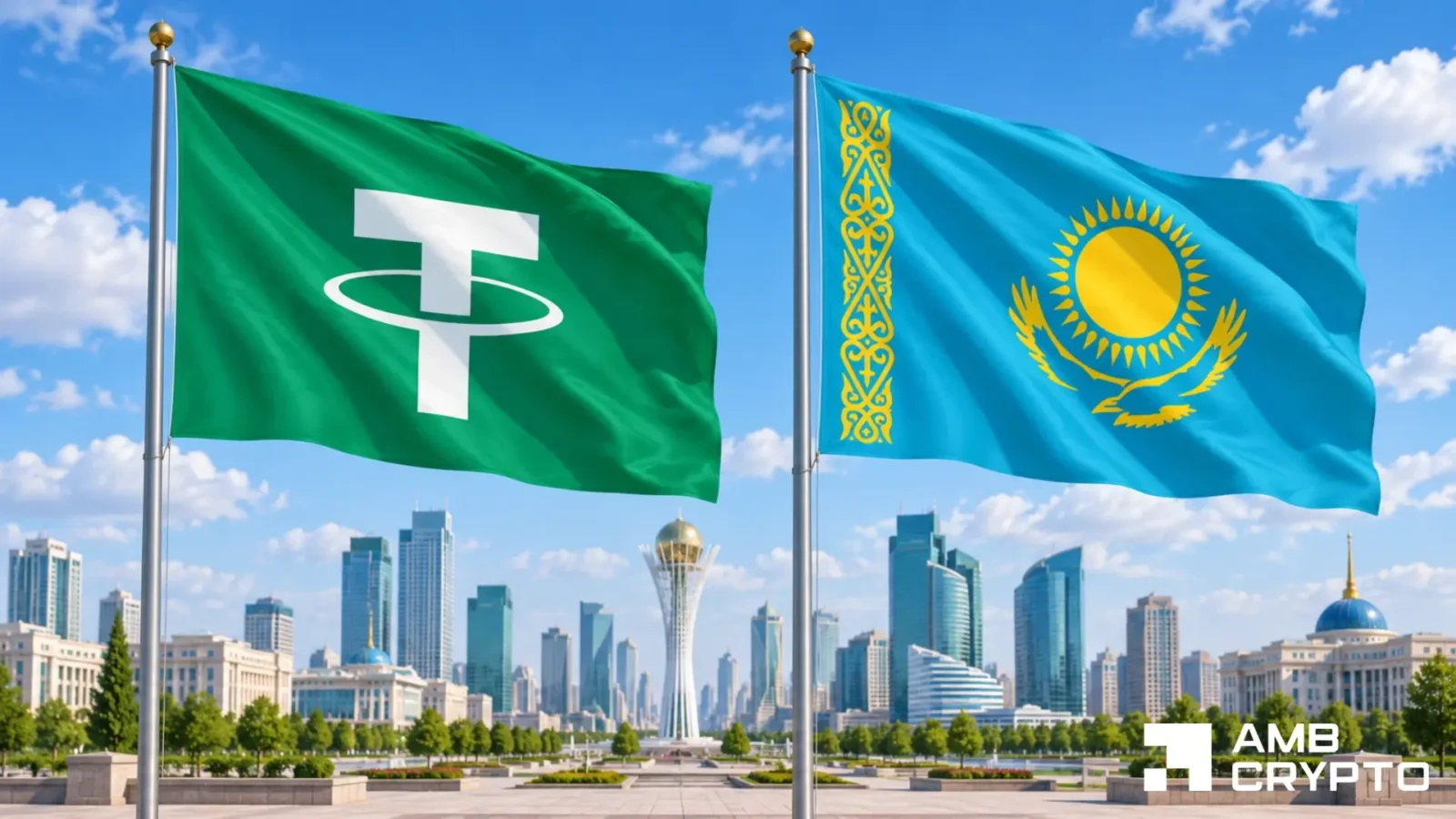
Kazakhstan Taps Tether to Explore a New Tenge Stablecoin Model

Kazakhstan Taps Tether to Explore a New Tenge Stablecoin Model

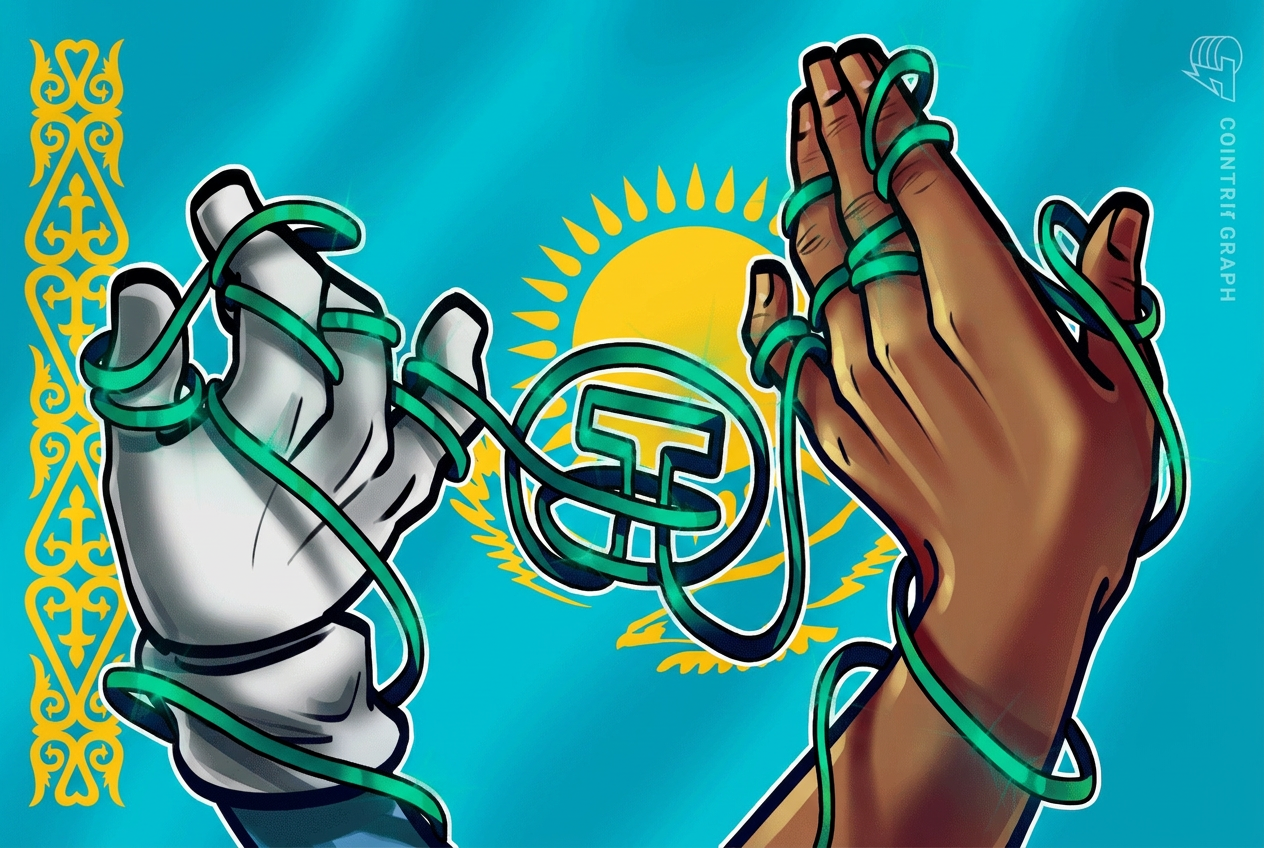
Kazakhstan already has a tenge stablecoin in a central-bank sandbox. Now it has brought Tether into the room to study another one. Tether, the National Bank of Kazakhstan, and the Alatau City Authority signed an exploratory memorandum on Wednesday covering a possible tenge-pegged stablecoin, asset tokenization, and decentralized finance (DeFi). No coin has been approved, […]

Oct 7, 2026 · byBitcoin.com News
Large oil exporters agree to continue consistent production in November

Large oil exporters agree to continue consistent production in November

Seven of the world’s largest oil-exporting countries agreed Sunday to maintain their baseline production levels for November, as fuel prices remain elevated amid the Iran war. The “OPEC+” group, which includes Algeria, Iraq, Kazakhstan, Kuwait, Oman, Russia and Saudi Arabia, decided to “maintain” oil production levels they agreed to in September, the Organization of the…

Oct 4, 2026 · byThe Hill
📰

Pegasus NW26 Kazakhstan Service Increases

Published at 0430PDT / 1130GMT 01OCT26 Pegasus in Northern winter 2026/27 season plans to increase flights to Kazakhstan, including service to Atyrau and Shymkent. Planned increases include the following, based on schedule filing comparison 30AUG26 vs 27SEP26. Istanbul Sabiha Gokcen – Atyrau eff 05NOV26 Increase from 2 to 3 weekly, A320/321neo Istanbul Sabiha Gokcen – Shymkent eff 06NOV26 Increase from 3 to 4 weekly, A320/321neo

Oct 1, 2026 · byAeroRoutes
📰

World: Déclaration conjointe sur l’Initiative mondiale visant à revitaliser l’engagement politique en faveur du droit international humanitaire

Country: World Source: International Committee of the Red Cross En marge de l’Assemblée générale des Nations Unies, de hauts représentants des six pays à l’origine de l’ Initiative mondiale visant à revitaliser l’engagement politique en faveur du droit international humanitaire (DIH) et la présidente du Comité international de la Croix-Rouge (CICR) ont publié la déclaration conjointe qui suit, laquelle appelle à réaffirmer le respect des règles de la guerre et invite instamment les gouvernements à envoyer leurs plus hauts représentants à la Conférence de haut niveau sur l’humanité dans la guerre, qui se tiendra le 7 décembre prochain en Jordanie. Cette déclaration a été prononcée par S.E. Ayman Safadi, vice-premier ministre et ministre des Affaires étrangères et des Expatriés du Royaume hachémite de Jordanie, accompagné par S.E. l’Ambassadeur Mauro Vieira, ministre des Affaires étrangères de la République fédérative du Brésil ; S.E. Mukhtar Tileuberdi, ministre des Affaires étrangères de la République du Kazakhstan ; S.E. Ronald O. Lamola, ministre des Relations internationales et de la Coopération de la République sud-africaine ; S.E. Fu Cong, ambassadeur extraordinaire et plénipotentiaire et représentant permanent de la République populaire de Chine auprès de l’Organisation des Nations Unies ; Mme Éléonore Caroit, ministre déléguée chargée de la Francophonie, des partenariats internationaux et des Français de l’étranger auprès du ministre de l’Europe et des Affaires étrangères de la République française ; et Mme Mirjana Spoljaric, présidente du Comité international de la Croix-Rouge. Je m’adresse à vous aujourd’hui, aux côtés de mes éminents collègues, au nom du Brésil, de la Chine, de la France, du Kazakhstan, de l’Afrique du Sud et de mon propre pays, la Jordanie. Il y a deux ans, nous avons lancé avec le Comité international de la Croix-Rouge l’Initiative mondiale visant à revitaliser l’engagement politique en faveur du droit international humanitaire (DIH). Nous sommes réunis aujourd’hui pour renouveler notre appel à l’action. Le bilan des conflits armés actuels est inadmissible et il n’y a pas un instant à perdre. Les civils, dans plus de 130 conflits armés à travers le monde, sont confrontés à des réalités inacceptables. Les hôpitaux, les écoles et les foyers sont de plus en plus souvent pris pour des champs de bataille. Ces phénomènes ne sont pas des conséquences inévitables de la guerre ; ils relèvent trop souvent de choix délibérés d’ignorer les règles destinées à protéger les populations prises dans les conflits. Le monde ne doit pas accepter de telles souffrances et destructions. Changer de cap est possible, et les chefs d’État en ont le pouvoir. C’est pourquoi, sur invitation de Sa Majesté le Roi Abdallah II, le Royaume hachémite de Jordanie accueillera le 7 décembre 2026 la Conférence de haut niveau visant à préserver l’humanité dans la guerre. Celle-ci réunira des chefs d’État pour réaffirmer leur engagement collectif en faveur du droit international humanitaire et traduire cet élan en actions concrètes, en s’appuyant sur les travaux réalisés dans le cadre de l’Initiative mondiale en faveur du DIH. Dans cet esprit et à l’issue de larges consultations, une déclaration politique concise et inclusive sera publiée par les États lors de la Conférence. Nous invitons tous les États à rejoindre l’Initiative et tous les États participants à se faire représenter au plus haut niveau à la Conférence. À ce jour, 118 États de toutes les régions du monde ont rejoint l’Initiative mondiale, et 27 États coprésident sept axes de travail thématiques afin d’élaborer des recommandations pratiques sur la manière d’accroître le respect du DIH et de relever les défis posés par les guerres contemporaines. Ces recommandations s’appuient sur un constat récurrent exprimé par les États tout au long du processus : la nécessité de préserver et de garantir la finalité protectrice du DIH. L’Initiative mondiale en faveur du DIH traite de questions pertinentes pour les conflits armés contemporains et les parties prenantes dans le monde entier, en vue de garantir une application impartiale, constante et universelle des obligations existantes en matière de DIH. Elle reconnaît que les États portent la responsabilité première de respecter, mettre en œuvre et appliquer les Conventions de Genève en toutes circonstances, y compris dans les situations d’occupation. Alors que nous sommes réunis aujourd’hui à New York, nous reconnaissons également le rôle important joué par les Nations Unies et le système multilatéral au sens large dans la promotion du respect du DIH et en soutien à sa mise en œuvre effective. Depuis leur adoption en 1949, les Conventions de Genève ont contribué à protéger la vie et la dignité de millions de personnes. Cependant, les souffrances observées dans les conflits armés actuels à travers le monde nous rappellent avec force que les règles les plus fondamentales de ces conventions ne sont pas respectées. Nous appelons les dirigeants mondiaux à s’unir autour de cette responsabilité partagée lors de la Conférence de haut niveau qui se tiendra en Jordanie. Le monde ne peut pas rester sans réagir alors que les principes fondamentaux du droit international humanitaire sont régulièrement et systématiquement violés. Nous pouvons mettre un terme aux souffrances et aux destructions inconcevables et inadmissibles qui sont la marque des conflits actuels, et en favoriser la résolution par des moyens pacifiques. Ensemble, nous devons préserver l’humanité en temps de guerre. Note à l’intention des rédactions On ne saurait changer la façon dont les guerres sont menées sans volonté politique. C’est la raison pour laquelle l’Afrique du Sud, le Brésil, la Chine, la France, la Jordanie et le Kazakhstan, en collaboration avec le CICR, ont lancé une initiative mondiale visant à faire du respect du droit international humanitaire une priorité politique ainsi qu’à limiter les souffrances dans les situations de conflit armé. À ce jour, 118 États ont officiellement rejoint l’Initiative mondiale visant à revitaliser l’engagement politique en faveur du droit international humanitaire. Pour en savoir plus, rendez-vous sur upholdhumanityinwar.org . Informations complémentaires : Yuriy SHAFARENKO, CICR New York, tél. : +1 917 631 1913, yshafarenko@icrc.org Christoph HANGER, CICR Genève, tél. : +41 79 313 84 61, changer@icrc.org

Oct 1, 2026 · byReliefWeb
OPEC+ Expected to Keep Oil Production Quotas Unchanged

OPEC+ Expected to Keep Oil Production Quotas Unchanged

The key OPEC+ producers are set to leave their current crude oil output quotas unchanged for November at a meeting this weekend, anonymous sources familiar with the plans told Reuters on Wednesday.  The Gulf producers in OPEC+ have been producing and exporting much lower volumes sin ce the Iran war crippled traffic through the Strait of Hormuz.  In the early September monthly meeting, Saudi Arabia, Russia, Iraq, Kuwait, Kazakhstan, Algeria, and Oman decided to maintain the September 2026 required production quotas for October 2026, after…

Sep 30, 2026 · byOilPrice.com
📰

Kazakhstan: After Syria and Iraq: mental health support helps repatriated families rebuild in Central Asia

Countries: Kazakhstan, Iraq, Kyrgyzstan, Syrian Arab Republic, Tajikistan, Uzbekistan Source: International Committee of the Red Cross Maryam is ten years old. She spent years without a home, without a mother, and without the documents to prove that the woman raising her was family. Today she goes to school, and that woman is, finally, her mother on paper too. Maryam is one of more than a thousand women and children who have returned since 2021 to Kazakhstan, Kyrgyzstan, Tajikistan and Uzbekistan*, after years in Syria and Iraq. For each of them, coming home was only the beginning. What came next, the slow work of healing, trust and belonging, is a story that rarely makes headlines. In June 2026, after five years of working side by side with national authorities, local institutions, and humanitarian partners to mend the region's invisible wounds, the ICRC concluded the mental health and psychosocial support (MHPSS) programme. Through dedicated work, they planted seeds of endurance, strengthening local care networks, equipping practitioners with new tools, and standing beside families piecing their lives back together after the trials of return. Behind the statistics are real journeys of recovery and resilience. Below are three stories of people who rediscovered themselves. Tajikistan: “She didn’t leave” Maryam speaks about the hardest years of her life with a calm that makes you listen carefully. Her father disappeared when she was small. Her mother died in a displacement camp, leaving Maryam entirely alone. A family friend took her in, and over time became her caregiver. “At first, my heart hurt too much, and I couldn’t call her mom,” Maryam says. “But she was kind. She took care of me. She didn’t leave.” The two arrived at a transit centre in Tajikistan. But as the woman raising Maryam was not her biological mother, and without documentation to prove their relationship, every day brought the risk of separation. Officials came with questions. The nights were long. ICRC psychologists began visiting the centre. Using child-centred approaches such as play and drawing, they gradually built trust with Maryam and provided a safe space to express herself. It was, she says, the first time she felt genuinely heard. Her adoptive mother received psychoeducation and parenting guidance from ICRC psychologists, and Maryam, too, became more settled. Eventually, the legal process was resolved in their favour: Maryam was formally recognised as her daughter. Maryam now attends school, while her mother runs a small sewing business from home. “I am not scared anymore,” Maryam says. “Because I know we can stay together.” Uzbekistan: It is about small steps Nazima works as a psychologist at an orphanage. When children repatriated from Syria and Iraq began arriving in her care, she soon realised that her existing training had not prepared her for their complex needs. “I didn’t know how to approach them and was afraid of causing more harm,” she says. The children had lost parents, siblings, and in many cases their entire social world. They were withdrawn and slow to engage. Inside the institution, they faced stigma from peers who called them “children of terrorists.” Staff, without the tools or knowledge to respond differently, would sometimes send struggling children to Nazima as a form of discipline, which meant she became associated with punishment rather than support. She navigated this largely on her own, until the ICRC offered her the training, tools, and knowledge to support the children in her care. She learned grounding techniques, psychoeducation, and trauma-focused approaches that helped children understand and process their reactions to difficult experiences without feeling ‘broken’ or ‘abnormal’. “Without the training, supervision, and ongoing support of the ICRC, I would not have been able to help them this way,” she says. Progress in mental health and psychosocial work is rarely linear. A child who chooses to attend a session. A therapeutic room that no longer feels like punishment. “Working with repatriated children is not about quick results. It is about small steps, trust, and rebuilding hope,” Nazima says. Kyrgyzstan: Healing is possible Aigul followed her husband to Syria as a young woman. Shortly after they arrived, he went missing. Left with five children, no identity documents, and no route home, she spent the next twelve years in a displacement camp. During that time, she also lost contact with her father, who told her by phone that he no longer considered her his daughter. When her plane landed in Kyrgyzstan, she says she could barely believe it was real. “For the first time in many years, I felt freedom and safety.” But reintegration brought its own difficulties. Family members blamed her for what had happened. Her children faced stigma at school. Her in-laws treated her with distrust. Aigul had encountered the ICRC before, in the camp where she had lived in Syria. When an ICRC psychologist offered to visit her, she accepted. The sessions gave her a space to talk about the accumulated weight of more than a decade of hardship. She learned breathing and grounding techniques, and ways to manage overwhelming emotions and intrusive thoughts. “These exercises and simple moments helped me feel alive again.” Aigul also joined an ICRC-organised support group for repatriated women. Across Kyrgyzstan, nearly 100 women took part in these groups. Aigul found comfort in shared experience: proof that others carried a similar weight, and that it was possible to move forward. “Listening to others helped me realise that healing is possible, even after years of hardship. Each session reminded me that my voice and my feelings mattered.” She now speaks about her children with quiet determination. “I want them to grow up in a safe place.” Walking alongside families: Five years of human centered support in Central Asia Repatriation is not the end of a humanitarian crisis. Sustainable support requires investing in the people and systems that remain after an organisation’s direct presence ends. Through training, technical supervision, and direct psychological support, the MHPSS programme has equipped practitioners to support people in their care. For those who carried out this work, the programme was about more than numbers. One psychologist described it as a matter of trust, “built step by step, between families and us.” Others emphasised quality, long-term, needs-driven support tailored to each person and context. The team likened their work to a thread, connecting moments in people’s journeys and ensuring continuity. Psychological support, they said, does not simply solve problems, it accompanies people, and in doing so, it transforms lives.

Sep 30, 2026 · byReliefWeb
Kazakhstan Turns to Flare Gas to Power Crypto Mining Revival

Kazakhstan Turns to Flare Gas to Power Crypto Mining Revival

Kazakhstan is working to entice crypto miners to take advantage of flared gas opportunities as part of a push to revive mining, which was severely hampered by power limitations imposed by an auction system designed to protect the country’s aging grid. Kazakhstan Works Towards Bringing Crypto Miners and Flare Gas Energy Together The government of […]

Sep 28, 2026 · byBitcoin.com News