Intel
105 articles · 3+ stories
Stories about Intel

NFT sales rise 6.8% to $46.8M as Bitcoin trades surge
 Sep 12, 2026· AMBCrypto
Altera files confidentially for IPO, targets potential listing worth over $2 billion
 Sep 15, 2026· CryptoBriefing
Tesla and Intel earnings this week could ripple across crypto markets
Jul 17, 2026· CryptoBriefingLatest Intel articles

Save $1,050 Off the Alienware 16X Aurora RTX 5060 Gaming Laptop During Walmart's GeForce Week Sale
Features premium all-metal build quality, a gorgeous OLED display, and Intel's most powerful mobile CPU.
 Sep 22, 2026 · byIGN
Intel stock surges 25% in 5 days on rising CPU demand
Intel's stock surge highlights a structural shift in CPU demand, signaling potential long-term growth and investment opportunities in the sector. The post Intel stock surges 25% in 5 days on rising CPU demand appeared first on Crypto Briefing .
Sep 22, 2026 · byCryptoBriefing
Google opens pre-orders for AI-powered Googlebook laptops
Washington: Alphabet's Google opened pre-orders on Monday for Googlebook, a new category of premium laptops designed for Android users and powered by artificial intelligence and the company’s Gemini technology. The first models, manufactured by Acer, ASUS, Dell, HP and Lenovo, start at $899 and are powered by processors from Intel or Qualcomm. Google said the devices offer up to 14 hours of video playback and combine premium laptop hardware with on-device AI capabilities. The launch comes as Apple strengthens its presence in the lower-priced laptop market with the MacBook Neo, which starts at $699 in the United States, intensifying competition in a segment where Chromebooks have traditionally targeted students and consumers seeking affordable, easy-to-use devices. Googlebook is built on the Android technology stack combined with desktop foundations from ChromeOS, providing closer integration between Android phones and laptops. The devices incorporate Gemini-powered tools designed to assist with tasks, understand on-screen content and enable users to continue work begun on an Android phone. The new category marks Google’s latest effort to showcase its vision for premium personal computing following the Pixelbook in 2017 and Pixelbook Go in 2019.

Intel surges 12% as CPU stocks rally. Here's what's driving the move
Every weekday, the Investing Club releases the Homestretch, an actionable afternoon update just in time for the last hour of trading.
MediaTek’s flagship laptop chip is the Dimensity CX C10 Max, debuts in a Lenovo Googlebook
The initial batch of Googlebook laptops that debuted earlier today use either Intel or Qualcomm chipsets, but MediaTek has confirmed it will also be backing the platform with the debut of its flagship laptop chip, the Dimensity CX C10 Max, which will show up in an incoming Lenovo Googlebook. more…
 Sep 21, 2026 · by9to5Google
Apple Supplier Subsidiary Considering U.S. Flash Memory Factory
Apple supplier SK Hynix's subsidiary Solidigm is considering a U.S. NAND flash memory factory, with upstate New York emerging as a leading candidate, according to Reuters . The move would reduce Solidigm's reliance on its NAND factory in China. Yesterday, it emerged that the Apple supplier is in manufacturing talks with Intel to start memory production in the U.S. Tag: United States This article, " Apple Supplier Subsidiary Considering U.S. Flash Memory Factory " first appeared on MacRumors.com Discuss this article in our forums
Intel options trading surges as stock rallies, Cboe volatility drops
Increased options trading and stock rallies suggest growing investor confidence in tech, potentially stabilizing market volatility. The post Intel options trading surges as stock rallies, Cboe volatility drops appeared first on Crypto Briefing .
Sep 18, 2026 · byCryptoBriefing
Intel and Micron lead our portfolio higher, and J&J strengthens our case for owning it
Every weekday, the Investing Club releases the Homestretch; an actionable afternoon update just in time for the last hour of trading.
Micron, Intel and other chip stocks are furthering their strong comebacks
Investor fears about an AI spending slowdown and the impact of interest-rate hikes are subsiding.
Intel shares could hit $200 in two years, says Melius Research analyst
Intel's potential $200 valuation highlights its strategic positioning in AI-driven semiconductor demand and global manufacturing shifts. The post Intel shares could hit $200 in two years, says Melius Research analyst appeared first on Crypto Briefing .
Sep 16, 2026 · byCryptoBriefing
Apple Memory Supplier Explores U.S. Manufacturing With Intel
Apple memory supplier SK Hynix is in exploratory talks with Intel about manufacturing memory chips in the United States for the first time, according to Reuters . One option would see the South Korean chipmaker lease part of Intel's planned manufacturing complex in Ohio. Another would involve a joint venture with Intel and major cloud providers seeking to secure memory supplies, people familiar with the discussions said. No decisions have been made, and other arrangements remain possible. SK Hynix supplies Apple with memory alongside Samsung and Micron. The discussions come as AI infrastructure spending puts pressure on the supply of memory for consumer devices, including iPhones and Macs. Chipmakers have been directing more production capacity toward high-bandwidth memory (HBM) for AI processors, leaving smartphone and computer manufacturers competing for available supplies. In February, Apple reportedly agreed to pay Samsung twice as much for memory chips needed for iPhone 17 production. More recently, analyst Ming-Chi Kuo said Apple was reducing its 2026 hardware shipment plans because of DRAM shortages, with supply constraints also affecting the Mac Studio , Mac mini , and MacBook Air . It remains unclear which types of memory SK Hynix would manufacture under a potential agreement with Intel. Its products include DRAM used in smartphones, computers, and servers, NAND flash storage, and HBM for AI processors. The report does not mention whether a U.S. facility would produce memory for Apple devices. SK Hynix already has an advanced packaging facility under construction in West Lafayette, Indiana. That project will package DRAM wafers manufactured in South Korea into HBM chips, rather than fabricate the wafers domestically. Tags: Intel , United States This article, " Apple Memory Supplier Explores U.S. Manufacturing With Intel " first appeared on MacRumors.com Discuss this article in our forums

SK Hynix explores options to enhance competitiveness, may partner with Intel
A potential SK Hynix-Intel partnership could intensify competition in the memory chip sector, challenging Samsung and diversifying US production. The post SK Hynix explores options to enhance competitiveness, may partner with Intel appeared first on Crypto Briefing .
Sep 16, 2026 · byCryptoBriefing
SK Hynix reportedly in talks with Intel to build memory chips in US
SK Hynix told TechCrunch the company hasn't finalized any plans or arrangements yet.
 Sep 16, 2026 · byTechCrunch
Intel’s stock rises as investors anticipate memory chip turnaround
Intel's potential partnership with SK Hynix could reshape the AI supply chain, boost U.S. semiconductor production, and alter market dynamics. The post Intel’s stock rises as investors anticipate memory chip turnaround appeared first on Crypto Briefing .
Sep 16, 2026 · byCryptoBriefing
Intel’s stock rises as investors hope memory chips can mark the next step in its turnaround
A report says Intel is in early talks with SK Hynix, which is considering some sort of partnership that would enable it to make memory chips in the U.S.
SK Hynix denies confirmed plans for US memory chip talks with Intel
SK Hynix's potential US expansion could reshape global semiconductor dynamics, enhancing US tech infrastructure and supply chain resilience. The post SK Hynix denies confirmed plans for US memory chip talks with Intel appeared first on Crypto Briefing .
Sep 16, 2026 · byCryptoBriefing
Intel, SK Hynix shares jump on report they're discussing U.S. memory chip manufacturing
The deal could be a big win for Intel which has been looking to gain marquee customers for its manufacturing, or foundry, business.

Intel's Bold Rebirth: AI, Chips and Global Power
Intel faces a pivotal transformation in 2026. Global tech demands force radical shifts in silicon manufacturing. Artificial intelligence drives unprecedented semiconductor growth. Intel must adapt to survive. The global economy relies on robust supply chains. Macroeconomic pressures squeeze legacy hardware producers. Memory prices have risen sharply, with SK Group Chairman Chey Tae-won describing them as abnormally high and calling for supply expansion. Data centers devour available global silicon output. This creates immense economic friction. Intel seeks dominance in this new paradigm. The company pivots increasingly from monolithic processors to agile chiplets. This strategic shift redefines global high-tech industries. Geopolitics and Geostrategy Semiconductors dictate modern geopolitical leverage. The US government aggressively secures domestic supply chains, and last year took a 10% equity stake in Intel itself. Commerce Secretary Howard Lutnick has publicly pressed foreign memory giants to build locally, telling an audience at Micron's New York fab in July that he wants to bring Samsung Electronics and SK Hynix to the United States to build production facilities. Intel broke ground on its New Albany, Ohio campus in 2022 with an initial $28 billion commitment and a longer-term vision approaching $100 billion across as many as eight fabs. After missing its original 2025 target, Intel pushed first production to 2030 or 2031, five to six years later than planned. The site remains strategic, designed to support 14A and future nodes. Korea JoongAng Daily reported in July that SK Hynix was in talks to acquire the campus. SK Hynix firmly denied these specific buyout claims in a Korea Exchange filing. However, Semafor subsequently reported early-stage discussions about an operational partnership, so strategic collaboration remains viable. SK Hynix is testing integration of its HBM with Intel's EMIB-based 2.5D packaging technology, and Samsung and Micron are assessing EMIB as well, reflecting memory makers' push to diversify away from tight TSMC CoWoS supply. Intel leverages government support aggressively. Geostrategy now revolves around localized silicon independence. Business Models and Economics Intel embraces a radically new business model. The company separates its foundry operations from chip design. This bold move attracts external clients, and Intel has onboarded marquee customers including Apple and SpaceX under chief executive Lip-Bu Tan. High capital expenditures challenge traditional profit margins. Building advanced fabs costs tens of billions. Intel Foundry lost $10.3 billion in 2025 on $17.8 billion of revenue, followed by a further $2.4 billion loss in the first quarter of 2026. The Arizona Fab 52 has begun mass production of 18A nodes. Intel pushes the Ohio facility launch to 2030. Joint investment programs spread massive financial risks. Brookfield partnered with Intel for Arizona expansions. Intel monetizes its advanced packaging capabilities effectively. Supplying ecosystem partners diversifies revenue streams. Company Culture and Leadership Management prioritizes pragmatic adaptability over rigid tradition. Decades of monolithic CPU dominance fostered complacency. Chief executive Lip-Bu Tan, appointed in 2025, ruthlessly targets high-growth AI sectors. The corporate culture now emphasizes rapid iteration. Teams race to bridge previous technological gaps. Intel acknowledges its late entry into AI hardware. Leaders implement an aggressive recovery strategy that has included large-scale layoffs and capital expenditure cuts. This requires immense organizational resilience. Managers foster diverse industry collaboration initiatives, and Intel hired Lee Seok-hee, SK Hynix's former chief executive, in June to help run its packaging business. Intel builds partnerships rather than fighting isolationist battles. This cultural evolution ensures long-term survival. Technology, High Tech and Innovation Innovation centers on heterogeneous compute architectures. Intel moves steadily away from traditional monolithic chip designs. Advanced packaging technology connects specialized silicon chiplets. Engineers optimize hardware specifically for large language models. New chips feature efficient SoftMax calculations for transformers. Speculative kernel execution accelerates chiplet GPU performance. Early exit mechanisms speed up neural inference. Sparse neural network inference reduces required computational power. Hardware compression of sparse matrices eliminates wasted operations. These innovations make AI deployments significantly cheaper. Cybersecurity and Patent Analysis Intel's patent portfolio reveals clear strategic priorities. Advanced packaging dominates recent filings, consistent with the company's chiplet and EMIB strategy. AI accelerator filings surged during 2025. Cybersecurity remains a foundational pillar for enterprise clients. The portfolio shows a deliberate security evolution. Intel transitioned from client-side secure enclaves. The focus shifted to cloud-scale confidential computing. Trust Domain Extensions now secure shared cloud environments. Hardware encryption protects critical AI matrix accelerators. Science and The Pharmaceutical Industry Intel silicon supports breakthroughs in modern medical science. The Intel Pharma Analytics Platform, developed with contract research organization ICON under an agreement first announced in 2018, captures sensor data from remote study subjects. Edge-to-cloud AI quantifies therapy impacts objectively. This automation aims to reduce clinical trial costs. High-quality data accelerates new drug market delivery. A notable personal link runs through the leadership. Lip-Bu Tan, Intel's chief executive, serves as board chairman of Greenstone Biosciences, the Palo Alto company combining human iPSC biology with AI-driven drug discovery. Greenstone has announced collaborations with NVIDIA and with Illumina rather than with Intel. Silicon innovation nonetheless underpins computational drug discovery across the sector.

How Far Could Intel Stock Fall After Quadrupling in a year?
Intel (INTC) has delivered one of the more dramatic turnarounds in the market over the past year, but the stock’s recent pullback has raised a difficult question: after such a powerful run, how much of those gains could a broader market shock take back? The answer matters because Intel has historically fallen harder than the S&P 500 when shocks hit, and its current valuation and trading level leave plenty of room for volatility. Intel stock fell 5.6% on September 10 and now trades near $100. That price is about 29% below its 52-week high. Even after that decline, however, the shares have still returned 310.5% over the past year. In other words, anyone who bought a year ago has more than quadrupled their money, despite the recent weakness. The central issue is not whether Intel has been a winning stock — it clearly has — but how much of that extraordinary gain could be erased if the market enters another period of stress. Why Is Intel Stock Off Its High? The latest drop is not necessarily a verdict on the business. Even after falling 5.6% on September 10, Intel stock was still up 11.4% over the past week, which shows that a single session does not tell the whole story. More broadly, Intel has not provided a specific reason for the wider slide from its high. That leaves investors to weigh other factors, including a major capital raise and the stock’s own stretched recent performance. Separately, in August, Intel sold $20 billion of new stock at $95 a share. That offering price is below where the stock currently trades. The company said it would use the proceeds for general corporate purposes and to enable growth opportunities. Before the sale, management had said that a very successful Intel might need outside capital for additional investment. Intel now plans more than $20 billion of capital spending in 2026, citing strong customer demand, and management expects 2027 capital spending to be significantly higher. By the company’s account, server CPU demand is far outpacing supply. That combination — a huge stock sale, ambitious spending plans, and soaring demand — helps explain why investors are focused on both the opportunity and the risk. The capital raise gives Intel more resources to invest, but it also dilutes existing shareholders and signals that the company’s growth ambitions are expensive. If demand remains strong, the spending could pay off. If the cycle turns, the same spending could become a burden. Is Intel’s Business Getting Worse While It Spends? No. The fundamentals have actually been improving. Revenue over the trailing twelve months is $57.03 billion, up 7.5%. That compares with a three-year average growth rate of just 1.9%. The operating margin over the same twelve-month period is 7.6%, which is Intel’s best in three years. Over the past three years, the average operating margin was negative 2.0%. So Intel is not deteriorating while it spends. It is growing faster than its recent historical average and generating its strongest operating margin in years. That improvement gives the bull case something concrete to stand on. A company with accelerating revenue and better profitability is generally in a stronger position to absorb heavy investment. It also means that if the broader market avoids a severe shock, Intel’s earnings power could continue to improve. How Much Further Could Intel Stock Fall in a Shock? History offers a sobering guide. During the 2022 inflation shock, Intel fell 52%, while the S&P 500 fell 24%. That means Intel’s decline was more than twice as deep as the index’s drop. On average, Intel has fallen harder than the S&P 500 when shocks hit. That pattern matters because it suggests Intel is not a defensive stock in a market downturn. It is a high-beta name that can suffer disproportionately when sentiment turns. The recovery timeline is also important. From its low after a shock, Intel has needed a median of about five months to regain its pre-shock high. The slowest recovery, after 2022, took about 39 months and ran through the 2024 shock. That is a long time for investors to wait just to get back to even. It also shows that even if Intel’s business improves, the stock may not immediately recover its lost ground. So the old downside still applies. Faster growth and the best operating margin in three years give a rebound something to build on. They are not, however, a reason to assume Intel would fall less than it has in past shocks. A stronger business can support a recovery, but it does not erase the stock’s historical tendency to drop harder than the broader market. The Bottom Line Intel stock has more than quadrupled over the past year, but it is already about 29% below its 52-week high. The business is improving: revenue is growing faster than its three-year average, and operating margin is at a three-year high. At the same time, the company is spending heavily, raised $20 billion in new stock at $95 a share, and faces a market that has historically punished Intel more severely than the S&P 500 during shocks. The key takeaway is not that Intel will fall by a specific percentage. It is that the stock’s own history shows a larger downside in market shocks than the index, and there is no fundamental reason yet to size Intel for a shallower fall. Growth and margin improvement may help the eventual rebound, but they do not remove the risk. Investors should weigh the improving business against the stock’s record of sharp drawdowns and slow recoveries.
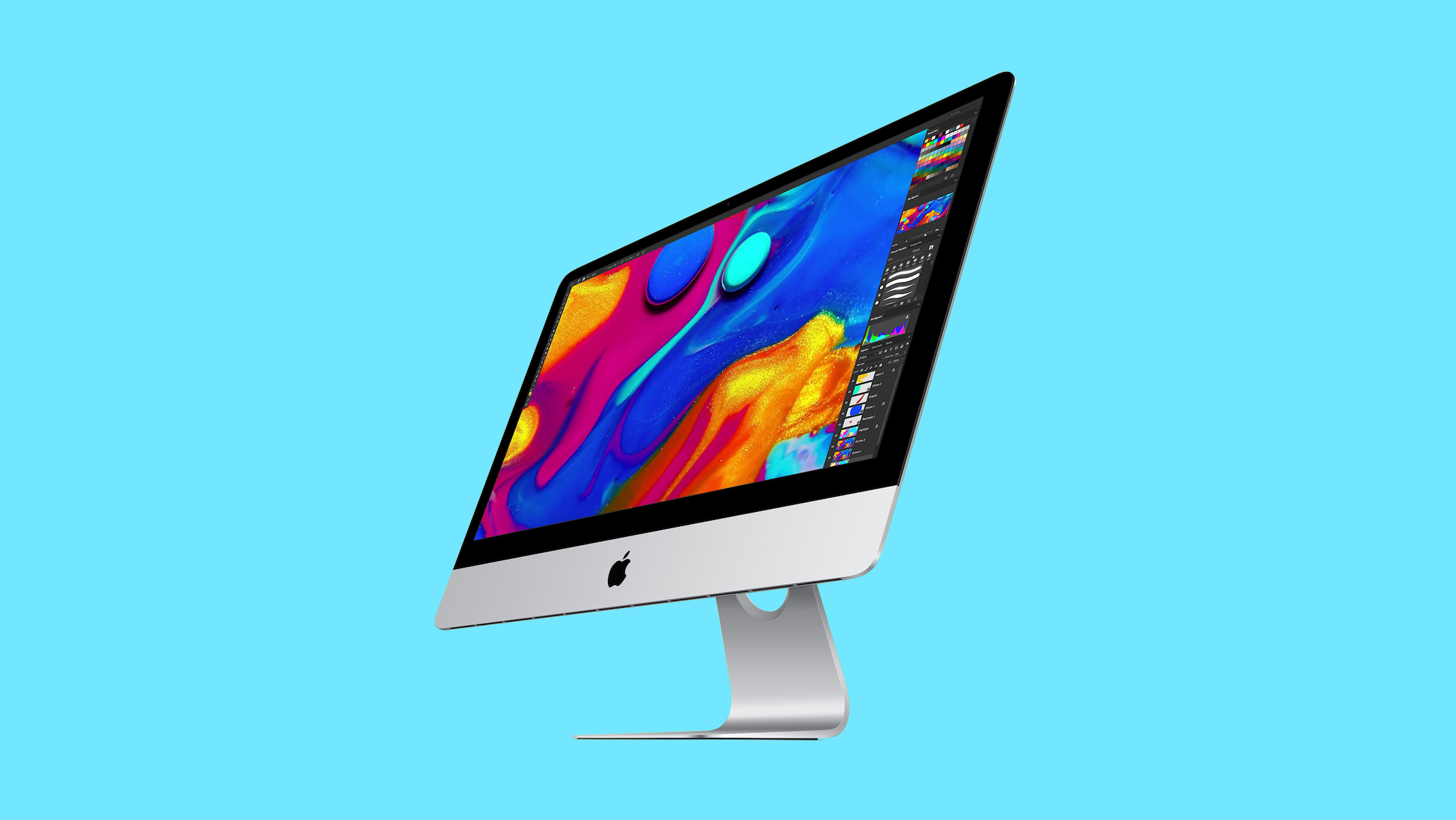
Apple's Last Intel 21.5-Inch iMac is Now Vintage
Apple today added the 2019 4K iMac to its list of vintage products , which means repairs can only be done if Apple has the parts available. Products are added to the vintage list five years after they were last distributed for sale, and they're moved to the obsolete list at the seven-year mark. Vintage products can be repaired at Apple Stores and by Apple Authorized Service Providers if the parts are available, but that's not guaranteed. Devices that are obsolete are not eligible for repair and Apple no longer makes repair components. The 2019 iMac preceded the colorful, redesigned M1 iMac that came out in 2021. The machine featured a 21.5-inch Retina 4K display and the standard silver iMac design. The base model was equipped with an Intel Core i3 processor, 8GB RAM, and a 1TB hard drive. Pricing in 2019 started at $1,299. The 2019 27-inch iMac that was sold alongside the 21.5-inch model was added to the vintage list in July 2025, but Apple sold the smaller model for a longer so it didn't previously qualify as vintage. Related Roundup: iMac Tags: Intel , Vintage and Obsolete Apple Products Buyer's Guide: iMac (Don't Buy) Related Forum: iMac This article, " Apple's Last Intel 21.5-Inch iMac is Now Vintage " first appeared on MacRumors.com Discuss this article in our forums
Altera files confidentially for initial public offering backed by Silver Lake and Intel
Altera's IPO could reshape the semiconductor landscape, offering Intel liquidity for its foundry goals and showcasing Silver Lake's strategic prowess. The post Altera files confidentially for initial public offering backed by Silver Lake and Intel appeared first on Crypto Briefing .
Sep 15, 2026 · byCryptoBriefing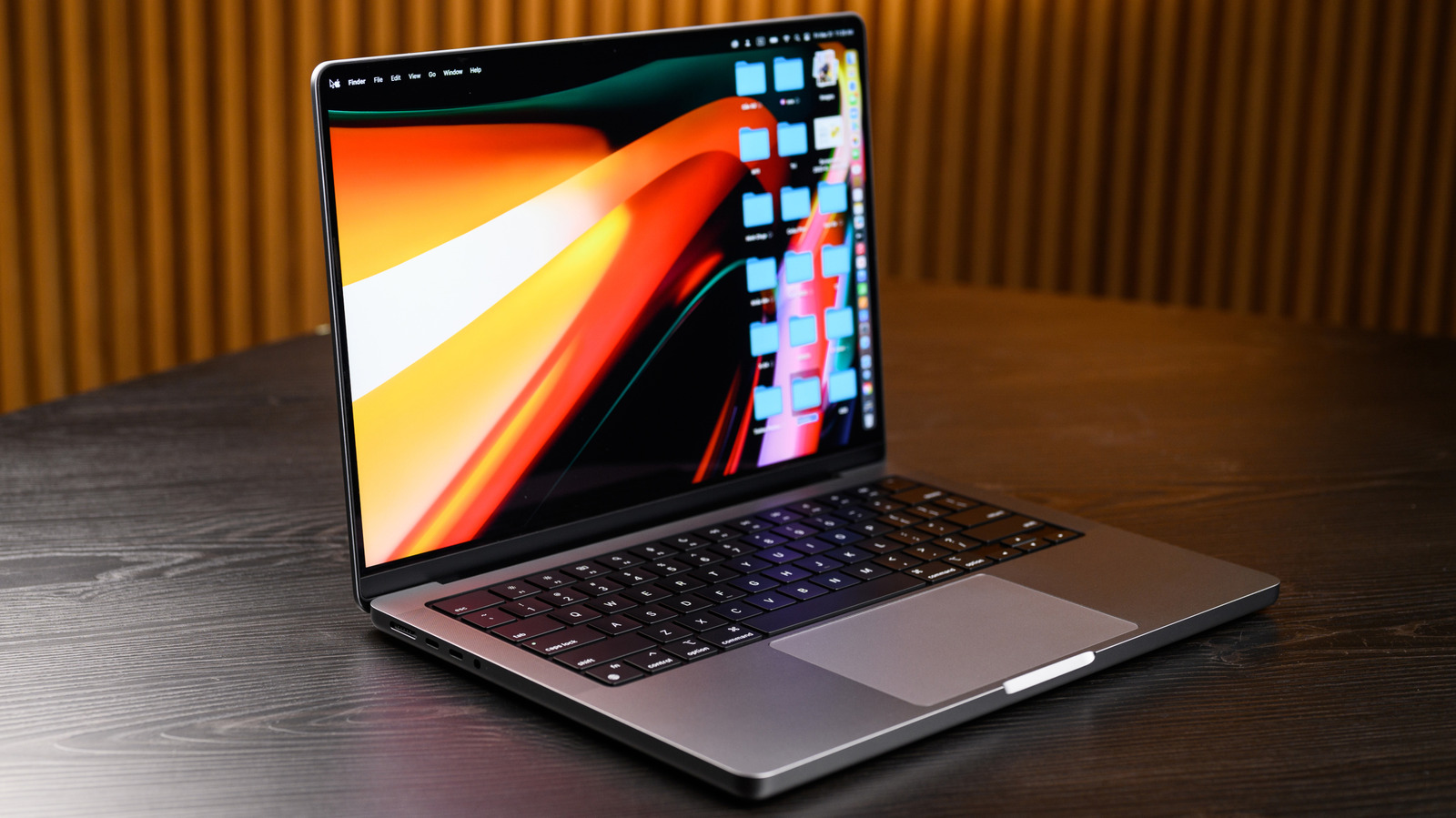
Are older MacBooks still worth buying in 2026?
You'll probably want to avoid Intel-powered MacBooks, but Apple Silicon models are solid.

Apple releases iOS 27, macOS Golden Gate 27 with Siri AI and Liquid Glass refinements
This is also the last version of macOS to support Rosetta for Intel apps.
 Sep 14, 2026 · byArs Technica